

Window leakage in winter
How to solve window air leakage in winter? How to cure air leakage in household windows + detailed tutorial
First, the common hazards and principles of air leakage in windows in winter
Window cold air penetration, indoor heat loss schematic diagram
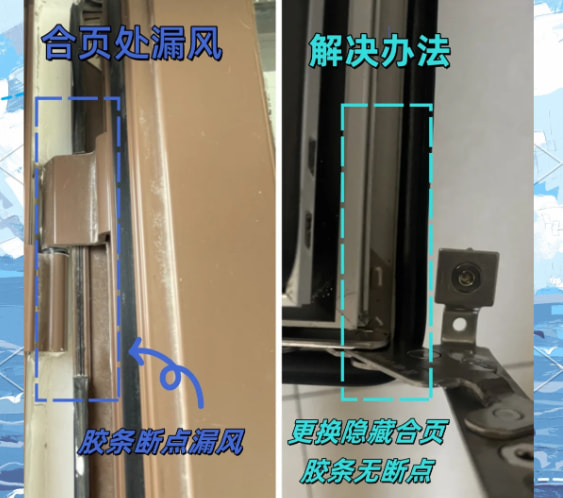
Every winter, most families will encounter the problem of window air leakage: the window is obviously cold, there is wind sound in the ear, the curtains are shaking, the window sill is condensed and moldy, the room temperature does not go up, and the heating cost of air conditioning soars. Many people think that air leakage is caused by the failure of window glass to keep warm. In fact, 90% of window air leakage is caused by the failure of gap sealing, lax hardware locking, and cracking of the wall interface. Cold air penetration is not a glass problem.
In winter, the indoor and outdoor temperature difference is large and the air pressure difference is strong, and the outdoor cold air will continue to penetrate into the room along the gap of the window frame, the lap joint of the window sash, the gap of the glass bead, and the joint of the wall interface. Long-term air leakage not only reduces the living comfort, but also causes the wall to get damp, the window sill to become moldy, and the window frame to rust and age. In severe cases, the high-rise windows will experience abnormal wind pressure and noise pouring.
Window air leakage is divided into three grades: slight air leakage, gap air leakage, and structural air leakage. Slight air leakage can be solved by sealing rectification. Structural air leakage needs to be re-glued, replaced with accessories, and redone for insulation. This article gradually teaches you to accurately find air leakage points, symptomatic repair, and one-time cure of winter window air leakage problems.
Second, the five core reasons for window air leakage (accurately locate the source of air leakage)
Distribution map of five major air leakage points of windows
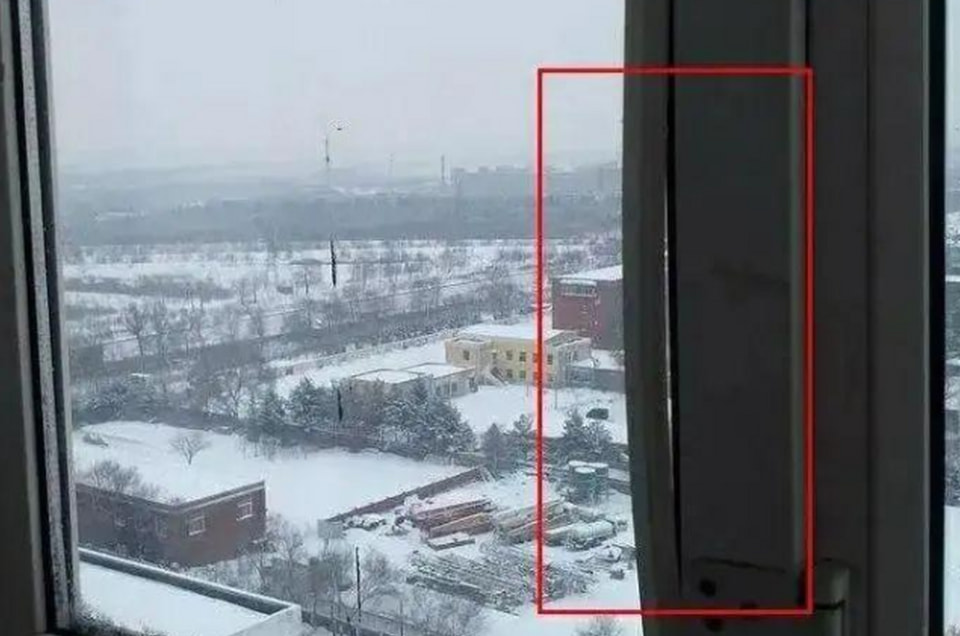
If you want to completely solve the problem of air leakage, you must first find the right cause. The repair methods for air leakage in different locations are completely different.
First, the aging failure of the sealing strip (the highest hair). The service life of the window tape is generally 5-8 years. After years of sun exposure, alternating heat and cold, it is easy to harden, shrink, crack, and lose elasticity in winter. After the window sash is closed, it cannot be pressed and fitted to the window frame, forming a continuous gap for air leakage, which is the main reason for air leakage in household windows.
Second, the hardware accessories are loose and worn. The handles, lock points, actuators, and hinges are loose, dislocated, and worn after long-term use, resulting in the windows not being closed tightly, locked firmly, and the window sash is suspended. It seems to be tightly closed, but there are actually overlapping gaps, and cold air continues to pour in.
Third, the interface between the window frame and the wall is cracked. The installation of styrofoam in the new house is not full, the wall of the old house settles, and the weathering glue ages and falls off, resulting in subtle cracks in the walls around the window frame, which belongs to concealed air leakage and cannot be cured by ordinary tape.
Fourth, the glass bead gap leaks air. The sealant around the glass cracks, falls off, and shrinks, and the outdoor cold air seeps in from the glass gap. The window feels the coldest and easiest to condense.
Fifth, the window deformation, sash sagging. Long-term switch bumps, thin-walled profiles, loose screws, resulting in sash falling, profile slight deformation, closed dislocation, uneven gaps, unilateral gap is too large and continuous air leakage.
Locate the air leakage point, without blind window replacement, low-cost maintenance can restore the sealing performance of doors and windows.
3. Quick self-examination method: accurately find the location of the window air leakage in 3 minutes
Candle flame detection, tissue detection practice diagram
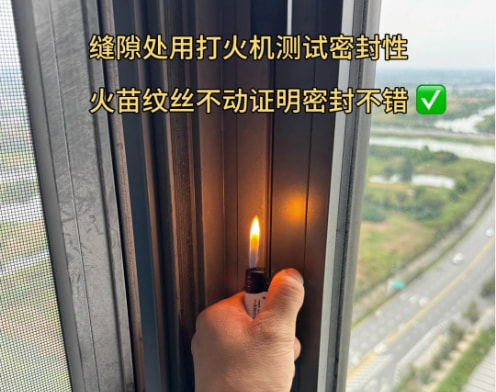
Many families cannot repair air leaks because they cannot find accurate air leakage gaps. Two professional and simple self-testing methods are recommended.
The first is the tissue test method. Close the doors and windows, lock the windows, and stick the light tissue on the four sides, corners, hinges, and lock points of the window frame. If the tissue flutters and bulges in a windless environment, it is the air leakage point.
The second is the candle flame test method. Light the candle and move slowly around the window frame. Where the flame shakes, deviates, and shakes violently, the cold air penetrates the gap.
Focus on four dead corners: the upper and lower corners of the window, the side of the hinge, the gap opposite the lock point, and the interface around the window frame wall. These four locations are the hardest hit areas by wind leakage in winter.
IV. Temporary solution for slight air leakage (suitable for renting and emergency use)
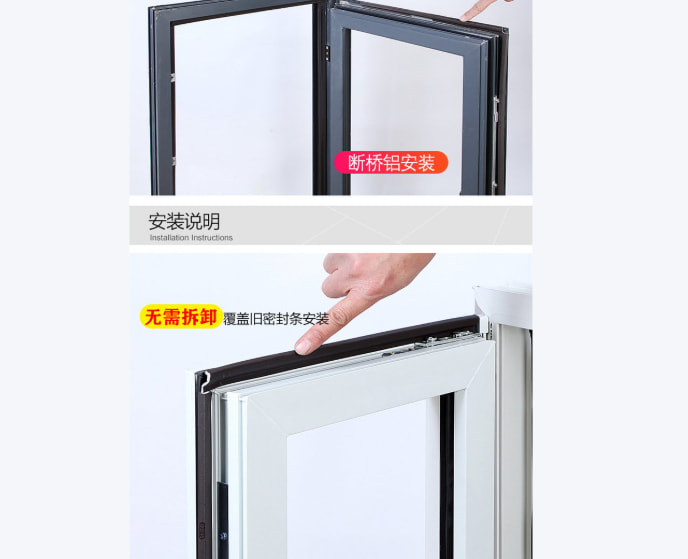
Window sealing strip, windproof tape installation renderings
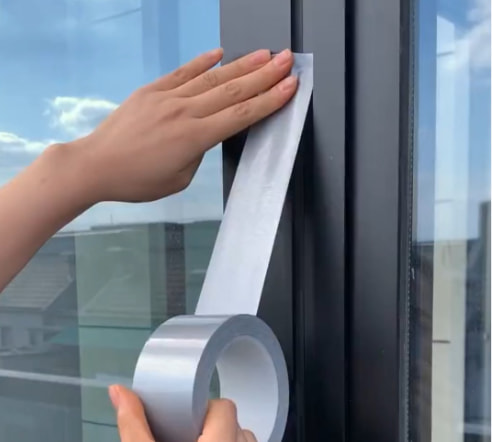
Small air leakage, low budget, short-term living, low-cost emergency plans can be adopted to quickly alleviate the problem of air leakage in winter.
First, paste the special windproof sealing strip for doors and windows. Select the EPDM foam sealing strip and top strip, paste it in the overlapping position of the window sash, fill the subtle gaps, soft fit, antifreeze and low temperature resistance, no hard in winter, and effectively block the penetration of cold air.
Second, the window gap sealing tape. Transparent windproof tape and masking sealant are attached to the outer gap of the window frame, which is waterproof, windproof and tightly sealed, suitable for slight cracking and air leakage of the window frame wall.
Third, paste the window thermal insulation film. The whole house window is pasted with thermal insulation and cold reduction film to reduce air convection, block cold air, reduce the cooling feeling of the window, and improve the overall thermal insulation effect.
The advantage of the emergency method is that it saves money, is fast, and does not need to be dismantled and unloaded; the disadvantage is that it is a palliative treatment rather than a root cause, and it needs to be replaced in the winter of the second year.
5. Professional repair plan for moderate air leakage (family mainstream radical treatment method)
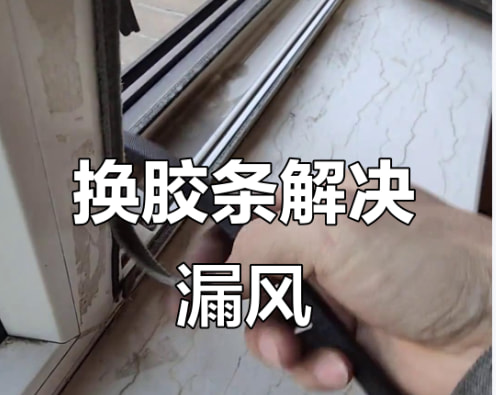
Replace the rubber strip, debug the hardware, and re-glue the construction map
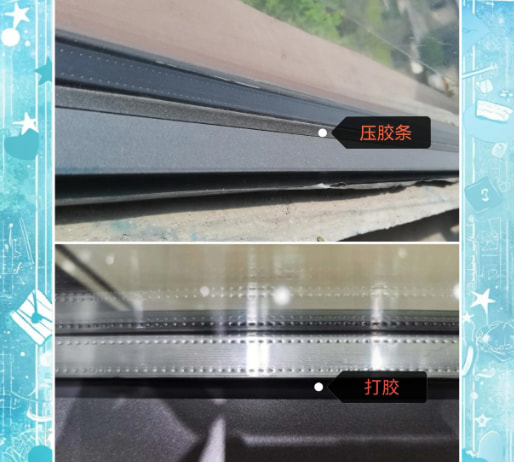
Most household windows have moderate air leakage, which can be completely solved by changing the rubber strip + adjusting the hardware + replenishing the seal, and the effect is comparable to that of new windows.
First, replace the low temperature resistant sealing strip throughout the house. Remove the original hardened, aging and broken old rubber strip, replace the high-density, antifreeze and high-rebound EPDM sealing strip, and cover the lap seams of the window frame to achieve a compression seal after the window is closed, so as to prevent air leakage from the gap at the root.
Second, debug and tighten the door and window hardware. Tighten the hinge screws and lock point screws, adjust the occlusal depth of the lock point, and make the window sash closed more tightly; for the sagging and lax closure of the window sash, fine-tune the high and low gaps of the hinge to eliminate air leakage in unilateral gaps; replace the severely worn lock points and actuators directly.
Third, re-glue the glass gaps. Remove the cracked old glue around the glass, clean up dust impurities, use neutral weather-resistant glass glue to re-seal, fill the gap between the glass and the bead and profile, and prevent cold air and water vapor from penetrating.
After completing the above three items, 80% of household window air leakage problems can be cured at one time, and the room temperature in winter will increase significantly, and the window will no longer be ventilated and cool.
Severe air leakage structural cure plan (wall gaps, installation defects)
Window frame foam filling, exterior wall weathering glue construction map
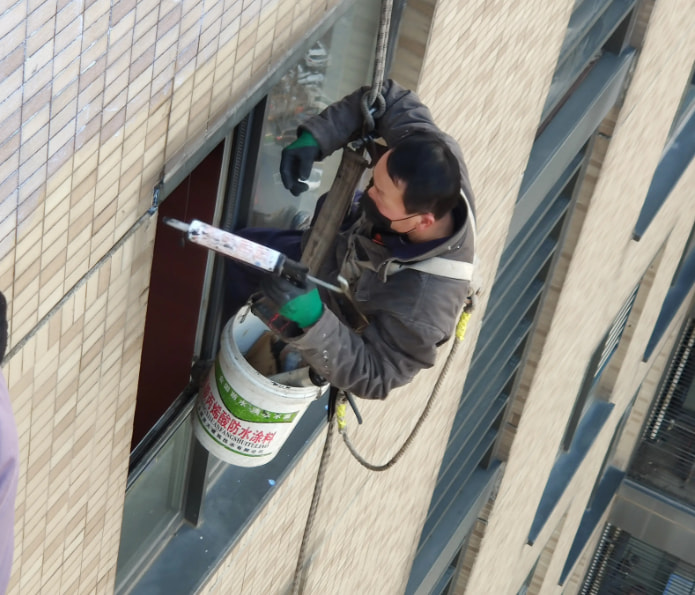
The air leakage between the window frame and the wall is a structural air leakage, which is manifested as long-term cold, moldy, and obvious air intake in windy days. Ordinary stickers are invalid and must be professionally rectified.
The first step is to remove the aging cracking and falling off external wall weathering glue and internal wall beauty glue around the window frame.
The second step is to check the gap between the window frame and the wall. If the gap is too large, fill it with high-density polyurethane styrofoam to fill it fully without leaving a hole, and block the air convection channel.
The third step is to apply weather-resistant sealant to the outer wall, which is waterproof and windproof, anti-aging, high and low temperature resistance, and isolates the penetration of outdoor cold air.
The fourth step is to hit the inner wall with anti-mildew beauty glue to beautify the closure and prevent indoor moisture return and mildew.
The old-fashioned installation of windows with cutting corners, foam voids, and cracked walls requires redoing the sealing and insulation structure in order to completely solve the persistent air leakage in winter.
Seven, sliding window air leakage special project solution
Sliding window track seal, windproof block installation diagram
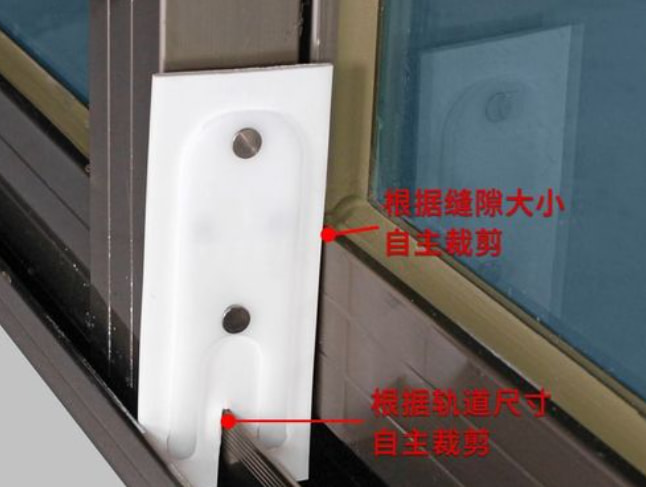
The sliding window is the hardest hit area by air leakage, with large track gaps, small overlap, weak sealing, and the most serious ventilation in winter.
Special solutions for sliding windows: install track windproof and dustproof tops, install sliding window windproof limit blocks, replace lap sealing strips; clean up track debris to ensure closure in place; adjust the height of the pulley to close the window sash tightly, leaving no gaps.
Old-fashioned sliding windows generally have the problem of insufficient overlap, and the installation of special windproof accessories can greatly reduce the influx of cold air.
Eight, common maintenance mistakes in window air leakage (the reason for the more repair, the more leakage)
Maintenance pit avoidance mind map
After many owners repair themselves, air leakage becomes more serious, mainly due to four major mistakes.
Misunderstanding 1: Only use ordinary scotch tape to seal the window. Ordinary tape is hard and cracked in winter, and the gap sealing is not tight, which is easy to leave glue stains and damage the paint surface of the window frame.
Misunderstanding 2: Only stick to the inside without sealing the outside. Cold air enters the interlayer from the outer gap and will still penetrate the room, so it must be double sealed inside and outside.
Misunderstanding 3: Stick the strip directly without changing the aging rubber strip. The original rubber strip is deformed and raised, and the superimposed sealing strip leads to lax windows and larger gaps.
Misunderstanding 4: Ignore hardware debugging. Only do sealing without adjusting the lock point, the window sash cannot be pressed, and the sealing strip cannot play a role.
Professional maintenance principles: first adjust the hardware, then change the rubber strip, and finally glue and seal, and the order error repair effect will be greatly discounted.
Full text summary
Summary diagram of the radical treatment plan for window air leakage
Window air leakage in winter is not a complete scrap of the window. Most of them are repairable problems caused by aging of the sealing system, loose hardware, and cracking of the interface. Slight air leakage can be treated with sealing strips and thermal insulation films for emergency treatment; moderate air leakage can be eradicated by replacing antifreeze rubber strips, debugging hardware, and glass sealing; severe structural air leakage can be completely blocked by redoing foam insulation and gluing inside and outside to seal.
In winter, timely resolution of window air leakage can not only improve indoor temperature, reduce heating and air conditioning energy consumption, eliminate the feeling of cold wind by the window, but also prevent window sill mildew, window frame rust and aging, and prolong the service life of doors and windows.
Correctly check the air leakage point, symptomatic construction, and repair according to the process. Without changing the window, the old doors and windows can be restored to the sealing and insulation effect of the new window level, so that the home is warm, quiet, and free of cold air penetration throughout the winter.