

The best way to insulate a sun room
The best way to insulate a sun room | Systematic insulation solution to completely solve stuffy sun exposure
First, the core principle of sun room stuffiness, why ordinary insulation is useless
Schematic diagram of heat conduction principle of sun room
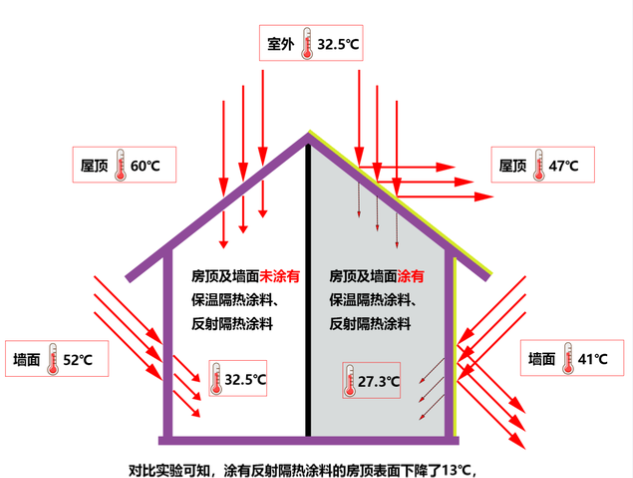
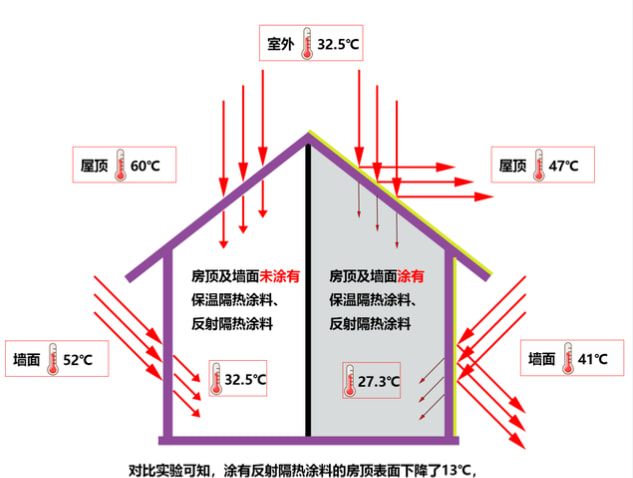
Many owners face the same problem when finishing a sun room: full marks for lighting, sultry steamers in summer, and cold dew in winter. Most people simply rely on film and curtains for heat insulation, and the effect is minimal. The root cause is that they do not understand the heating logic of a sun room. 90% of the heat in a sun room comes from direct heat radiation from the top glass, the shading coefficient of ordinary white glass is as high as 0.83, and nearly 80% of the solar energy directly penetrates the glass and enters the room, forming a greenhouse effect.
The heating up of the sun room belongs to the dual problem of heat radiation + heat accumulation: the top is continuously exposed to the sun and accumulates heat, the heat in the closed space cannot be discharged, the heat conduction in the gap of the profile is fast, and there is no air convection. A single partial heat insulation treats the symptoms but not the root cause. A truly professional sun room insulation must adopt a systematic plan of external heat blocking, internal temperature locking, heat elimination, and heat conduction resistance. Only by blocking heat from the source and diverting retained hot air can a constant temperature be achieved in all seasons. This paper gradually dismantles the current sun room insulation best, most durable, and cost-effective full set of methods, and distinguishes between exclusive plans for new house construction and old house renovation.
Second, the optimal core solution: outdoor front shading, heat insulation efficiency ranked first
Installation renderings of outdoor canopy shading on the sun roof
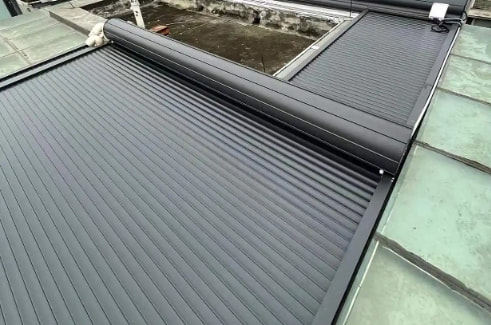
In all sun room insulation methods, outdoor smart shading is the most effective and fundamental method, with a heat insulation rate of 70% to 85%, far exceeding film, indoor curtains, and other internal insulation methods. It is also a standard process for high-end villa sun rooms.
The heat is isolated by the external sunshade fabric before it touches the glass, completely blocking the heat radiation from entering the room, and solving the problem of sun exposure and heating from the source. Mainstream high-quality external shading is divided into two types: electric canopy shading and louver shading: electric canopy can be opened and closed with one click, automatic shading on sunny days, and no light blocking on cloudy days; aluminum alloy outdoor louvers can adjust the angle, taking into account shading, ventilation and dimming.
Outdoor shading has absolute advantages over indoor heat insulation: internal shading can only block the heat that has entered the room, and the hot air still stays in the room; external shading directly isolates the heat source, and the temperature of the glass on the top of the sun room can drop by 20-30 ° C, and the indoor temperature can be reduced by 8-12 ° C. It truly realizes normal living in summer and eliminates the feeling of steamer. Suitable for all old sun rooms that have been built, no need to dismantle and modify the structure, and the transformation is the most cost-effective.
III. Basic hardcore thermal insulation: Upgrade high-performance thermal insulation glass to eliminate hidden dangers of heat transmission
Low-E insulating glass structure details
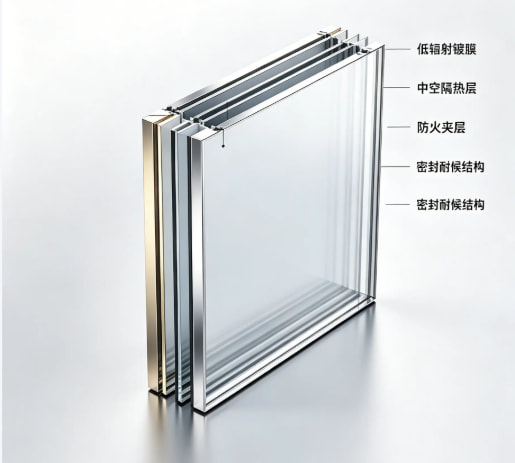
Glass is the sun room's largest thermal conductivity loophole. Ordinary single-layer glass and ordinary insulating glass have extremely poor thermal insulation capabilities, which is the core hardware problem of the sun room's continuous stuffiness. The first choice for new house construction is to upgrade professional thermal insulation glass to solve the problem of heat transfer in one step.
At present, the best collocation in the industry is Low-E low-radiation hollow tempered glass, and high-end apartments can be upgraded to three-glass two-cavity insulating glass. Low-E coating can reflect more than 90% of infrared heat sources and block solar thermal radiation. The hollow layer is filled with dry air or argon, cutting off the heat conduction path, and the shading coefficient can be reduced to less than 0.3, which meets the constant temperature standard of the four-season sun room.
It is recommended to choose laminated Low-E insulating glass for the top surface, taking into account thermal insulation, explosion-proof and waterproof performance. The side facade windows are matched with conventional Low-E insulating glass. The whole set can greatly reduce the basic heat transmission, avoid the glass absorbing heat and continuously radiating heat to the room. In the case of the old sun room without removing the roof, nano-thermal insulation paint can be sprayed, the light transmission is not shaded, and the infrared barrier rate can reach 95%, which is suitable for owners who do not want to sacrifice daylighting.
Fourth, structural heat insulation: broken bridge aluminum system profiles, blocking the frame heat conduction channel
Schematic diagram of the structure of aluminum thermal insulation strip of broken bridge
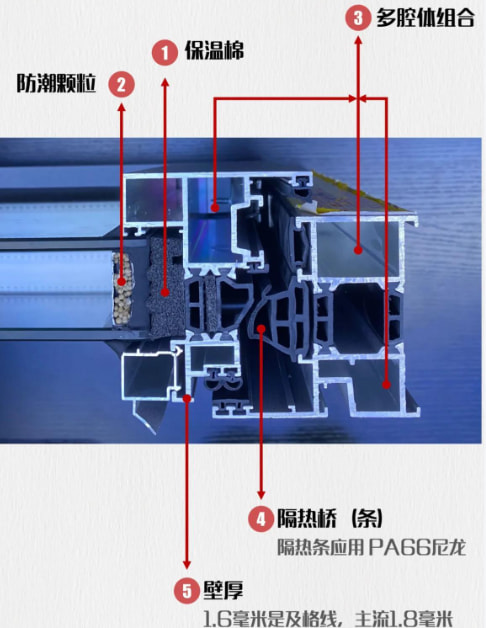
Many owners only pay attention to glass heat insulation and ignore the heat conduction problem of profiles. Ordinary non-broken bridge aluminum alloy profiles are metal heat conductors. They absorb heat quickly at high temperatures in summer, and the frame of the whole house is hot, which continues to conduct heat to the room. At the same time, they quickly dissipate heat and condensate in winter.
Professional constant temperature sun room must use broken bridge aluminum system profiles, rely on PA66 nylon insulation strips to disconnect the inner and outer aluminum walls, and completely cut off the metal heat conduction path. With multi-cavity sealing structure and EPDM sealing strips, it can not only insulate heat, but also eliminate air leakage, dustproof, and sound insulation, achieving warm winter and cool summer.
Low-end sun rooms use ordinary aluminum alloys and plastic steel profiles. No matter how the sunshade film is applied, the thermal conductivity problem of the frame cannot be solved, and there are always problems of local stuffiness and large temperature difference. This is also the core gap between professional sun rooms and ordinary simple sun rooms.
Ventilation and heat insulation: hot and cold convection exhaust, quickly discharge accumulated waste heat
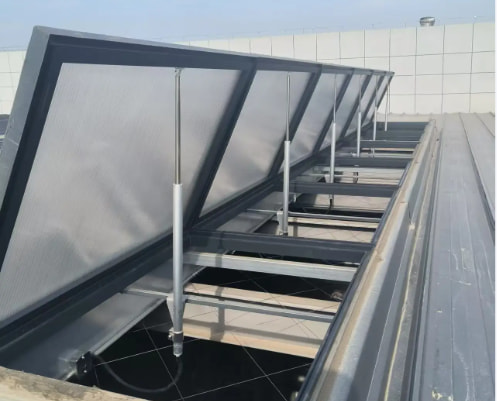
Schematic diagram of ventilation convection for electric sunroof in sun room
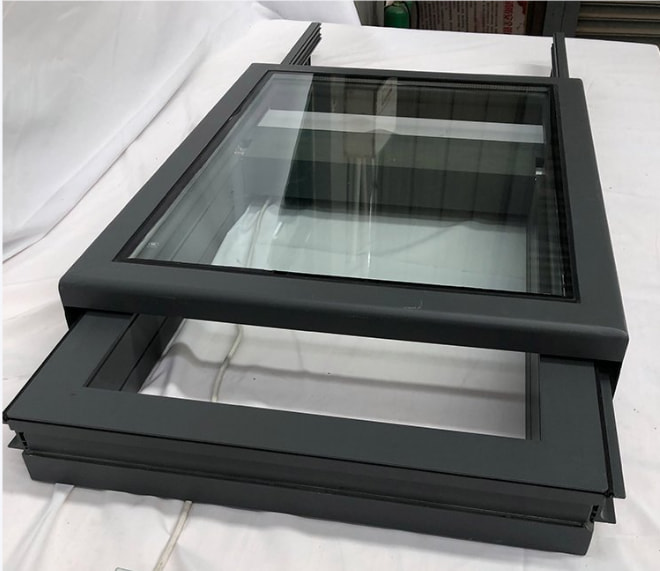
The core of heat insulation is not only to "block heat", but also to "remove heat". The sun room is closed and has no ventilation. Even if the sun is well shaded and insulated, the residual heat cannot be dissipated, and it will still be stuffy. Professional heat insulation must build a high and low convection ventilation system.
The top is equipped with an electric smoke exhaust sunroof and a ventilation sunroof as a high-level trend; the side windows retain a low-level trend, using the physical principle of hot air rising to form natural hot and cold convection. High-temperature hot air is quickly discharged from the top sunroof, and outdoor cool air enters from a low position to continuously replace indoor hot air to avoid heat accumulation.
In daily use, the top sunroof convection ventilation can be turned on during high temperature periods, which can quickly cool down 4-6 ° C. With the intelligent wind and rain sensing system, it can be automatically turned off in rainy days and automatically ventilated in sunny days, without manual operation. Large-area, large-span sun room, silent exhaust fan can be installed to assist forced exhaust, completely solving the hot dead angle.
6. Auxiliary upgrade: top thermal insulation pavement, exclusive thermal insulation method for old house renovation
Sunshine roof extruded board insulation paving construction map
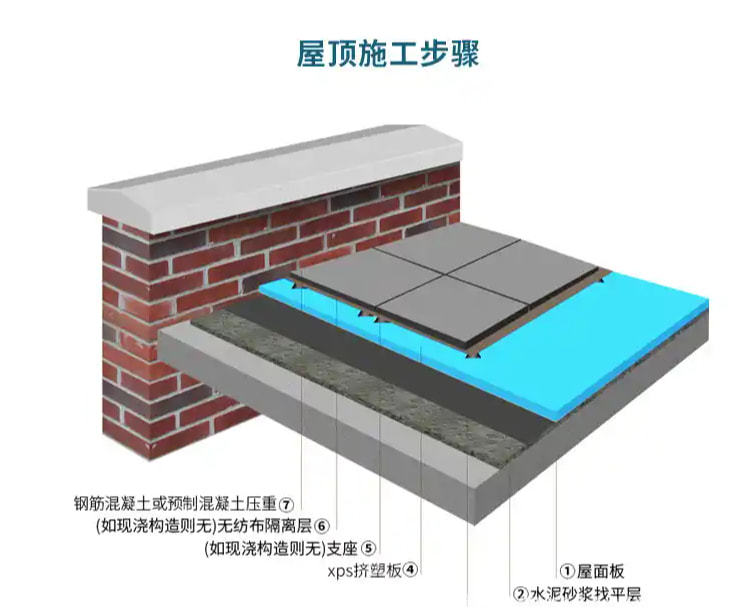
For old sun rooms that cannot be installed with outdoor shading, internal thermal insulation paving on the top surface is the optimal renovation plan, suitable for units with moderate budget and no desire for large-scale renovation.
In the keel gap of the sun roof, high-density extruded polystyrene board and aerogel thermal insulation cotton are laid, and packaged with waterproof and thermal insulation aluminum plate to form an indoor thermal insulation layer. This process can lock the indoor temperature and block the secondary radiation of the residual heat on the top surface of the glass. At the same time, it has the functions of sound insulation, waterproof and anti-condensation. The thermal insulation effect is stable and the service life is long.
With the dual assistance of indoor honeycomb curtain and thermal insulation louvers, the thermal insulation effect can be further improved. It should be noted that indoor auxiliary thermal insulation can only be used as a supplement, not a substitute for external shading and high-performance glass. Multiple combinations can achieve the best constant temperature effect.
Seven or four seasons adaptation: partition insulation matching plan (common for new houses/old houses)
Schematic diagram of the whole house insulation system in the sun room
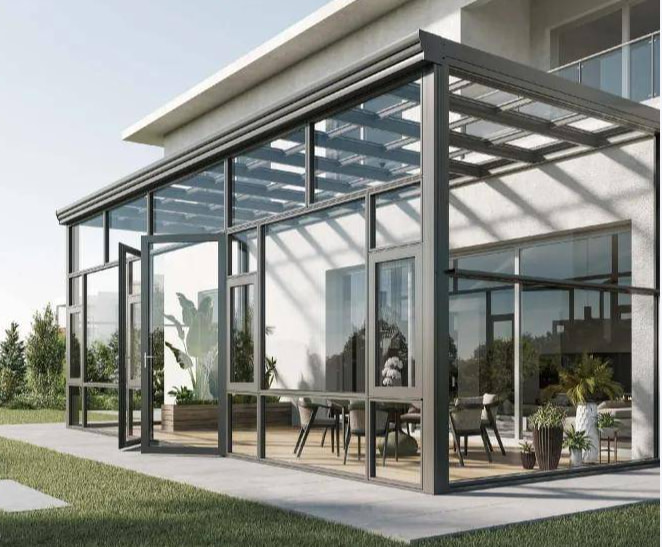
New house custom sun room (one-step optimal solution)
Outdoor electric canopy shading + Low-E insulating glass + broken bridge aluminum system profile + high and low convection skylight, the whole set of systematic heat insulation, no need for later transformation, four seasons constant temperature, can be used as tea room, study, leisure room long-term residence.
Old house sun room renovation (cost-effective solution)
Glass nano thermal insulation coating + top thermal insulation pavement + installation of electric ventilation sunroof + indoor thermal insulation curtains, no need to dismantle or modify the main structure, quickly solve the problem of stuffy heat, and have high cost performance.
Sun room on the top floor of the west sun (exclusive to heavy sun exposure)
Upgrade thickened external sunshade louvers + three-glass two-chamber glass + forced exhaust system, multiple protections to resist continuous high temperatures in the west and prevent extreme muggy heat.
Eight, sun room insulation common misunderstandings, 90% of owners step on the pit
Heat insulation pit avoidance knowledge popular science map
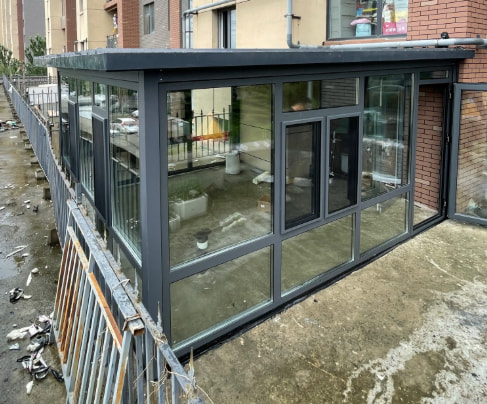
Misunderstanding 1: Only stick the thermal insulation film to solve the stuffy heat. Ordinary thermal insulation films can only slightly insulate and cannot block heat accumulation. They are still sultry in summer, only UV protection, and have no substantial cooling effect.
Misunderstanding 2: Only rely on window opening for ventilation. Single ventilation has no shade to block heat, and hot air continues to pour in, and the ventilation effect is a drop in the bucket.
Myth 3: It is entirely insulated by indoor curtains. Indoor curtains block the heat that has entered the room, and the hot air accumulates between the curtains and the glass, resulting in higher temperatures.
Misunderstanding 4: Ignore the heat insulation of profiles. Non-broken bridge profiles continue to conduct heat, and no matter how thick the glass is, it cannot achieve constant temperature.
Professional summary: A single thermal insulation method has limited effect. External shading, heat resistance, high-performance glass, broken bridge profiles, heat resistance, and convection ventilation are the most scientific and effective methods for solar room insulation.
Full text summary
Mind map of core method of heat insulation in sun room
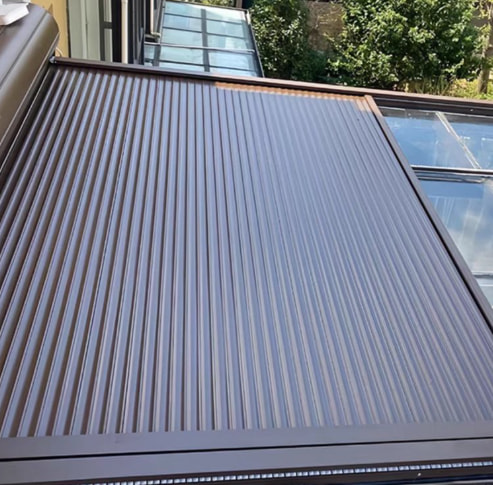
If the sun room wants to completely bid farewell to the hot summer and cold winter, it cannot rely on a single prescription. It must build a complete systematic heat insulation system. At present, the first thermal insulation effect is outdoor front shading, which blocks solar thermal radiation from the source, and has the most significant cooling effect. With Low-E thermal insulation glass and broken bridge aluminum system profiles to block heat conduction, relying on high and low convection skylights to discharge accumulated residual heat, supplemented by top insulation and intelligent auxiliary equipment, the sun room can achieve constant temperature in all seasons.
Customization of new houses gives priority to a full set of system insulation, eliminating hidden dangers in one step; renovation of old houses gives priority to a combination of external shading + ventilation + coating, which is cost-effective and efficient to upgrade. Avoid ineffective misunderstandings such as film, single window, and pure internal shading, and scientifically match heat insulation solutions, which can not only retain the advantages of transparent lighting in the sun room, but also completely solve the problem of sun exposure and sultry, so that the sun room can truly become a leisure space available throughout the year.