

Garden fence
What is a garden guardrail? 2026 Garden guardrail material classification, specifications, construction and purchase guide
Overview of the foundation of garden guardrails: indispensable supporting facilities for garden landscapes
Garden guardrail landscape matching renderings
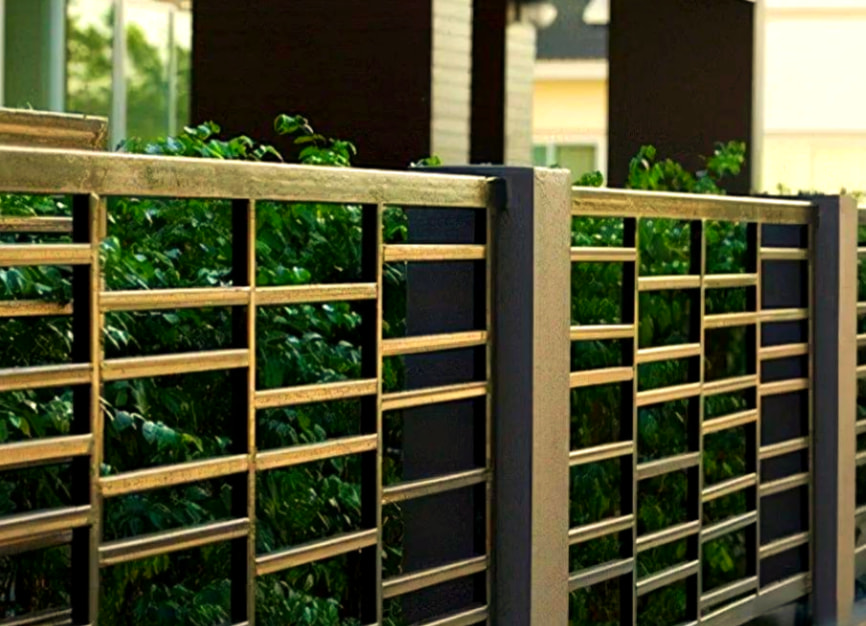
Garden guardrails, also known as landscape guardrails and garden fences, are essential functional + decorative supporting facilities for urban parks, municipal green belts, community gardens, courtyard landscapes, and scenic walks. Different from industrial guardrails and construction site fences, the core design logic of garden guardrails is not high-intensity isolation, but four functions: safety protection, landscaping, space zoning, and ecological coordination.
In the modern garden engineering system, garden guardrails are refined landscape engineering accessories, which must not only meet municipal safety specifications, but also adapt to the overall style of green plants, water features, trails and lawns. The main uses include: lawn boundary division, river waterfront protection, trail edge isolation, flower bed green plant protection, landscape area partition, pedestrian safety protection, etc.
With the aesthetic upgrade of garden landscape and the update of safety specifications, the traditional simple iron fence has been gradually phased out. At this stage, the mainstream garden fence pays more attention to weather resistance, environmental protection, aesthetic unity and structural safety, and has become a key item for garden engineering acceptance. This article gradually explains the mainstream materials of garden guardrails, national standard specifications, performance advantages, construction standards, applicable scenarios and purchasing skills, so as to help the engineering side and owners fully understand the professional knowledge.
Second, the mainstream material classification and professional performance comparison of garden guardrails
Material comparison chart of four garden guardrails
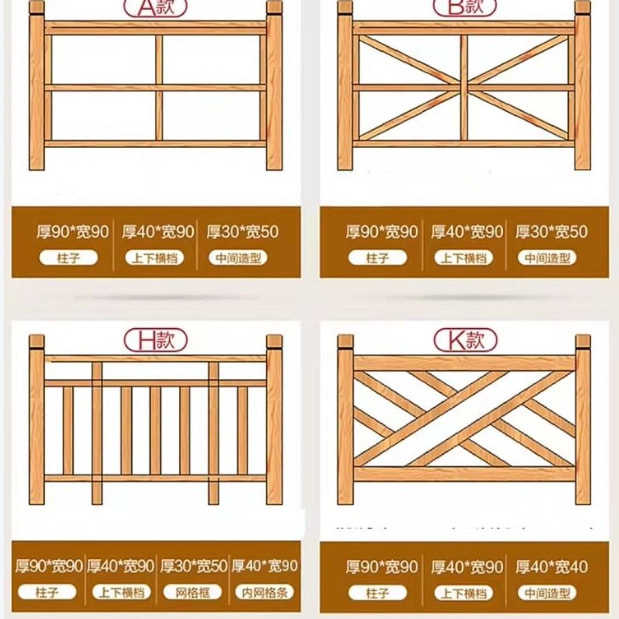
At present, the commonly used guardrail materials for garden projects in 2026 are divided into four categories: zinc steel garden guardrail, aluminum art garden guardrail, PVC garden guardrail, and stone garden guardrail. Each material has great differences in technology, lifespan, performance, and adaptation scenarios.
First, zinc steel garden guardrail (the mainstream model of the project)
Using hot-dip galvanized steel pipe substrate + electrostatic spraying process, the substrate is rust-proof, the surface layer is anti-corrosion, the overall hardness is high, the impact resistance is strong, and the cost performance is the highest. The surface does not peel paint, rust-free, maintenance-free, the color can be customized grass green, dark green, white, gray, perfect for municipal greening. Suitable for large-scale parks, green belts, and lawn isolation, it is the preferred material for municipal garden bidding.
Second, aluminum art garden guardrail (high-end landscape models)
Using 6063-T5 aviation aluminum profile, the overall lightweight, high strength, never rust, support complex carving, arc shape, retro new Chinese design. The surface adopts fluorocarbon paint spraying process, which is resistant to sun exposure, rain corrosion, and has advanced texture. It is mainly used in high-end scenes of villa gardens, scenic boutique landscapes, and courtyard waterscapes.
Third, PVC garden guardrail (economical simple model)
The whole body PVC polymer material, insulation and environmental protection, bright colors, light installation, low price. The disadvantage is that the anti-aging is general, the low temperature is brittle, and the impact resistance is weak. It is only suitable for residential lawns, small flower beds, and temporary landscape partitions, not suitable for high-risk areas such as rivers and high-difference sections.
Fourth, the stone garden fence (retro classic)
Mainly granite, white marble, bluestone, using tenon and mortise structure installation, simple and atmospheric texture, life-long weather resistance, no maintenance. Mostly used in antique gardens, ancient scenic spots, river landscapes, Chinese gardens, highly decorative, but high cost, heavy weight, long construction period.
III. National norms and standards for garden guardrails (professional core parameters)
Schematic diagram of national standard parameters of garden guardrail
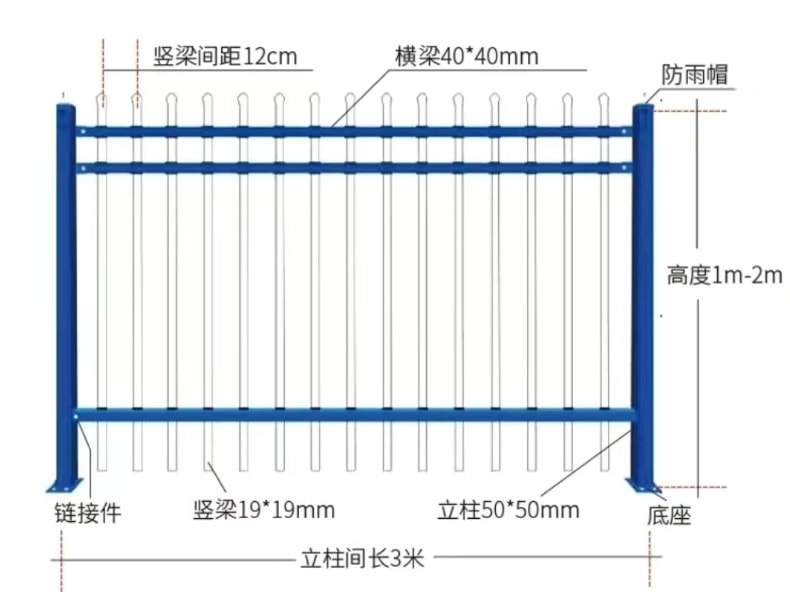
Many small projects are easy to ignore the specifications, resulting in unqualified acceptance. According to the latest "General Technical Conditions for Public Space Safety Facilities" and "Specifications for Landscaping Engineering Construction", garden guardrails have clear and rigid standards:
1. Safety height standard: the height of ordinary lawn guardrail is 30-60cm; the height of trail isolation guardrail is 80-100cm; the height of guardrail in areas facing water, cliffs, and height differences exceeding 0.8 meters is not less than 110cm.
2. Vertical pole clearance standard: public gardens, children's activity areas, the vertical pole spacing is ≤110mm to prevent children from getting stuck, climbing and falling.
3. Structural stress standard: the overall resistance of the garden guardrail to horizontal thrust is ≥0.5KN/m, and the impact strength of the high-risk waterfront area is increased to 1.5KN/m to prevent strong winds, extrusion deformation and collapse.
4. Appearance safety standards: The guardrail prohibits sharp edges and corners, burrs and sharp thorns, and all ends must be sealed and capped to ensure the safety of pedestrians.
5. Installation spacing: Conventional column center spacing is within 2 meters, and reinforced columns must be added to large-span areas to ensure overall stability.
Regular garden projects must be constructed in strict accordance with the above parameters, which is also the core basis for distinguishing between ordinary fences and professional garden guardrails.
Fourth, the core functional advantages of garden guardrails adapt to the needs of garden landscapes
Garden guardrail function details display
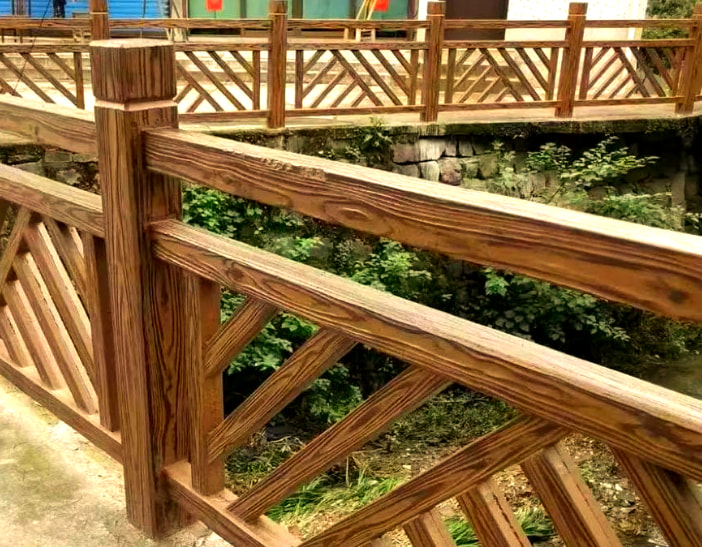
1. The landscape is highly decorative and integrates with the natural environment
The color scheme of the garden guardrail is soft, the shape is simple and transparent, and it will not block the vision of green plants. It can not only divide the space, but also set off the landscape of flowers and plants, improve the overall sense of hierarchy of the garden, and avoid the depression of traditional walls.
2. Protection and isolation, protection of green vegetation
It effectively prevents pedestrians from stepping on lawns, climbing over flower beds, destroying green plants, reducing the cost of garden maintenance in the later stage, and protecting greening achievements. It is the basic support for urban greening maintenance.
3. Weather-resistant and durable, suitable for outdoor complex environments
High-quality zinc steel and aluminum art guardrails are treated with anti-corrosion, anti-rust, and anti-ultraviolet treatment, which can resist sun exposure, rainstorm, and frost. The outdoor service life can reach 15-25 years. Long-term use will not fade, rust, or deform.
4. Easy installation and high engineering adaptability
Standardized assembled structure, no need for welding, no need for complex civil construction, on-site splicing and fixing, fast construction speed, no damage to the original garden floor, suitable for old and new garden renovation, municipal emergency repair projects.
Selection and matching scheme of garden guardrails in different scenarios
Garden scene guardrail matching renderings
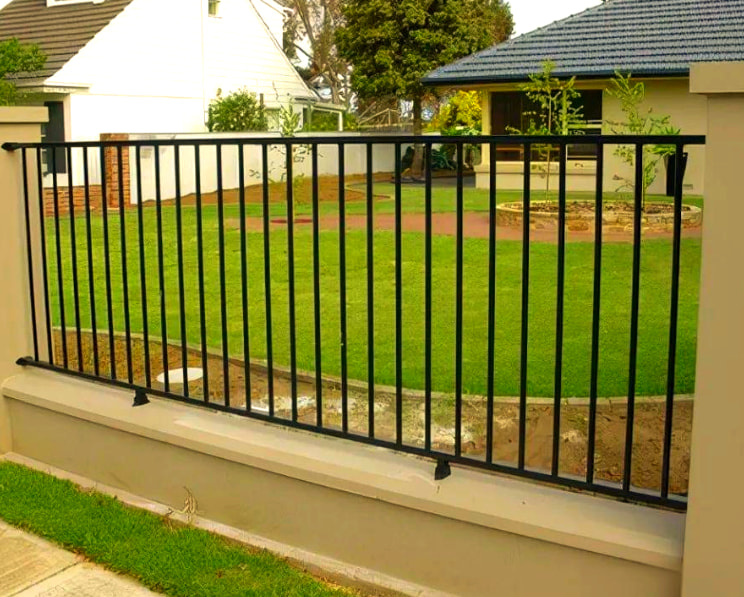
1. Municipal parks and urban green belts
Zinc steel lawn guardrail is preferred, mainly green, simple and transparent, cost-effective, unified and beautiful, suitable for large-scale standardized construction, in line with municipal acceptance standards.
2. Residential gardens and flower bed landscapes
Optional PVC white guardrail or light zinc steel guardrail, fresh appearance, light and beautiful, suitable for community leisure greening scene.
3. Villa courtyards, high-end scenic spots, antique gardens
The use of aluminum art carved guardrail, stone guardrail, advanced texture, rich shape, suitable for high-end landscape positioning, improve the overall grade.
4. River courses, ponds, and waterfront landscape areas
It is necessary to choose thickened zinc steel or aluminum alloy high-strength guardrails, and strictly implement the design of vertical bars with a height of more than 1.1 meters to eliminate potential safety hazards. Simple PVC guardrails are prohibited.
Standard construction process for garden guardrails (professional engineering steps)
Garden guardrail construction flow chart
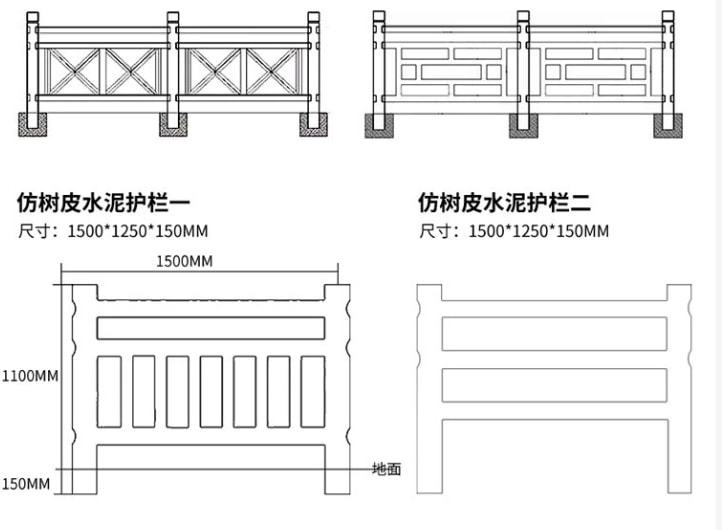
The construction of regular garden guardrails is divided into five steps to ensure a stable and beautiful appearance and acceptance standards:
Step 1: On-site line positioning. According to the garden drawings, accurately mark the column points, avoid green plant roots and pipelines, and ensure that the straight lines are flat and the spacing is uniform.
The second step: foundation embedded fixed. Using concrete embedded, expansion screws fixed two ways, soft soil foundation must be deepened embedded, to prevent the later tilt.
Step 3: Column installation and leveling. Ensure that all columns are vertical, uniform in height, and aligned in a straight line, without height difference or inclination.
Step 4: The cross beam and vertical rod are assembled and spliced. Snap-on and bolt-on fixation, the connection is tightly fitted, and there is no loose gap.
Step 5: Overall debugging, finishing and cleaning. Check firmness, flatness, and appearance defects, clean up construction waste, protect garden green plants, and deliver for acceptance.
Seven, garden fence purchase and engineering pit avoidance guide
Guardrail purchase pit avoidance popular science map
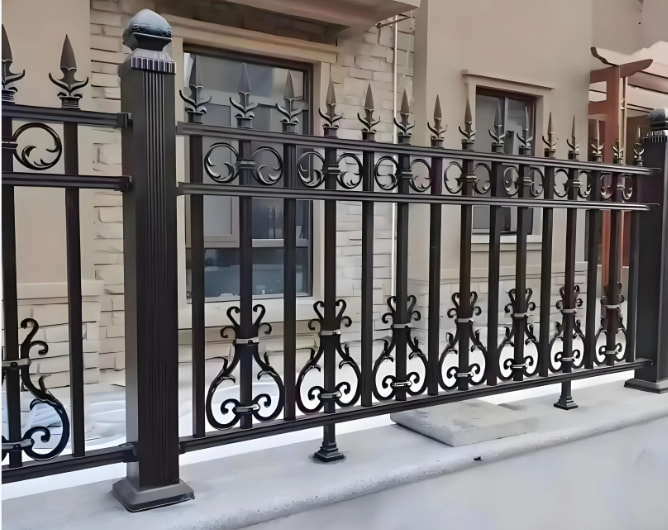
1. Only look at the low price without looking at the substrate: low-cost guardrails mostly use thin-walled pipes and recycled materials, with insufficient wall thickness, no galvanized layer, short-term rust deformation, and high project rework costs.
2. Ignore the safety spacing: children's areas and river areas are too spaced, the height is insufficient, and the later acceptance fails, which poses a major safety hazard.
3. Cut corners in the process: no electrostatic spraying, no anti-rust treatment, the surface layer is easy to peel and paint, and the overall aging is 1-2 years.
4. Mismatched scenes use materials indiscriminately: PVC for water and ordinary iron bars for high-end scenic spots, resulting in inconsistent grades and substandard safety.
Professional advice: choose thickened zinc steel guardrails for municipal projects, aluminum art guardrails for high-end landscapes, and standard PVC guardrails for temporary greening, and strictly match materials and specifications according to the scene.
Full text summary
Garden guardrail is a core supporting facility that integrates safety protection, space zoning, landscaping, and greening protection in modern landscape engineering, and has long bid farewell to simple fence isolation. In 2026, the mainstream of garden engineering will be zinc steel and aluminum art guardrails, with stone and PVC materials to adapt to different budgets and scenarios.
Regular garden guardrails must comply with the national height, spacing, and impact safety specifications, and the construction follows a standardized process to ensure beautiful, durable, safe, and smooth acceptance. Whether it is municipal greening renovation, community garden upgrading, scenic landscape construction, or courtyard greening decoration, selecting the right materials and standardizing construction can not only improve the overall appearance of the garden, but also ensure outdoor safety for a long time, and reduce later maintenance costs. It is a key part of the fine construction of the garden landscape.