

Waveform guardrail manufacturer
Waveform guardrail manufacturer | National standard waveform beam steel guardrail source factory, process, selection, procurement full analysis
First, the basic cognition of waveform guardrail manufacturers
Schematic diagram of disassembly of two-wave and three-wave waveform guardrail structure
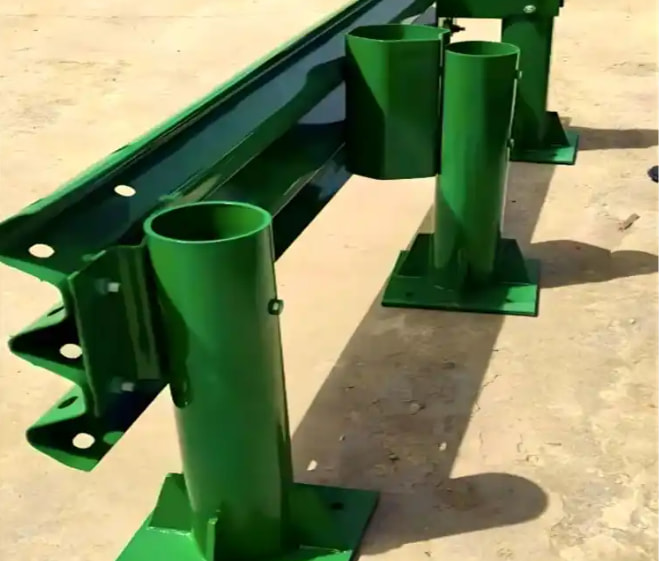
Corrugated guardrail, scientific name corrugated beam steel guardrail, belongs to road semi-rigid anti-collision protection facilities, and is the most widely used protection product in highway traffic safety projects. Many project purchasers, municipal units, and road construction parties will look for professional corrugated guardrail manufacturers when inviting tenders for projects, but many purchasers cannot distinguish between dealers and source manufacturers, and are prone to problems such as thickness reduction, non-compliance with anti-corrosion standards, and poor acceptance.
According to the national standard GB/T 31439 standard, the waveform guardrail relies on the deformation of the waveform plate to absorb the impact energy of the vehicle, buffer the impact force of the vehicle, prevent the vehicle from rushing off the road, and reduce the risk of accident casualties. It is widely used in highways, national and provincial roads, rural highways, scenic roads, municipal ramps, parking lot slopes and other scenes. The semi-rigid characteristics are different from rigid concrete guardrails and flexible rope guardrails, and it has the advantages of buffering energy absorption, easy repair, and moderate cost.
The regular waveform guardrail manufacturer is a physical factory with an integrated production line of roll forming, punching, hot-dip galvanizing and spraying. It can independently produce a full set of accessories for guardrail plates, columns, anti-resistance blocks, brackets, ends, and high-strength bolts. It supports customization according to project drawings, arc processing, and special-shaped end processing. This paper gradually explains the production process, product classification, anti-corrosion scheme, quality inspection standards, and procurement avoidance points of waveform guardrail manufacturers, helping the engineering side find a reliable source manufacturer and ensure the smooth acceptance of the project.
Second, waveform guardrail product classification and national standard specifications, manufacturer selection basis
Comparison chart of two-wave guardrail and three-wave guardrail
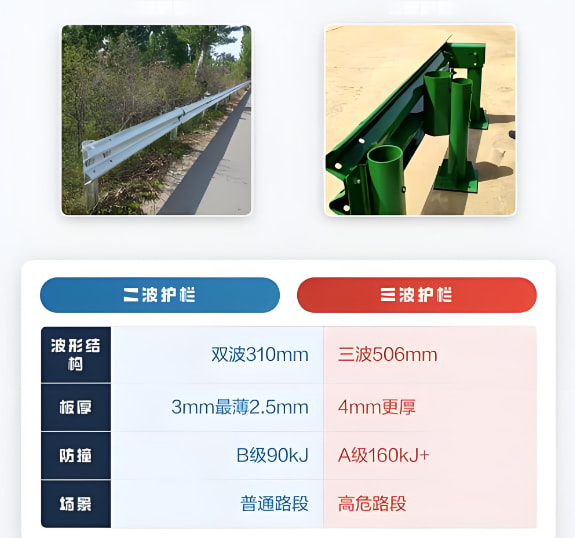
Professional wave guardrail manufacturers, the mainstream products are divided into two wave wave guardrail, three wave wave guardrail two series, supporting anti-collision grades B, A, SB, SA, SS, different grades correspond to different road risk factors.
Two-wave waveform guardrail plate conventional size: 4320mm310mm85mm, plate thickness 3.0mm, 4.0mm, mostly used for rural roads, county roads, ordinary municipal roads;
Three-wave waveform guardrail plate conventional size: 4320mm506mm85mm, plate thickness 4.0mm mainly, stronger anti-collision performance, mostly used for high-speed, steep slopes, cliffs, high-risk road sections.
Common specifications of columns: 114mm, 140mm round tube column, 130mm square tube column, wall thickness 4.0mm, 4.5mm, 6mm; supporting accessories include anti-resistance blocks, brackets, ends, gradual change sections, splicing high-strength bolts. In low temperature and cold areas, manufacturers will choose Q235D steel, and Q235B carbon steel is used in ordinary areas to ensure that the steel does not crack and toughness meets standards in low temperature environments.
At the same time, the manufacturer can produce special customized models: curved guardrail, variable height guardrail, central partition guardrail, open movable guardrail, anti-collision end, transition plate, suitable for tunnel entrances and exits, interchanges, sharp bends and other special road sections.
Third, the core production process of the source manufacturer of the waveform guardrail
The actual picture of the automatic production line of the waveform guardrail
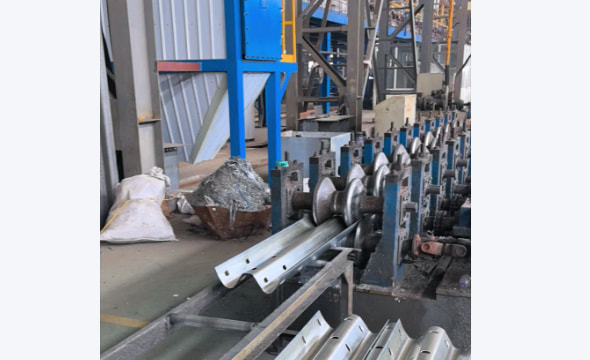
The gap between low-priced guardrails and national standard guardrails on the market is rooted in the production process. Complete process of regular waveform guardrail manufacturers: raw materials entering the factory for inspection, uncoiling, leveling, continuous roll forming, positioning, punching, cutting, correcting, grinding, anti-corrosion treatment, quality inspection, packaging, loading and delivery.
Roll forming is a key process. Continuous rolling equipment is used to ensure uniform waveform curvature and no distortion of the plate body. The punching process requires a uniform position of the screw holes, and the hole spacing error is controlled within the allowable range of the national standard to ensure on-site splicing and bonding, and there will be no situation where the bolts cannot match the holes. Many small workshops use simple equipment, and the forming plate is twisted and the hole position deviation is large. During construction, holes are forcibly punched, which destroys the structural strength.
The most important part is the anti-corrosion process. The mainstream anti-corrosion process is divided into three types: hot-dip galvanizing, hot-dip galvanizing + electrostatic spraying, and epoxy zinc-based coating, which is also the place where the price difference between manufacturers is the largest. Before anti-corrosion, all components must be degreased and rust removed to ensure the adhesion of the coating and prevent peeling and falling off.
Detailed explanation of the three major anti-corrosion processes of waveform guardrail manufacturers
Comparison of details of hot-dip galvanized guardrail and spray guardrail
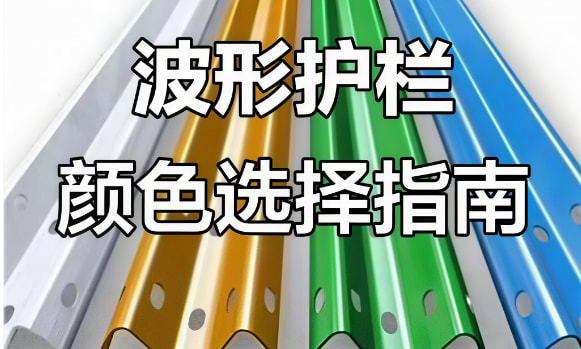
Waveform guardrail long-term open-air use, sun and rain, salt and alkali corrosion, rain and snow initialize, anti-corrosion process directly determines the service life, professional manufacturers will recommend solutions according to the project location environment.
The first type is pure hot-dip galvanizing: the thickness of the zinc layer is ≥85 μm, the anti-rust ability is strong, suitable for inland dry roads, the service life is 15-20 years, and the cost is moderate. It is a common solution for national and provincial roads;
The second type, hot-dip galvanized + electrostatic spraying (galvanized spraying): galvanized base, outer polyester powder high temperature curing, color can be selected grass green, silver gray, white, both rust-proof and beautiful, scenic spots, municipal roads are preferred, UV resistance, not easy to fade;
The third type is epoxy zinc-based anti-corrosion: environmentally friendly coating, free of heavy metal pollution, meeting strict environmental control areas, excellent salt spray test performance, suitable for coastal salt spray areas.
It is necessary to remind: inferior manufacturers will use cold galvanizing and painting instead of hot-dip galvanizing. The coating is thin, the adhesion is poor, and a large area will rust in half a year. The maintenance cost in the later stage of the project is extremely high, and the acceptance cannot be passed.
Fifth, the national standard quality inspection system of the waveform guardrail manufacturer
Guardrail salt spray test, thickness test laboratory diagram
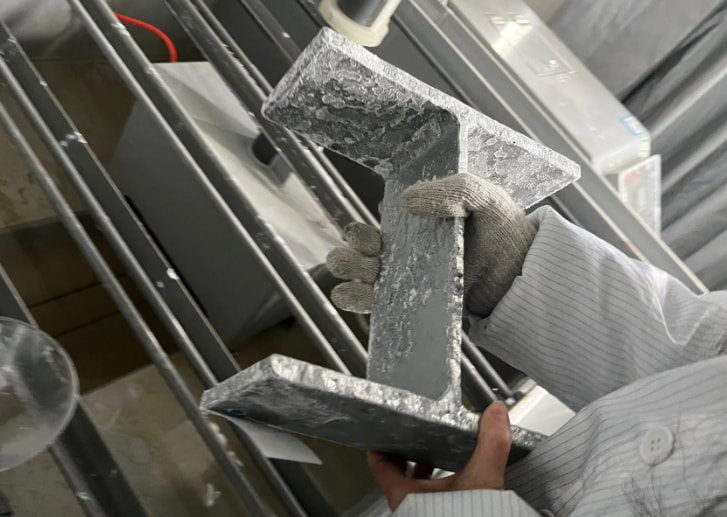
Manufacturers of waveform guardrails that meet the requirements of traffic engineering bidding must establish a complete set of quality inspection processes, retain samples for each batch of products, and issue product certificates and test reports.
The inspection items include: substrate thickness detection, zinc layer thickness detection, mechanical tensile test, salt spray corrosion test, external dimensional tolerance, bolt tensile load test. The national standard requires the overall tensile load of splicing high-strength bolts ≥133kN to ensure that the joint will not be directly broken during impact.
Regular manufacturers implement a sampling system: raw materials enter the factory for sampling, plate type sampling after molding, coating sampling after anti-corrosion is completed, and unqualified products are directly reworked. Many middlemen do not have the ability to detect, only look at the appearance, and cannot control the thickness of the zinc layer and substrate. There is often a problem of "standard 4mm, actual 3.2mm" negative difference stealing materials, which is the biggest risk point in engineering procurement.
Six, waveform guardrail production source manufacturer supporting services
Waveform guardrail site installation guide construction map
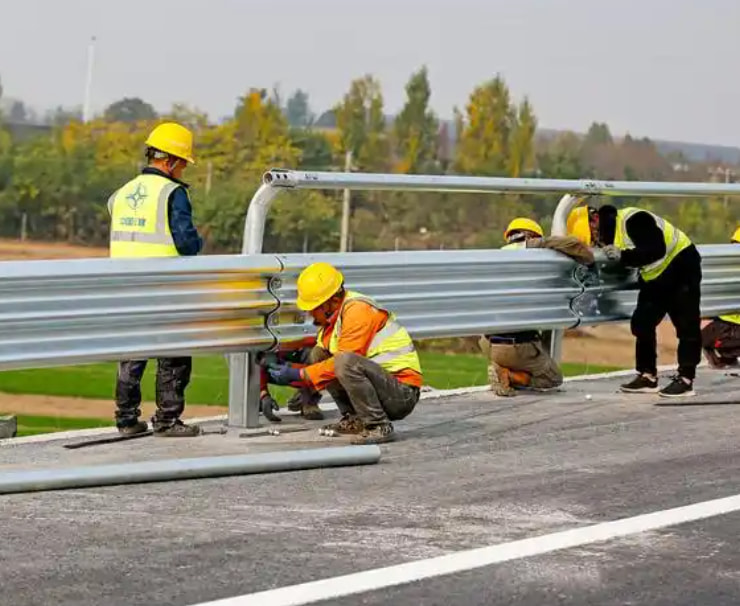
Reliable waveform guardrail manufacturers do not simply sell plates, but provide a complete set of transportation facilities supporting services to meet the needs of the entire project process.
First, the drawing deepening and program optimization: after getting the construction drawings, the manufacturer's technicians review, give anti-collision grade suggestions for sharp bends, steep slopes, and bridge sections, and customize the arc plate and gradually change the end;
Second, special-shaped processing: curved arc plate, variable height column, non-standard end processing, it is difficult for small workshops to complete high-precision arc bending;
Third, supporting supply: guardrail plates, columns, anti-resistance blocks, bolts, and gaskets are fully equipped, and there is no need to purchase from many parties to reduce color difference and mismatch of accessories;
Fourth, logistics and delivery: large factories always have spot inventory, conventional two-wave guardrails can be shipped quickly, and large-scale engineering orders can be scheduled and controlled;
Fifth, on-site technical support: Arrange technicians online or on-site to guide the laying-off, piling, and splicing installation to avoid installation errors that reduce the anti-collision performance.
Seven, waveform guardrail manufacturer quotation logic
Waveform guardrail quotation sub-item mind map
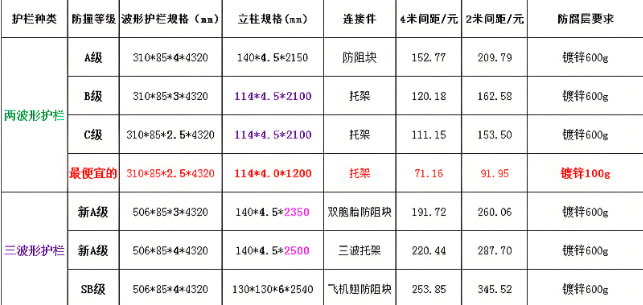
Many purchasers are puzzled. The same is the waveform guardrail, and the quotation of different manufacturers varies widely. The quotation is mainly composed of substrate thickness, anti-corrosion type, anti-collision grade, accessory standards, transportation distance, and taxes.
The thickness of the substrate is the core: the cost gap between 3mm plate and 4mm plate steel is obvious; the anti-corrosion scheme is from low to high: cold galvanizing (not recommended)
The regular manufacturer's quotation will list itemized: guardrail board, column, anti-resistance block, bolt, end, processing fee, anti-corrosion fee, freight, clear and transparent. Quotations that only quote the total price, do not write the thickness, and do not mark the zinc layer standard are likely to be at risk of stealing materials. For project invite tenders projects, manufacturers are given priority to provide third-party test reports, factory qualifications, and on-site factory inspections.
Eight, waveform guardrail manufacturers purchase pit avoidance
Comparison of source factory and middleman
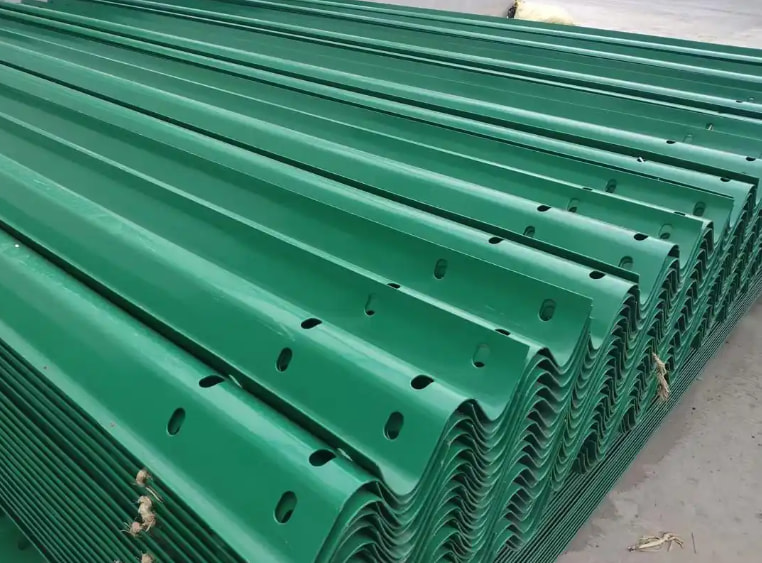
Many merchants in the market claim to be waveform guardrail manufacturers, but they are actually middlemen transferring goods. Without a production line, they cannot control the quality and delivery time. Teach everyone to simply distinguish:
1. Can you provide real shots of the factory, production line videos, and real-time workshop viewing?
2. Whether to support factory inspection and on-site sampling for inspection;
3. Whether it is possible to issue a regular VAT special invoice and provide a complete certificate of conformity and test report;
4. Whether it can undertake large-scale orders, customized arc bends, and special-shaped ends.
Common routines of middlemen: verbal commitment to national standards, actual negative difference sheet; delivery cannot be guaranteed; after-sales shirking, rust and deformation problems cannot be found. For municipal and highway bidding projects, physical manufacturers are preferred to reduce intermediate links and reduce quality risks.
Full text summary of waveform guardrail manufacturers
Waveform guardrail procurement points summary chart
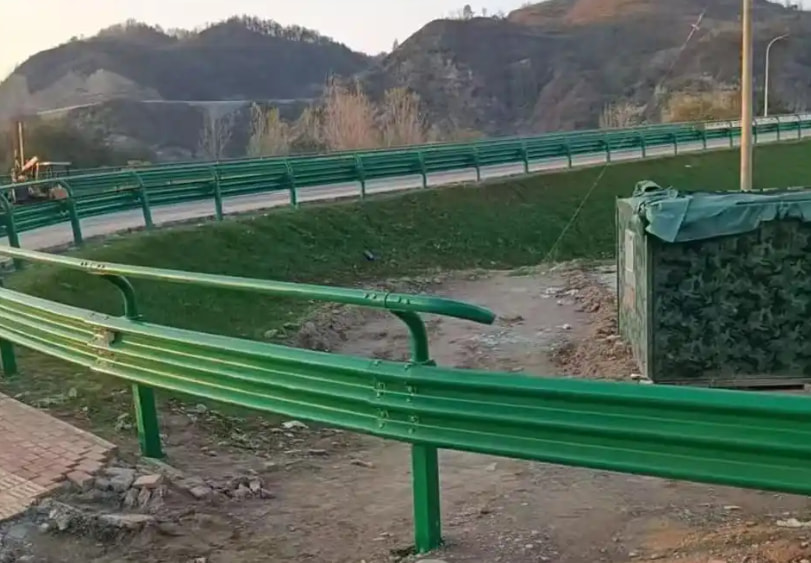
The corrugated guardrail manufacturer is a transportation facility physical factory that integrates roller forming, punching, anti-corrosion, quality inspection, and custom processing. Its core products are two-wave and three-wave national standard corrugated beam steel guardrails, complete with a full set of anti-collision accessories. It is produced in accordance with GB/T 31439 national standard and is suitable for various traffic projects such as high-speed, national and provincial trunk lines, rural roads, and scenic roads.
The core of product quality lies in the selection of substrate, substrate thickness, anti-corrosion process, and factory quality inspection. Hot-dip galvanizing, galvanizing spraying, and epoxy zinc-based anti-corrosion solutions are respectively suitable for inland, municipal scenic spots, and coastal salt spray environments. In addition to product production, high-quality source manufacturers can also provide one-stop services for drawing deepening, bending and arc processing, supporting supply, and on-site installation guidance.
When purchasing a project, do not simply compare the price, give priority to verifying the manufacturer's qualifications, test reports, and capacity, distinguish between regular factories, middlemen, and small workshops, avoid hidden dangers such as substrate thinning, anti-corrosion theft, and non-standard bolts, and ensure that the anti-collision performance of the waveform guardrail meets the standard.