

Steel swing door
Steel casement door professional detailed explanation | Material process, classification specifications, selection, construction acceptance and maintenance guide
First, what is a steel swing door, product positioning and application scenarios
Schematic diagram of opening structure of steel swing door
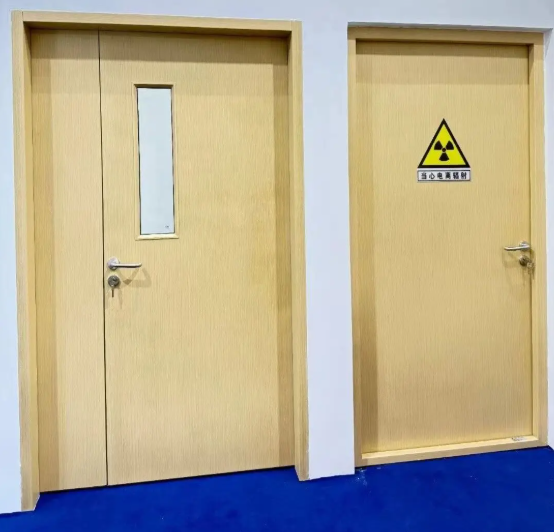
Steel casement doors are door products that use galvanized steel sheet and cold-rolled steel sheet as the main material of door leaf and door frame. They are internally matched with reinforcing ribs and filling materials, and rely on hinges to achieve one-way inward or outward casement opening. They are widely used in industrial, warehousing, civil air defense, machine room, and factory support. Different from rolling shutter doors, sliding doors, and lifting doors, steel casement doors have a simple way of opening, strong sealing, good impact resistance, and outstanding anti-theft capabilities. They take into account multiple functions such as traffic, isolation, and protection.
Many customers will confuse steel casement doors with ordinary household steel burglar doors. The design standards, size specifications, load-bearing, and operating conditions of the two are very different. Household burglar doors are biased towards home burglar prevention, and the size is too small; industrial steel casement doors can be customized in large sizes to fit forklifts, equipment, and materials. At the same time, special functions such as fire protection, airtight, anti-explosion, and thermal insulation can be derived.
Common use scenarios include: steel structure factory door, warehouse passage door, equipment room door, power distribution room door, factory area auxiliary room door, underground passage door, construction site temporary room, garbage station, pump room, etc. According to the project needs, it is divided into ordinary traffic models and special function models, which can meet different engineering needs such as ordinary isolation, fire protection, airtight moisture-proof, explosion-proof and impact-resistant. Our manufacturer supports on-demand customization, and can connect with civil engineering, new plant renovation, park renovation and other projects.
Second, steel swing doors implement national standards and core technical standards
Steel casement door test report, schematic diagram of standard documents
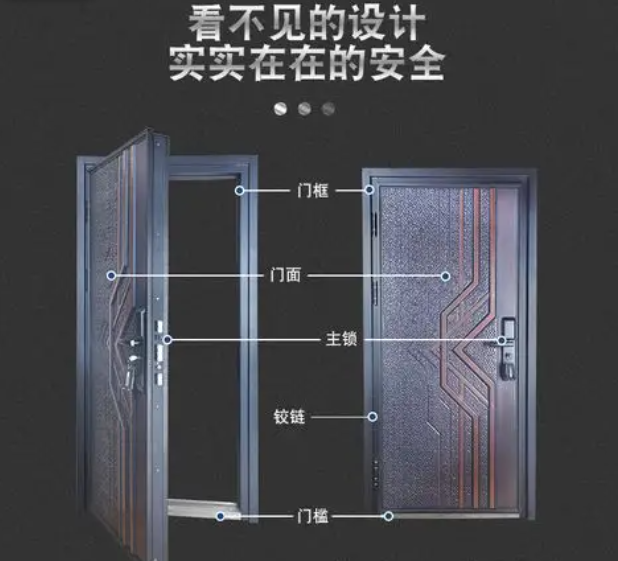
Steel casement doors are not simple steel plate welding products. Different functional types correspond to different national standards. Procurement, production and acceptance all need to be carried out according to the standards. Ordinary industrial steel casement doors refer to GB/T 14155 general door technical requirements; fireproof steel casement doors implement GB 12955 fire door standards; closed steel doors, anti-explosion doors, and civil air defense steel doors correspond to civil air defense and anti-explosion special project specifications.
The standard specifies rigid indicators such as plate thickness, welding requirements, reinforcement arrangement, hinge load-bearing, lock configuration, anti-corrosion coating, and opening and closing durability. Take conventional industrial steel casement doors as an example. Door frame panels and door leaf panels have minimum thickness requirements, and large-size door fans must add horizontal and vertical reinforcing ribs to prevent the door leaf from sagging and deforming for a long time.
Fireproof steel casement doors also have mandatory requirements for internal filling materials, fire resistance limits, door closers, aligners, and fireproof seals. The fire resistance limits are divided into Class A, Class B, and Class C. Type inspection reports and identification signs need to be provided during fire inspection acceptance. Non-standard products cannot pass fire inspection. Bidding projects must check the standards required by the drawings in advance to avoid later rework.
III. Mainstream classification and style characteristics of steel swing doors
Comparison chart of styles of various functional steel swing doors
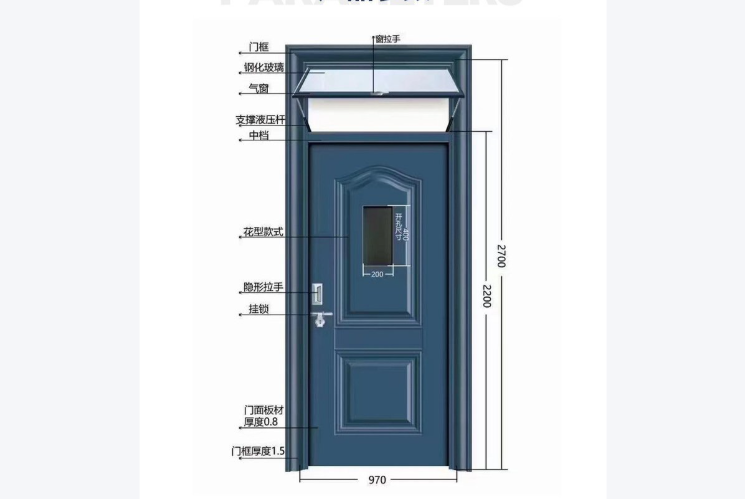
According to the functional division, the mainstream steel swing doors on the market are divided into ordinary industrial steel swing doors, steel fireproof swing doors, airtight steel swing doors, thermal insulation steel swing doors, explosion-resistant steel swing doors, and civil air defense steel doors.
Ordinary steel casement doors are mainly used for basic traffic isolation, with moderate cost, and are mostly used in ordinary factories and warehouse auxiliary rooms. There are no special requirements for fire protection and sealing; fireproof steel casement doors are built with fireproof filling materials and matched with fireproof accessories for fire zone isolation; airtight steel doors add multiple sealing structures, suitable for pump rooms, sewage stations, basements, blocking moisture, odor, and water vapor penetration; thermal insulation steel doors are filled with rock wool and polyurethane thermal insulation cores, suitable for cold storage and constant temperature workshops; anti-explosion, civil air defense steel door plate thickening, structural reinforcement, used in chemical workshops, civil air defense projects, to resist shock waves.
According to the opening structure, it is divided into single-open steel casement doors and folio double-open steel casement doors. The oversized hole can also be matched with fixed bright windows, and tempered glass and fireproof glass can be used for bright windows. Single door is suitable for personnel passage, and the width of the hole is generally 900mm-1200mm; double door is suitable for materials and small forklifts to enter and exit. The width of the hole is more than 1500mm, which is the most widely used style in the factory.
In addition, it can also be equipped with observation windows, ventilation shutters, escape push bar locks, and access control matching, which can be flexibly combined and configured according to the use environment.
Fourth, detailed explanation of steel casement door sheet material, filling and anti-corrosion process
Close-up drawing of door leaf plate section and spray process details
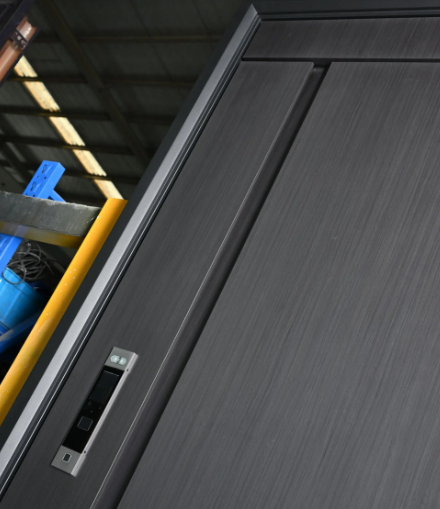
Hot-dip galvanized steel sheet is preferred for the main material of steel casement doors. Compared with ordinary cold-rolled steel sheet, the substrate has its own galvanized layer, and the bottom layer has stronger anti-rust ability. The price of cold-rolled steel sheet is low, and a full set of surface anti-corrosion must be done, which is suitable for dry indoor environments. The thickness of the plate is the quality watershed. For conventional door frame panels of 1.2mm and door leaf panels of 0.8mm and 1.0mm, heavy-duty steel doors with large size and high-frequency opening are recommended to be above 1.2mm, and the door frame is thickened to 1.5mm.
The inside of the door leaf is welded with square reinforcement ribs to prevent the panel from sinking; the filling material is selected according to the function, the ordinary one is filled with honeycomb paper and rock wool; the thermal insulation one is filled with high-density polyurethane; the fireproof one is filled with fireproof perlite and fireproof rock wool. It is strictly forbidden to cut corners without reinforcing ribs or hollow core door fans, and it will bulge and deform in short-term use.
The mainstream process of surface anti-corrosion is electrostatic powder spraying, which is often referred to as spraying treatment. After the whole process of degreasing, pickling, phosphating, electrostatic spraying, and high temperature curing, the plastic layer has strong adhesion, resistance to bumping, rain, acid and alkali, and is not easy to rust when used outdoors. Low-priced products are only simply painted, and the paint surface is easy to peel and fall off. Generally, a large area of rust will occur in two or three years.
Outdoor humid and coastal areas can also be upgraded with galvanizing + epoxy primer + fluorocarbon spraying process, which greatly increases the anti-corrosion life and adapts to high-corrosive environments.
Five, steel casement door hinges, locks, hardware accessories selection points
Close-up of heavy-duty hinges, fire locks, escape lock accessories
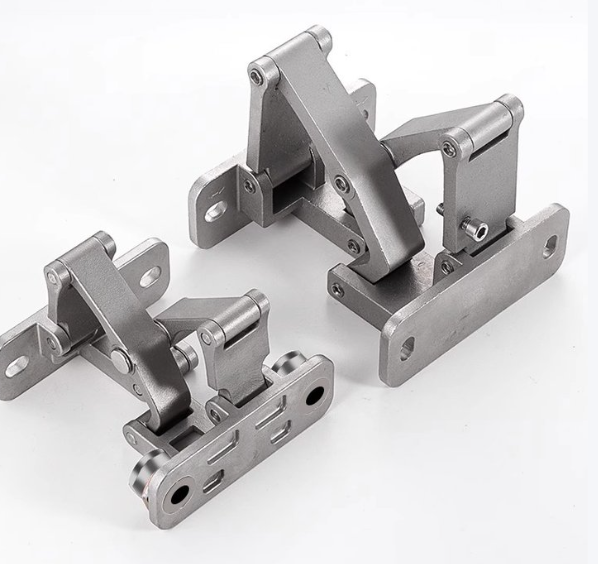
The service life of steel swing doors depends to a large extent on hardware accessories. The heavier the door leaf, the higher the load-bearing requirements for the hinge. Light small doors can choose ordinary hinges; heavy industrial steel doors must be equipped with heavy-duty load-bearing hinges, bearing hinges, with ball bearings, light switches, and long-term load-bearing without sagging. The hinge material is divided into galvanized and stainless steel. 304 stainless steel hinges are preferred in humid environments to avoid rust.
Lock types are rich, and ordinary factory doors use mechanical anti-theft locks and spherical locks. Fire-resistant steel casement doors for fire passages must be equipped with fire locks, door closers, and aligners. If the double door lacks an aligner, it will not be closed strictly. Evacuation passages require escape push bar locks, which can be pushed open with one click in an emergency to meet fire evacuation requirements. Machine rooms and important warehouses can be equipped with access control locks and electromagnetic locks to achieve card swiping and password opening.
All hardware fittings must match the function of the door body. Fire door fittings must be fire-certified fire-proof fittings. Ordinary hardware cannot be replaced. Many projects fail to accept, that is, the door closer and sealing strip do not use matching fire-proof fittings. At the same time, the welding and fixed points of the hardware positions should fall on the position of the door reinforcement to prevent the force from pulling and the screws from loosening and falling off.
Key parameters of steel casement doors and precautions for hole design
Steel casement door hole size marking drawing
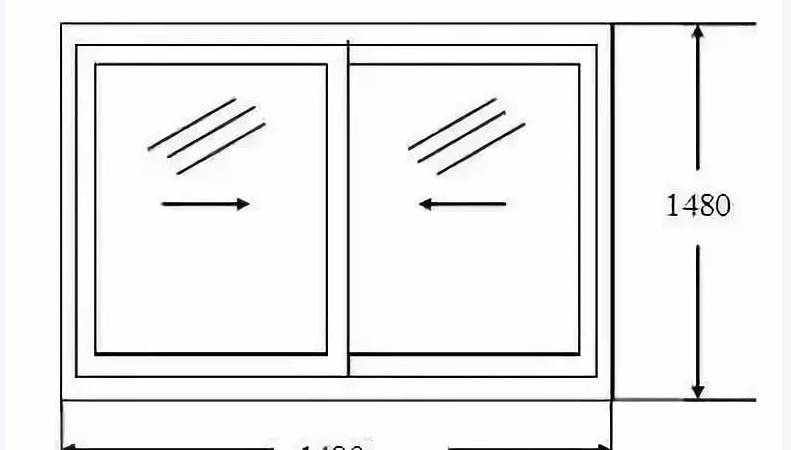
Many purchasers made mistakes in the early reservation of the hole, resulting in the failure to install the door body. Here are the core parameters. Conventional single door opening: width 900/1000/1200mm, height 2100/2400/2700mm; opposite door opening width 1500, 1800, 2100, 2400mm, height is customized according to the floor height.
Door openings are divided into civil net openings and door frame outsourcing sizes. Before placing an order, the outer opening and the inner opening must be distinguished. Door frames are divided into door frames with and without grooves. The grooves structure can improve the sealing, and the windproof, dustproof and sound insulation effect is better. The opening direction should be marked in a standardized manner: open outside, open inside, open left, and open right to avoid the inversion of the opening direction after the production is completed.
At the same time, it is necessary to consider the demand for passage. If there are forklifts and equipment entering and leaving, the net width and net height of the door opening should be reserved for sufficient allowance, and it cannot just fit the size of the equipment. The installation position should also take into account drainage. The bottom of the outdoor door should be reserved for a threshold or a water stop structure to prevent rainwater from pouring back into the room. Thresholds are divided into high thresholds and low thresholds. There are carts in the workshop for passage. No threshold and low threshold styles are preferred.
Seven, steel swing door standardized installation process and construction points
Construction site diagram of door frame in place, grouting fixed, gluing and sealing
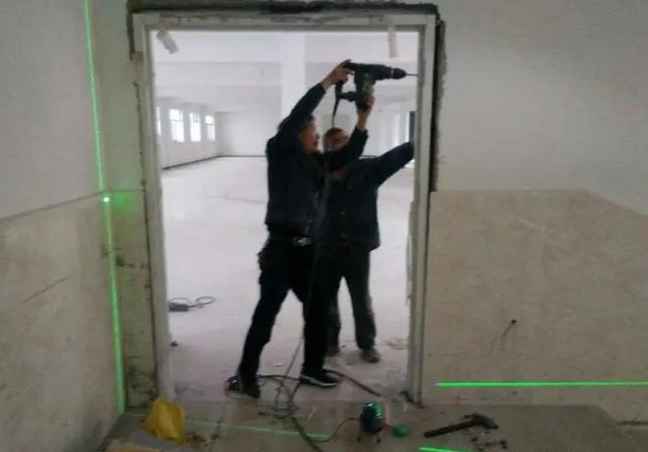
The steel casement door follows the principle of "first measurement, then production, professional installation", and the complete construction process: on-site hole review, cleaning the hole entrance debris door frame in place, adjusting the vertical horizontal wooden wedge temporary fixing grouting or expansion bolt fixing and curing door leaf, hinge, lock assembly and debugging gap filling and foaming, outer sealing and gluing cleaning, finished product protection, acceptance.
Steel door installation is different from home improvement wooden doors. Heavy-duty steel doors have a large weight. Lightweight gas block walls cannot be directly fixed with ordinary expansion screws. Embedded parts need to be embedded in advance, or steel plates need to be installed to reinforce, otherwise the door frame will be loose and the door leaf will be tilted after a period of use. Grout fixing is mostly used for civil walls. Mortar fills the gaps between the door frame and the wall, and the structure is stable.
Installation key control: The vertical error of the door frame is controlled within the standard range. After the door leaf is closed, the gap is uniform, and one side of the gap cannot be large and the other side of the gap is small; the outside of outdoor installation must be continuously filled with weather-resistant sealant to block rainwater from penetrating into the door frame cavity; fire-proof steel door installation, the gap should be filled with fire-proof sealant and fire-proof sealing material, and cannot be simply filled with ordinary foam.
After the installation is completed, repeatedly open and close the test to check whether the switch is stuck, the lock is engaged smoothly, the speed of the door closer is reasonable, and the door leaf will not be damaged by excessive impact.
Eight, common failures of steel swing doors, post-maintenance plans
The door leaf is sagging, the paint surface is rusted, and the hinge is stuck.
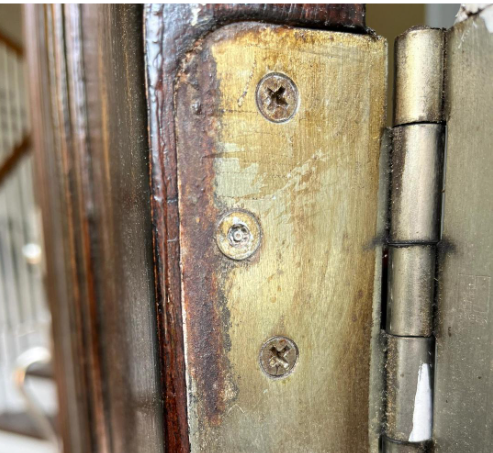
Steel casement doors are prone to several types of typical problems under long-term high-frequency use: sagging door leaf, hinge rust stuck, lock cylinder card can not be opened, paint surface bumping off paint rust, sealant aging cracking water seepage, door closer oil leakage failure.
Daily maintenance: regularly add grease to the bearing hinge, do not use ordinary oil, the oil is easy to absorb dust to form sludge; pay attention to the door closer to observe whether there is any oil leakage, and replace the door closer directly after the oil leakage; the paint surface bumps and peels off, and timely polish and replenish the same color plastic powder repair paint to prevent the steel plate from rusting from the damaged position; clean the drain hole at the bottom of the door frame to avoid water accumulation and corrosion of the door frame.
For fireproof steel casement doors, door closers and fireproof seals cannot be removed without permission, and holes cannot be punched in the door leaf for modification. After modification, the fireproof performance will be lost, and the fire inspection will determine unqualified. For steel doors in humid areas, the inspection frequency should be appropriately increased, and the surface moisture and water accumulation should be cleaned up in time.
Do not rely on the door leaf for storing materials and equipment. Long-term external extrusion will cause the door frame to deform and close loosely.
Nine, steel swing door procurement avoidance guide, engineering selection suggestions
Comparison of high-quality samples and cut corners samples
There is a lot of low-price competition in the steel casement door market, and many merchants reduce their distribution, which brings hidden dangers to the purchaser in the later stage. First, the contract states the thickness of the plate, whether to galvanize the substrate, the arrangement of the reinforcing ribs, the filling material, and the surface process. Verbal promises do not count, and it is agreed to support on-site caliper sampling; second, distinguish between ordinary steel doors and fireproof steel doors. Fireproof doors must ask for fire certificates and logos; third, large-size, high-frequency open doors, focus on confirming the hinge load-bearing specifications, and do not use light and cheap hinges.
Differentiate the use environment: indoor drying plant, ordinary spray cold-rolled steel plate is cost-effective; outdoor, rainwater, coastal plant areas, priority hot-dip galvanized substrate + spray; fire zone location, strict selection of certified fireproof steel casement door; sewage pump room, basement, choose closed steel door, with multi-rubber seal.
In addition, the transportation process is well protected, the corners of the steel door are easy to bump off the plastic, and the packaging needs corner protection. After arrival, check the paint surface and welding position one by one for welding deformation, and reject unqualified products in advance to avoid problems found after installation.
Summary: The application value of steel swing doors in industrial engineering
Panorama of the completion of the multi-frame steel swing door of the factory building
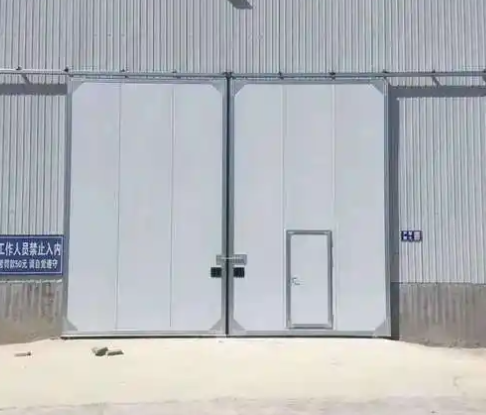
Steel casement doors are sturdy in structure, impact resistance, durability, and rich in function expansion. They can be achieved from simple isolation to fire protection, airtight, thermal insulation, and anti-explosion. They are affordable and easy to maintain. They are highly versatile door products in industrial projects.
It is unlike lifting doors and fast doors with complex equipment and high maintenance costs in the later stage. The steel swing door structure is simple and stable, and the accessories are easy to obtain. It is suitable for most factories, warehouses, and supporting rooms. As long as the thickness of the board, internal reinforcement, anti-corrosion process, hardware specifications, and standardized installation are controlled, it can be used stably for a long time to meet the multiple needs of plant isolation, personnel evacuation, and fire protection.
Our source manufacturer specializes in customizing various types of steel swing doors, including ordinary industrial steel doors, fireproof steel swing doors, and airtight thermal insulation steel doors. It supports drawing processing, door-to-door measurement, delivery and installation, and serves various engineering projects such as new factory buildings, park renovations, and fire protection facilities.