

What is a swing door?
What is a swing door? Full analysis of swing door structure principle, classification characteristics, material selection, and installation standards
First, the professional definition of swing door: what is a swing door
Schematic diagram of the opening structure principle of the swing door
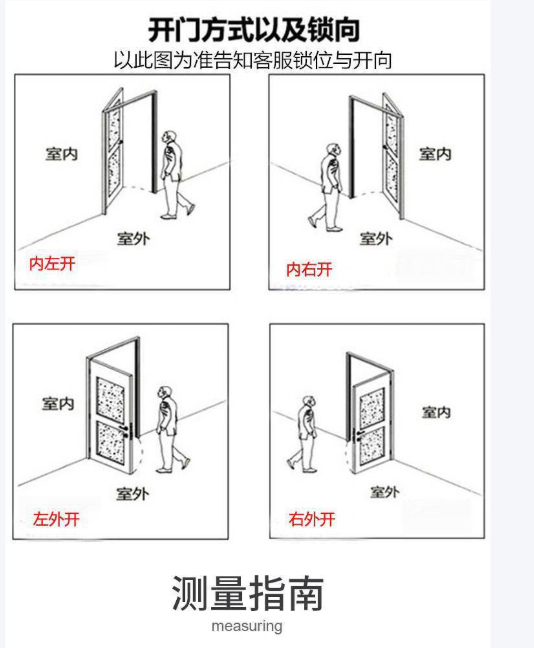
Side-hung door is the most classic, most versatile, and preferred open door type in the construction door and window industry. According to the definition of JG/T 453-2014 construction industry standard, hinges (hinges) are installed on the side of the door leaf, and the side is the rotating axis. A door body structure that rotates inward or outward is collectively referred to as a swing door.
Simply put, it is the one-way rotating door that we see every day, fixed with hinges, and does not occupy the space of the upper and lower tracks. It is different from the opening methods of sliding doors, folding doors, sliding doors, rolling shutter doors, etc. The swing door as a whole is composed of six core structures: door frame, door leaf, hinge, door lock, sealing tape, and hardware accessories. It has a stable structure, strong sealing, and a solid switch feel. It is the most mainstream door type for residences, villas, office buildings, factories, and shops.
The reason why swing doors have become the preferred door type for buildings is that the structure conforms to human usage habits, the safety factor is high, the sound insulation and sealing performance is excellent, and it is suitable for a wide range of scenarios. Whether it is indoor bedroom doors, bathroom doors, kitchen doors, or outdoor entry doors, balcony doors, factory doors, swing doors are the preferred styles recommended by national standards.
Second, the core working principle of the swing door, why the stability far exceeds other door types
Detailed drawing of stress structure of swing door hinge
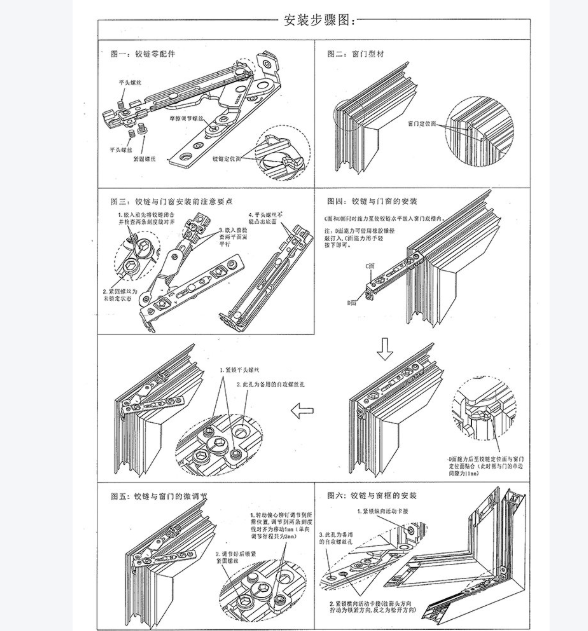
Many users only recognize the appearance of the swing door, but do not understand its structural advantages. The swing door adopts the principle of side hinge load-bearing and axis rotation force. All the weight of the door leaf is evenly distributed on multiple hinges on the side, and the force is vertical, uniform, and not offset. It is not easy to deform, sag, and derail after long-term use.
Sliding doors rely on track load-bearing, and long-term pulley wear and track dust accumulation are easy to get stuck and shake; while swing doors have no track, no pulley, and no risk of derailment. They are opened and closed by hinge axis rotation, with simple structural and mechanical principles and a very low failure rate.
At the same time, the casement door closure method is the whole pressing type closure, the door leaf is completely fitted with the sealing structure around the door frame, the gap is uniform and controllable, and can achieve high airtightness, high water tightness, and high sound insulation effect. This is also the core technical advantage that the sliding door can never replace the casement door.
Whether it is a long-term high-frequency switch for household use or a large-scale use in public places, swing doors have a much longer service life than other door types due to their scientific stress structure, making them the most mature and durable structural system in the field of building doors and windows.
III. Detailed classification of swing doors: opening methods | door leaf structure | usage scenarios
Classification and comparison chart of various styles of swing doors
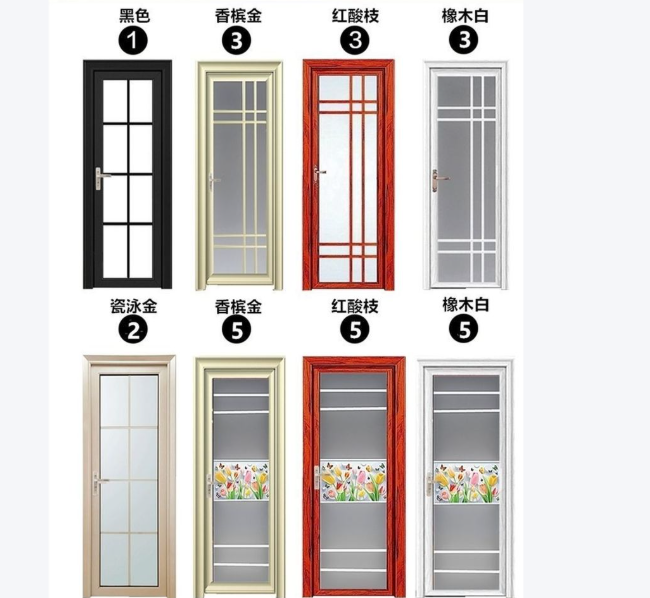
The flat door category system is perfect, and can be divided into three categories according to the opening direction, the number of door fans, and the use environment. The selection logic is clear and the adaptation is accurate.
1. Classify by opening direction
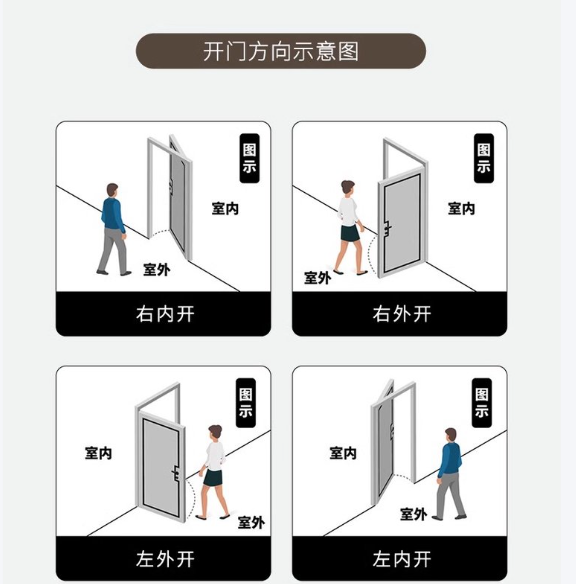
Inner opening swing door: The door leaf opens indoors, making it the most commonly used style for home improvement. It is safe and beautiful, does not occupy outdoor space, and has good windproof and rainproof effects.
Open casement door: The door leaf opens to the outside, and is mostly used in shops, factories, fire escapes, and escape doors to meet fire evacuation specifications.
At the same time, it can be subdivided into left and right opening, and can be flexibly customized according to the location of the door opening and entry and exit habits.
2. Classify by the number of door leaves
Single swing door: single door leaf, suitable for conventional small apartment door openings, bedrooms, bathrooms, kitchens.
Double-opening casement door: double-fan folio, large width of the door opening, transparent atmosphere, suitable for balconies, villa doors, factory entrances and exits, office halls.
Mother and child swing door: a combination of large and small doors, daily small doors, large pieces of furniture in and out of the full open, both beautiful and practical.
3. Classify by usage scenario
Indoor swing doors: pay attention to sound insulation, appearance, and lightness, and are mostly used in bedrooms, study rooms, and bathrooms.
Outdoor swing doors: focus on wind pressure resistance, waterproof, anti-theft, heat insulation, and are mostly used for entry doors, balcony doors, and factory doors.
IV. Detailed explanation of the mainstream materials of swing doors, different material properties and applicable scenarios
Broken bridge aluminum, solid wood, composite material swing door details close-up
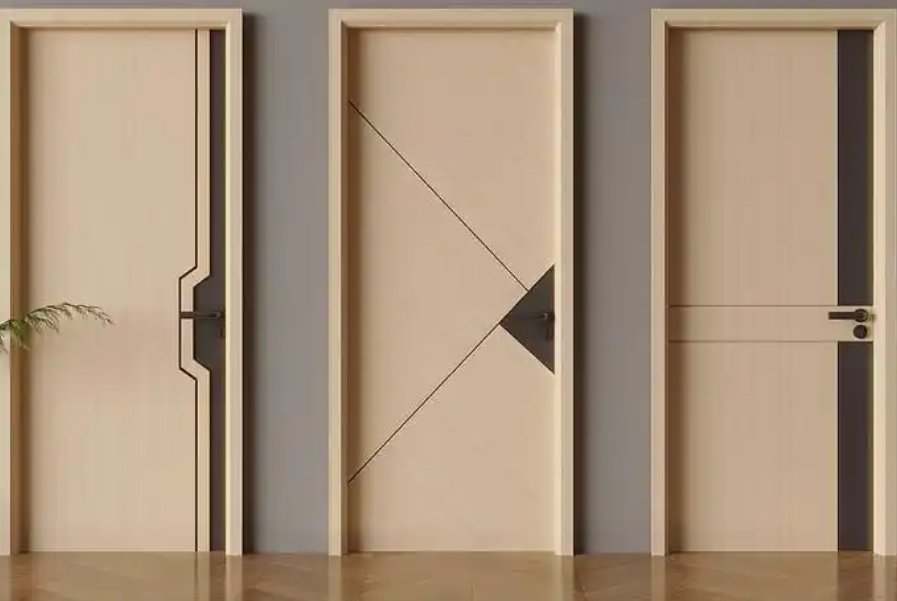
The materials of swing doors on the market are mainly divided into five mainstream materials: broken bridge aluminum swing doors, solid wood swing doors, composite wooden doors, stainless steel swing doors, and tempered glass swing doors, with great differences in performance.
1. Broken bridge aluminum swing door (currently the mainstream of home improvement)
Using 6063-T5 original aluminum alloy profile, with PA66 heat insulation strip, hollow tempered glass, multi-cavity sealing structure, waterproof, sound insulation, heat insulation, moisture-proof, no rust, no deformation. Especially suitable for bathroom, kitchen, balcony humid environment, is the first choice for modern minimalist decoration.
2. Solid wood swing door
Made of natural solid wood, with advanced texture, natural texture and excellent sound insulation, it is suitable for indoor use in bedrooms and studies; the disadvantage is that it is afraid of moisture, easy to expand and contract, and is not suitable for humid areas.
3. Composite solid wood swing door
Solid wood composite structure, with strong stability, high cost performance, and not easy to crack, is the most popular interior door for ordinary home decoration.
4. Stainless steel swing door
High strength, anti-corrosion, impact resistance, mostly used in factories, corridors, equipment rooms, public places, practical, durable.
5. Tempered glass swing door
Good transparent lighting, minimalist and light luxury, mostly used in kitchens, bathrooms, and partition areas. With a very narrow frame, it has a very high appearance.
Five core advantages of swing doors, why swing doors are the first choice for decoration
Swing door airtight sound insulation, overall completion renderings
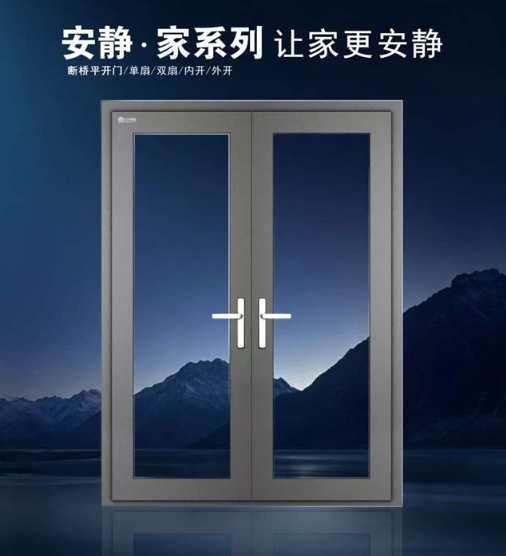
Compared with sliding doors, folding doors, and hanging doors, swing doors offer five irreplaceable professional advantages, which are also the fundamental reasons why they are the first choice for engineering and home improvement.
1. Strong sealing, top sound insulation and waterproof effect
The swing door is closed with a tight sealing structure around it. With EPDM sealing strip, the gap is extremely small, which effectively isolates outdoor noise, water vapor, and dust. The effect of sound insulation, temperature insulation, and dust insulation far exceeds that of sliding doors. The bathroom does not return moisture or smell, and the street balcony can effectively reduce noise.
2. Stable structure, not easy to deform and derail for life
No track, no pulley, no sinking card problems, hinge load-bearing stability, tens of thousands of switches are still smooth, almost zero failure rate.
3. High safety factor, in line with national fire protection regulations
The swing door is stable, not easy to clamp, and has no risk of dumping. Public places and fire escapes require the use of external swing doors, and the safety has passed the national standard inspection.
4. Open and close transparent, good ventilation and lighting effect
The door leaf can be fully opened at 180 degrees, with no obstruction or ventilation dead ends. Summer ventilation and daily lighting have the best effect.
5. Versatile styles, suitable for all decoration styles
Minimalist narrow side, light luxury, Chinese style, European style, modern style full coverage, can do extremely narrow glass, solid wood shape, tempered matte, Changhong glass, appearance plasticity is extremely strong.
Swing door vs sliding door: professional comparison, goodbye to torn selection
Comparison diagram of structural advantages and disadvantages of swing door and sliding door
Many owners choose flat doors or sliding doors for decoration, and give accurate comparisons from a professional perspective:
The advantages of swing door: good sealing, strong sound insulation, waterproof and moisture-proof, stable structure, no deformation, long life and safety compliance.
Disadvantages of swing doors: Opening the door requires a certain amount of indoor space.
The advantages of sliding doors are that they do not occupy indoor space and have a wide field of vision.
Disadvantages of sliding doors: large gaps, air leakage, poor sound insulation, track dust accumulation, pulley damage, long-term use of shaking deformation.
Professional conclusion: For bathrooms, kitchens, balconies, street-facing rooms, and humid areas, flat doors are preferred; the space is extremely small, and sliding doors can be selected only for partition decoration.
Seven, swing door hardware accessories selection standards determine the overall service life
Swing door hinge, lock, rubber strip hardware details
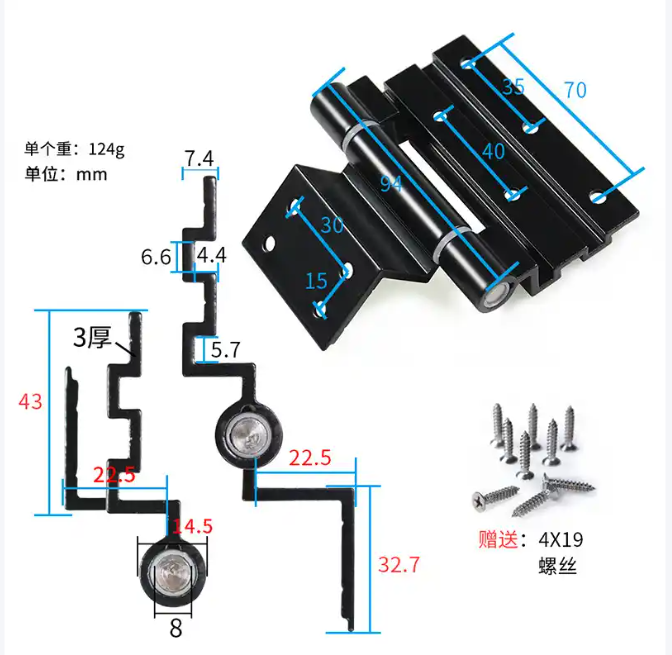
The expert looks at the hardware, and 80% of the service life of the swing door is determined by the hardware. The national standard swing door requires thickened load-bearing hinges, anti-drop devices, silent lock bodies, and weathering sealant strips.
High-quality swing door standard: thickened stainless steel heavy-duty hinge, strong load-bearing, silent and rust-proof; anti-drop chain device to prevent the door leaf from falling off; multi-point silent lock body, smooth switch without noise; EPDM weather-resistant rubber strip, anti-aging, non-hard, long-lasting seal.
Low-priced swing doors are prone to: deformation of thin iron hinges, poor quality hardening of rubber strips, lock body cards, lax closure, air leakage and water leakage, and frequent maintenance in the later stage.
VIII. Standardized installation process and acceptance standards for swing doors
Master's standardized installation and leveling construction actual pictures

No matter how good the swing door is, if the installation is not standard, there will be problems such as uneven gaps, water seepage, abnormal noise, and lax closing. Regular swing door installation follows the national standard construction process:
1. The hole is leveled and cleaned, and the wall is repaired for hollowing and cracking;
2. Door frame positioning and calibration to ensure horizontal and vertical;
3. The expansion screw fixes the frame and reinforces the stress point.
4. The gap is foamed and filled, full and dense;
5. Glue and seal inside and outside, waterproof and moisture-proof;
6. Debug hinges and locking points to ensure smooth opening and closing and tight closure.
7. Overall acceptance, check the sound insulation, gap, sealing, and switch feel.
Acceptance standards: door leaf opening and closing without card, no abnormal sound, no shaking, closed tightly without gaps, tight fitting of rubber strips, waterproof and sound insulation standards.
Nine, swing door daily maintenance and common fault solutions
Schematic diagram of daily maintenance of swing door

The swing door has a stable structure and a low failure rate. It can be used for more than ten years without deformation with simple daily maintenance.
1. Regularly clean the hinge dust and add silicon-based lubricant slightly to prevent abnormal noise cards;
2. Avoid vigorously hitting the door leaf to prevent the hinge from being deflected by force.
3. Regularly check the sealing strip, replace it in time when it ages, and maintain the sound insulation and waterproof effect;
4. Avoid strong acid and alkali wiping in the glass area to protect the sealing of tempered glass.
5. Wet bathrooms and kitchens are regularly ventilated to prevent long-term moisture and rust.
Common faults of swing door (minor): slight abnormal noise, slight loosening of closure, can be solved by simple debugging, with almost no overhaul cost.
Full text summary: summary of the value and application scenarios of swing doors
The overall decoration of the whole house swing door
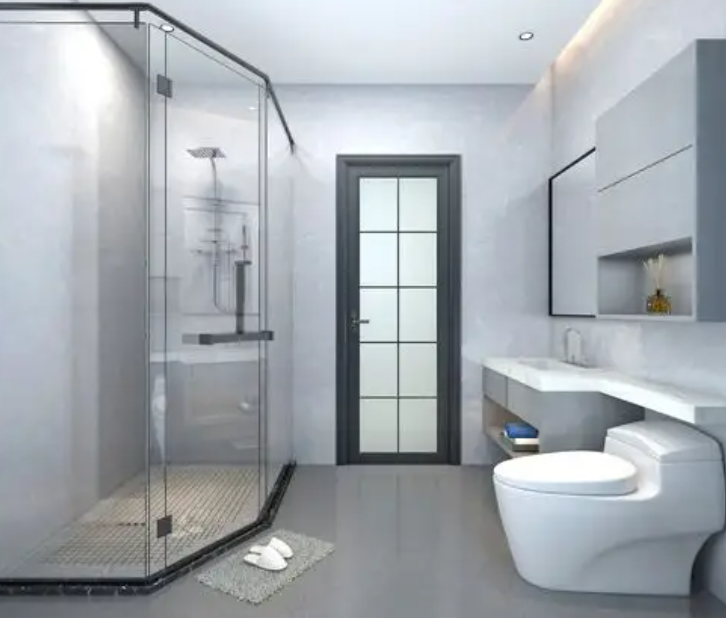
Overall, casement doors are currently the most mature, most stable, best sealed and soundproof, safest, and most widely applicable standard door types in the field of building doors and windows. With the side hinge rotary opening structure, compression sealing design, extremely low failure rate, and versatile appearance, it has become the universal preferred product for home improvement, tooling, engineering, and factories.
Whether it is an indoor bedroom, study, bathroom, kitchen, or outdoor balcony, home, shop, factory area, swing doors can be perfectly adapted, taking into account the five core properties of beauty, safety, sound insulation, waterproof and durability. Compared with sliding doors, folding doors and other door types, swing doors are more cost-effective, have a longer service life, and have lower maintenance costs in the later stage.