

Screen profile
Screen profile | Material classification, specification parameters, surface technology, selection to avoid pits
First, the basic cognition of screen window profiles: what is screen window profiles?
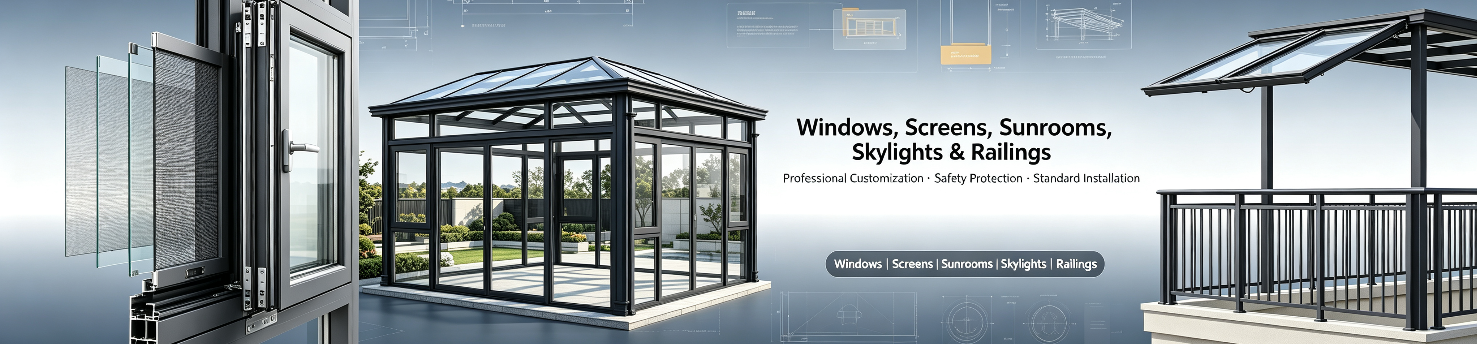
Schematic diagram of disassembly of aluminum profile section of screen window
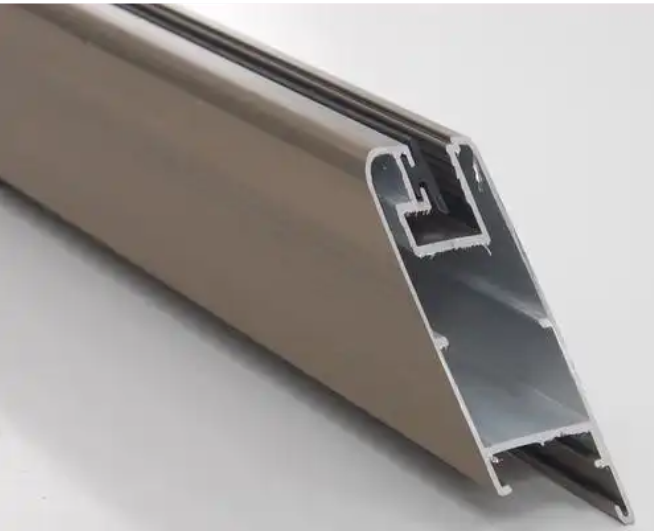
Screen window profiles are the basic skeleton material of the screen window frame, and the core components that support the screen, fixed accessories, bearing hinges and reels. Most of the invisible screens, diamond screens, folding screens, sliding screens, and casement windows on the market are assembled and formed by the screen window profiles. When many owners buy screen windows, they only pay attention to the quality of the screen screen, ignoring the profile itself. They do not know that the material thickness, cross-sectional structure, and process quality of the profile directly determine whether the screen window will be deformed, sagging, service life, and smooth switch.
The mainstream screen window profiles on the market are mainly aluminum alloys, and a few use plastic steel and stainless steel profiles. There are clear industry reference standards. Screen window profiles are different from large profiles of broken bridge doors and windows. They belong to small thin-walled profiles. The cross-sectional design is more delicate. It is necessary to take into account lightweight, toughness, anti-distortion, and anti-rust. At the same time, they are suitable for different screen structures: rewinding invisible screens, diamond mesh screens, folding screens, and push-pull screens each have their own profile cavities. If the profile material is too thin and the cavity design is unreasonable, after a period of use, the window frame will be distorted, closed loosely, the scroll will be stuck, and the corners will be cracked. This article gradually explains the classification, specifications, surface treatment, structural design, selection points, pit avoidance and maintenance knowledge of screen window profiles, helping everyone understand screen window profiles and choose durable and reliable screens.
Classification of mainstream materials for screen window profiles, comparison of advantages and disadvantages of different materials
Comparison chart of samples of aluminum alloy, plastic steel and stainless steel screen window profiles
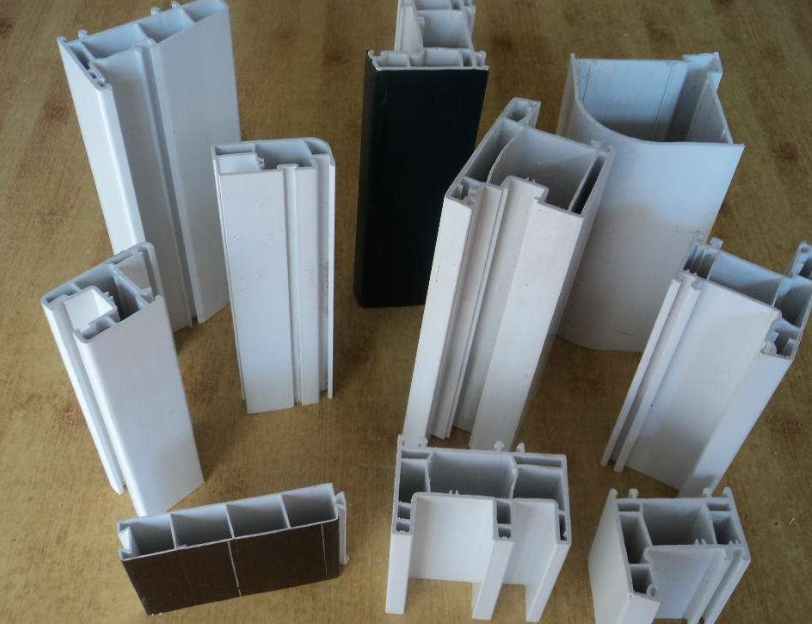
According to the division of raw materials, screen window profiles are divided into three categories: aluminum alloy screen profiles, plastic steel screen profiles, and stainless steel screen profiles. They are also all mainstream categories in the market, each adapted to different scenarios, with obvious performance differences.
The first category, aluminum alloy screen window profiles, is currently the highest market share of screen window profiles. The base material is made of 6063 series aluminum alloy, extrusion molding, good toughness, not easy to rust, light weight, strong plasticity, can extrude complex multi-cavity structure, the surface can be sprayed in a variety of colors, rich colors, not easy to fade. The advantage is that the cost-effective balance, easy processing, rewinding screen windows, diamond mesh screen windows, push-pull screen windows, folding screen windows are widely used aluminum alloy profiles; the disadvantage is that if the wall thickness of thin-walled profiles is too thin, the impact resistance is limited, so the wall thickness is the most important indicator of aluminum alloy screen profiles.
The second category, plastic steel screen window profiles, PVC modified plastic profiles. In the early years, old-fashioned sliding screen windows were used more, with low cost and light weight. The shortcomings are very prominent. Long-term outdoor sun exposure is prone to aging and brittleness, yellowing and deformation, poor toughness in low-temperature environments, easy to break, obvious thermal expansion and contraction, and easy to enlarge sealing gaps. Now high-end home improvement screens have rarely used plastic steel screen window profiles, only for temporary screens in low-cost projects.
The third category, stainless steel screen window profiles, mostly 304 stainless steel bending forming profiles. Top anti-rust performance, obvious advantages in coastal high salt fog areas, high hardness and impact resistance; short board is difficult to form, few styles, single color, most only true color, cost is much higher than aluminum alloy profiles, bending position prone to stress cracking, generally used for seaside villas, factories high corrosion environment diamond screen window frame.
Comprehensive home improvement scenarios, regular aluminum alloy screen profiles are preferred; 304 stainless steel profiles can be selected if the budget is sufficient in rainy salt fog areas along the coast; long-term household plastic steel screen profiles are not recommended.
Third, the wall thickness standard of aluminum alloy screen window profiles, understand the wall thickness and refuse to cut corners
Profile wall thickness caliper measurement real picture
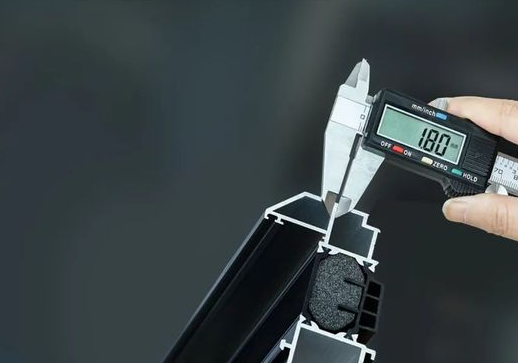
Aluminum alloy screen window profiles, wall thickness is the first indicator to judge the quality, and it is also the easiest place for merchants to reduce distribution. Screen window profiles are thin-walled profiles, and there is no mandatory national standard for unified wall thickness, but the industry has formed a mature reference standard. Different screen window styles correspond to different recommended wall thicknesses.
Invisible rewinding screen window profiles: the regular wall thickness of the outer frame is 0.6mm-0.8mm, and the high-quality model is 0.8-1.0mm. The force of the invisible screen window is concentrated at both ends of the reel. If the wall thickness is lower than 0.6mm, the long-term rewinding of the reel will cause the frame to be distorted, the guide rail to be deformed, and the screen to run from side to side.
Diamond mesh window profiles: Diamond mesh has a larger weight and has the highest load-bearing requirements for profiles. The recommended wall thickness is 1.0mm-1.2mm. It is recommended to choose 1.2mm wall thickness profiles for large-size diamond mesh windows and exterior and interior openings. Diamond mesh profiles with a wall thickness of less than 0.8mm are thin materials, and are prone to sagging fan frames, failure to close, and dislocation of lock points after about one year of use.
Push-pull screen window, folding screen window profiles: Conventionally recommended 0.7-0.9mm wall thickness, push-pull profiles should also take into account the wear resistance of the guide rail, insufficient wall thickness will lead to deformation of the guide rail, push-pull card.
Many low-cost screen window packages promote aluminum alloy profiles. The actual wall thickness is only 0.4-0.5mm, which is difficult to distinguish with the naked eye and can only be found by caliper measurement. When purchasing, be sure to mark the wall thickness of the profile in the contract. When receiving the goods, you can check the caliper on site to avoid merchants filling the material with thin materials. At the same time, it is necessary to distinguish between primary aluminum profiles and recycled aluminum profiles. Recycled aluminum has many impurities and is brittle. The extruded profiles are prone to trachoma and dark cracks, and are easily broken after being stressed. High-quality screen window profiles are all extruded with native 6063 aluminum rods.
Fourth, the structural design of the screen profile cavity, the characteristics of the cavity of different screens
Comparison chart of screen window profiles with different cavities
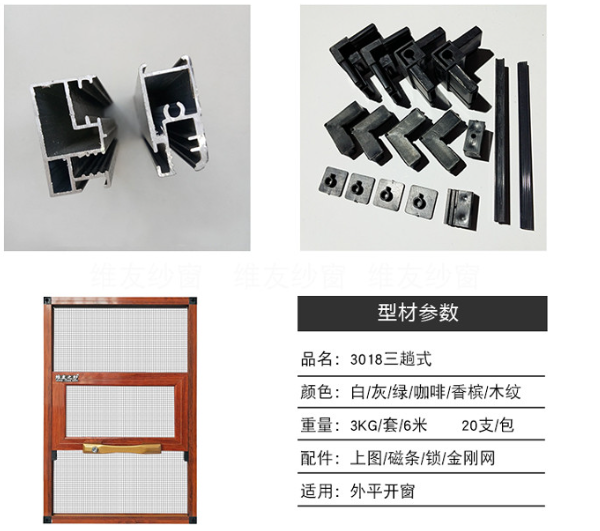
Screen profiles of the same material and the same wall thickness have different cavity designs and huge differences in strength. Screen profile cavities are divided into single-cavity profiles and multi-cavity reinforced profiles, and the cavity design ideas of different screen window categories are completely different.
Single cavity simple profile: only one hollow cavity, simple structure, low mold cost, cheap price, mostly used for small-size invisible screens, temporary engineering screens, weak anti-distortion performance, large size is not suitable.
Multi-cavity reinforced profiles: The internal reinforcement ribs and the separation of the cavity are added to the profile, which is equivalent to adding support to the interior of the profile. Under the same wall thickness conditions, the anti-bending and anti-twisting capabilities are greatly improved, which is the standard for mid-to-high-end screens. For example, the fan frame of the outer opening of the diamond mesh window is mostly made of multi-cavity profiles with reinforcing ribs, which bear the weight of the diamond mesh and are not easy to sag for a long time.
Special profiles for invisible rewinding screen windows will reserve reel installation grooves, spring accommodating cavities, gauze guide grooves, and windproof card slots. The profile cavity is a functional structure, not just a simple frame. Folding screen profiles will reserve hinge installation grooves and sealing strip card slots. Push-pull screen window profiles come with upper and lower guide rails and anti-derailment card slots.
A good profile section is specially designed according to the mechanical force of the screen window, rather than a general simple aluminum strip. Some small manufacturers directly use general-purpose aluminum square tubes to modify the screen window frame without reserving the accessory card slot. Later installation forced punching, destroying the profile structure and greatly reducing the strength.
The surface treatment process of screen window profiles determines weather resistance and appearance life
Close-up of surface details of sprayed, oxidized, electrophoretic profiles
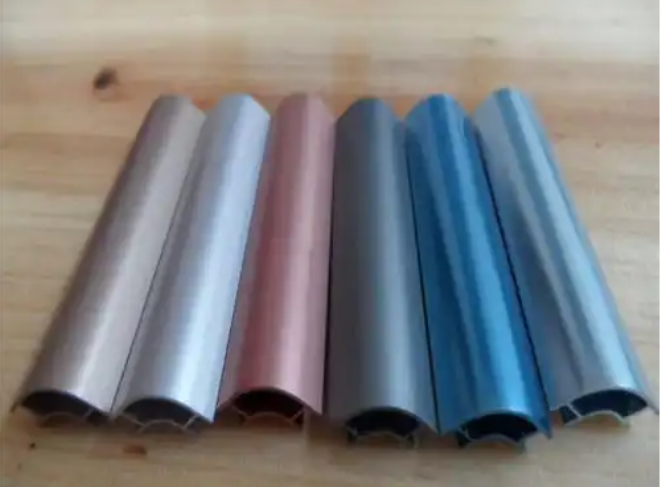
The screen window profile is exposed to the window, exposed to the sun and rain all year round, and the surface treatment process determines whether the profile will fade, peel, oxidize and turn white. There are four main surface treatments for aluminum alloy screen window profiles: anodic oxidation, electrostatic powder spraying, electrophoretic spraying, and fluorocarbon spraying.
Anodizing: the earliest process, the surface is aluminum or light champagne color, the surface forms an oxide protective film, rust-proof, less color selection, wear resistance is average, long-term exposure to the sun is easy to black, and now it is mostly used for low-end screens.
Electrostatic powder spraying: At present, the most mainstream process of home improvement screens, powder spraying has strong adhesion and rich colors. Coffee, dark gray, sand gray, black, and white sand patterns can be done. It is resistant to ultraviolet rays and rain. It is not easy to fade after 8-12 years of normal use. The surface of high-quality spraying profiles is delicate and uniform, and there are no particles, hanging, or leaking sprays; the inferior spraying spray layer is thin, and it will peel and fade in one or two years.
Electrophoresis process: smooth and shiny surface, high gloss, waterproof and stain-resistant, smooth feel, mostly used for light luxury bright color screen windows, the cost is higher than ordinary powder spraying; the disadvantage is that bright surface is easy to leave scratches.
Fluorocarbon spraying: the most high-end surface treatment process, with strong weather resistance, anti-ultraviolet, anti-salt spray, preferred in coastal areas, the fading cycle can reach more than 15 years, and the cost is high. Generally, high-end villa screens are selected.
Key points for pit avoidance: distinguish between "powder spraying" and spray paint. The spray paint is liquid paint, which has poor adhesion and peels off in half a year to two years. Many low-cost screens are sprayed with spray paint as powder, which feels greasy and easy to scrape off the paint layer.
Six, various types of screens corresponding to the profile selection plan, matching on demand
diamond mesh, rewinding invisible, folding screen finished renderings
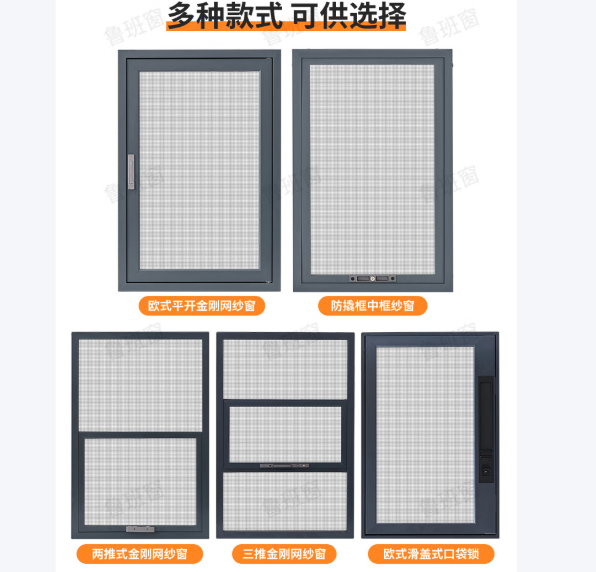
Different screen window structures cannot be mixed with profiles. Only by selecting the right matching profiles can we give full play to the screen window performance. Here are some mature selection plans for the industry.
Invisible rewinding screen window (wire-controlled positioning invisible screen window): Preference is given to powder-sprayed multi-cavity rail profiles of 0.8mm and above, with windproof card slots and windproof strips to prevent gale gauze from bulging out; it is not recommended to use thin single-cavity profiles below 0.6mm, which are prone to deformation of the guide rail in windy environments.
External inner opening diamond mesh screen window: focus on the selection of 1.0-1.2mm thickened multi-cavity reinforced rib profiles, profiles with sealing tape slots, with EPDM tape to ensure tight sealing after closing, load-bearing capacity Suitable for thickened diamond mesh.
Folding screen window (organ-type screen window): Special folding screen narrow-sided profile is selected, and the hinge installation position is reserved. The wall thickness is 0.7-0.9mm, and the profile toughness is better. Repeated folding and opening is not easy to crack.
Push-pull screen window: Special push-pull profiles with integrated forming guide rails are selected, and the guide rails are thickened and wear-resistant to prevent long-term push-pull wear grooves and cause the screen window to shake and jump rails.
Balcony large hole, super high screen window: no matter what style, it is necessary to upgrade the thickened profile, if necessary, add the middle stiffening to strengthen the profile, disperse the force, and avoid bending deformation in the middle of the long frame.
Seven, screen window profile matching accessories card slot and sealing adaptation details
Detail drawing of profile rubber strip groove, lock point groove and windproof groove
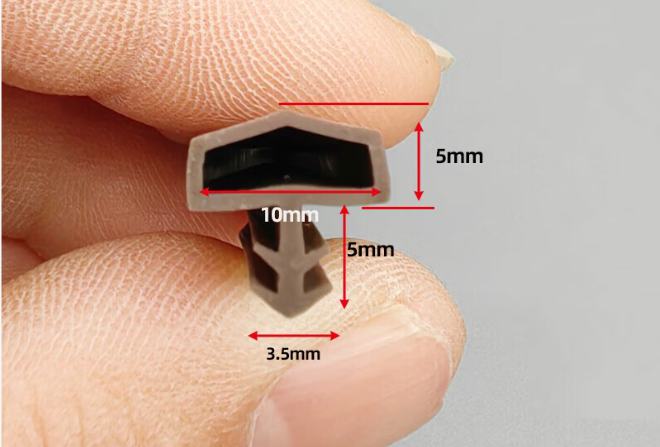
Many people ignore the profile card slot design. When high-quality screen window profiles leave the factory, standardized card slots have been reserved for embedding sealing strips, windproof strips, lock blocks, buckles, and hinge bases.
The size of the rubber strip slot of the qualified profile is standard, and the EPDM rubber strip can be directly stuck in and will not fall off easily; the profile of the windproof screen window has its own windproof slot, which is matched with the windproof sheet to achieve the windproof function; the diamond mesh screen window profile has a pressing slot, which is used to press the screen, which is firmly fixed and will not be loose.
The simple profiles in the small workshop do not have prefabricated card slots. The installer glues and fixes the rubber strips and locks on site. After a long time, the colloid ages, the rubber strips fall off, the locks are loose, the seal fails, and mosquitoes drill in from the gaps. At the same time, the corners of the profiles should be connected with corner codes, and the corner codes match the inner cavity of the profiles. The size of the corner codes is adapted to the cavity of the profiles. After splicing, the diagonals are flat and the gaps are small; if the inner cavity of the profiles is not standard, the corner codes are not matched. After splicing, the height difference is large, the appearance is ugly, and the structure is loose.
Eight, screen window profile procurement and acceptance to avoid pits
Schematic diagram of screen window profile acceptance and verification
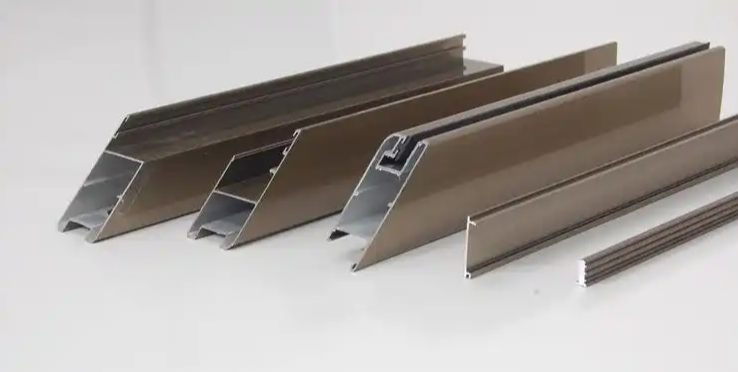
The screen window market is full of chaos, and many businesses describe it vaguely. They only talk about aluminum alloys, not mentioning wall thickness, primary aluminum, and surface craftsmanship. Here, they comb through high-frequency pit points.
First, verbally say thickening the profile, the contract does not mark the wall thickness, and the thin material is stolen and replaced when the goods arrive. The order contract states: profile material, substrate primary aluminum, wall thickness, surface process, and caliper for receipt.
Second, the spray paint pretends to be powder sprayed, and the surface is observed up close. The surface of the spray paint is reflective and greasy, and it is easy for the nails to scrape off the coating; the powder spraying is matte sand surface, and the coating is strong.
Third, recycled aluminum profiles, the surface of the profile has black spots, trachoma, burrs, and many impurities in the incision, the price is extremely low, and the risk is easy to break.
Fourth, the profiles are mixed in different positions, the outer frame is thick and the fan frame is thin. The fan frame of the diamond mesh window is the most stressed, and many merchants reduce the fan frame individually.
Fifth, the profile size is not standard, and the accessories are difficult to match. Replacement accessories cannot be found in later maintenance.
Preference is given to screen window manufacturers with profile mold opening specifications, complete supporting accessories, and local stores, rather than low-priced mobile merchants without samples and vague parameters.
Nine, daily maintenance of screen window profiles to extend the service life of the frame
Schematic diagram of cleaning and maintenance of screen window profiles
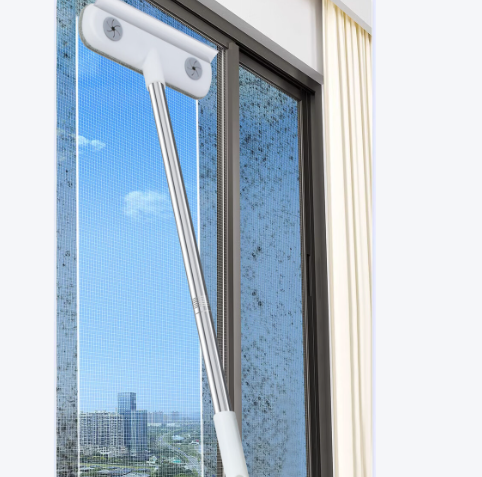
The aluminum alloy screen window profile itself is durable, but daily miscleaning can accelerate surface damage. The correct maintenance method is simple and easy to operate.
Use a soft rag with neutral water to wipe for cleaning. Do not use strong acid, strong alkali, toilet cleaning spirit, or bleach. Strong corrosive agents will corrode the sprayed surface layer, causing fading and whitening.
The dust and catkins in the window frame track and profile card slot are cleaned regularly, and the accumulation of sundries will squeeze the profile, resulting in abnormal stress on the switch and long-term distortion and deformation;
Avoid hard objects hitting the corners of the profile vigorously. The position of the corners of the profile is the stress concentration point, and the impact is easy to cause cracking and paint peeling;
If there is bumping and paint peeling on the surface, the same color refinish paint can be used to prevent the aluminum substrate from being exposed to water vapor oxidation for a long time;
For screen window profiles in coastal areas, it is recommended to rinse the surface salt of the profiles with water every six months to reduce salt spray corrosion.
Full text summary
Panorama of the complete set of screen window profiles assembled
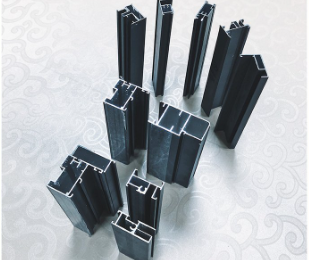
The screen window profile is the skeleton of the screen window. Its material, wall thickness, cavity structure, and surface treatment process determine the load-bearing capacity, deformation resistance, weathering life, and sealing effect of the screen window. Mainstream screen window profiles are preferably made of original 6063 aluminum alloy, with electrostatic powder spraying process. According to the invisible rewinding, diamond mesh, folding, and push-pull styles of the screen window, the corresponding wall thickness and special cavity profiles can be matched. 304 stainless steel profiles can be used in high-corrosive coastal environments. Long-term use of plastic steel profiles at home is not recommended.
When buying screen windows, you can't just focus on the price of screen nets and locks. Profiles are the foundation, and the skeleton is unstable. No matter how good the screen nets and hardware are, they will not be effective. Priority is given to screen profiles with primary aluminum, standard wall thickness, complete matching card slots, and regular powder spraying. At the same time, mark the parameters in the contract, receive the goods for verification, and avoid routines such as thin materials, recycled aluminum, and spray paint pretending to be powder spraying. Do a good job of simple cleaning and maintenance in the later stage. A set of screen window frames can be used stably for more than ten years, and continue to play a role in anti-mosquito protection.