

Door and window slide
Door and window slide professional science: material, classification, purchase, installation and maintenance guide
What is the door and window slide rail and its function in the door and window system?
Installation diagram of door and window slide rail position
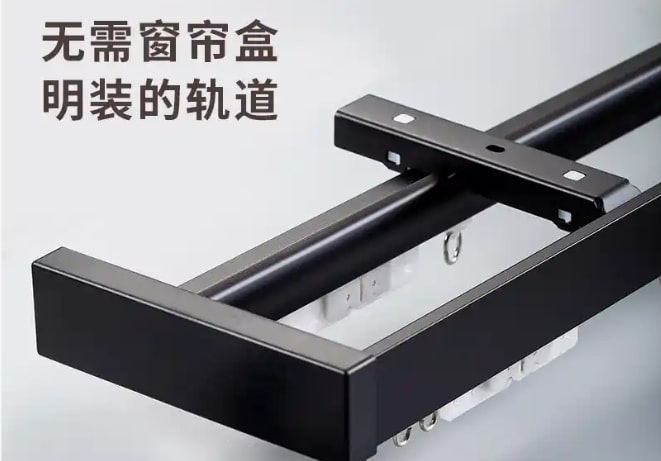
Door and window slides, also known as door and window rails, sliding rails, and chutes, are the core sports accessories for sliding windows, sliding doors, balcony sliding doors, wardrobe sliding doors, and broken bridge aluminum sliding doors and windows. When purchasing doors and windows, many owners focus on profiles, glass, and sealing strips, but ignore small slides. They do not know whether sliding doors and windows can be used smoothly and their service life is largely determined by slides.
The door and window slides bear the weight of the door and window sash, guide the fan body to slide smoothly, and cooperate with the pulley to complete the push-pull opening and closing action. High-quality door and window slides are smooth to push and pull, silent and wear-resistant, strong load-bearing, and not easy to deform; inferior slides will get stuck, shaking, derailment, abnormal sound, and rust after being used for a period of time. In serious cases, it directly causes the push-pull doors and windows to fail to switch normally, and even the safety hazard of the window sash falling off.
Unlike ordinary furniture slides, door and window slides are exposed to outdoor or balcony humid environments for a long time, and must withstand sun exposure, rain, temperature difference, and dust erosion. They have higher requirements for wear resistance, rust prevention, load-bearing, and deformation resistance. This article provides professional explanations from the material classification, style distinction, core parameters, process standards, installation points, common faults, and purchase and avoidance pits of door and window slides. It is suitable for decoration owners, door and window dealers, and engineering procurement references.
Second, compare the mainstream materials of door and window slides to understand the advantages and disadvantages of different materials
Comparison chart of slide rail samples of different materials
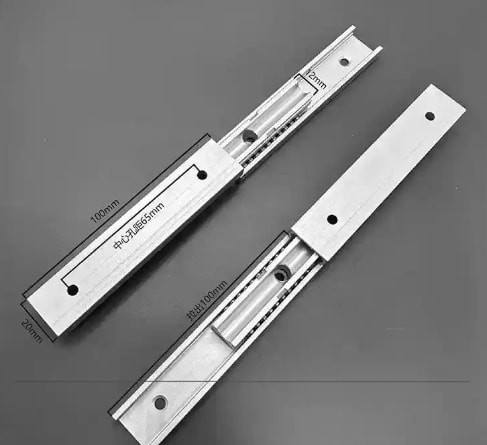
The mainstream materials of door and window slides on the market are divided into four categories: aluminum alloy slides, stainless steel slides, galvanized steel slides, and copper slides. The cost, wear resistance, and rust resistance of different materials vary significantly, and the adaptation scenarios vary.
The aluminum alloy slide rail is the most commonly used style for aluminum sliding doors and windows of broken bridges. It is mostly extruded with 6063-T5 primary aluminum profile, and the surface is anodized, sprayed or fluorocarbon treated. The advantages are light weight, not easy to rust, and strong plasticity. It can be used as a thickened and widened track, which is suitable for the integrated color scheme of doors and windows. The disadvantage is that the hardness of aluminum itself is low. If the wall thickness is too thin, it is easy to deform in long-term load bearing, so the aluminum alloy slide rail focuses on the wall thickness.
Stainless steel slides are divided into 201, 304, and 316 stainless steel. 304 stainless steel slides are preferred for home improvement balconies and coastal areas. Stainless steel has high hardness, wear resistance, strong rust resistance, and excellent load-bearing performance; 201 stainless steel is inexpensive, but has poor corrosion resistance. Rust spots will appear in 1-2 years in humid environments, not suitable for balconies, outdoor doors and windows; 316 stainless steel has strong salt spray resistance, and is mostly used in seaside and high humidity areas, with higher costs.
Galvanized steel slide rail has the lowest cost, the base material is carbon steel, the surface is hot-dip galvanized, and the wear resistance is good. However, once the galvanized layer is scratched, the internal steel will quickly rust, and it is generally only used in low-end engineering doors and windows. It is not recommended for home improvement.
The copper slide rail has excellent wear resistance, quietness, rust resistance, and good texture, but it is expensive and weighs a lot. It is only used for high-end customized doors and windows, and the market penetration rate is very low.
Brief summary: Inland home improvement is preferably thickened 304 stainless steel slide or thickened aluminum alloy fluorocarbon sprayed slide; coastal humid environment is preferred 304/316 stainless steel slide; low-cost projects will only consider galvanized steel slide.
Third, the door and window slide rail structure style classification, different tracks adapt to different doors and windows
Single track, double track, three track, hanging rail style comparison chart
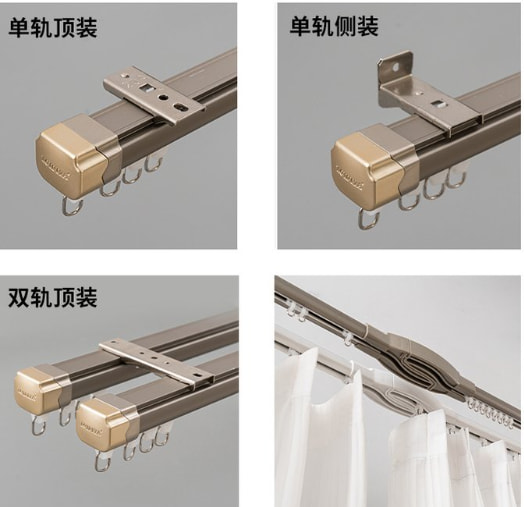
According to the structural form, door and window slides are mainly divided into two categories: ground rails and suspended rails. At the same time, according to the number of rails, they are divided into single rails, double rails, three rails, and multiple rails. The application scenarios of different structures are different.
The ground rail is the most common style on the market. The track is pre-embedded or fixed on the ground and the lower edge of the window frame, and relies on pulleys to carry the fan on the track. The ground rail is divided into high and low rails, flat rails, and water-retaining rails. The high and low rails have good waterproof effect and are mostly used for balcony sliding doors. Rainwater is not easy to flow back into the room; the surface of the flat rail is flat and not easy to trip, which is suitable for indoor sliding doors; the water-retaining track is a special structure for sliding windows. It has its own water-retaining edge to prevent rainwater from infiltrating into the room along the gap. The advantages of the ground rail are strong load-bearing capacity and good stability. The ground rail is the first choice for large heavy-duty sliding doors; the disadvantage
The hanging rail, that is, the hanging and sliding track, is installed above the door leaf, the weight is borne by the upper beam, and there is no track on the ground. The advantage is that the ground has no grooves, easy cleaning and high appearance; the short board has extremely high requirements for the load-bearing and installation process of the upper beam. If the profiles and fixing parts are not up to standard, the door leaf will fall and shake after long-term use, so the hanging rail is more suitable for lightweight small door leaves, not heavy-duty large glass sliding doors.
According to the number of tracks: double track is suitable for two sliding doors and windows; three track is mostly used for three sliding doors, which can achieve large opening ventilation; multi-track is mostly used for balcony sliding doors with large openings, which has a larger ventilation area.
Fourth, the core technical parameters of the door and window slide rail, the standard for professional judgment of the quality of the track
Slide rail wall thickness, slot structure details
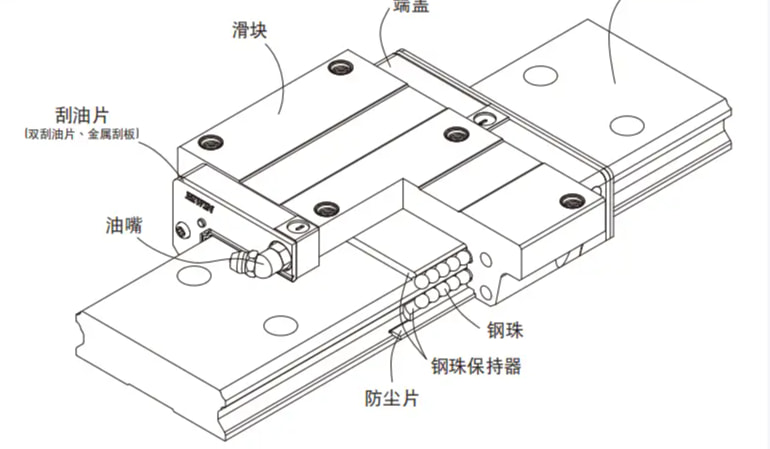
When selecting door and window slides, you should not only consider the smooth surface, but also focus on several core parameters, which are also key indicators for industry acceptance.
The first is the wall thickness. The recommended wall thickness of aluminum alloy slide rails is ≥1.2mm for conventional home improvement, and the wall thickness of heavy sliding door rails is ≥1.4mm; the wall thickness of stainless steel slide rails is recommended to be ≥1.0mm. For rails with insufficient wall thickness, under the long-term heavy pressure of the door leaf, the track slot will be crushed and deformed, and push-pull cards will appear directly. Many low-priced doors and windows have a wall thickness of only 0.6-0. 8mm, no problem for short-term use, and it will be deformed and scrapped in 1-2 years.
The second is the slot structure. The high-quality slide rail adopts an arc-shaped slot design, which matches the curvature of the pulley. The pulley has a high degree of fit, uniform force, and smooth and silent push-pull. The inferior track slot is easy to slot at right angles, and the pulley's force points are concentrated. It wears quickly and is easy to shake and derail.
The third is the surface treatment process. Aluminum alloy tracks are anodized and fluorocarbon sprayed, resulting in strong coating adhesion, scratch resistance and sun resistance. Stainless steel tracks are generally brushed, and some high-end products are mirror polished. Tracks with poor surface treatment are prone to fading and peeling.
The fourth is to adapt the pulley. The slide rail and pulley are a set of matching systems. The hard track is matched with a nylon silent pulley, which has a low friction coefficient and low noise. If the track hardness is high and the pulley material is poor, it will accelerate the wear of the pulley. On the contrary, the track is soft and the pulley hardness is high, and the track is quickly worn out.
In addition, the regular door and window slides need to be adapted to the national standard of doors and windows, pass the wind pressure resistance and hot and cold cycle test, adapt to the change of temperature difference in the four seasons, and will not be stuck due to thermal expansion and contraction.
V. Door and window slide rail production process and silent wear-resistant design
The actual picture of the extrusion and grinding process of the slide rail production
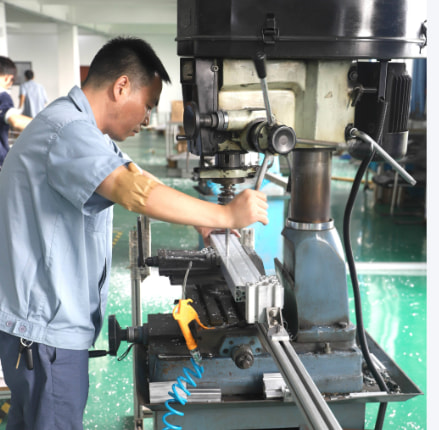
The production process of high-quality door and window slides is rigorous. Aluminum alloy rails are extruded, straightened, cut, deburred, surface treated, and precisely grooved. Stainless steel slides are cut, bent, polished, and fully controlled for tolerances.
Many users care about the mute effect. Mute is not just about pulleys, but also the process of the track plays a key role. The high-quality track groove is smooth and burr-free, and some high-end slides will be equipped with wear-resistant lining strips. The lining strips are generally made of POM wear-resistant material to reduce the noise of direct metal friction, reduce track wear, and prolong the life of the whole set of accessories.
Simplify the grinding process during the production of inferior tracks. There are burrs and unevenness inside the notch, which makes a lot of noise when pushing and pulling. At the same time, the pulley continues to wear and tear, shortening the service life of the whole set of accessories. There are also some small factories with large track size tolerances, and the width of the same batch of tracks varies. After installation, it is tight and loose when pushing and pulling, and the experience is very poor.
Standardized installation points for door and window slides, installation determines the use experience
Installation and construction map
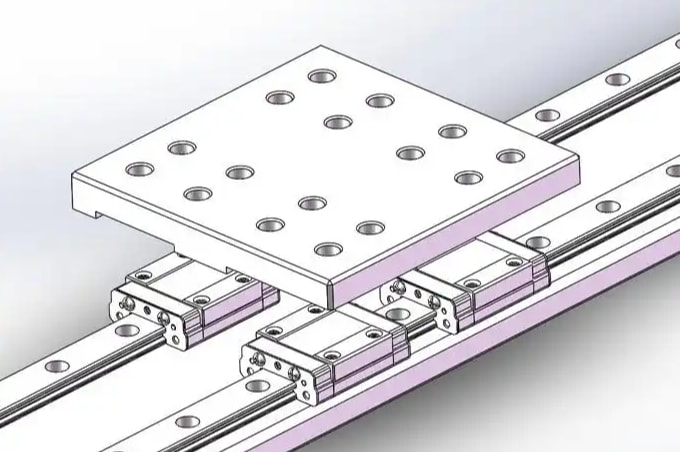
There is an industry saying for door and window slides: three points of track, seven points of installation. No matter how good the slide is, if the installation is not level or fixed, it will definitely get stuck and make abnormal noises in the future.
The first point of installation: the track must be leveled. When the track is inclined, the door leaf will automatically slide to one side, the push-pull resistance will increase, the pulley will be stressed on one side, and the wear speed will be doubled. When installing, rely on the level calibration, and the error is controlled within the specification range.
The second point: fix firmly, fix the screw spacing evenly, both ends of the track, the middle of the force point must be screws, not only fixed at both ends. The track in the aluminum alloy window frame, the screw can not penetrate the sealing structure, to avoid water seepage. Balcony sliding door ground rail, need to do a good job of glue sealing at the bottom of the track to prevent water from penetrating from the bottom of the track into the room.
The third point: the installation of the hanging rail, the load-bearing beam above must be reinforced, the number of fixed parts must be up to standard, and the adjustment gap can be reserved. The height of the door leaf can be adjusted later to prevent falling.
After the installation is completed, clean the aluminum chips and dust inside the track, and adjust the height of the pulley to ensure smooth pushing and pulling without shaking, and even gaps after closing.
Common failures, causes, and maintenance methods of door and window slides
Schematic diagram of slide rail cleaning and fault maintenance
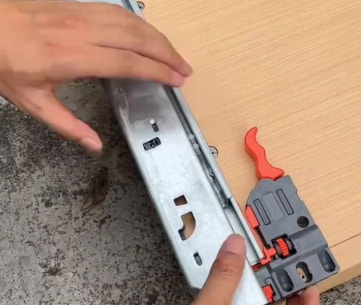
In daily use, the most common failures of door and window slides are push-pull cards, abnormal noises, door leaf shaking, derailment, and rust.
The most common reasons for the card: dust accumulation in the track groove, sand and gravel stuck on the pulley; followed by track deformation, pulley wear, and uneven track. Treatment method: regularly clean the groove dust and gravel, clean it with a brush or vacuum cleaner, and do not directly push violently.
Abnormal noise: Metal friction abnormal noise, mostly due to the lack of wear-resistant lining or pulley bearing damage; special silicone-based grease can be added, and oil and butter are prohibited. Oil is easy to stick to ash, and the more you use it, the more stuck it becomes.
Rust: mostly 201 stainless steel, galvanized track, or the seal is damaged and water enters, and the humid environment accelerates rust. Slight rust points can be polished and rust removed, and serious rust can directly replace the track.
Daily maintenance suggestions: indoor door and window slides are cleaned once every 3-6 months; balcony sliding door slides are recommended to be simply cleaned every month; increase the frequency of inspection in coastal humid areas to dry the track water in time.
Eight, door and window slides to buy pit avoidance guide
Mind map of key points for buying pit avoidance
Many consumers buy doors and windows, and merchants promise thicker profiles, but they are equipped with low-end slides, leaving hidden dangers in the later stage. Here are a few purchase avoidance points.
First, distinguish between the main profiles of doors and windows and the supporting slides. Many merchants only mark the aluminum wall thickness, and the slides are reduced separately. Before placing an order, clarify the material and wall thickness of the slides;
Second, don't pursue low-cost stainless steel slides blindly. Ask whether 201 or 304 stainless steel is not suitable for balconies and outdoor doors and windows.
Third, heavy-duty sliding doors give priority to thickening ground rails, and do not blindly choose hanging rails, which have extremely high requirements for installation and substrate.
Fourth, the matching pulley is confirmed synchronously. No matter how good the track is, inferior pulleys will accelerate the damage of the entire system.
Fifth, give priority to the sliding rails that match the doors and windows of the same factory. The matching degree of the rails, pulleys and grooves in the same factory is higher, which reduces running-in failures.
Door and window slides are small accessories in doors and windows, but they directly affect the use experience and service life of doors and windows. When decorating and engineering procurement, this detail cannot be ignored. Combine the use environment, hole size, door leaf weight, choose the appropriate material and structure of the slide rail, and cooperate with the standard installation to ensure long-term smooth, silent, stable and durable sliding doors and windows.