

Screen material
Screen material full analysis | Different screen material characteristics, advantages and disadvantages, purchase and application scenarios guide
Comparison of samples of various screen window materials (high-transparency mesh, stainless steel, diamond mesh, PET mesh, nylon mesh are placed together)
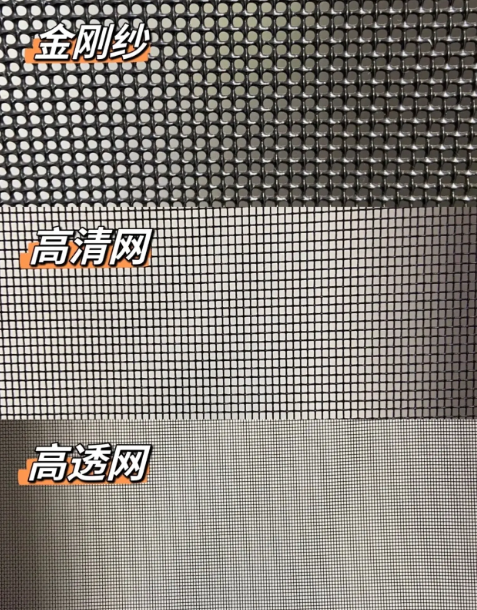
First, the basic understanding of screen window materials: why choosing the right material is more important than style
Screen windows are functional components of doors and windows. The core function is to prevent mosquitoes, catkins, and dust. Some high-end screen windows also take into account the needs of protection, anti-theft, and pet anti-grab. When many owners choose screen windows, they only focus on whether they are invisibly rolled back, folded, or flattened, but ignore the material of the mesh itself. This is also the fundamental reason why the screen window is not used long, easy to break, poor light transmission, and difficult to take care of.
There are many styles of screen windows on the market, but the mesh substrate is the core of the screen window. The same style, replaced with different materials, has a very large difference in service life, light transmission and ventilation, tensile strength, weather resistance, and price. Inferior screen window materials turn yellow, brittle, and broken after a few months of use; high-quality materials can be used stably for many years, and remain transparent and beautiful for a long time.
The choice of screen window material needs to be combined with the use environment: high-rise residential buildings, low-rise first floor with yard, children and pets, coastal salt spray areas, street-facing dusty areas, and the suitable mesh materials are completely different. This article will systematically sort out the mainstream screen window materials, disassemble the composition, performance, advantages and disadvantages, parameters, and applicable scenarios of each material, so as to help decoration owners and project purchasers accurately select models and avoid material purchase traps.
Old-fashioned nylon screen window aging brittle broken real shot, yellowing, weathering damage details
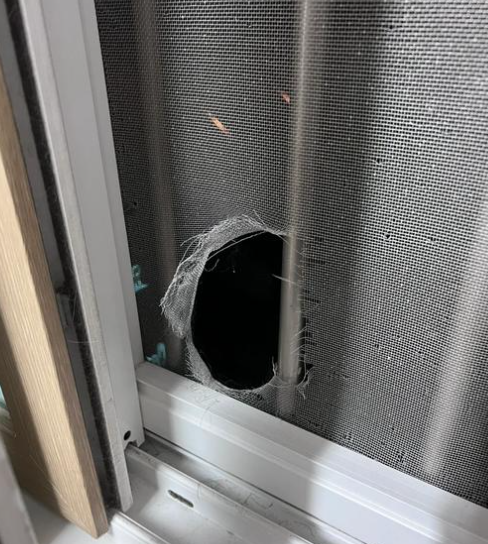
Second, nylon screen window (PP polyester screen window): traditional basic screen window material
Nylon screen window, also known as polyester PP screen, is the earliest popular screen window material in China. The raw material is polypropylene or polyester fiber, which is woven and formed by wire drawing. It belongs to chemical fiber mesh materials and is also the most commonly used screen window in home improvement, rental housing, and engineering simple decoration in the early years.
The conventional wire diameter of nylon gauze is 0.18mm-0.25mm, and the mesh number is generally 1816 mesh and 2020 mesh. The advantages are very outstanding: low price, light weight, soft texture, good ventilation and breathability, many color choices, black, gray, white are available, and it is installed on invisible screens and simple fixed screens. Strong adaptability.
However, the shortcomings of nylon material are very obvious: weak UV resistance, long-term outdoor sun exposure, polymer chains are easy to age and break. Ordinary nylon yarn will turn yellow and brittle in the open air for 2-3 years, and crack when pulled lightly; the temperature resistance is average, and it is easy to accelerate aging near the high temperature of the stove; the scratch resistance is poor, and it is easy to scratch holes when there are cats and dogs at home; at the same time, the static electricity is strong, and it is very easy to hang catkins and dust, and the cleaning frequency is high.
Suitable for scenarios: short-term rental, temporary simple screen windows, indoor lighting inner windows, short-term use projects with limited budget; not suitable for first floor, coastal, long-term sun-exposed balconies, and families with pets. Now new home decoration has rarely promoted pure nylon screen windows, and most of them are only used for simple tooling projects.
304 stainless steel screen mesh close-up, metal woven texture
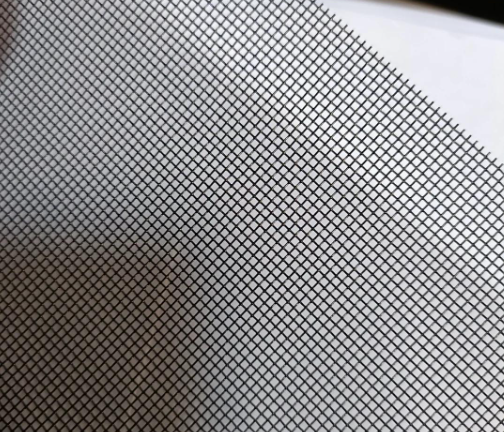
Third, stainless steel screen net: anti-rust metal screen basic material
Stainless steel screens are made of stainless steel wire, and the mainstream is divided into 201 stainless steel gauze and 304 stainless steel gauze. The price and rust resistance of the two are very different, and they are also the most easily confused materials in the market.
201 stainless steel yarn: high manganese content, weak rust resistance, suitable for dry inland indoor use, in humid, rainwater, coastal salt spray environment, rust points will appear in half a year to a year, rust water flows along the window frame to pollute the profile, the price is cheap, many low-cost invisible screens will use 201 gauze.
304 stainless steel yarn: national standard food-grade stainless steel, nickel-chromium content up to standard, strong rust-proof and corrosion-resistant ability, conventional wire diameter 0.15-0.22mm, fine weaving, mostly 2020 mesh. Advantages: balanced ventilation and light transmission, not easy to electrostatic ash accumulation, flame retardant, not easy to be easily scratched by pets, good toughness, not easy to greatly deform.
Disadvantages of stainless steel mesh: the metal wire is hard, easy to leave creases after bending, and local deformation will occur when squeezed vigorously; the light transmission is not as good as that of PET high-transparency mesh; the wire diameter is thin, and the anti-theft protection ability is weak, so it cannot be used as a protective diamond mesh; the color is single, most of which are natural colors and gray spray models.
Applicable scenarios: high-rise residential invisible rewinding screen windows, folding screen windows, families who pursue cost-effectiveness, do not want to change yarn frequently, and do not have strong pets; when purchasing, be sure to clearly mark 304 stainless steel in the contract to avoid merchants using 201 instead.
Diamond mesh screen window material cross-section real shot, thick wire stainless steel woven plate
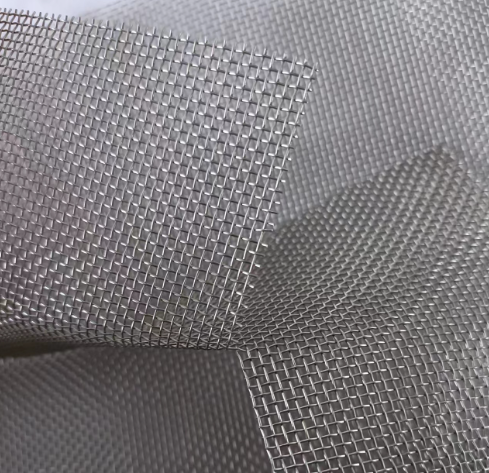
IV. Diamond mesh (high-strength stainless steel anti-theft screen window material): the mainstream material of protective screen windows
The essence of diamond mesh is thickened and thickened stainless steel woven sheet, the vast majority of which are made of 304 and 316 stainless steel raw materials, which are different from filament stainless steel yarn. The diameter of diamond mesh wire is thick, commonly 0.5mm to 0.8mm, and the mesh size is 11 mesh and 12 mesh. It is a special material that takes into account anti-mosquito + anti-theft, anti-fall, and anti-pet in the screen material.
The production process is stainless steel wire plain weaving, after high pressure leveling treatment, the mesh surface is flat and hard, and the impact resistance is extremely strong. Ordinary scissors are difficult to cut. It is a popular choice for families with yards and children on the first floor. 316 diamond mesh has a higher molybdenum content than 304, which is specially designed for coastal cities, islands, and chemical plants. It resists salt spray corrosion, is not easy to rust, and has a higher cost.
The material advantages of diamond mesh: high strength, good anti-skid protection effect, prevent children from climbing and falling windows, cats and dogs from scratching and biting; flame retardant and high temperature resistance; long service life, qualified 304 diamond mesh can be used outdoors for more than 10 years; not easy to accumulate dust, simple care.
Shortboard: Thick silk, dense weaving, lower light transmittance and ventilation rate than high-transparency mesh, and grid occlusion in the field of vision; greater weight, high load-bearing requirements for screen window frames, hinges, and track hardware, and poor quality of profiles and hardware are prone to door leaf falling; the unit price belongs to the higher gear in the screen window material; the color is mainly dark gray and black, with fewer choices.
Applicable scenarios: low-rise first floor, street courtyard, villa, families with young children, windows that need anti-theft protection; priority is given to upgrading 316 material diamond mesh in coastal areas. Many customers misunderstand: all diamond mesh is the same. In fact, wire diameter and stainless steel grade are the core indicators, and the protection level of 0.5mm and 0.8mm is very different.
PET high-transparency screen window net, close-range transparent effect real shot
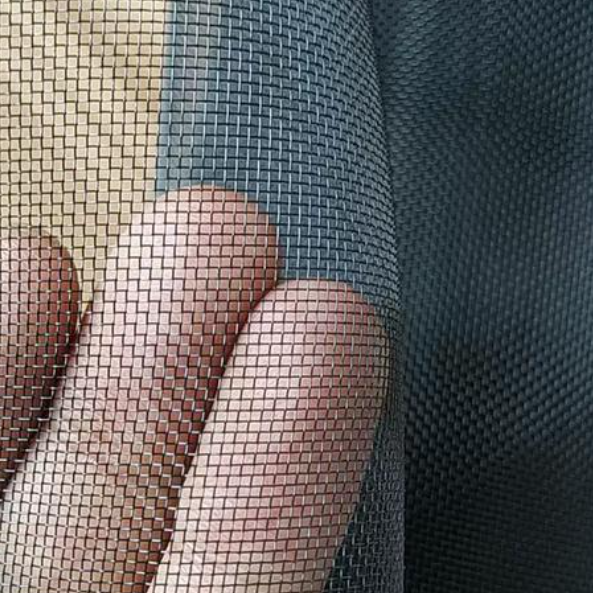
PET high-transparency mesh (polyester high-transparency mesh): the current home improvement popular Internet celebrity screen material
PET high-transparency mesh, the raw material is polyethylene terephthalate, which belongs to the improved and upgraded polymer polyester material. It is also the mainstream material of minimalist home improvement, floor-to-ceiling windows, and large balcony screens in recent years. It is widely used in invisible rewind screens, casement screens, and pocket folding screens.
The PET material has been modified with anti-UV and added anti-UV masterbatch, which is not the same material as the old-fashioned ordinary nylon PP yarn. The wire diameter is extremely fine, generally 0.12-0.15mm, high mesh weaving, mainly 24 mesh and 26 mesh. The biggest feature is high transparency, almost "invisible net" from a distance, excellent lighting and vision, no blocking the landscape outside the window, large ventilation, minimalist and advanced visual effect, very suitable for large floor-to-ceiling windows and viewing balconies.
Advantages of PET high-permeability mesh: soft and light texture, smooth rewinding, invisible screen window is not easy to get stuck; after adding anti-UV formula, aging resistance is far better than old-fashioned nylon; surface after anti-static treatment, catkins, dust are not easy to adhere, cleaning is simple; color is mainly deep space gray, high aesthetics; light weight, small burden on screen window hardware.
Disadvantages: It is made of chemical fiber, and no matter how much it is improved, it cannot achieve the anti-scratch and anti-theft ability of metal mesh. Large and fierce dogs and cats are easy to scratch; it is not resistant to high temperature, so do not approach the kitchen open flame stove; low-priced and inferior PET on the market does not add anti-UV agent, and it will still age and become brittle after 1-2 years of sun exposure.
Applicable scenarios: high-rise viewing rooms, floor-to-ceiling windows, sun rooms, families who pursue minimalist vision and do not have strong pets are now a popular choice for home improvement custom screens. Purchasing key confirmation: whether it is anti-UV modified PET, reject ordinary PET raw materials without anti-aging formula.
Fiberglass screen mesh sample, high temperature resistant fiberglass material
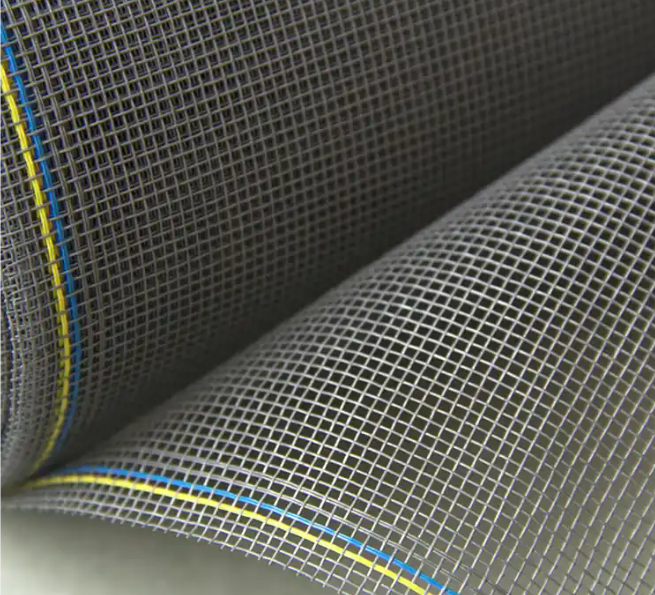
Glass fiber screen mesh (glass fiber screen mesh): commonly used materials for tooling projects
Glass fiber screen window, the substrate is glass fiber silk, the outer layer is coated with PVC coating, and it is also a common material for engineering supporting screen windows. Many real estate hardcover matching original screens are glass fiber mesh.
The core advantages of glass fiber material are: strong dimensional stability, small thermal expansion and contraction deformation, not easy to stretch and lengthen; excellent flame retardant performance, does not support combustion; moderate price, good factory flatness, and stable supply of large-scale projects; When the surface coating is complete, the weathering performance is better than that of ordinary nylon.
Short board: The material is brittle, after bending and repeated folding, the coating is easy to crack, the glass fiber is broken, and white broken silk appears; the toughness is poor, and the hole is directly broken by the impact of sharp objects, which is difficult to repair; the hand feels hard, and the rewinding screen window is rolled repeatedly for a long time, which is easier to break the wire. There are relatively few customers who buy home improvement alone.
Applicable scenarios: real estate hardcover matching, engineering batch fixed screen windows, office, factory windows; not suitable for invisible rewinding screen windows, frequent need to disassemble and clean, and household scenes with pets.
Comparative diagram of 316 stainless steel gauze salt spray test
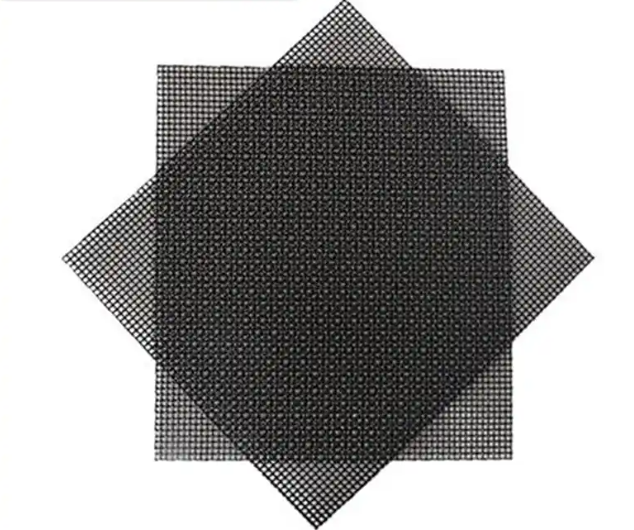
Special screen material: 316 stainless steel, aluminum alloy gauze and other niche materials analysis
In addition to the above five mainstream materials, there are also some niche screen window materials in the market, which are highly targeted.
316 stainless steel gauze mesh: filament woven model, consistent with 304 structure, molybdenum element is added, salt spray resistance, acid and alkali corrosion resistance, rigid demand around seaside, wharf, chemical plant, anti-rust grade ceiling, the disadvantage is much more expensive.
Aluminum alloy gauze: aluminum alloy wire weave, does not rust, light weight, but the aluminum material is soft in texture, easy to pull and deform, poor impact resistance, and has a very low market share. It is rarely recommended for home improvement.
Bulletproof wire, PE special protective yarn: mostly used in special security scenarios, civilian home improvement is rare, expensive, and ordinary customers will not choose it.
Here is a key point to remind the industry: there is no "never-breaking, never-aging" screen window material, but it is resistant to different environments. Metal materials are afraid of corrosion, chemical fiber materials are afraid of ultraviolet rays and sharp scratches, and the core of selection is to match the environment, not blindly pursue the most expensive materials.
Screen window material cleaning comparison chart, different mesh material cleaning demonstration
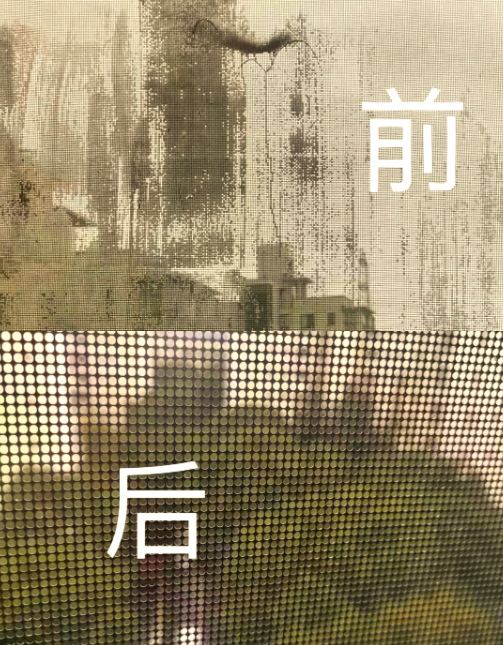
Eight, different screen material cleaning and maintenance methods, aging speed comparison
The physical properties of different substrates are different, and cleaning and maintenance methods cannot be generalized. Wrong cleaning will accelerate screen damage.
Nylon, PET chemical fiber gauze: can be rinsed with low-pressure water, with neutral detergent soft brush to sweep, prohibit strong friction of steel balls and hard brushes, and prohibit strong acid and alkali cleaners; chemical fiber materials should not be exposed to the sun for a long time, aging speed PET anti-UV < ordinary nylon.
Stainless steel, diamond mesh metal yarn: rinse with water, stubborn stains can be cleaned with a soft brush; metal mesh focuses on avoiding long-term water accumulation, and surface salt is regularly rinsed in coastal areas to delay corrosion; diamond mesh has high strength and is not easy to break when slightly bumped, but after the coating is scraped off, the steel wire is exposed and easy to rust.
Glass fiber mesh: wipe as gently as possible, do not bend repeatedly, the coating cannot be repaired after damage, only replace the gauze mesh.
Aging cycle reference (normal outdoor balcony environment): ordinary nylon yarn 1-3 years; glass fiber coated yarn 3-5 years; 304 fine stainless steel yarn 5-8 years; UV-resistant PET high-transparency mesh 5-7 years; 304 diamond mesh 8-12 years; 316 material more than 10 years.
Screen window material selection comparison table to intuitively distinguish applicable scenarios
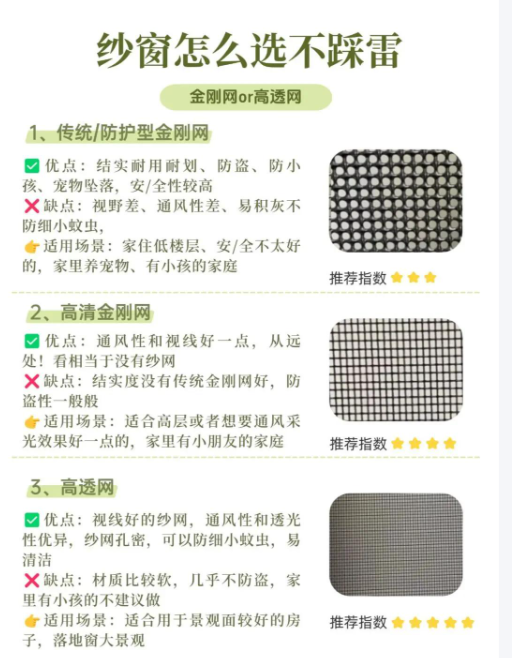
Nine, screen window material selection to avoid pits, purchase common routines to disassemble
Many businesses will play material word games, which are the hardest hit areas for screen window purchases. Here are the high-frequency traps:
1. Pass 201 stainless steel as 304 stainless steel gauze, the price is very low, and it will rust later; simple self-test: it can be tested with stainless steel detection solution.
2. Ordinary nylon PP yarn, the packaging is marked with "high-transparency mesh", which is confused into anti-UV PET high-transparency mesh. The appearance looks close in the short term, but the aging speed difference is huge.
3. The virtual standard wire diameter of diamond mesh, marked with 0.7mm, is actually only 0.4mm, which greatly reduces the protection ability.
4. The PET network does not distinguish whether it is anti-UV. The low-priced non-anti-UV models are sold to balcony sun-exposed customers, and they turn yellow and break in a short time.
5. The invisible screen window forcibly recommends diamond mesh, which is too heavy, causing the screen window track and hinge to overload and frequent falling failures.
Suggestions for purchase order: first determine the floor to use, whether there are pets, whether it is coastal, and whether it is window style, and then lock the material, rather than setting the style first and then matching the gauze. High-level viewing priority anti-UV PET high transparency; anti-theft on the first floor 304/316 diamond mesh; high-level without pets on a budget 304 fine stainless steel yarn; glass fiber mesh can be used for engineering simple packaging.
Comparison of real scene effects of various screen window materials
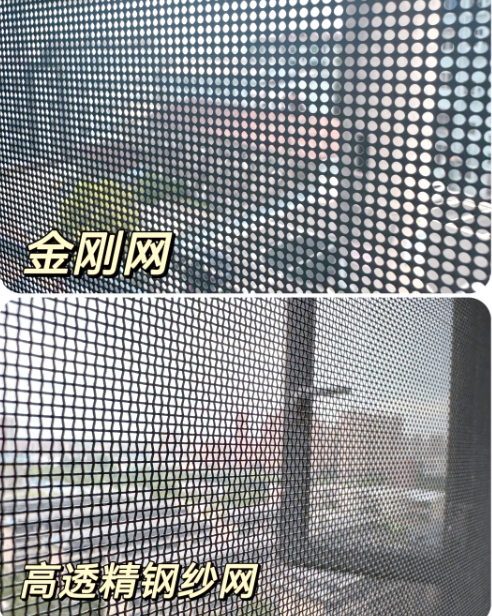
Full text summary
The screen window material seems simple, but behind it are multiple professional knowledge of polymer materials, metal anti-corrosion, and textile weaving. Nylon, glass fiber, 304 stainless steel, PET high-transparency mesh, diamond mesh, each material has a clear positioning, advantages and shortcomings, and there is no universal screen window material.
When choosing screens, home improvement owners and project purchasers should not only be attracted by such promotional words as "high definition invisible, anti-theft diamond network", but also give priority to the use environment: floor height, sun exposure time, whether it is facing the sea, whether there are cats and dogs at home, and window types to match the screen substrate.
Metal screens are better than anti-grab, protection, and pull resistance, and chemical fiber high-transparency screens are better than transparent vision and light appearance; reasonable selection of materials and regular simple maintenance can greatly prolong the service life of screens, reduce the trouble of later yarn change and maintenance, and take into account mosquito protection, beautiful lighting and living safety