

Aluminum alloy swing door
Aluminum alloy swing door professional detailed explanation: profile structure, process parameters, selection, installation and maintenance guide
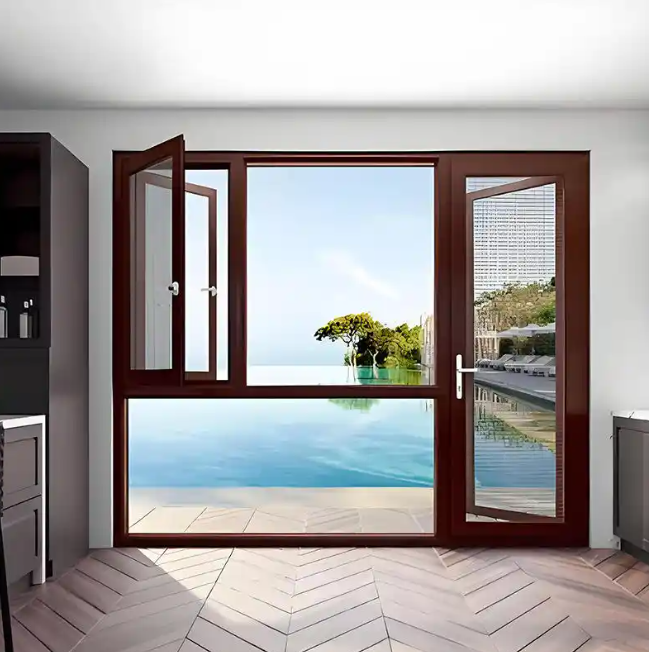
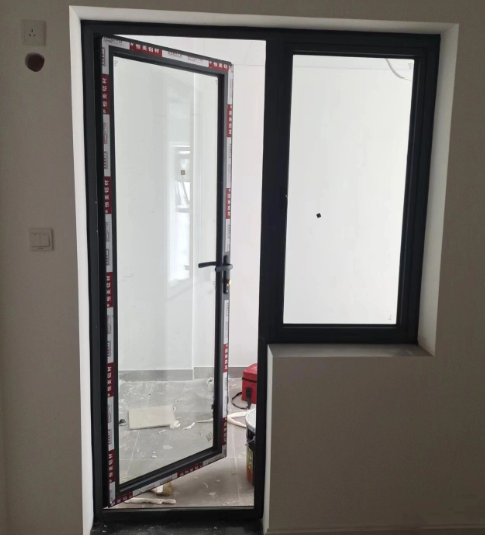
Home improvement balcony aluminum alloy swing door floor real scene renderings
First, aluminum alloy swing door product overview and mainstream application scenarios
Aluminum alloy casement doors are casement doors composed of aluminum alloy profiles as the main frame, with glass, sealing systems, and special hardware accessories. They are opened inward or outward by hinges. They are widely used in the field of home improvement and tooling. Many consumers easily confuse aluminum alloy casement doors with sliding doors and broken bridge sliding doors. The biggest feature of casement doors is strong sealing, good sound insulation and heat insulation effect. The opening method is one-way casement, which is different from sliding sliding doors.
With the upgrading of home improvement quality, aluminum alloy swing doors are divided into two major systems: ordinary non-broken bridge aluminum alloy swing doors and broken bridge thermal insulation aluminum alloy swing doors. Non-broken bridge models are affordable and suitable for warehouses, factories, shop aisles, and simple partitions; broken bridge aluminum alloy swing doors are added with thermal insulation strip structure, which has outstanding energy-saving performance. They are mostly used in bedroom doors, bathroom doors, kitchen doors, balcony connecting doors, and villa entry side doors.
The aluminum alloy material itself has the advantages of light weight, high strength, not easy to rust, rich colors, and strong plasticity. Compared with wooden doors, it is moisture-proof and waterproof, and not easy to deform. Compared with plastic steel doors, it is better to resist aging and rigidity. In scenes such as humid bathrooms, kitchens with heavy oil fumes, balconies in the sun and rain, shops, and factory partitions, aluminum alloy swing doors have significant advantages. It takes into account multiple functions of lighting, ventilation, partition, sound insulation, and protection. It is also a standardized category product mainly promoted by door and window manufacturers.
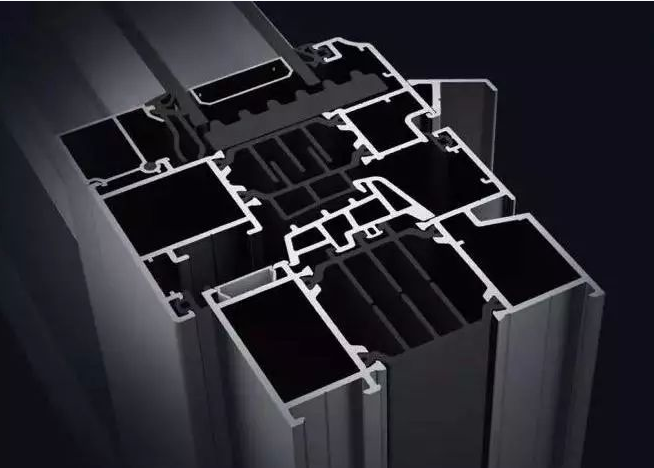
Disassembly diagram of aluminum alloy swing door profile frame, display of frame, fan, heat insulation strip and rubber strip
Second, aluminum alloy swing door profile specifications, material standards and core parameters
Profile is the basis for determining the quality of aluminum alloy swing doors. The base material of the national standard aluminum alloy swing door is 6063-T5 aluminum alloy. T5 represents air-cooled aging treatment. The hardness and tensile strength of the profile meet the standards, and it is not easy to bend and deform. Inferior products on the market will use recycled aluminum, which has many impurities and soft profiles. It is easy to twist and close the gap after being stressed.
The wall thickness of general profiles in the industry is clearly distinguished: the conventional wall thickness of home improvement indoor bathroom and kitchen swing doors is 1.2mm and 1.4mm; the balcony heavy-duty broken bridge swing door and villa entry side door are recommended to be 1.6mm and 1.8mm; the factory and shop doors can choose 2.0mm thickened profiles according to the size of the door leaf. The larger the door leaf, the thicker the profile needs to be matched. Thin profiles are prone to door leaf falling, hinge deformation, and switch cards when making large fans.
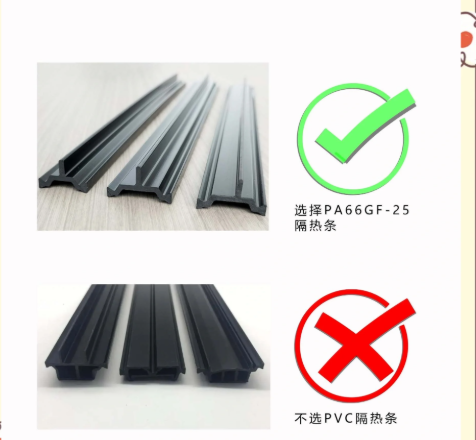
The core component of the broken bridge model is the PA66 nylon thermal insulation strip, which is the key to thermal insulation performance. The national standard thermal insulation strip is PA66 plus 25% glass fiber, which is resistant to high temperature and not easy to shrink and break. Low-cost products use PVC plastic strips, which are softened by heat, and the insulation fails. After a long time, the profile deforms and cracks.
There are various styles of profile sections, including extremely narrow styles, wide frame styles, arc styles, and Chinese antique styles. Extremely narrow aluminum alloy swing doors are popular for home improvement in recent years. The viewing surface is as narrow as 8mm, 10mm, and 12mm, which is simple and transparent, suitable for modern minimalist decoration style. However, the extremely narrow profile has a small cavity and limited load-bearing capacity. It is not recommended to use extremely narrow series for large-size door fans.
Comparison of PA66 thermal insulation strip and PVC inferior thermal insulation strip
Third, aluminum alloy swing door glass selection, sealing system and performance classification
The sound insulation, heat insulation, and safety performance of aluminum alloy swing doors are largely determined by the glass and sealing system, and are also the most overlooked aspects when purchasing.
Indoor conventional kitchen and bathroom aluminum alloy swing doors, commonly used 5mm, 6mm tempered single glass to meet the basic lighting partition; 5 + 12A + 5 hollow tempered glass is recommended for balconies and street-facing rooms, and the hollow layer is filled with dry air, which greatly enhances sound insulation and heat insulation; for street-facing noisy apartment types, laminated tempered glass can be selected to isolate low-frequency noise; for high-end solutions, Low-E insulating glass can be selected to block ultraviolet rays, reduce indoor heat loss, and insulate in summer and winter.
Safety requirements: Glass with an area greater than 0.5 square meters must be tempered glass with a 3C logo to prevent sharp fragments from hurting people after being broken.
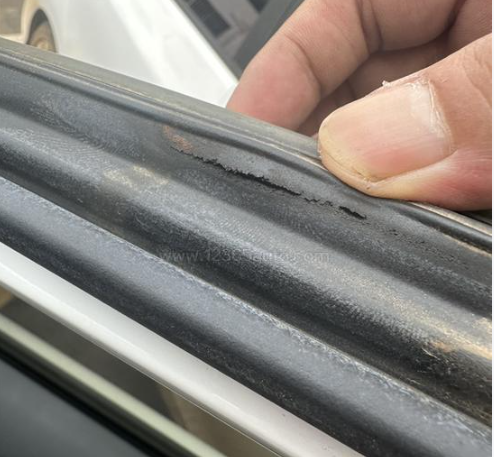
The sealing system adopts a multi-channel sealing structure, and high-quality broken bridge swing doors are generally equipped with three seals. The rubber strip is made of EPDM rubber strip, which is resistant to high and low temperatures, anti-aging, and has long-lasting elasticity. Repeated switching will not cause hard cracking for many years. The inferior rubber strip is made of recycled rubber, which hardens and shrinks after half a year, and the door seam leaks air, seeps water, and has poor sound insulation.
Airtight, watertight, wind pressure resistance, sound insulation, and thermal insulation are graded according to the national standard GB/T7106~ 7108. Home improvement broken bridge swing doors are preferably airtight 6 and watertight 4 or more.
Schematic diagram of hollow tempered glass structure, details of sealing tape
Fourth, aluminum alloy swing door hardware accessories selection, force principle and importance
Hardware is the "heart" of aluminum alloy swing doors. Door leaves are opened and closed tens of thousands of times, and all rely on hardware to carry them. Many swing doors fail: falling, not closing tightly, abnormal noises, and falling fans. The root cause is improper hardware selection or poor hardware quality.
The core hardware of aluminum alloy swing door includes: load-bearing hinge (hinge), lock, lock point, actuator, buffer, anti-collision block, positioner.
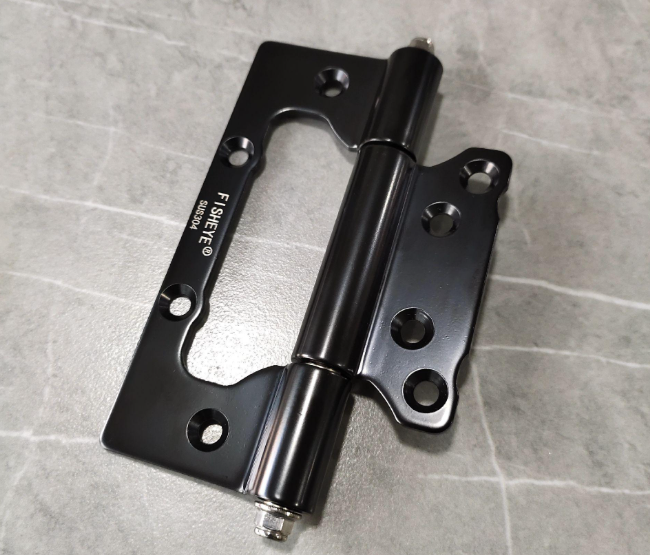
Hinges are divided into ordinary single hinges, heavy-duty invisible hinges, and heaven and earth hinges. Conventional small door fans, with a single weight of less than 30kg, can be used with ordinary 304 stainless steel hinges; large glass heavy-duty door fans, ultra-high door fans, priority heaven and earth hinges, upper and lower load-bearing two points, uniform force, not easy to fall, it is the first choice for heavy-duty swing doors on balconies.
Locks are divided into single-point locks and multi-point locks. Single-point locks for indoor kitchen and bathroom small doors are enough; multi-point locks are recommended for balconies and outdoor swing doors. After closing, multiple points are locked up and down at the same time, which has better sealing performance, stronger anti-theft and wind pressure resistance. Buffer hinges and dampers with buffer damping function can achieve slow silence of the door, avoid the impact of the door closing vigorously, protect the profiles and glass, and have children at home to prevent hand clamping.
Hardware material priority 304 stainless steel, thickened zinc alloy, do not use 201 stainless steel, humid bathroom environment is easy to rust, rust stains flow pollution profile surface. Hardware load-bearing parameters must match the weight of the door leaf, small hinge with heavy door leaf, short-term deformation will be scrapped.
Heaven and earth hinge, damping hinge, multi-point lock hardware kit real shot
Five, aluminum alloy swing door mainstream style classification and adaptation scene
According to function, opening position, and structural style, aluminum alloy swing doors can be divided into multiple categories, and the performance, cost, and application scenarios of different styles vary significantly.
1. Extremely narrow aluminum alloy swing door: narrow frame design, simple and transparent lines, the first choice for modern minimalist and creamy decoration, mostly used in kitchens and bathrooms; the disadvantage is that the cavity is small, the load-bearing is limited, and the size of the door leaf cannot be too large.
2. Broken bridge thermal insulation aluminum alloy swing door: with PA66 thermal insulation strip, energy saving and sound insulation, suitable for balcony doors, street-facing bedroom doors, and outdoor side doors of villas. Areas with large indoor temperature differences in winter and summer are preferred.
3. Non-broken bridge aluminum alloy swing door: no heat insulation strip, economical price, moisture-proof and rust-proof, mostly used for factory partitions, warehouse doors, back doors of shops, and simple kitchen and bathroom doors in rental rooms, not suitable for direct sunlight and large temperature differences.
4, double glass sound insulation swing door: hollow/laminated glass configuration, excellent sound insulation performance, close to the road, elevated apartment use.
5. Outdoor rainproof aluminum alloy swing door: heightened anti-water edge, exclusive drainage structure, sealed and strengthened, with poncho design, used for small courtyard doors and terrace doors to prevent rainwater from pouring back.
The opening direction is divided into inner opening swing door and outer opening swing door. The inner opening door occupies space indoors; the outer opening door does not occupy indoor space. The high-rise outer opening door should focus on wind load and safety anti-fall. Some community properties are prohibited from opening outside the high-rise. Before purchasing, confirm the property specifications and indoor circulation lines in advance.
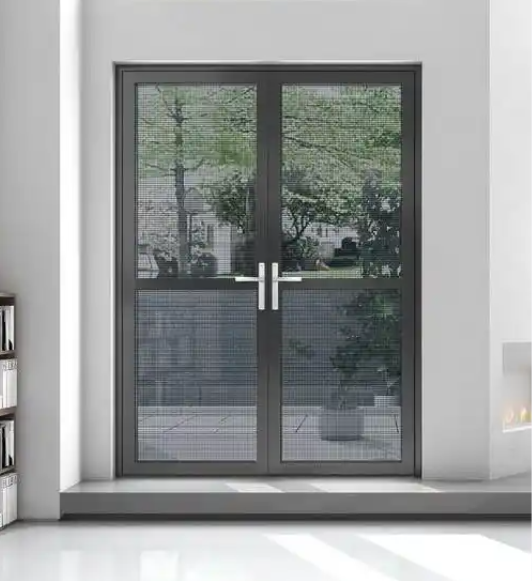
Very narrow kitchen and bathroom swing door, broken bridge balcony swing door, factory aluminum alloy swing door comparison chart
Standardized production and surface treatment process of aluminum alloy swing doors
The surface treatment of aluminum alloy profiles directly determines the appearance texture and weathering and fading ability. There are four mainstream processes on the market:
1. Electrostatic powder spraying: the most popular in the market, with rich colors, matte and matte texture, good weather resistance, not easy to fade when used outdoors, and high cost performance;
2. Fluorocarbon spraying: high-end technology, the coating is dense and anti-ultraviolet, anti-corrosion, and the seaside salt spray area and outdoor long-term exposure scenes are preferred, and the cost is higher;
3. Anodizing: metal native texture, metal silver gray, wear-resistant, less style choices;
4. Wood grain transfer: replicate oak, walnut and other wood grain effects to meet the new Chinese style and log style decoration, suitable for customers who pursue the texture of wooden doors but want moisture-proof and durable.
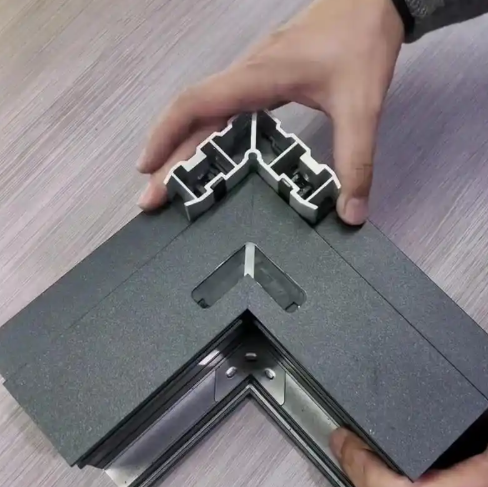
Regular production process: profile cutting and blanking numerical control milling holes, milling and draining sinks wear heat insulation strips (broken bridge models) group angle splicing injection group angle glue reinforcement grinding cleaning gluing assembly glass hardware installation debugging quality inspection packaging. The key process is to inject group angle glue, after the corner glue injection, the corner seam of the door frame does not crack, does not seep water, and has stronger rigidity; small factories do not inject glue, only use corner code splicing, later corner loosening, water leakage, and abnormal noises occur frequently.
Aluminum alloy swing door workshop group angle, glue injection processing real shot
Seven, aluminum alloy swing door site installation specifications, construction points
No matter how good the product is, the installation is not in place, the performance is directly reduced, and the leakage, lax closure, shaking, and falling are mostly due to irregular construction.
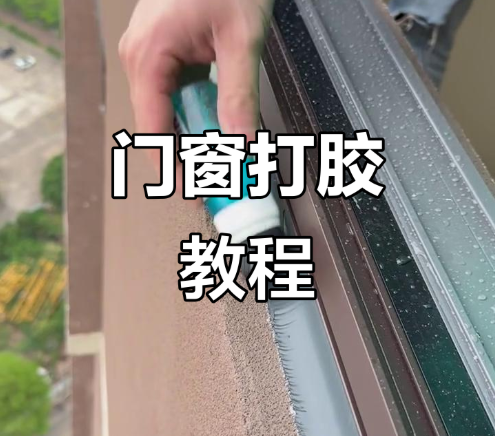
Standard construction process: door opening review and measurement, cleaning the base door frame in place, hanging line vertical correction, foaming agent filling the gap, weathering sealant on the outside, beauty glue on the inside, closing door leaf, hardware installation and debugging, drainage hole dredging opening and closing test, cleaning acceptance.
Key professional points:
1. The vertical error of the door frame is controlled within 2mm, and the skew will cause the door leaf to automatically switch on and off and seal loosely;
2. The foaming agent is fully filled, but the frame deformation cannot be caused by excessive extrusion of the profile;
3. Neutral weather-resistant silicone sealant must be used on the outside of the room, not ordinary glass glue, which will crack and seep quickly in the sun and rain;
4. The profile has its own drainage hole. After installation, it must be dredged and cannot be blocked by glue or cement. Rainwater accumulation inside the cavity will corrode the hardware;
5. Floor tiles and threshold positions should be reversed, and the threshold of the toilet swing door should be raised reasonably to prevent the ground water from pouring back into the room.
Construction taboos: direct glue fixing without foaming, mixed use of internal and external glue, sealing drainage holes, and vertical direct fixing without correction.
Aluminum alloy swing door opening installation gluing and leveling construction real shot
Eight, aluminum alloy swing door daily maintenance, troubleshooting program
The failure rate of aluminum alloy swing doors is low, but long-term use and lack of maintenance can also cause various minor problems. Mastering basic maintenance knowledge can prolong service life.
Common fault 1: switch card, abnormal sound. Most of the hinges lack lubrication and the track has sediment and dust. After cleaning the dust, spray silicon-based lubricant at the hinge position to prohibit oil, which is easy to get ash and turn black;
Common fault 2: The door leaf falls and wipes the frame. The hinge is under load-bearing or the fixing screw is loose, so re-tighten the screw. If it falls seriously, the heavy hinge needs to be replaced;
Common fault 3: air leakage in the door seam and poor sound insulation. The rubber strip ages and shrinks, and directly replaces the EPDM rubber strip of the same specification;
Common fault 4: Stains on the surface of the profile. Wipe with water with neutral detergent, do not use strong acid and alkali detergent, corrode the surface coating, cause fading and whitening.
Daily maintenance cycle: check hinge screws and sealants for cracking every six months; dredge drainage holes once a year; avoid hitting the door leaf violently, and do not hang heavy objects on the door leaf. Long-term load-bearing will cause the frame to deform.
Aging rubber strip, door leaf falling failure comparison picture
Nine, aluminum alloy swing door purchase pit avoidance points summary
Many customers only compare the unit price when purchasing, ignore the core configuration, and it is easy to step on the pit. Here are the key pit avoidance directions:
First, distinguish between broken bridges and non-broken bridges, balconies, streets, and outdoor priority broken bridges, confirm the PA66 thermal insulation strip, and ask for the thermal insulation strip logo;
Second, verify the wall thickness of the profile, check the quotation to mark the wall thickness, and avoid the merchant verbally saying that 1.4mm is actually sent 1.0mm thin material;
Third, the glass confirms the tempered 3C logo, and selects single glass, hollow, and laminated glue according to noise and thermal insulation requirements;
Fourth, focus on the hardware configuration, confirm the load-bearing, material, and large fans must upgrade the heavy-duty heaven and earth hinges;
Fifth, confirm the group angle glue injection process, ask clear sealant, surface treatment process;
Sixth, plan the opening direction in advance and consult whether the property in the community is allowed to open outside to avoid the trouble of later rectification.
Full text summary
Aluminum alloy swing doors are door products that take into account durability, aesthetics and functionality. They are widely used in a wide range of applications, from home improvement kitchens and bathrooms, balcony partitions, to shops, factories, and villa courtyards. Its quality is determined by profiles, thermal insulation structures, glass, sealing strips, hardware, production technology, and installation and construction.
The extremely narrow style is suitable for modern decoration aesthetics. The broken bridge style focuses on energy-saving and sound insulation. Thickened profiles and heavy-duty hardware are suitable for large-size and outdoor high-load scenes. Compared with wooden doors, it is moisture-proof and anti-deformation, and compared with plastic-steel doors, it has strong rigidity and aging resistance; compared with sliding doors, it is more airtight, sound-proof and sealed. When purchasing, you can't blindly pursue low prices, and focus on checking wall thickness, heat insulation strips, glass, hardware, and corner-forming processes.
Standardized production, standardized installation, regular simple maintenance of aluminum alloy swing doors, with a normal service life of up to 15-20 years, is a cost-effective solution for partition doors and windows.