

Screen mesh
How to choose the screen window net? Full analysis of material, mesh number and wire diameter, home screen window net purchase guide
First, what is the screen net?
Real scene renderings of screen mesh installed on windows
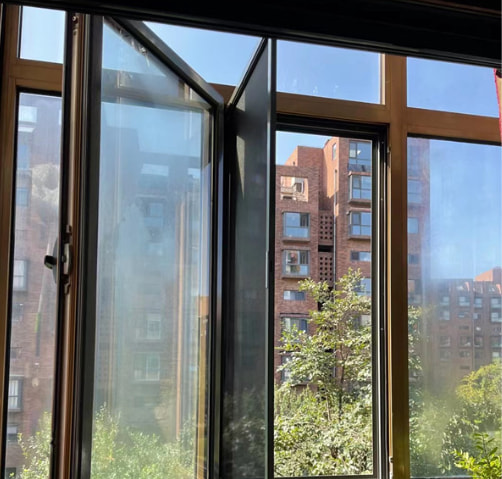
Screen mesh is the core function carrier of screen windows, and it is also the most easily overlooked component in door and window matching, but directly determines the use experience. Many owners only pay attention to the frame and lock of the screen window when customizing the screen window, and ignore the quality of the screen window mesh. Later, problems such as easy to break, unclear vision, mosquitoes drilling in, rust and fracture occur. Simply put, screen mesh is a mesh substrate fixed inside the screen window frame, which bears the multiple functions of mosquito prevention, insect prevention, dust prevention, protection, lighting and ventilation.
There are many types of screen mesh on the market, such as nylon mesh, PET high-transparency mesh, 304 stainless steel diamond mesh, 316 stainless steel mesh, galvanized barbed wire mesh, etc. Screen mesh of different materials has a huge gap in strength, rust prevention, light transmission and service life. Screen mesh is not the denser the better, nor is it the thicker the safer. The wire diameter, mesh number and material need to match their own use environment. This article gradually explains the professional parameters of screen mesh, material differences, purchase points, installation and maintenance, pit avoidance knowledge, to help everyone understand the screen mesh industry standards, avoid business routines, and choose the screen mesh that suits their own.
Core professional parameters of screen mesh
Detail drawing of wire diameter mesh scale measurement
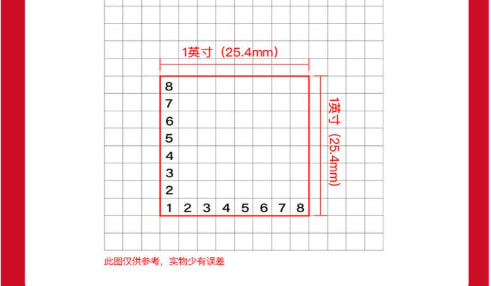
When selecting a screen, you must first understand the two core parameters of the industry: wire diameter and mesh number, which are also the keys to the difference in the quotation of the screen.
The number of mesh refers to the number of horizontal + vertical mesh holes within one inch (25.4mm) length, such as 18 mesh, 22 mesh, and 26 mesh. The larger the mesh number, the smaller the mesh, the better the effect of blocking mosquitoes and catkins, but the ventilation will be slightly reduced; if the mesh number is too small, the mesh is too large, and small mosquitoes are easy to get in.
The wire diameter is the thickness of a single mesh wire. The unit generally uses wire (1 wire = 0.01mm), and 12, 15, 18, and 20 wires are common. The larger the wire diameter, the stronger the mesh, the stronger the impact resistance, and the stronger the anti-cat scratching and anti-theft performance. The disadvantage is that it blocks lighting and has a dark field of vision. The filament has a thin diameter and good light transmission, but the impact resistance is weaker.
Industry conventional household matching reference: high-transparency mesh with 12-15 wire, 26 mesh; ordinary diamond mesh mainstream 18 wire 22 mesh; thickened anti-theft diamond mesh more than 20 wire. Many bad merchants will falsely label parameters, verbally say 18 wire diamond mesh, but in fact only 14 silk, it is difficult to distinguish with the naked eye. If possible, it can be measured with a micrometer. This is the most important professional judgment basis for purchasing screen mesh.
Classification of mainstream screen mesh materials
Close-up comparison chart of various screen mesh material samples
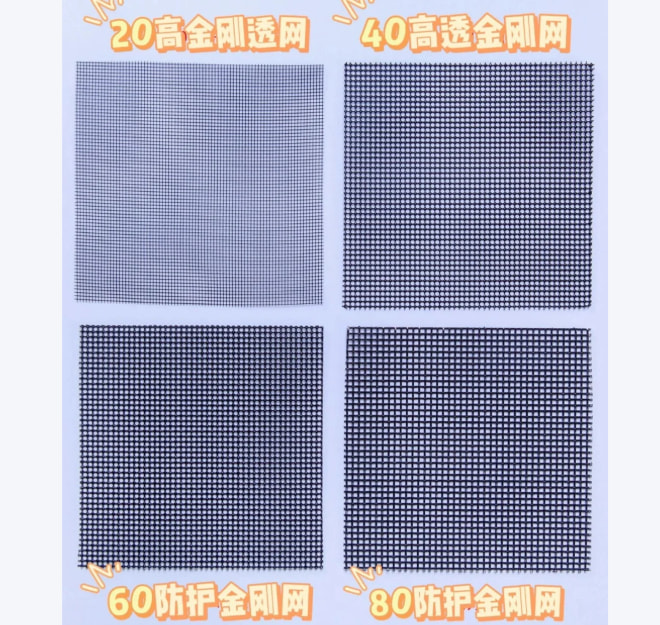
At present, the screen screens circulating in the home improvement market are divided into five categories. Each type of adaptation scenario is different. There is no absolute best, only whether it is suitable or not.
Nylon window screen mesh (chemical fiber mesh): the lowest cost, light texture, cheap price. The disadvantage is obvious, the sun is easy to age and become brittle, and it will be pulverized and broken in 2-3 years. It is not suitable for high-rise and balcony long-term sun exposure. It is mostly used for temporary use in rental houses.
PET high-transparency screen window mesh: made of polyester fiber, popular in recent years, the mesh wire is extremely fine, the light transmission is extremely strong, the field of view is close to invisible, the wind resistance is small and the ventilation is good. Anti-rust, light weight, suitable for families who pursue minimalist vision, but the impact resistance is average, easy to be scratched by cats, not suitable for low-floor anti-theft needs.
304 stainless steel screen window net (diamond net): The most popular stainless steel material for household use, excellent rust resistance, strong toughness, impact resistance, cat scratch resistance, normal indoor environment 8-12 years is not easy to rust, suitable for most residences. However, seaside, humid saline environment is not recommended, long-term salt spray corrosion will still rust.
316 stainless steel screen mesh: high-end stainless steel mesh, adding molybdenum on the basis of 304, greatly improving salt spray resistance and corrosion resistance. It is suitable for coastal cities, humid first floors, and close to the river. Its anti-rust durability is more than twice that of 304, and the price is also higher.
Galvanized wire mesh: low-cost engineering mesh, the surface galvanized layer is easily rusted after wear, and rust will pollute the window frame wall. Home decoration is not recommended, and it is mostly used for temporary protection on construction sites.
Fourth, how to match the screen mesh for different apartment types
Schematic diagram of application scenarios of screen screens of different apartment types
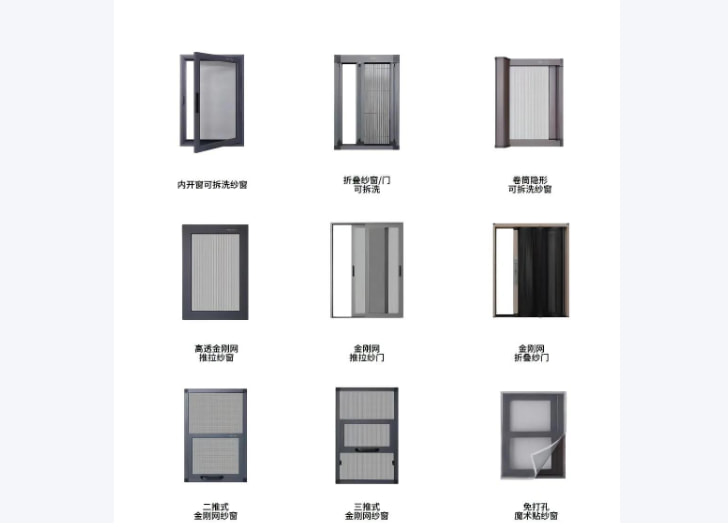
Different floors, living environments, and family situations require completely different screen screen selection directions.
High-rise residential buildings (above 10 floors): mosquitoes are few, priority is given to lighting and ventilation, PET high-transparency mesh or 15-wire 26-mesh 304 high-transparency stainless steel mesh is recommended, the field of vision is transparent, not suppressed, and there is little external damage to high-rise buildings. There is no need for too thick anti-theft nets.
Low floors (1-3 floors): mosquitoes, anti-theft needs, priority is given to 18-wire 22-mesh 304 diamond mesh, which is strong and shear-resistant, anti-mosquito and protective at the same time; if it is the first floor along the coast, directly upgrade 316 stainless steel screen mesh.
Families with cats and pets: Avoid PET fiber mesh, cat claws are easy to break, 304 stainless steel diamond mesh is preferred, and the wire diameter is recommended to start with 18 wires, which is resistant to scratching and tearing.
There are infants and young children at home: priority is given to stainless steel screen window mesh, which has high mesh strength and prevents children from bursting the mesh falling window with force. It is used together with pocket lock and sliding cover lock screen window for double protection.
Seaside, riverside humid areas: Resolutely do not use ordinary 304 mesh, salt spray corrosion will cause rust points, give priority to 316 stainless steel screen mesh to reduce later maintenance troubles.
Screen mesh process to identify the weaving process
Enlarged detail of screen mesh weaving process
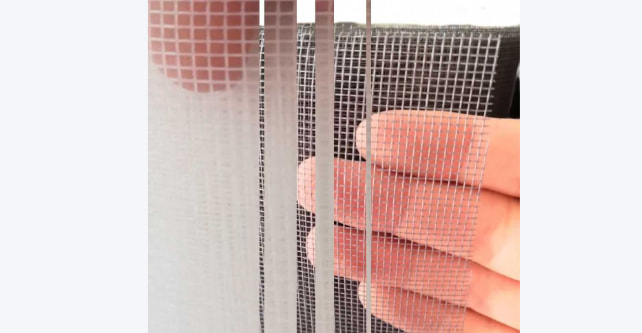
The same is 304 screen mesh, with a large price gap. In addition to the wire diameter, the weaving process and surface spraying process are the core differences.
The market is divided into two types: flat weaving and twill weaving. Flat weaving is the most mainstream. The mesh is horizontal and vertical, the mesh is uniform and flat, and the tension is stable. Twill mesh has better toughness, but the light transmission is slightly worse, and it is used more in engineering.
The high-quality stainless steel screen window mesh will be coated with electrostatic spraying, with uniform color, mainly black, dark gray, and coffee gray. The coating function is to isolate the air, further delay oxidation and rust, feel smooth, and is not easy to hang ash. The inferior mesh is sprayed thinly, leaks spray, and some metal is exposed, which will soon rust and spots.
There is another detail: the tension of the mesh surface. Good screen window mesh is flat, elastic and uniform, without bulging or loosening; inferior screen window stretching process is poor, after installation, the mesh surface is loose, and the wind blows back and forth, which not only has poor appearance, but also is easy to remove the frame and deform. Regular factories are automatically stretched by machines, with uniform and stable tension, and the quality of manual stretching nets is uneven.
Common quality problems of screen window nets
The screen window mesh is rusted, broken, loose and inferior samples are actually taken.
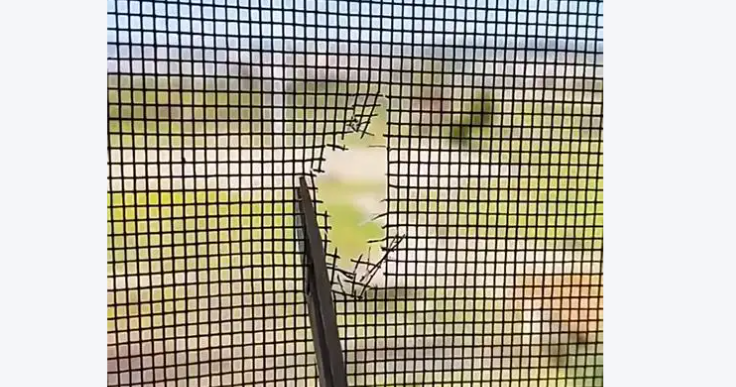
Many owners have problems in a short time after installing the screen mesh, mostly because they did not identify the quality in the early stage. Here are a few characteristics of high-frequency inferior screen mesh:
First, the mesh surface is mottled in color, with local white and black spots, uneven spraying, and easy to rust later;
Second, the mesh size varies, the weaving is loose, and the gap in some positions is too large, allowing small mosquitoes to burrow in;
Third, the mesh wire is unevenly soft and hard, and it is directly broken when gently bent, indicating that the material is not standard stainless steel, but recycled material or inferior stainless iron;
Fourth, the mesh surface is easy to hang ash, dust adhesion is difficult to clean, mostly inferior spraying, and the surface is rough;
Fifth, there are many burrs on the edge, and the cutting position is not polished, which makes it easy to scratch your hands.
Simple self-test small method: magnet test, 304, 316 stainless steel is normally weak magnetic or non-magnetic, if the magnet adsorption is very tight, there is a high probability that it is stainless iron, which is very easy to rust, and it is not recommended to purchase. (Note: stainless steel will have weak magnetic properties after cold processing, and cannot be used as a one-size-fits-all magnet alone, it can only be used as a preliminary screening)
Seven, screen net daily maintenance and replacement opportunities
Schematic diagram of screen net cleaning operation
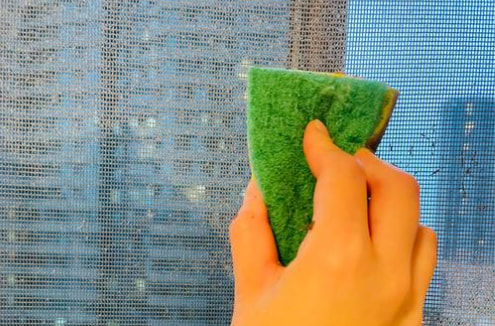
No matter how good the screen window net is, reasonable maintenance can prolong the service life.
PET high-permeability mesh is soft in texture, and cannot be vigorously brushed with a hard-bristled brush when cleaning. It is recommended to rinse with a damp rag and low-pressure water to avoid the broken wire of the mesh wire; stainless steel diamond mesh can be rinsed with a soft-bristled brush and water, stubborn stains with neutral detergents, strong acid and alkali detergents are prohibited, which will corrode the surface coating.
The screen window mesh has the following conditions, and it is recommended to replace it directly: multiple rust points on the mesh surface, large-scale holes, serious loose deformation of the mesh surface, and large-scale falling off of the coating. The nylon mesh is aging and powdered, and it is of little significance to replace it directly.
Daily try to avoid sharp objects scratching the mesh surface vigorously, and do not hold hard objects against the screen mesh when opening the window to reduce external force pulling. Many people think that the screen mesh can be used permanently, but in fact all materials have an aging cycle, chemical fiber mesh 2-3 years, ordinary 304 diamond mesh 8-12 years, 316 mesh can reach about 15 years.
Eight, screen net summary
Screen net purchase points summary diagram
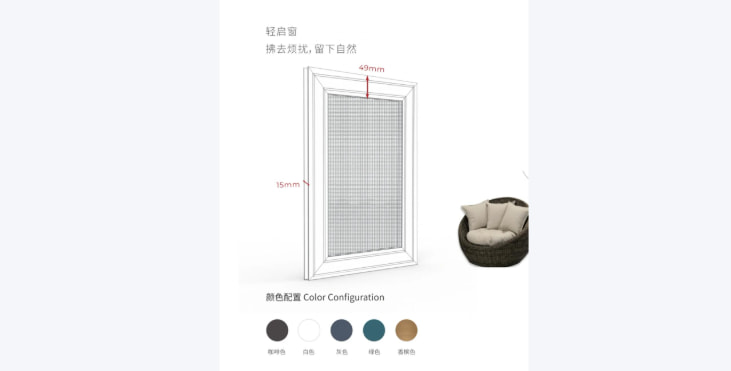
The screen window net looks simple, but it is the soul of the screen window. The material, silk diameter, mesh number, and craftsmanship jointly determine the anti-mosquito effect, lighting, durability, and safety. Don't blindly pursue low prices when purchasing a screen window net, and don't blindly pursue thick silk anti-theft. Combine the floor, environment, whether there are pets at home, and whether it is humid along the coast.
If you want a good field of vision and strong ventilation, choose PET high-transparency mesh; if you want a strong and durable, cat-proof, 304 stainless steel diamond mesh is preferred; in a humid coastal environment, go directly to 316 stainless steel screen mesh. When purchasing, focus on checking the wire diameter and mesh number marked by the merchant, and give priority to products with complete machine stretching and spraying processes. Avoid inferior screen mesh with stainless iron, recycled materials, and false standard parameters.
Choosing the right screen net can not only block mosquito catkins for a long time, but also do not affect indoor lighting and ventilation, providing families with a comfortable and safe home environment.