

The difference between sliding doors and swing doors
The difference between sliding doors and swing doors? Comprehensive comparison of sealing, space, sound insulation and durability
First, the difference between sliding doors and swing doors, the difference in basic structure principles
Schematic diagram of the opening structure principle of swing door and sliding door

In home decoration, shop partitions, and interior renovations, sliding doors and swing doors are the two types of interior doors with the highest utilization rate. The fundamental reason why many owners choose which door to decorate is that they do not understand the structural principle of the two doors. All the differences in sound insulation, sealing, durability, and spatial effect are all due to the different opening structures.
The swing door belongs to the hinge rotary opening structure. It relies on the hinge on the side of the door frame to fix the door leaf. It opens and closes inward or outward in one direction. The door leaf is completely separated from the gap of the door frame. When closed, the whole door panel is pressed against the rubber strip, and the fit is extremely high.
The sliding door belongs to the track sliding type opening structure. It relies on the upper and lower rails and pulleys to slide left and right in parallel, and the doors overlap and dislocate to open and close. The closed position is the splicing gap between the two doors, so the overall compression and sealing cannot be achieved.
Simple summary: the swing door relies on "pressing and sealing", and the sliding door relies on "splicing and blocking". This is also the root of all the performance gaps between the two doors. This article gradually makes a professional comparison from the structure, space, sealing, sound insulation, waterproof, durability, price, and applicable scenarios to help users accurately choose the right door type without stepping on the decoration pit.
Second, the difference between sliding doors and swing doors, space utilization comparison
Comparison of the occupied space of the two kinds of doors
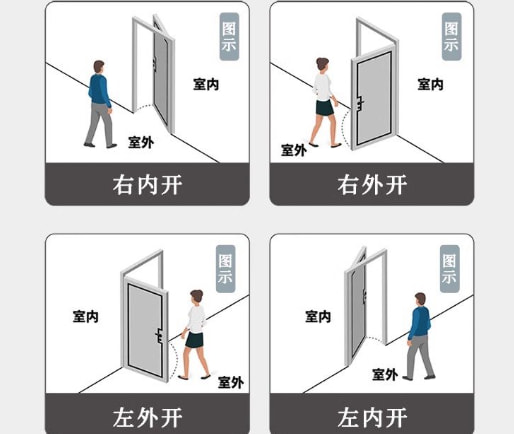
Space utilization is the biggest choice between sliding doors and casement doors, and it is also the most intuitive difference in home improvement.
The opening and closing of the swing door requires a fan-shaped activity space. Refrigerators, cabinets, washbasins, and furniture cannot be placed within the opening range, otherwise the door will be blocked and cannot be fully opened. In bathrooms, kitchens, and narrow aisles, if the swing door is installed, it is very easy to open the door and bump, the space is crowded, and the moving line is blocked, which is very unfriendly to small apartments.
The sliding door does not need to occupy the activity space in front of the door. The door leaf slides left and right to store, and the front area can be fully utilized to place furniture and electrical appliances. No matter how wide or narrow the door opening is, it will not affect the passage. Especially for large balconies, wide openings, and open kitchens, sliding doors can achieve large transparency and complete openness, with a wider visual space and better lighting effect.
Professional conclusion: small space, dense furniture, large hole partition priority sliding door; sufficient space, do not worry about land priority swing door.
Third, the difference between sliding doors and swing doors
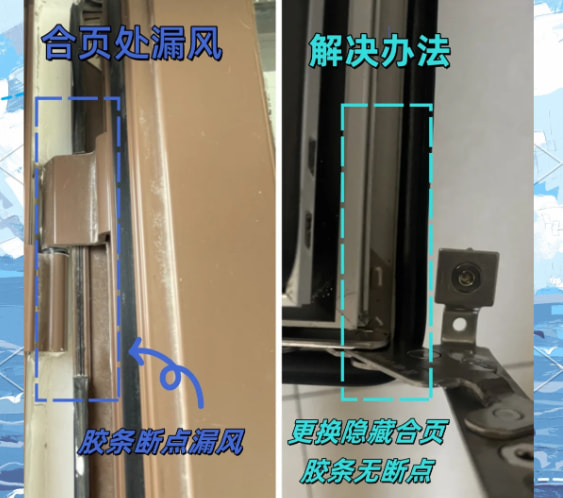
Comparison of details of door and window sealing strip closure

Sealing is the core professional indicator that swing doors outperform sliding doors in the industry, and it is also the key reason why swing doors are preferred for bedrooms, bathrooms, and air-conditioned rooms.
When the swing door is closed, the door fan squeezes multiple sealing strips around the whole, the gap is completely compacted, the whole circle has no dead ends, and the windproof, dustproof, thermal insulation and heat insulation performance are extremely strong. After closing the door, it can effectively lock the indoor air conditioning and heating, reduce the energy consumption of the air conditioner, and isolate the outdoor dust from entering the room.
The sliding door is a sliding structure, with reserved gaps in the track, splicing joints in the middle of the door leaf, the upper and lower tracks cannot be completely sealed, and no matter how precise the process is, it cannot achieve the sealing effect of the casement door level. Long-term use is prone to ventilation, ash intake, and hot and cold air intercommunication, and the thermal insulation ability is weak.
Especially in kitchens and street-facing balconies, sliding door gaps are prone to infiltration of smoke, dust, and outdoor wind noise. For owners who pursue a closed home experience, the advantages of swing doors are even more obvious.
IV. Comparison of sound insulation performance between sliding doors and swing doors
Sound insulation and noise reduction principle structure analysis diagram
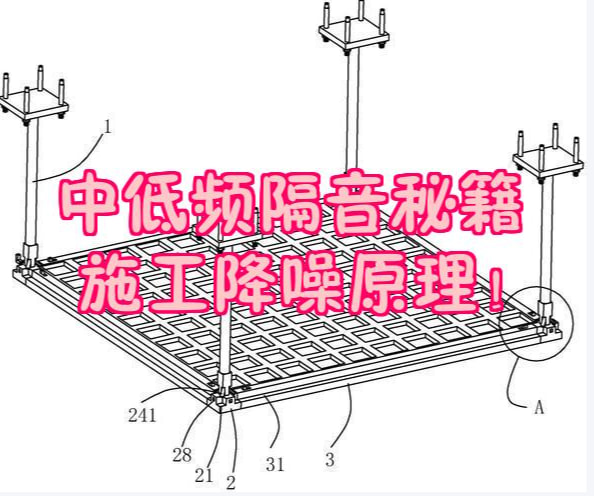
In the home silent experience, the sound insulation effect gap between sliding doors and swing doors is very intuitive, and the suitable functional space is completely different.
After the swing door is closed and pressed, the door panel + sealing strip forms a complete noise barrier, which has a good air sound insulation effect and can effectively block corridor noise, living room noise, and outdoor car flow. It has higher privacy and tranquility, fully meeting the quiet needs of bedrooms, study, and rest areas.
Due to the existence of track gaps and splicing gaps, sound waves easily penetrate the gaps and spread, and the sound insulation performance is weak. Even with hollow tempered glass, the overall sound insulation effect is still not as good as that of the same material. It is not recommended for bedrooms, study and other spaces that require high privacy and high silence.
Decoration professional specifications: quiet area (bedroom, study) priority casement door; moving area (kitchen, balcony, partition) priority sliding door.
Fifth, the difference between sliding doors and swing doors, waterproof and moisture-proof performance comparison
Schematic diagram of bathroom water vapor seal test
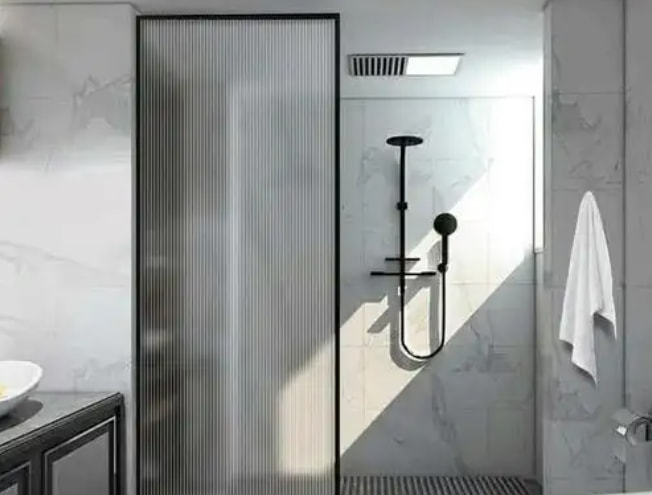
The bathroom and kitchen belong to high-moisture and high-humidity areas, and the waterproof performance of the two door types directly affects the service life.
The casement door is tightly closed, making it difficult for water vapor to penetrate the door seam into the room or overflow outdoors. With the design of sunken toilet and wet and dry separation, the waterproof and moisture-proof effect is stable, suitable for small toilets and shower area partitions.
The sliding door track is a waterproof weakness, and the ground track is prone to water accumulation and fouling. Long-term moisture is easy to breed mildew and water accumulation. Although the hanging rail solves the problem of water accumulation on the ground, a small amount of water vapor will still leak through the splicing gap of the door leaf.
If it is a bathroom that does not separate wet and dry, give priority to a swing door with stronger sealing; for wet and dry separation, large hole toilets, and kitchen partitions, a very narrow sliding door can be selected to enhance the appearance and transparency.
Sixth, the difference between sliding doors and swing doors, hardware structure and durability comparison
Sliding door pulley, swing door hinge hardware comparison chart
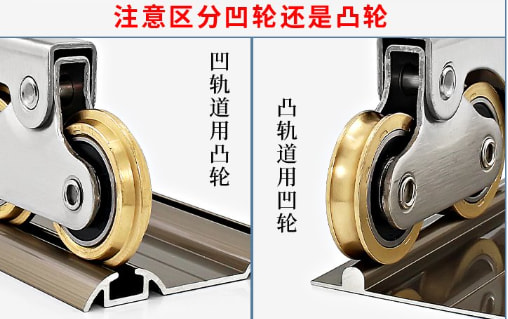
The durability, failure rate, and service life of doors and windows depend entirely on the core hardware structure, and the two door types are completely different in terms of wear and tear.
The core accessories of the swing door are thickened silent hinges, which are stable in load bearing, uniform in force, and not easy to damage. They are opened and closed more than 100,000 times in normal use without failure and almost zero maintenance. Except for hinge rust and loose screws, there are almost no problems such as cards, deformation, and inability to close, and long-term use is extremely stable.
The sliding door relies on the track + pulley system, which is an easy-to-wear structure. Long-term dust accumulation and debris on the ground rail can easily cause pulley cards, unsmooth push-pull, derailment, and door leaf shaking; the load-bearing of the hanging rail door relies entirely on the top hardware, and long-term high-frequency opening and closing are prone to problems such as slight fall, large gap, and lax closure. Later maintenance frequency is higher.
From a long-term durability perspective, the failure rate of swing doors is lower and more worry-free; the sliding door has a high value and transparency, but it needs regular cleaning and maintenance later.
Seven, the difference between sliding doors and swing doors, the contrast between appearance style and lighting effect
Minimal narrow sliding door, simple swing door home decoration renderings
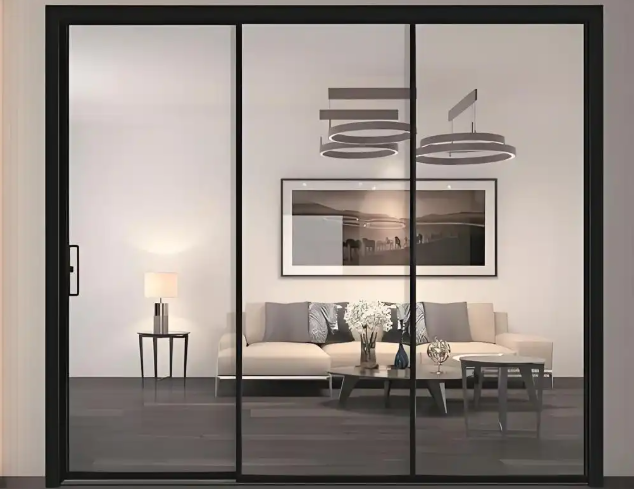
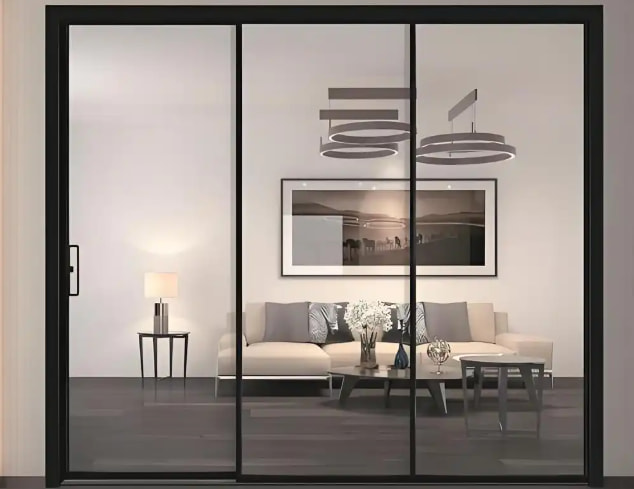
In modern minimalist decoration, light luxury style and modern style home decoration, the visual effect of the two door types is very different.
Sliding doors can be made of extremely narrow borders, panoramic glass, multi-fan linkage, slender borders, minimal occlusion, transparent lighting, wide field of vision, able to stretch the sense of spatial hierarchy, and a stronger sense of advanced. It is currently the mainstream Internet celebrity style of balconies, kitchens, and large hole partitions.
The frame of the swing door is wider, the vision is more traditional, the lighting is blocked more, the style is simple and stable, and it is suitable for Chinese style, modern simplicity, minimalist and silent bedroom space. It is better in being beautiful, atmospheric, and versatile, and will not be outdated.
Aesthetic purchase summary: the pursuit of transparency, large vision, minimalist value of the sliding door; the pursuit of steady, quiet, traditional home texture choose flat door.
Eight, the difference between sliding doors and swing doors, price cost and cost performance comparison
Comparison chart of the price range of the two door types
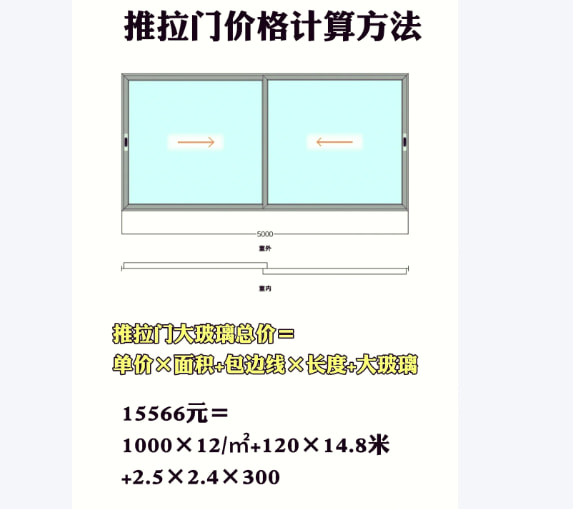
Under the same material and glass configuration, the cost difference between the two door types is clear:
Under normal circumstances, the price of sliding doors with the same configuration is higher than that of swing doors. Sliding doors require precision tracks, pulleys, linkage accessories, insulating glass, and extremely narrow profiles. The process structure is more complex and the production cost is higher, especially for extremely narrow sliding doors with hanging rails. The cost is significantly higher.
The swing door has simple structure, mature technology, cheap hardware, low mass production cost, and higher cost performance, making it suitable for large-scale installation in the whole house.
The budget of a small apartment is limited: the bedroom has a flat door, and the kitchen balcony has a sliding door on demand, which is the most cost-effective and reasonable solution.
Nine, the difference between sliding doors and swing doors is accurately divided into applicable scenarios
Whole house space door type adaptation scene mind map
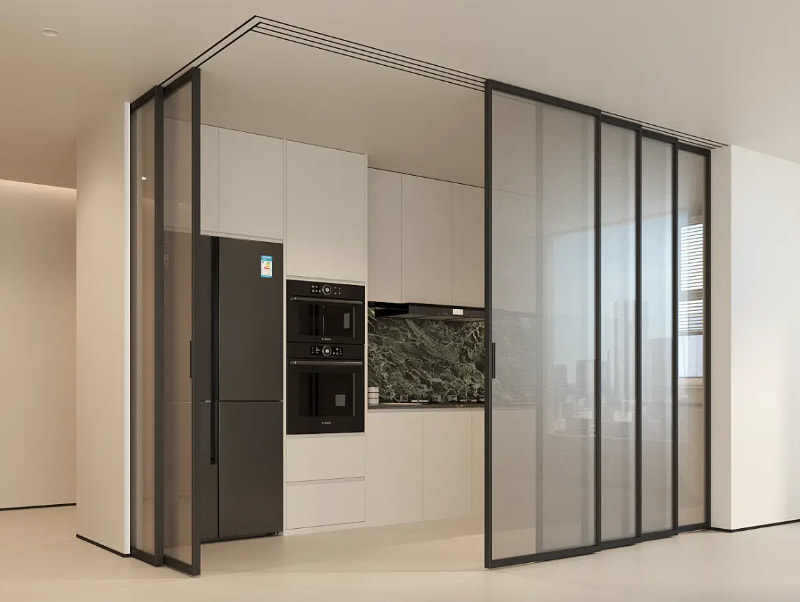
Combining all the above differences, an accurate matching plan for industry standards and decoration companies is given:
Space suitable for installing flat doors:
1. Bedroom, study (requires sound insulation, privacy, and heat preservation)
2. Small apartment bathroom (needs to be waterproof, sealed, and budget-saving)
3. High quiet requirements, high dust, street-facing apartment
Space suitable for installing sliding doors:
1. Kitchen open partition, large hole kitchen
2. Balcony floor-to-ceiling windows, viewing balcony
3. Large bathroom dry and wet separation outer partition
4. Large space partitions for shops, exhibition halls, and offices
5. Space is small and furniture cannot be placed in front of the door
The reasonable combination of two door types can not only ensure the quiet and comfortable home, but also enhance the transparent appearance of the whole house, taking into account practicality and aesthetics.
The differences between sliding doors and swing doors
Summary diagram of core differences of sliding door swing door

Comprehensive professional performance comparison shows that there is no absolute difference between sliding doors and swing doors, only the scene adaptation difference.
Swing door advantages: strong sealing, good sound insulation, waterproof and dustproof, thermal insulation, durable and stable, low failure rate, high cost performance, and strong privacy; the disadvantage is that it occupies the space in front of the door, the lighting is general, and the style is more traditional.
The advantages of sliding doors are: zero footprint, transparent lighting, advanced appearance, suitable for large openings, and open space vision; the disadvantages are that the sealing and sound insulation are weak, the track is easy to accumulate dust, the hardware loss is fast, and the cost is higher.
The correct matching logic of home decoration: use swing doors in quiet areas and sliding doors in dynamic areas. Bedrooms, bathrooms, and study give priority to swing doors to ensure comfort and tranquility; kitchens, balconies, and partition areas give priority to sliding doors to improve space transparency and decoration texture.
Owners decorate and purchase, do not blindly follow the Internet celebrity style, according to their own door size, space pattern, silent needs, budget reasonable choice, in order to install durable, good-looking, practical, do not step on the pit of the whole house doors and windows effect.