

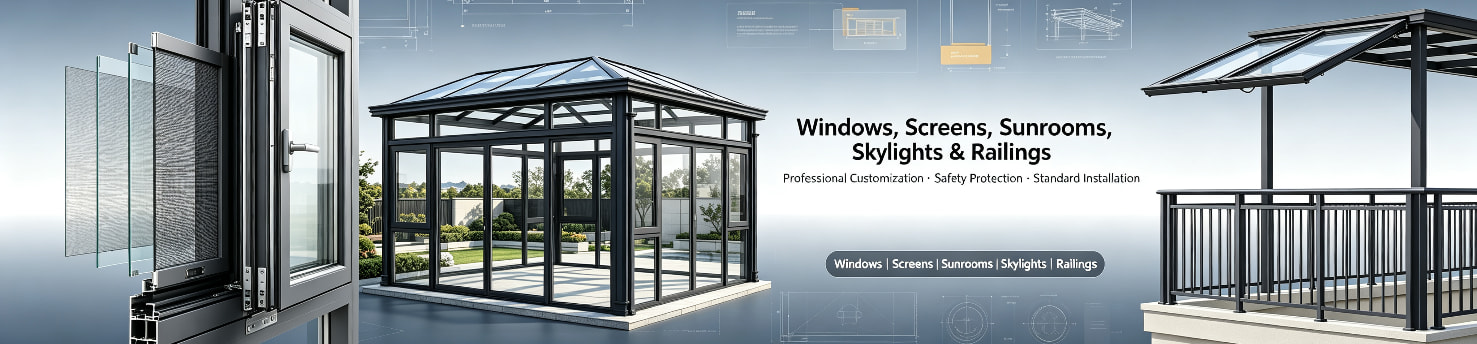
fence
Wall guardrail | Full analysis of material classification, specification standards, process characteristics, and scene selection
First, the definition and core role of the fence
Community, factory wall guardrail landing overall renderings
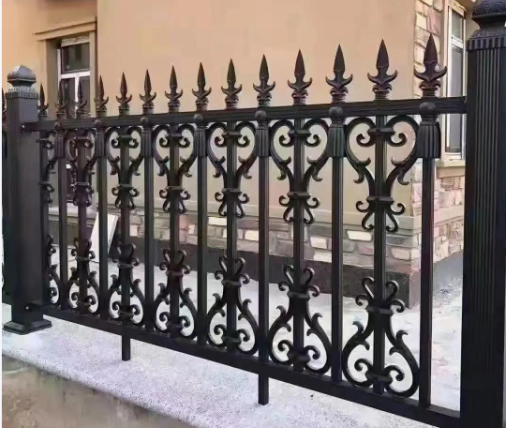
Wall guardrail is a building's peripheral basic protective building material, mainly used for border isolation, security protection and landscape decoration in factories, residential areas, schools, villa courtyards, municipal roads, and industrial parks. It is a rigid demand engineering material with security functions, architectural aesthetics, and site standardization.
Unlike ordinary simple fences, formal engineering fence has the characteristics of anti-impact, anti-climbing, anti-aging, anti-corrosion, and uniform regularity. It can not only divide the ownership of the site, prevent foreign personnel from entering and leaving at will, and prevent theft. It can also regulate the overall façade of the park and improve the overall grade of the building.
At present, inferior fences and simple iron fences on the market generally have problems such as rust and paint peeling, deformation and bending, excessive safety gaps, and short service life, which cannot meet modern engineering acceptance standards. High-quality standardized fence, using metal modular assembly process, is suitable for all kinds of regular engineering projects, and can perfectly pass the acceptance of residential, municipal, and residential property projects. It is the preferred product for modern engineering fence renovation and new construction projects.
Second, the classification of mainstream materials for walls and guardrails and the comparison of professional advantages and disadvantages
Comparison diagram of the details of the four major materials fence fence
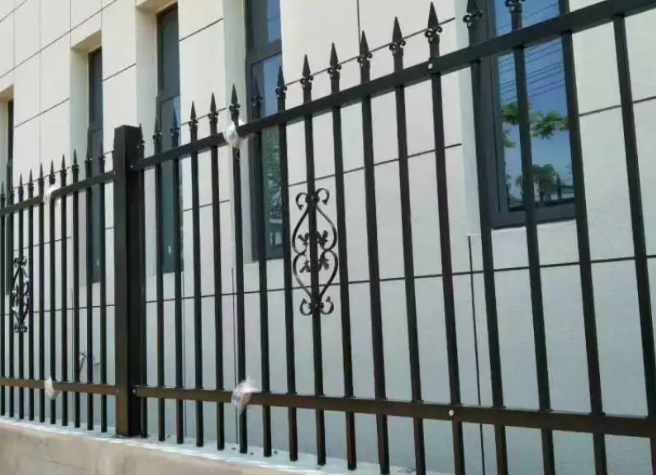
There are many types of fence materials on the market. The mainstream is divided into four categories: zinc steel fence, aluminum art fence, stainless steel fence, and PVC fence. The cost, strength, lifespan, and adaptation scenarios of different materials vary greatly, and it is also the core basis for engineering selection.
First, zinc steel fence (the mainstream of the project). The base material is made of Q235 high-quality hot-dip galvanized steel pipe, which has been treated by pickling phosphating and electrostatic spraying process. The advantages are high overall hardness, strong impact resistance, high cost performance, rich colors, not easy to rust, and fast installation speed. It is suitable for large-scale municipal, residential and factory projects. The only shortcoming is that it will be slightly oxidized after long-term damage to the bottom. It belongs to the most widely used and cost-effective engineering general guardrail.
Second, aluminum art fence (high-end boutique model). Using 6063-T5 primary aluminum alloy profile, one-piece die-casting molding, fluorocarbon spraying surface treatment. The advantage is that it does not rust for life, advanced texture, rich shape carving, light weight, maintenance-free, waterproof and corrosion resistance full, suitable for humid, rainy, coastal salt fog environment. The disadvantage is that the cost is high, the strong impact resistance is slightly weaker than the thick-walled zinc steel guardrail, mostly used in villas, high-end residential areas, garden landscape projects.
Third, stainless steel fence (durable and practical). With 304, 316 stainless steel as the base material, corrosion resistance, wear resistance, stable structure, almost no maintenance. Suitable for coastal areas, chemical plants, high humidity factory areas, but the shape is single, the appearance is ordinary, the decoration is insufficient, the main practical protection.
Fourth, PVC fence (economical temporary model). The plastic material is integrally formed, inexpensive and easy to install. The disadvantage is poor impact resistance, easy aging and brittleness, and serious fading from long-term sun exposure. It is only suitable for temporary enclosures and simple isolation in rural areas. It is not recommended for regular long-term projects.
III. Wall fence core structure specifications and national standard parameters
Detailed structural dimensions of fence columns, crossbars and vertical bars
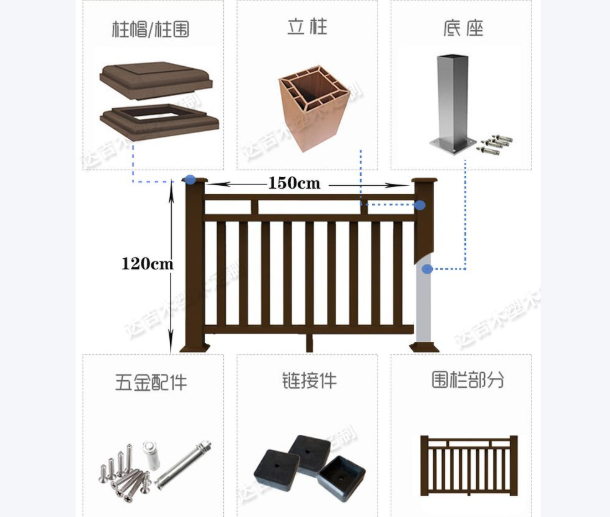
The formal engineering fence is not customized at will, and there are clear industry standards for size and structure. Qualified products must meet the four rigid standards of structural thickness, ground clearance, anti-climbing spacing, and overall height.
Conventional height specifications: community, factory general height 1.2 meters, 1.5 meters, 1.8 meters, 2.0 meters; villa courtyard commonly used 1.8-2.5 meters heightened models; key security areas can be customized anti-climbing bayonets, pointed raised guardrails.
Pipe thickness standards: engineering general column thickness 1.2mm, 1.5mm, crossbar thickness 1.0-1.2mm, vertical rod thickness 0.8-1.0mm, wall thickness standards can ensure wind pressure resistance, impact resistance and no deformation. Low-priced non-standard products generally cut corners on thin materials, which are easy to bend and break.
Safety spacing standard: The net spacing of vertical rods is not more than 11 cm, which eliminates the safety hazards of children's drilling and climbing, and fully complies with the security specifications of residential buildings.
Structural design: Adopt upper and lower double-layer crossbar reinforcement structure, with special stamping connectors, no welding exposure, no sharp edges and corners, uniform overall force, stable structure, excellent wind resistance, earthquake resistance, anti-shaking ability, suitable for outdoor perennial open-air use.
IV. Detailed explanation of the production process of the fence: the core key to determining the service life
Process flow chart of guardrail pickling phosphating and electrostatic spraying
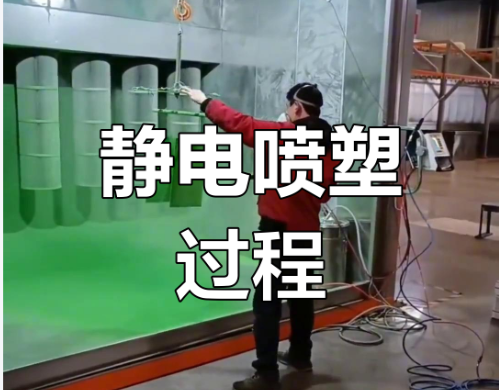
The service life of the fence depends on the production process by 70%. The difference in service life of the same material and different processes can reach 3-5 times. The production process of the regular manufacturer includes eight Seiko processes to prevent rust, paint peeling and delamination.
The first step is precise cutting. The numerical control equipment sets the length to cut the pipe, the incision is flat and vertical, no burr, no skew, and guarantees the tight fit of the later assembly.
The second step is pickling and phosphating. Remove rust, oxide scale and oil stains on the surface of the pipe, enhance the adhesion of the paint surface, and prevent peeling and paint peeling from the source.
The third step is high-temperature hot-dip zinc treatment. A dense zinc layer is formed on the surface of the steel to isolate air and water vapor and achieve anti-rust priming.
The fourth step, mechanical stamping forming. Standardized die stamping column head, connector, vertical bar shape, uniform parts, strong interchangeability.
The fifth step is non-marking welding reinforcement. The key nodes are fully welded and reinforced, the weld is polished flat, and there is no solder joint bulge.
The sixth step is electrostatic powder spraying. Using outdoor special Aksu powder, high temperature curing, the paint surface is delicate and full.
The seventh step is high temperature curing and forming. Baked at a high temperature of 200 degrees, the paint surface has high hardness, scratch resistance and sun exposure resistance.
The eighth step is quality inspection and packaging. Test the flatness, paint integrity and structural stability one by one, and then leave the factory after passing the test.
After a full set of process treatment, the fence can achieve rain resistance, sun exposure resistance, temperature difference resistance, corrosion resistance, rust resistance, and can be used outdoors for more than 15 years without fading or aging.
Fifth, the core performance advantages of the fence fence, the reason for replacing the old fence
Comparison of the effect of old and new fence guardrails
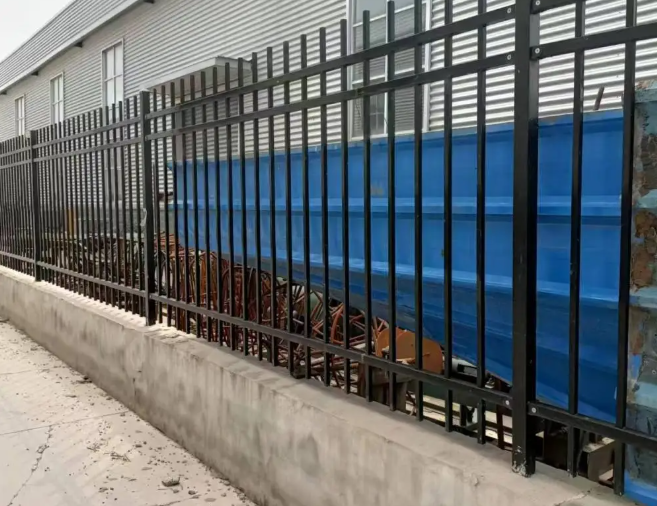
Traditional brick walls and old-fashioned iron railings have the drawbacks of high cost, slow construction, heavy weight, easy cracking, rust and collapse, etc. Modern standardized fence has fully replaced the old-fashioned structure and become the first choice for engineering.
First, super anti-corrosion and weather resistance, suitable for outdoor all-weather environment. After galvanized + sprayed dual protection, it is not afraid of summer sun exposure, winter frost, and humid water in the rainy season. It can be used stably in rainy southern, low temperature northern, and coastal salt spray areas.
Second, the safety protection is strong. Structural reinforcement, spacing compliance, no sharp burrs, anti-climbing, anti-climbing, anti-child accident, the safety level far exceeds the old simple guardrail.
Third, the appearance is regular and beautiful, improving the overall engineering appearance. Unified colors, straight lines, simple and atmospheric shape, black, gray, white, brown, dark green and other color schemes can be customized according to the architectural style, suitable for all kinds of building facades.
Fourth, the installation is efficient and the construction period is shortened. Modular assembly design, no need for on-site welding, no need for complex construction, complete accessories, simple assembly, and large-scale projects can be completed quickly.
Fifth, maintenance-free and low-cost. There is no need to paint and rust every year, just wipe it with dirty water, and there is almost no maintenance cost in the later stage, which greatly saves operation and maintenance expenses.
Sixth, environmentally friendly and recyclable. The metal material is green and environmentally friendly, free of pollutants, and can be recycled after demolition, in line with green engineering construction standards.
Six, different scenarios fence accurate selection guide
Factory area, community, villa, school guardrail scene classification map
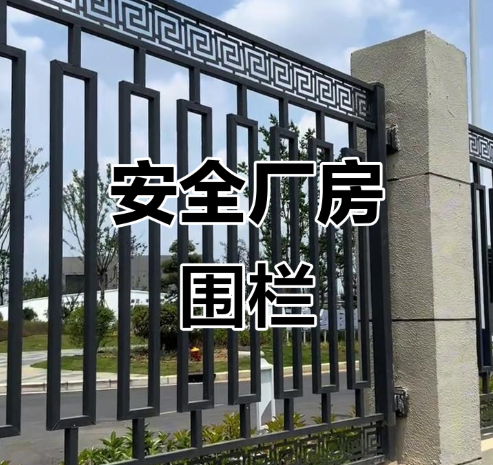
In different usage scenarios, the height, material, style, and protection level of the fence are different, and accurate selection can take into account cost performance and practicality.
Residential scene in the community: 1.5-meter and 1.8-meter high thickened zinc steel guardrails are preferred, with simple and versatile colors, moderate protection, beautiful appearance, and high cost performance, suitable for large-scale unified installation.
School and kindergarten scenes: choose encrypted vertical rods and rounded safety guardrails to eliminate sharp edges and corners, and encrypt spacing to ensure children's safety. Priority is given to corrosion-resistant, paint-free and environmentally friendly materials.
Scenarios in factories and industrial parks: 1.8-2.0 meters thickened and heightened zinc steel guardrails are selected, which are firm in structure, impact-resistant, and anti-overturning to meet the security and isolation needs of the factory area.
Villa courtyard, high-end garden scene: priority aluminum art fence, exquisite carving, advanced texture, lifelong stainless steel, suitable for high-end courtyard landscape, improve villa grade.
Municipal road and park scenes: lightweight landscape guardrails are selected, with fresh color scheme and beautiful appearance, taking into account isolation protection and landscape decoration effects.
VII. Standardized installation process and acceptance standards for wall guardrails
Professional master on-site installation of fence construction map
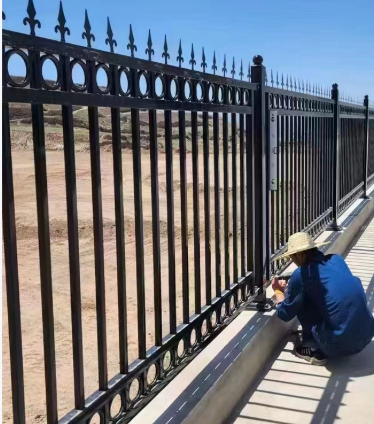
High-quality products need standardized installation. Irregular installation will lead to tilt, loosening, water seepage, and shortened service life. The formal installation process is divided into five steps, which fully meets the engineering acceptance standards.
The first step is to pay off the line positioning. Accurately measure the points according to the drawings to ensure that the column spacing is uniform and the straight line is straight.
The second step is to embed the foundation. Pit and pour concrete pre-embedded columns to ensure that the foundation is firm, does not shake or sink.
The third step is to fix the column. Calibrate the vertical height, fix the column base, and correct both horizontally and vertically.
The fourth step, frame assembly. Assemble the crossbar, vertical rod, accessories, lock the special anti-theft screws, overall reinforcement.
The fifth step is finished product acceptance. Check the overall flatness, verticality, paint integrity, firmness, and clean up the on-site completion and delivery.
Acceptance of the core standards: the overall straight line is flat without skew, no loose shaking, no scratches on the paint surface, uniform spacing compliance, no safety hazards, fully meet the municipal, community, plant engineering acceptance requirements.
Eight, common purchase mistakes and pit avoidance guidelines in the fence market
Defect diagram of inferior guardrail rusting deformation and cutting corners
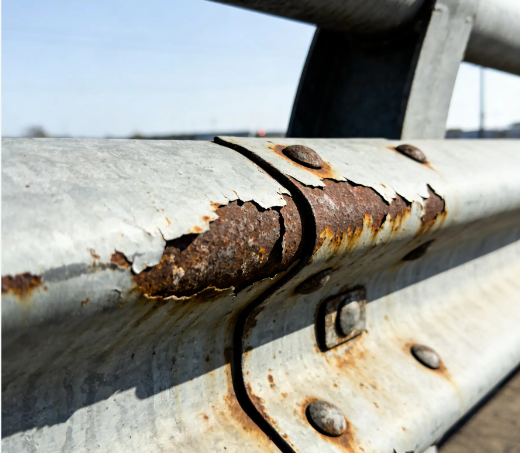
Many engineering projects have large areas of rust, deformation, and paint peeling in the later stage, which are basically caused by the purchase of trampling pits.
Misunderstanding 1: Only look at the price and not the wall thickness. Low-priced guardrails are generally thin materials that steal work, pipes are easily bent and deformed, and the rework cost in the later stage of the project is extremely high.
Misunderstanding 2: Confuse ordinary painting with electrostatic spraying. Ordinary spraying is easy to peel off the paint, and outdoor special electrostatic spraying is weathering and durable.
Misunderstanding 3: Do not distinguish between non-standard galvanizing and hot-dip galvanizing. Cold galvanizing, simple painting without anti-rust layer, rust in half a year, hot-dip galvanizing process is a long-term anti-rust guarantee.
Misunderstanding 4: Blind pursuit of high-end aluminum art. Ordinary factory and residential projects do not require high-priced aluminum art, and zinc steel guardrails are more cost-effective.
Misunderstanding 5: Ignoring the safety spacing and fillet process results in failure to accept and potential safety hazards.
Regular purchase: real standard wall thickness, hot dip zinc base, electrostatic spraying, compliance spacing, modular structure, stable quality, worry-free acceptance.
Full text summary
Panoramic renderings of boutique fence project
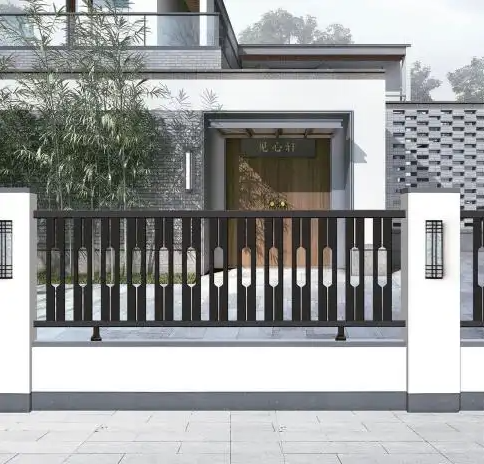
In summary, wall guardrails are an indispensable protective and decorative building material for modern construction projects. They are mainly divided into four main materials: zinc steel, aluminum art, stainless steel, and PVC. Among them, zinc steel guardrails are the most cost-effective and versatile. Aluminum art guardrails focus on high-end landscapes and are maintenance-free for life.
High-quality fence relies on the four core processes of standardized pipe thickness, compliance safety spacing, hot-dip zinc rust prevention, and high-temperature electrostatic spraying to achieve the advantages of weathering and anti-corrosion, stability and safety, beauty and regularity, efficient installation, and long-term maintenance-free.
Residential, school, factory, municipal, and villa different scenarios can be accurately selected according to budget, protection level, and decoration style. Engineering procurement avoids low-cost thin materials and inferior process routines, and chooses standardized Seiko products, which can not only pass the project acceptance smoothly, but also ensure stable use for more than ten years. It reduces the cost of later maintenance, renovation, and replacement from the source. It is the most cost-effective engineering fence protection solution.