

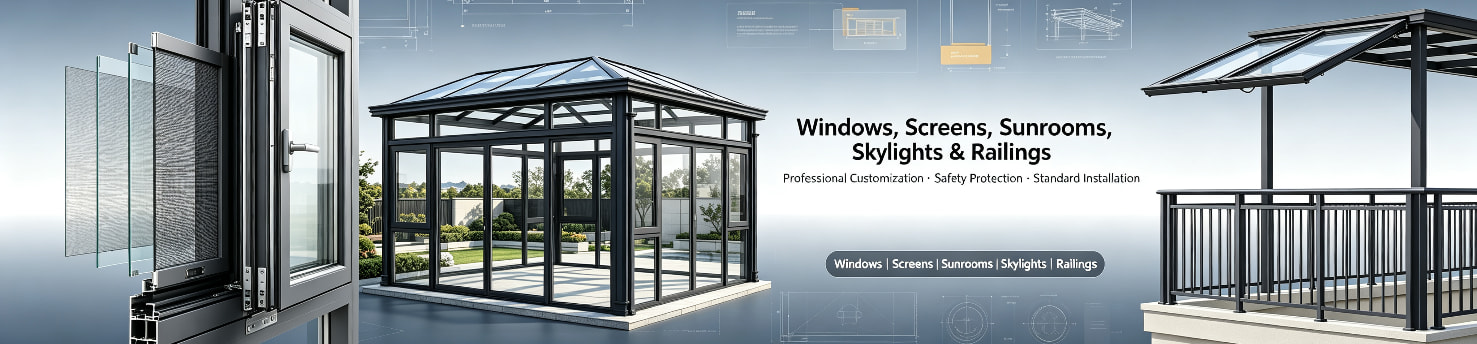
High-end doors and windows
How to choose high-end doors and windows? Full analysis of high-end system door and window material, configuration, process and acceptance
First, the basic cognition of high-end doors and windows: what is the essential difference between it and ordinary broken bridge aluminum doors and windows?
Comparison chart of ordinary doors and windows and high-end system doors and windows
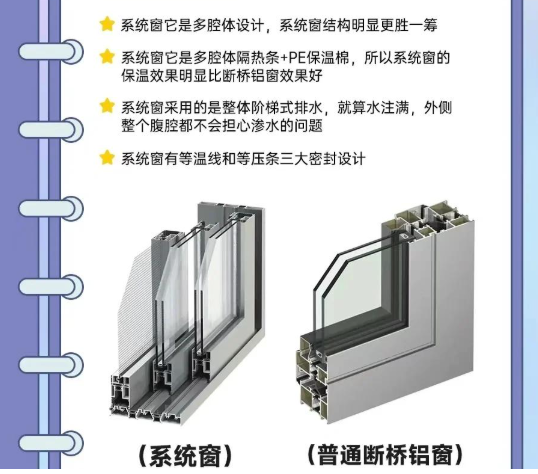
When many owners decorate, they often simply equate high-end doors and windows with "more expensive broken bridge aluminum windows", which is a very common cognitive misunderstanding. High-end doors and windows in the true sense mostly belong to the system door and window system, not thickened profiles and good-looking colors can be called high-end doors and windows. High-end doors and windows are a complete set of systems that have been developed and tested as a whole, including profiles, heat insulation strips, glass, sealing structures, hardware, rubber strips, and drainage systems. From the beginning of the design, the five core performance indicators of water tightness, air tightness, wind pressure resistance, sound insulation, and heat preservation are uniformly calculated.
Ordinary broken bridge aluminum doors and windows are mostly scattered purchases of profiles, glass, and hardware in stores, which are assembled at will on site. There is no matching test between each accessory, and the upper limit of performance is very low. After a few years of use, it is prone to problems such as water seepage, air leakage, switch cards, and poor sound insulation. The high-end doors and windows are for villas, large flat floors, duplexes, and high-end hardcover residences, and the core solution is to solve the owner's needs for silence, constant temperature, waterproofing, safety, appearance, and long-term stable use.
The core value of high-end doors and windows is not just exquisite appearance, but stable comprehensive performance. For high-rise large floor-to-ceiling windows, street-facing apartments, houses close to elevated shelves, wet areas of water systems, and houses in cold winter and hot summer, high-end doors and windows can significantly improve living comfort. This article gradually takes you to understand the professional standards of high-end doors and windows from profiles, heat insulation, glass, hardware, sealing and drainage, process, selection, pit avoidance, and acceptance. Avoid the trap of high price and low matching.
Analysis of high-end door and window profiles: Primary aluminum is the basic skeleton of high-end doors and windows
Enlargement of section details of high-grade door and window profiles
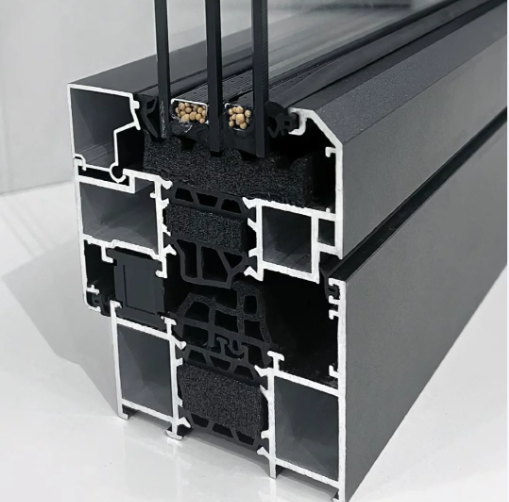
Profiles are the skeleton of doors and windows. The quality of the skeleton directly determines the structural strength, wind pressure resistance and service life of doors and windows, and is also the first threshold to distinguish high-end doors and windows from low-end products. High-end doors and windows uniformly use 6063-T5 aviation-grade primary aluminum profiles, refusing to recycle recycled aluminum.
6063-T5 aluminum alloy has a stable metal metallographic structure, with moderate hardness, good toughness, and not easy to crack, making it suitable for precision extrusion molding. Recycled aluminum is mixed with scrap aluminum, impurities, and many impurities, and the profile is prone to trachoma, pores, and insufficient strength. It is easy to deform under force in the later stage, and the surface is easy to peel when sprayed.
The wall thickness of the profile is a hard indicator. According to the national standard, the wall thickness of the outer window is ≥1.4mm. High-grade large fixed floor-to-ceiling windows, heavy-duty sliding doors, and balcony doors are routinely upgraded to 1.8mm and 2.0mm thicker wall thicknesses to resist high-rise strong wind pressure and avoid bending of profiles in large glass areas.
Surface treatment process is also a plus for high-end doors and windows. Mainstream high-end processes are divided into fluorocarbon spraying, imported electrostatic powder spraying, and wood grain transfer. Fluorocarbon spraying has the strongest UV resistance. It is not easy to fade or lose light in coastal salt spray and sun exposure for more than ten years. High-quality powder spraying has delicate color and warm feel. Wood grain transfer is suitable for new Chinese-style and light luxury style villas with realistic texture. Most low-end doors and windows use ordinary spray paint, which will turn white, fade, and peel in 2-3 years.
Third, thermal insulation strips: determine the thermal insulation and energy saving effect, true and false nylon is a watershed
Comparison close-up of PA66 nylon thermal insulation strip and PVC thermal insulation strip
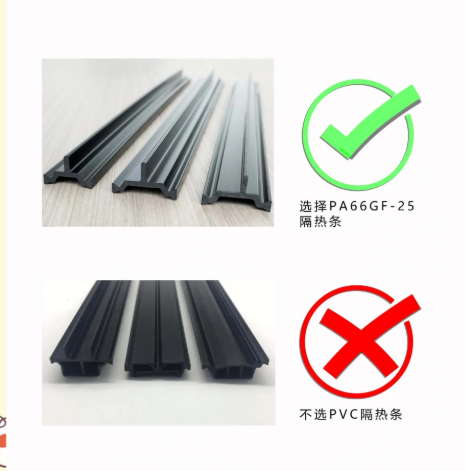
The thermal insulation strip is the core of the broken bridge structure, and it is also the core component of the energy-saving performance of high-end doors and windows. It is also the hardest hit area for counterfeiting on the market. High-end doors and windows come standard with PA66GF25 glass fiber nylon thermal insulation strip, that is, nylon thermal insulation strip with 25% glass fiber, which is a special thermal insulation material for broken bridge doors and windows recommended by the state.
PA66 nylon is resistant to high temperature and low temperature, and the coefficient of thermal expansion and contraction is close to that of aluminum alloy. It will not deform or take off the groove for a long time. The thermal insulation strip will have the brand logo and the words PA66 on it, and the surface is matte, with strong toughness, and it is not easy to break when bent.
Low-cost doors and windows commonly used PVC plastic insulation strips, low cost, easy to soften when heated, aging and brittle, cold shrinkage in winter and expansion in summer, will cause the profile to crack, leak air and water, and the insulation will directly fail. Many merchants offer very low prices, that is, quietly replace the nylon insulation strips with PVC.
The high-end system doors and windows will also adopt a multi-cavity structure design, with multiple independent cavities inside the profile. Some cavities are drained, some strengthen the structure, and some are filled with thermal insulation cotton to further reduce heat conduction. In winter, indoor heating is not easy to lose, and in summer, air conditioning and air conditioning are not easy to leak. Long-term use can save energy consumption for air conditioning and heating.
Fourth, high-end door and window glass configuration: the core carrier of sound insulation, heat insulation, and radiation protection
Section structure diagram of hollow laminated Low-E glass
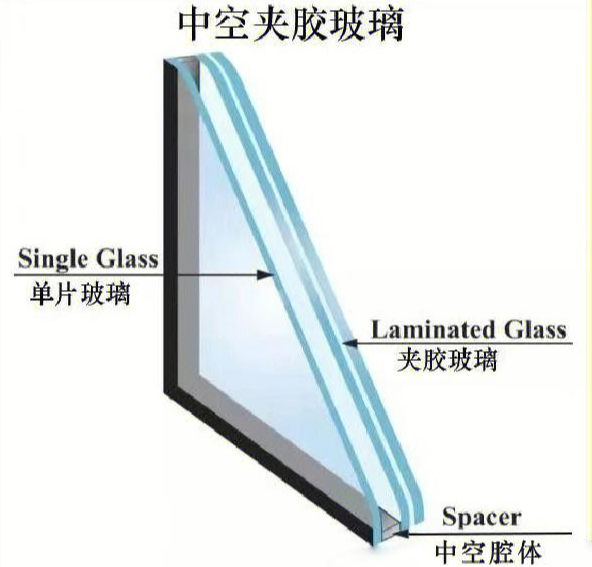
70% of the area of the windows is glass, and the glass configuration directly determines the ability of sound insulation, heat insulation, and UV protection. High-end doors and windows will not only use ordinary double-layer insulating glass. The mainstream configuration of high-end apartments is: double silver Low-E insulating glass, laminated insulating composite glass, and units facing the street, elevated, and close to the road are preferred to laminated hollow.
Low-E glass, also known as low-radiation glass, is divided into single silver, double silver, and three silver, and the grades are increased in sequence. Double silver Low-E is the best cost-effective choice for high-grade doors and windows. It can reflect outdoor infrared heat, block outdoor heat waves from entering the room in summer, and block indoor heat from dissipating outward in winter. At the same time, it blocks ultraviolet rays and protects furniture, curtains, and wooden floors from fading and aging. The hollow layer is filled with argon gas, which can further reduce heat conduction and improve the silent thermal insulation effect.
If it is a noisy environment facing the street, choose 5 + 0.76PVB + 5 laminated + 12A + 5 hollow structure, PVB laminated layer can effectively isolate medium and low frequency noise, unlike ordinary insulating glass, insulating glass can only isolate high frequency noise, which is very ineffective for traffic flow and engine low frequency noise.
At the same time, all high-end doors and windows are made of 3C certified tempered glass. The large glass layout must be thickened, and tempered explosion-proof and glass corner guards must be installed over a certain area. High-rise floor-to-ceiling windows are equipped with glass guardrails or strengthened structures to prevent the risk of self-explosion and falling. The original glass films are preferred from CSG, Xinyi and other first-line large factories, with high flatness, no ripples, and light transmission and transparency without distortion.
High-end hardware accessories: the heart of doors and windows, affecting more than a decade of switching experience
Silvia, Haobo and other imported hardware components are actually photographed.
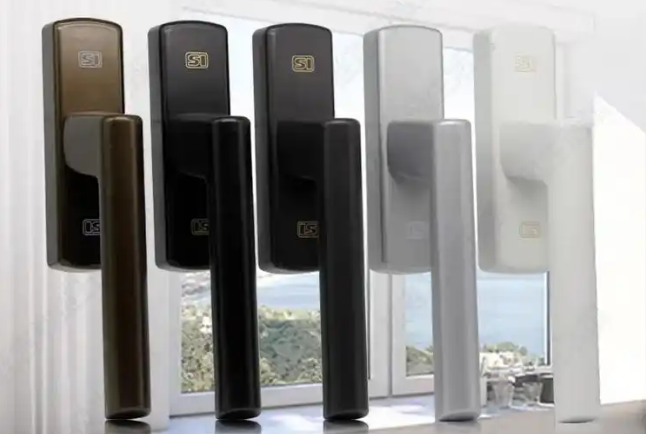
Many owners buy high-end doors and windows, only looking at profiles and glass, ignoring hardware. Hardware is the moving part of doors and windows. It is opened hundreds of thousands of times repeatedly. After 1-2 years of use of inferior hardware, the handle will be loose, the lock point will be stuck, the sagging close will not be strict, and the lock point will be rusted. High-end doors and windows are equipped with imported or first-line brand load-bearing hardware as standard. Common brands: Haobo Hoppe, Siglia, Noto, Grid, etc.
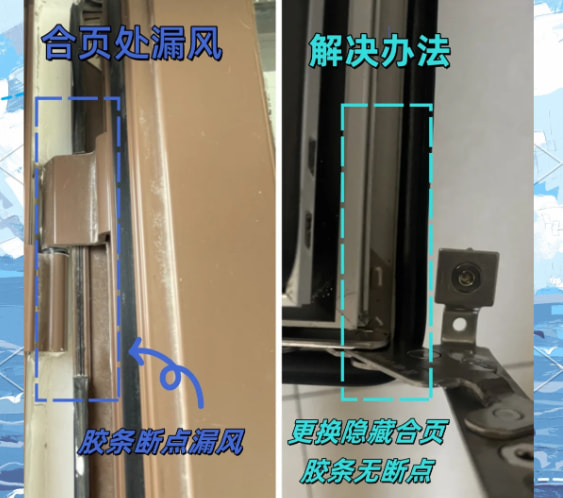
High-grade casement windows generally use a multi-point locking structure, not a single-point lock. After the multi-point lock is closed, the sealing strip is evenly pressed around the whole window, and the force is uniform in one circle, the sealing effect is better, and it is not easy to leak air and water. Heavy-duty lifting sliding doors, because the door leaf has a large weight, use load-bearing rails and lifting hardware, which are easy to open. A single fan can carry hundreds of kilograms of weight, and the push-pull is smooth and not stuck.
In terms of hardware materials, the high-grade hardware lock seat and actuator base material are 304 stainless steel or high-strength zinc alloy, the surface layer is anti-corrosion treatment, and it is not easy to rust in humid areas and coastal areas for long-term use. Note: Many businesses promote imported doors and windows, but the hardware is replaced by domestic cheap OEM hardware, which is a typical high-end low-end. When purchasing, the hardware brand and model should be stated in the contract.
Six, sealing, drainage structure: the key design to solve the water leakage of doors and windows
Schematic diagram of isobaric drainage structure for high-grade doors and windows
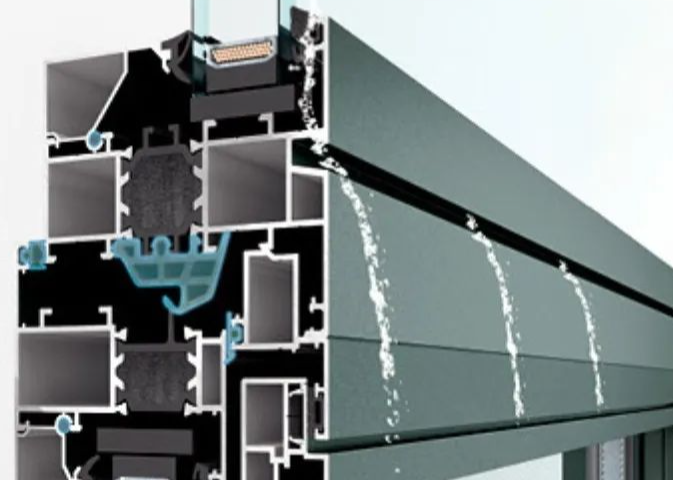
Water seepage is the most common problem of doors and windows. Most of them are not properly glued, but the design defects of the drainage structure. Many ordinary broken bridge doors and windows are simply drained straight, and rainwater is easy to pour backwards; while regular high-end system doors and windows use the principle of isobaric cavity drainage to design internal and external isobaric cavities. After rainwater enters the cavity, it is discharged outward along an independent drainage channel. The internal and external air pressure is balanced, and the rainwater will not pour into the room in windy and stormy weather.
The sealing structure adopts multi-seal design, three seals and four seals are common, and the rubber strip is made of EPDM foam rubber strip. EPDM rubber strip is resistant to aging, high and low temperature resistance, and has long-lasting elasticity. It will not harden and crack for more than ten years; ordinary recycled rubber strip hardens and loses elasticity in 2-3 years, and air leakage occurs in the gap.
The three seals correspond to each other: outdoor dust-proof water-blocking seal, middle isobaric chamber, indoor thermal insulation seal, layer by layer blocking rainwater, cold air, and dust from entering the room. Sealing and drainage complement each other. Even if the external wall glue is slightly aged, relying on the cavity drainage structure can still greatly reduce the probability of water seepage, which is also the core gap between system doors and windows and assembled doors and windows.
7. Production and installation process: three points of product and seven points of installation, high-end doors and windows floor-to-ceiling core
Door and window workshop numerical control processing, on-site standardized installation construction map
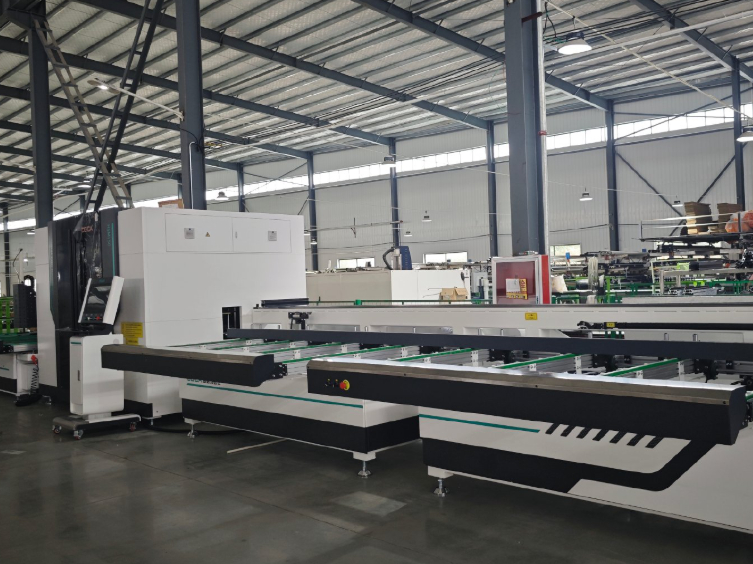
High-end doors and windows are customized products. No matter how good the profile glass is, the processing and installation are not in place, and the performance is directly discounted. Regular high-end door and window factories use numerical control precision cutting and corner code glue injection process. Corner code glue injection is a landmark process of high-end doors and windows. The group corner position is injected with group corner glue to firmly bond and reinforce the two profile corners, while ordinary doors and windows are just simple corner code splicing without glue injection. After a period of use, the corners are loose, the gaps become large, and the seal fails.
In the installation process, high-end doors and windows do not directly stick the window frame to the wall, but use the frame installation/foam filling + structural waterproofing process. Fill the micro-expansion foaming agent between the window frame and the wall, and use weathering structural glue on the outside to distinguish between exterior wall weathering glue and indoor beauty glue. The exterior wall glue must have anti-ultraviolet, waterproof and weathering properties, and cannot use indoor sealant instead of exterior wall glue.
When installing, use a level to calibrate the vertical level, fix the spacing compliance, and do not directly penetrate the heat insulation cavity; clean the base surface before gluing the outer wall to ensure that the glue layer is firmly bonded. Many high-priced door and window rollover cases are caused by the installation master's non-standard, no drainage slope, gluing cutting corners, water leakage in rainy days, and the loss far exceeds the price difference.
Eight, high-end door and window selection plan for different apartment scenarios
Real pictures of large flat floor-to-ceiling windows, villa doors and windows, street-facing apartment doors and windows

High-end doors and windows are not a one-size-fits-all style, but should be combined with apartment type, floor, noise, and climate to match the configuration.
Villa self-built house: priority fluorocarbon spraying profiles, three seals, optional aluminum-clad high-end system windows, the pursuit of texture and energy saving, the large floor-to-ceiling windows in the courtyard pay attention to wind pressure resistance and reinforced profiles;
High-rise large flat floor-to-ceiling windows: thickened profiles above 1.8mm, double silver Low-E hollow, large glass thickened, strict calculation and wind pressure resistance, priority multi-point lock casement windows, cautious oversized opening fans;
Street-facing elevated, railway apartment type: focus on upgrading laminated insulating glass, with three seals, priority is given to opening inner and inverted windows, taking into account ventilation and sound insulation;
Rainy and humid areas in the south: focus on isobaric drainage, EPDM rubber strips, and fluorocarbon spraying in coastal areas to resist salt spray corrosion;
In the cold northern region: multi-cavity thermal insulation profile + double silver Low-E argon-filled glass to strengthen thermal insulation and reduce condensation and icing.
Nine, high-end doors and windows purchase pit avoidance guide to avoid high prices and low matching routines
Door and window contract marked configuration, pit avoidance prompt diagram

There are many high-end door and window routines on the market. Many owners spend high-end prices to buy ordinary broken bridge products. Here are the high-frequency traps:
Trap 1: Orally saying that it is a system door and window, but it is actually an ordinary broken bridge, and there is no complete system test report;
Trap 2: The profile is said to be primary aluminum, but it is actually doped with recycled aluminum. The contract does not state the profile brand and wall thickness;
Trap 3: Low-E glass is stolen, using single silver as double silver, or even offline Low-E instead of online Low-E, the performance gap is huge;
Trap 4: Hardware verbally claims to be imported, the contract does not state the brand, and it will be replaced by an OEM imitation later;
Trap 5: Confuse the spraying process, and ordinary powder is sprayed as fluorocarbon;
Trap 6: The quotation is only for bare windows, open fans, glass upgrades, frames, waterproof gluing, and hoisting will be increased separately, and the later increases will be serious.
The correct approach: the contract states in black and white the profile brand, wall thickness, insulation strip brand, glass structure, Low-E grade, hardware brand, rubber strip material, and exterior wall glue brand, and at the same time asks for the test report of doors and windows (water tightness, air tightness, wind pressure resistance, sound insulation testing).
Full text summary
Panoramic renderings of the completion of the whole house of high-end doors and windows
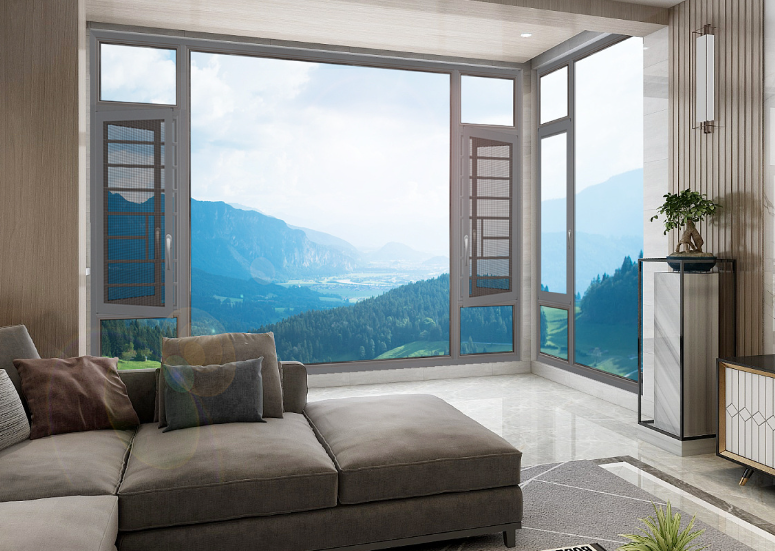
All in all, the core of high-end doors and windows is systematic matching, rather than simply thickening profiles and increasing prices. A set of qualified high-end doors and windows, with 6063-T5 original aluminum alloy profiles as the skeleton, with PA66 nylon thermal insulation strips, double silver Low-E or laminated safety glass, first-line brand multi-point lock hardware, EPDM multi-channel sealing strips, isobaric drainage cavity, with glue injection group angle Seiko process and standardized waterproof installation, to achieve excellent sound insulation, thermal insulation, waterproof and wind pressure resistance.
For large flat floors, villas, street-facing, and high-rise residences, high-end doors and windows can improve living pain points from the root, isolate noise, stabilize indoor temperature, and prevent water leakage and air leakage. At the same time, they take into account the simple and high-end appearance and texture, and improve the grade of home improvement. When purchasing, don't just compare the unit price, focus on checking the whole set of configuration lists, and write the materials, specifications, and brands into the contract to avoid the marketing routine of high price and low matching. Choose a reliable high-end door and window brand, and the double guarantee of product + standardized installation can make high-end doors and windows perform stably for more than ten years and bring a long-term comfortable experience to home life.