

Stainless steel guardrail
Stainless steel guardrail comprehensive popular science | Material classification, process standards, parameter selection, installation and maintenance and common misunderstandings
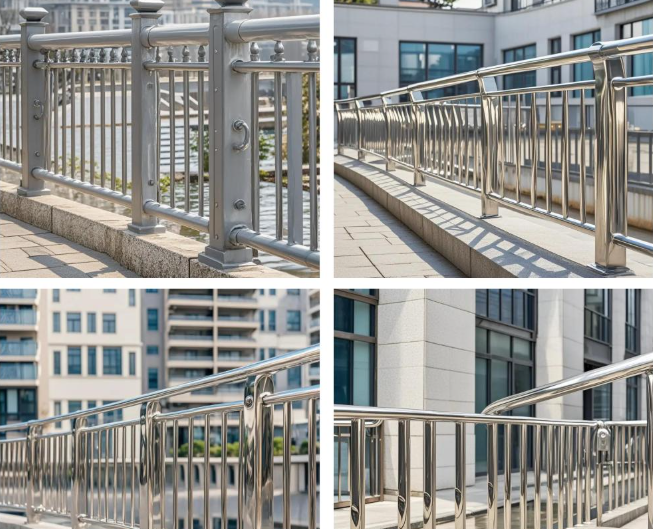
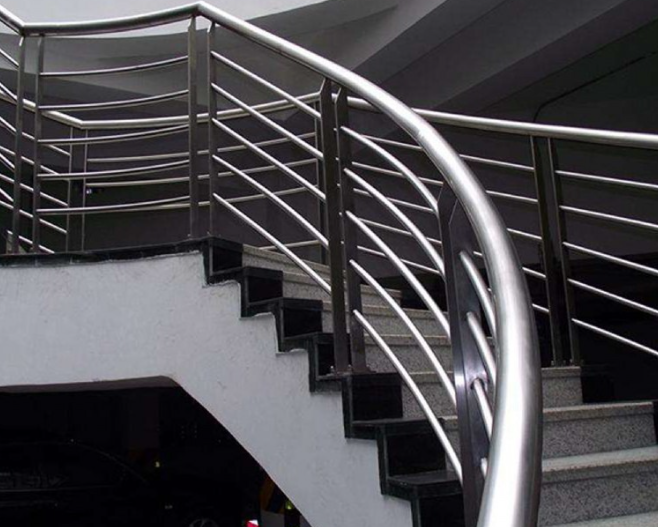
[A variety of stainless steel guardrails are a collection of real scenes, balcony guardrails, stair handrails, landscape guardrails, and factory isolation guardrails are real shots, with delicate texture and soft light]
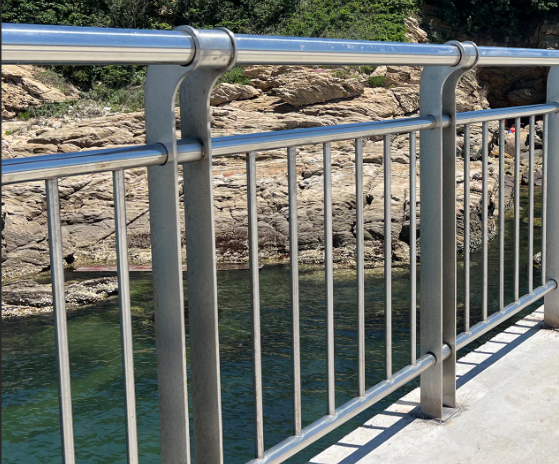
Stainless steel guardrail is currently a widely used protective product in the fields of architectural decoration, factory security, municipal landscape, home improvement stairs, and balcony protection. With its core advantages of not easy to rust, high strength, flexible shape, and long service life, it gradually replaces traditional wrought iron guardrail, ordinary carbon steel sprayed guardrail, and wooden guardrail. However, when many purchasers, decoration owners, and general contractors choose stainless steel guardrail, they only look at the appearance and quotation, and cannot tell the difference between 201, 304, and 316 materials. They do not understand the thickness of the pipe, welding process, and surface treatment standards. Problems such as rust, weld cracking, shaking and loosening, and black surface often occur after one or two years of use.
Stainless steel guardrail seems to have a simple structure, but it is actually a custom-made protective component with high technical requirements, with clear national specifications, material standards, mechanical parameters and construction acceptance requirements. This article systematically explains the material distinction of stainless steel guardrail, pipe parameters, processing technology, style classification, force standards, installation specifications, maintenance methods and the key points of purchasing and avoiding pits from an industry professional perspective, taking into account professional depth and popular readability. It is suitable for home improvement owners, engineering procurement, decoration companies, and real estate parties.
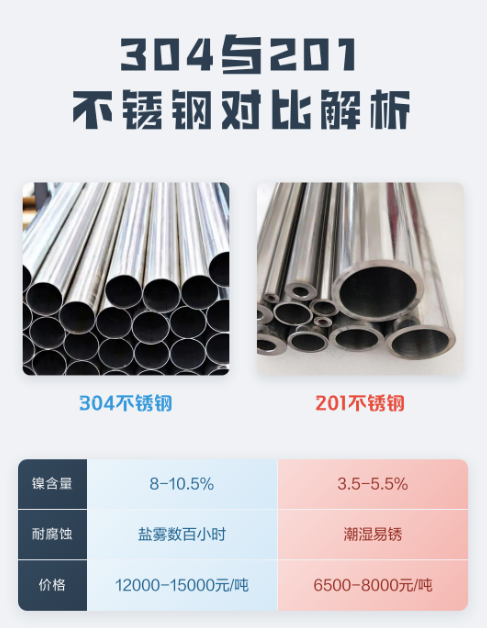
[Material comparison chart | 201, 304, 316 stainless steel samples are placed side by side, marked with material composition, applicable environment, and rust protection grade]
First, stainless steel guardrail core material classification and chemical composition, applicable environmental analysis
The basic anti-rust ability of stainless steel depends on the content of nickel, chromium, and molybdenum elements, which is also the core reason for the huge price difference between different grades of stainless steel. The mainstream of stainless steel guardrails on the market is divided into 201 stainless steel, 304 stainless steel, and 316 stainless steel. The performance gap between the three is obvious and cannot be mixed.
201 stainless steel: chromium content of about 16%, nickel content of only 3.5% - 5.5%, manganese content is high. Lowest cost, weak rust resistance, suitable for dry indoor environments, such as indoor stair handrails. If placed outdoors, along the coast, in a humid basement, near rain and high water vapor, rust spots and pitting will appear in a short time. Many low-priced guardrails generally use 201 material, and the pipe thickness is false standard, which is the source of high rust in the later stage.
304 stainless steel: national standard 06Cr19Ni10, chromium ≥18%, nickel ≥8%, is a general austenitic stainless steel, good toughness, stable rust resistance, is the mainstream preferred material in the guardrail industry. Indoor, ordinary outdoor, community balcony, ordinary landscape guardrail can be used, properly maintained under normal environment, the service life can reach 15-25 years.
316 stainless steel: national standard 06Cr17Ni12Mo2, adding molybdenum element (Mo≥2%) on the basis of 304, which greatly improves the corrosion resistance of chloride ions. It is specially used in coastal areas, seaside villas, swimming pools, chemical plant areas, and areas with heavy salt spray. It resists sea breeze, salt water, and water vapor erosion. It has the highest anti-rust grade, and the price is also higher than 304 stainless steel by more than 30%.
Here is to correct a common misunderstanding in the industry: if it is not stainless steel, it will never rust. Stainless steel is "not easy to rust", not absolutely stainless. When the surface protective film is damaged, long-term exposure to chloride ions, strong acids and alkalis, and long-term accumulation of sediment, 304 and 316 will also rust, but the rust rate is much slower than that of 201 materials.
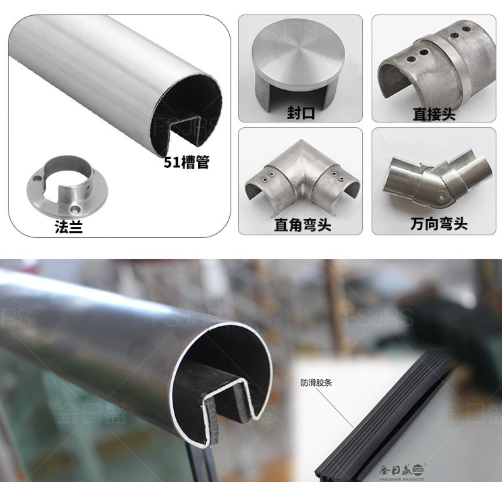
[Detailed drawing of pipe section | Close-up of round tube, square tube and rectangular tube section, marked with outer diameter, solid thickness, virtual standard tube comparison, caliper measurement screen]
Second, stainless steel guardrail commonly used pipe specifications and mechanical parameter standards
All stainless steel guardrails are made of stainless steel welded pipes. The pipes are divided into round pipes, square pipes, and rectangular pipes. They are divided into supervisors (columns/large armrests), crossbars, and vertical rods (flower pipes). The wall thickness of the pipe directly determines the overall impact resistance and side pressure resistance. It is related to safety and is also a disaster area for cutting corners. Many merchants mark 1.2mm, but it is actually the standard thickness. The actual thickness is only 0.6-0.8mm, which is easily deformed and shaken under force.
Engineering general reference parameters:
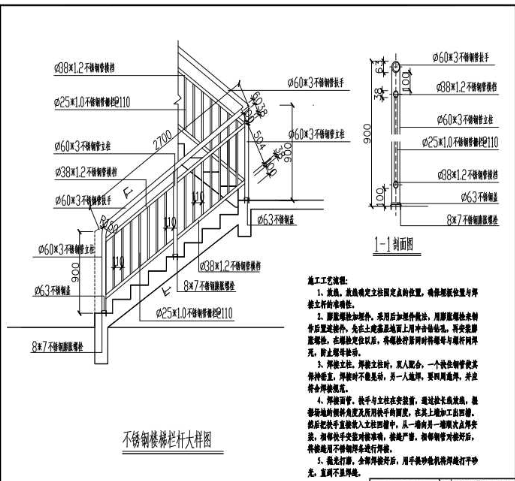
Stair handrail surface tube (round tube): commonly used Φ51mm, Φ63mm, commonly used Φ42mm for home improvement, recommended thickness ≥1.2mm; large-scale projects, public areas with dense traffic, solid thickness ≥1.5mm.
Column (square tube/rectangular tube): 4040mm, 5050mm, 6060mm square tube, or 4060 rectangular tube; household balcony guardrail column solid thickness ≥1.0mm; municipal, factory, high-rise public guardrail column solid thickness ≥1.5mm.
Vertical railing (small railing): Φ19, Φ22, Φ25 round tube, or 2020 square tube, solid thickness conventional 0.7 - 1.0mm; vertical railing spacing national standard requires a net distance of ≤110mm to prevent children's head from getting stuck, which is a mandatory safety clause.
Reference to force standards: According to the "Residential Design Code" and "Technical Regulations for Building Guardrails", the standard value of horizontal load of residential balconies and porches guardrails is ≥1.0kN/m; in schools, shopping malls and other crowded public areas, the horizontal load is ≥1.5kN/m. After the guardrail is installed, there should be no obvious shaking or permanent deformation.
Pipes are divided into decorative pipes and industrial pipes. The guardrail is basically a decorative welded pipe, with the weld seam on the inside. The weld of high-quality pipes is flat, and there is no black line after polishing. The weld of inferior pipes is raised, and it is easy to corrode and rust first from the weld position.
[Welding process comparison chart | Close-up of three groups of samples: full welding grinding, spot welding, and inferior virtual welding, showing the advantages and disadvantages of the weld]
III. Mainstream welding process and surface treatment process of stainless steel guardrail
Welding is the most challenging part of stainless steel processing. Stainless steel conducts heat quickly and is prone to thermal deformation. Improper welding will cause intergranular corrosion, and the weld position will rust first. At present, the industry is divided into argon arc welding (TIG welding), which is also the preferred process for stainless steel guardrails.
Argon arc welding is divided into full welding and spot welding: full welding is a continuous welding of the pipe butt position, with strong integrity, high strength, no dirt in the gap, and the best waterproof and rust-proof effect. High-end home improvement and outdoor landscape guardrails are preferred for full welding; spot welding is spaced point welding, with fast processing speed and low price. The gap is easy to accumulate water and ash, and the weld in humid environment is easy to corrode. It is mostly used for indoor low-demand handrails.
After the welding is completed, the weld bead treatment must be done: welding spot removal, pickling passivation. Many small workshops omit the passivation step, directly polish after welding, the chromium element at the weld position is lost, and yellow rust spots soon grow in the later stage, which is a very typical process reduction.
After welding, it enters the surface treatment process, and there are four mainstream processes on the market:
First, mirror polishing: 8K mirror, the surface is as bright as a mirror, with a high value, suitable for indoor stair handrails; the disadvantage is that it is easy to leave fingerprint scratches, and it is easy to lose light when used outdoors.
Second, wire drawing treatment: matte wire drawing (snowflake sand, straight sand), is currently the most popular process, fingerprints are not obvious, wear resistance, indoor and outdoor general, scratch resistance is better than mirror.
Third, sandblasting treatment: matte fine sand surface, advanced texture, not easy to leave fingerprints, often used in landscape and light luxury projects; the disadvantage is that it is difficult to repair after scratching.
Fourth, stainless steel paint/fluorocarbon spraying: spraying on the surface of stainless steel substrates can customize various colors to solve the problem of single stainless steel color. Fluorocarbon paint has strong weather resistance and is suitable for long-term outdoor use. Ordinary paint is easy to peel off outdoors.
[Style classification renderings | Balcony guardrail, stair guardrail, corridor guardrail, landscape river guardrail, factory isolation guardrail grouped display]
Fourth, stainless steel guardrail mainstream style classification and applicable scenarios
According to the use scenario and structural style, stainless steel guardrails can be divided into five categories. Different styles have different design focuses. When purchasing, choose on demand:
Balcony stainless steel guardrail: high-rise residential and self-built balcony protection, mainly vertical pole transparent models, taking into account protection and lighting; high-rise projects give priority to thickening columns, with high requirements for firmness and must meet anti-fall specifications.
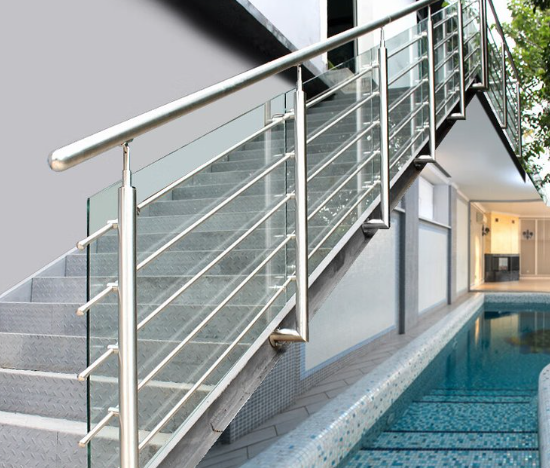
Stainless steel stair handrails: indoor duplex buildings, villas, shop stairs, rich styles, simple round tube models, brushed models, glass clip models (stainless steel glass guardrail). Glass models are transparent and modern, with tempered laminated glass, higher security.
Municipal landscape stainless steel guardrails: river guardrails, park plank roads, flyover guardrails, mostly made of 304 or 316 materials, the shape can be customized arc, special-shaped, taking into account the protection function and beautiful landscape, need to withstand outdoor sun and rain.
Factory area, fence stainless steel guardrail: factory boundary isolation, park fence, higher height, sturdy structure, some with anti-climbing design, stronger security properties.
Stainless steel glass guardrail (no column/simple column glass handrail): modern Internet celebrity models, stainless steel card slot fixed tempered glass, minimalist style, mostly used in hotels, clubs, villa terraces, high requirements for profile accuracy, glass size, gluing process.
[Installation and construction map | Embedded parts positioning, baseplate fixing, vertical adjustment, gluing and sealing, finished product correction on-site real shot]
Standardized installation process and acceptance specification for stainless steel guardrails
Stainless steel guardrail "three points product, seven points installation", no matter how good the pipe and welding are, if the fixing method is not in place, it will be loose, leaking, and the bottom will rust. The standardized installation process is divided into five steps:
The first step is to investigate and lay out the lines on site to confirm the base structure. The base is divided into concrete structure, brick-concrete structure, and steel structure. Hollow brick and aerated block walls cannot be directly expanded with screws, and steel plates or concrete piers must be pre-embedded in advance. Many later falling accidents are due to soft base.
The second step is to fix the embedded parts or baseplate. The concrete base surface is fixed with chemical anchor bolts and thickened flange baseplate, which has stronger tension than ordinary expansion screws and is suitable for high-rise and outdoor guardrails.
The third step is to level and correct the column. Use a level and a ruler to calibrate the verticality to ensure that the whole row of guardrails is straight and uniform in height. After correction, lock the fixed parts.
The fourth step is to assemble and weld the crossbar and vertical rod. The welding spot cleaning, passivation, and wire drawing/painting must be redone in the later stage of the on-site welding position, otherwise the on-site weld is prone to rust.
The fifth step is to seal and glue and clean the finished product. The bottom of the column and the joint position of the ground are sealed with neutral weathering silicone glue to prevent rainwater from seeping into the bottom of the baseplate along the gap and accumulating water from corroding the baseplate; it is forbidden to use acidic glass glue, which will corrode stainless steel and cause blackening and rust.
Acceptance key inspection: overall shaking, vertical rod spacing, bottom sealing, weld passivation, pipe thickness, whether the glass is 3C certified tempered glass.
[Maintenance schematic diagram | Cleaning and wiping, rust removal treatment, prohibition of contact with chemicals]
Six, stainless steel guardrail daily maintenance methods to extend service life
Many customers have reported that the guardrail has rusted for several years. In many cases, it is not a material problem, but the wrong maintenance method. There are clear taboos for stainless steel maintenance:
Cleaning is preferred to use water with a soft rag. Slight stains can be wiped with neutral detergent; stubborn stains and slight rust points, purchase special stainless steel cleaning paste and wipe along the brushed texture.
It is strictly forbidden to use steel wire balls for grinding. Steel wire balls will damage the surface passivation film, leaving small scratches, which will make it easier to hide and rust in the future. It is forbidden to contact high-chlorine strong acid products such as 84 disinfectant, hydrochloric acid, rust remover, and cement cleaner. Once in contact, rinse with water immediately.
The outdoor guardrail is recommended to be cleaned at least once a year to clean up the accumulation of sediment and fallen leaves at the bottom of the column to avoid long-term water soaking; the seaside 316 guardrail is recommended to be rinsed with fresh water regularly to reduce the accumulation of salt spray.
If there is a small amount of floating rust on the surface, deal with it in time; if left unchecked, the pitting will continue to expand inward, making it difficult to repair later.
[Comparison chart of pit avoidance | Comparison of shaking samples of virtual standard thin tube guardrail, 201 posing as 304 samples, and no passivation and rust weld]
Seven, stainless steel guardrail industry procurement misunderstandings and pit avoidance guide
Misunderstanding 1: The merchant verbally says 304, without any testing certificate. The market uses 201 as 304 in large quantities, which is difficult to distinguish with the naked eye. When purchasing, you can require material quality assurance books, spectral testing, and on-site spectral proofing testing for important projects.
Misunderstanding 2: Only look at the marked thickness, not the actual thickness. There are generally standard thickness and lower difference in the decorative pipe industry. The actual thickness must be stated in the contract, and the lower difference range must be indicated.
Misunderstanding 3: Only care about the price and ignore the passivation process. Many low-priced guardrails are not pickled and passivated after welding, and the weld is the hardest-hit area for rust, and macula appears in the short term.
Misunderstanding 4: The hollow brick wall is directly hit with expansion screws without pre-embedding. It will loosen and fall off in the later stage, and there is a major safety hazard in falling from high altitude.
Misunderstanding 5:201 stainless steel is used in outdoor environments. Even if it is temporarily cheap, the cost of refurbishing a large area of rust in one or two years is higher.
Misunderstanding 6: The spacing of the vertical rods exceeds the standard. In order to look good, the gap is enlarged, leaving a potential safety hazard for children's card heads, which cannot pass the acceptance.
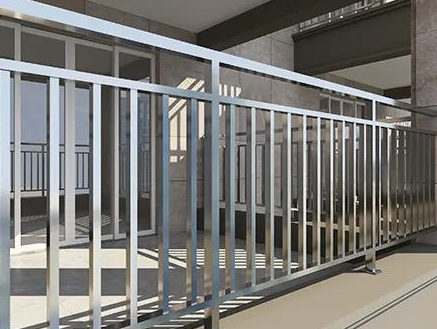
[Final panorama | A set of completed high-end stainless steel landscape guardrails, the overall clean atmosphere]
Eight.
Stainless steel guardrail
conclusion
Stainless steel guardrail is a custom building material with both safety protection functions and decorative attributes. Its safety bottom line is based on correct material selection, standard pipe thickness, qualified argon arc welding + passivation process, and standardized installation base treatment. 201, 304, 316 are not absolutely good or bad, the core is to match the use scenario: 201 can be selected for drying indoor budget; 304 is preferred for most home improvement and ordinary outdoor; 316 must be used in coastal salt spray environment.
Whether it is home improvement self-built house balcony staircase renovation, or real estate, municipal, factory project procurement, can not simply compare the price. A reliable stainless steel guardrail plan, should be stated in the contract material grade, pipe thickness, welding method, surface treatment process, fixing method, quality assurance range.
High-quality stainless steel guardrails, under the premise of reasonable selection, standardized construction, and regular simple maintenance, can accompany the building for decades, taking into account safety, stability, beauty and durability, and avoiding time and economic losses caused by repeated maintenance and replacement. In the current guardrail market environment, pay more attention to material reports, pipe parameters, and processing details in order to avoid routines and buy stable and durable stainless steel guardrails