

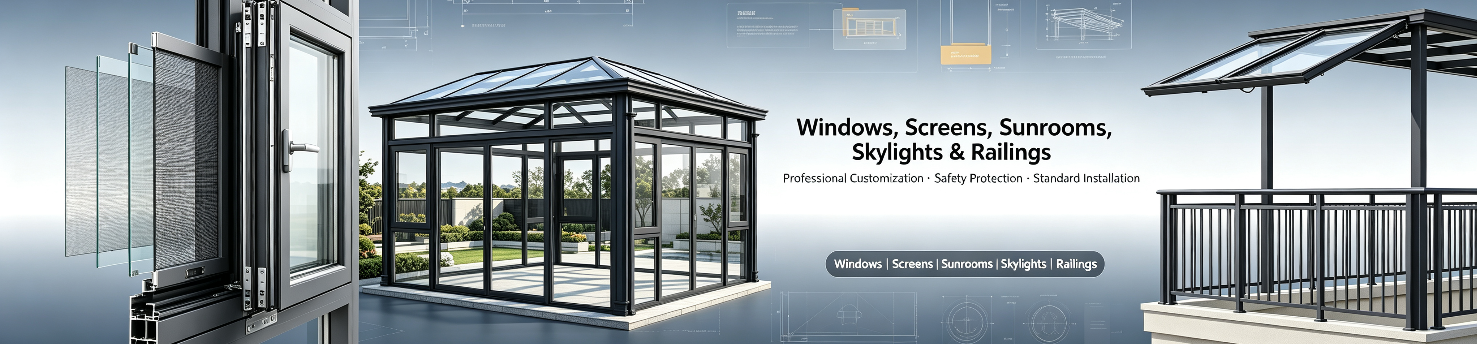
guardrail
I will focus on the national standard specifications of the guardrail, mainstream materials, classified scenes, construction acceptance, purchase of pit avoidance and other core specialties [real scene collection of home improvement balconies, bay windows, stairs, and roofing standardized guardrails, simple and safe styles]
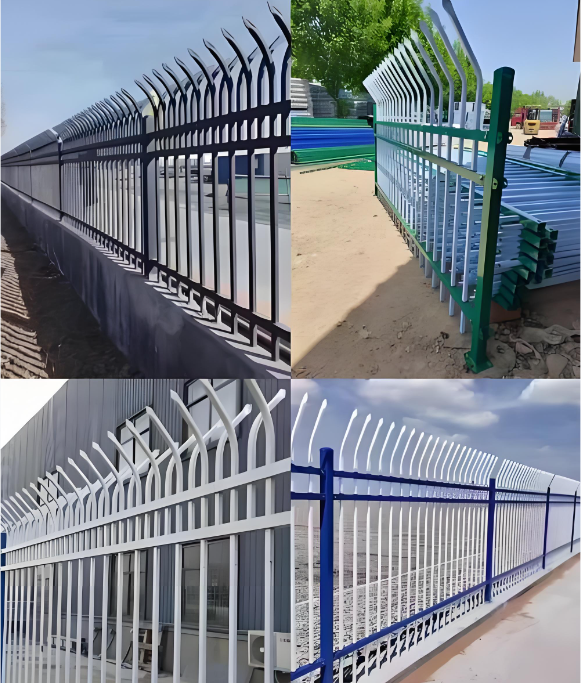
Guardrails are an indispensable safety protection component in architectural home improvement and engineering infrastructure. They are widely used in residential balconies, bay windows, stairs, patios, roofs, villa courtyards, municipal passages and other scenarios. Many owners and project purchasers have common cognitive misunderstandings, believing that guardrails are just simple wrought iron and aluminum railings. They only look at the appearance, style and price, and ignore the core indicators such as national standard safety parameters, material performance, structural load-bearing, and anti-climbing design.
Inferior guardrails generally have problems such as excessive spacing, insufficient height, thin material, loose welding, and easy corrosion and fracture, which can easily lead to safety accidents such as children falling from buildings, falling from heights, and railing collapse. In 2025, the new version of the "Specification for Residential Projects" (GB 55038-2025) was officially implemented, and new mandatory standards were proposed for the height, spacing, load-bearing, and structure of residential guardrails. This paper combines the latest national standard specifications, from the dimensions of guardrail classification, core parameters, mainstream materials, scene adaptation, construction standards, acceptance points, and purchase avoidance pits, all-round popular science guardrail expertise, taking into account industry professionalism and public readability, suitable for home improvement owners, engineering procurement,
[Schematic diagram of the specification | 2025 new version of the national standard parameter marking diagram of the protective fence, marking the height, spacing, load-bearing, and anti-climbing requirements]
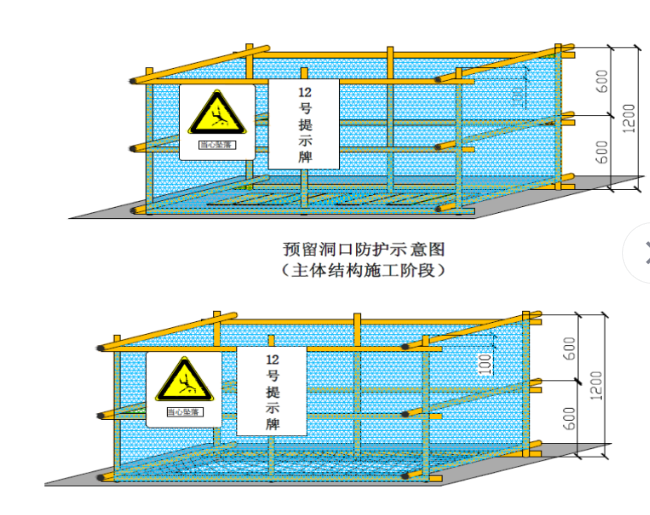
First, the latest national standard mandatory specifications for protective fences, home improvement projects must adhere to the safety red line
The guardrail is a mandatory component of building safety. All residential and civil construction must strictly follow the GB 55038-2025 "Code for Residential Projects" implemented in 2025. This is the highest authoritative standard for the design, construction and acceptance of guardrails in China. All old codes shall be invalid and updated accordingly.
The core mandatory parameters are the key to purchase and acceptance, and none of them are indispensable: first, the height of air protection is upgraded uniformly, and the net height of the guardrail shall not be less than 1.2 meters at the balcony, outer porch, inner patio, upper roof, and staircase. Completely replace the previous differentiated standards of 1.05 meters and 1.1 meters for high and low floors; if there is a tread table within 0.45 meters at the bottom of the railing, the height needs to be recalculated from the tread surface to ensure effective protection height. Second, to prevent children from climbing hard requirements, the net spacing of vertical rods is strictly prohibited from being greater than 11cm to prevent children from getting stuck in the head and drilling out of the body. At the same time, it is forbidden to set horizontal climbing handrails and pedal bars to avoid children from climbing by force.
Third, the load-bearing standard, the horizontal load-bearing load of ordinary residential guardrails is not less than 1.0kN/m, primary and secondary schools, public places need to reach 1.5kN/m, no deformation, no loosening, no fracture after force, no residual deformation after unloading. Fourth, the bottom of the anti-fall requirements, the bottom of the railing with a height of more than 20cm from the ground and air, must be equipped with solid water flanging or sealing baffles to prevent items and children's feet from slipping and falling.
All non-standard guardrails not only pose great safety hazards, but also fail new house acceptance, property inspection, and fire inspection. They will face forced rectification and demolition later.
[Classification scene map | Balcony guardrail, bay window guardrail, staircase guardrail, roof guardrail, courtyard guardrail classified real shot]
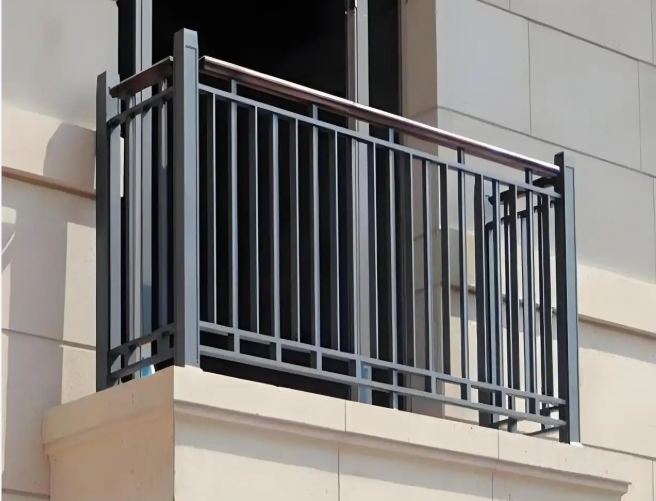
Second, accurate classification and scene adaptation of guardrails, selection standards for different locations
According to the usage scenarios and functional attributes, guardrails are divided into two categories: indoor home improvement guardrails and outdoor engineering guardrails. The structure, material, and shape requirements of different scenes are completely different, and cannot be replaced universally.
Balcony guardrail: The style with the highest frequency of residential use, the core requirements are high load-bearing, wind pressure resistance, and climbing resistance. Fixed solid and dense vertical rod structures are preferred for high-rise balconies, and simple styles are prohibited from being hollowed out; low-rise courtyard balconies can take into account appearance and protection, and are suitable for aluminum art and minimalist narrow frame styles.
The bay window guardrail: The bay window belongs to the high-frequency dangerous area, and the low countertop can easily cause children to climb and fall. The national standard requires that the bay window guardrail must be installed with full coverage, and the built-in invisible guardrail is preferred to not block lighting. At the same time, it meets the effective protection height of 1.2 meters and is suitable for the minimalist style of home improvement.
Stair guardrail: focusing on anti-skid, anti-rollover, and stable handrails. The spacing of the railings is strictly controlled within 11cm. The height of the handrails should not be less than 0.9 meters for indoor stairs and 1.2 meters for outdoor stairs. It is suitable for the elderly and children for daily passage protection.
Roof, patio guardrail: the upper roof, terrace air area, need to adapt to outdoor wind and rain environment, material requirements rust-proof, corrosion-resistant, structure thickened reinforcement, resist outdoor temperature difference, wind pressure erosion.
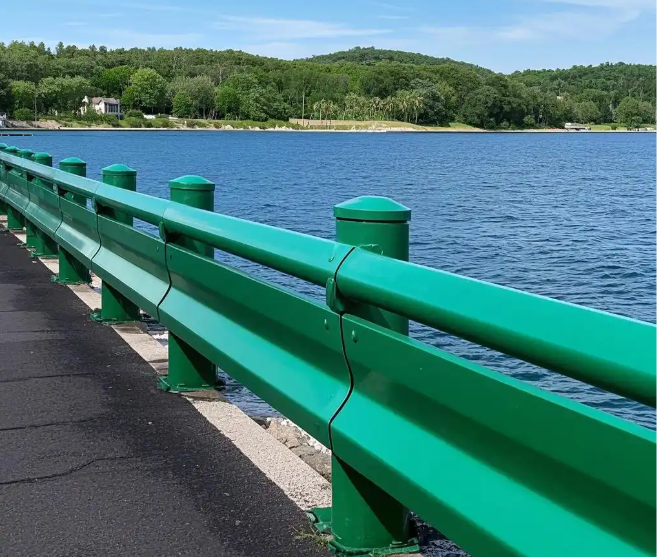
Courtyard and municipal guardrail: focusing on isolation and protection, beautiful and durable, suitable for villa walls, community walks, and municipal roads, taking into account the protection and the unity of the overall façade of the community.
Purchase core principles: indoor heavy safety appearance, outdoor heavy anti-corrosion and durability, high-rise heavy structure load-bearing, children's room heavy anti-climbing, on-demand selection can avoid potential safety hazards.
[Material comparison chart | 304 stainless steel, 201 stainless steel, aluminum alloy, wrought iron, invisible steel wire guardrail material sample comparison]
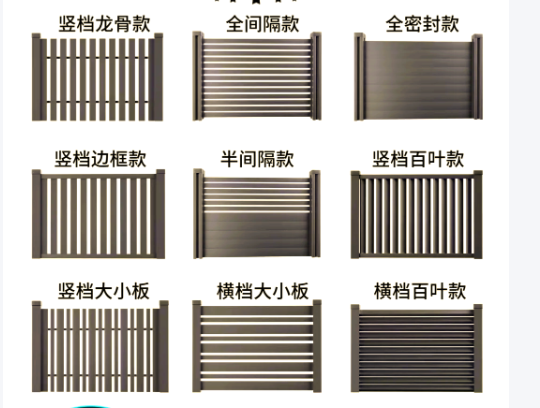
III. Deep analysis of mainstream guardrail materials, advantages and disadvantages and applicable scenarios
The mainstream materials of guardrails on the market are divided into five types, which directly determine the service life, safety, anti-corrosion ability and cost performance, and are also the core areas for merchants to reduce their distribution.
304 stainless steel guardrail: home improvement mainstream preferred material, nickel content up to standard, rust-resistant and corrosion-resistant, high hardness, not easy to deform, strong load-bearing, suitable for high-rise balconies, outdoor roofs, wet kitchen and bathroom periphery, normal service life up to 15-20 years, no rust cracking hazard, is the most comprehensive cost-effective household guardrail material.
201 stainless steel guardrail: low-cost alternative material, does not contain rust-proof nickel elements, can be used in indoor dry environments for short periods of time, outdoor and humid environments are prone to rust, pipe wall thinning, and rust spots, perforations, and deformation will appear in 2-3 years. It is strictly prohibited to use high-rise buildings, and is only suitable for temporary simple protection.
Aluminum alloy aluminum art guardrail: surface fluorocarbon spraying process, high value, diverse styles, advanced texture, excellent rust resistance, light and not bulky. The hardness is slightly lower than that of stainless steel, suitable for villa courtyard, low-rise balcony, home improvement aesthetic transformation, and it is not recommended to use high-rise large-span air.
Wrought iron guardrail: old-fashioned traditional style, high hardness, stable structure, but easy to rust, requires regular painting maintenance, high maintenance costs, thick and old style, currently home decoration is basically eliminated, only used in some engineering retro scenes.
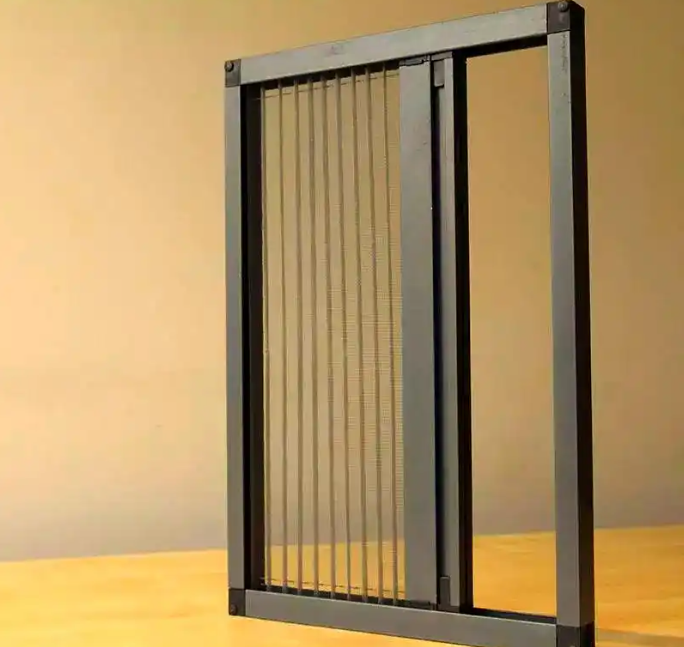
Invisible steel wire guardrail: made of high-strength steel wire weaving, minimally invisible, does not block lighting, specially designed for bay windows and high-rise windows, with strong protection, anti-climbing, and suitable for modern simple decoration. The only shortcoming is that the resistance to violent impact is weak, and it needs to be matched with a formal tightening process.
[Structural details | Thickened pipe wall, full welding process, fixed base, close-up of anti-screw protective fence details]
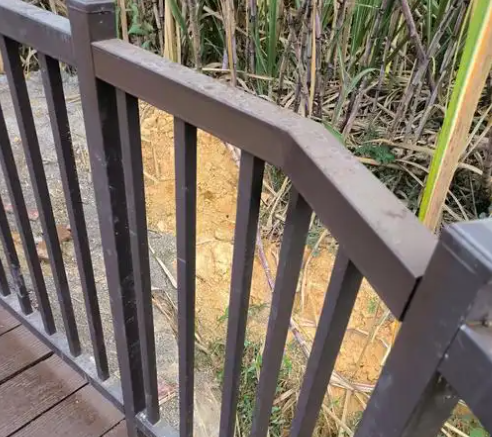
Fourth, the core structural process of the guardrail determines the key to safety and durability
Most users only look at the appearance, but ignore welding, pipe walls, and fixed structures. 80% of the safety hazards of guardrails come from process reduction.
The first is the thickness of the pipe wall, the standard wall thickness of household stainless steel guardrail is not less than 0.8mm, the high-rise air and large-span railings are recommended to be 1.0mm thickened; the wall thickness of low-priced products is only 0.4-0 mm, the pipe wall is thin, and it is easy to bend and break under force.
The second is the welding process. High-quality guardrails are seamlessly welded with full welding, and the solder joints are polished flat and smooth, without pores, cracks, or virtual welding. The overall structure is integrally formed, and the force is uniform and stable; inferior products are spot welding and broken welding. The surface appears intact, but there are gaps inside. Long-term stress will directly break off.
Finally, the fixed base, the regular guardrail is fixed with expansion screws, the base is wrapped in thickened steel plate, which fits the wall and floor, and there is no loose gap; the simple style is directly fixed by screws, the base is suspended, and the fixing points are rare. It is easy to fall off as a whole due to strong wind and external force.
At the same time, all qualified guardrails use anti-dismantling anti-theft screws to prevent children and people from disassembling without permission, and eliminate security bugs from the structure.
[Standardized construction map | Fence positioning and punching, pre-embedding and fixing, welding and grinding, polishing and finishing construction process]
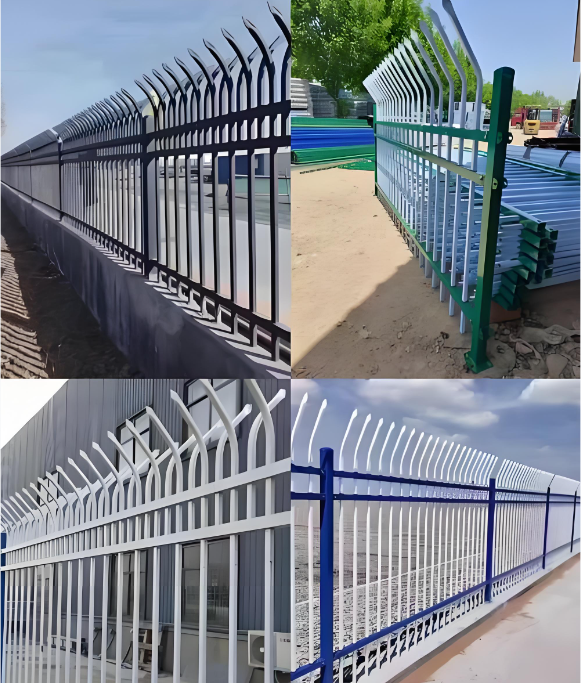
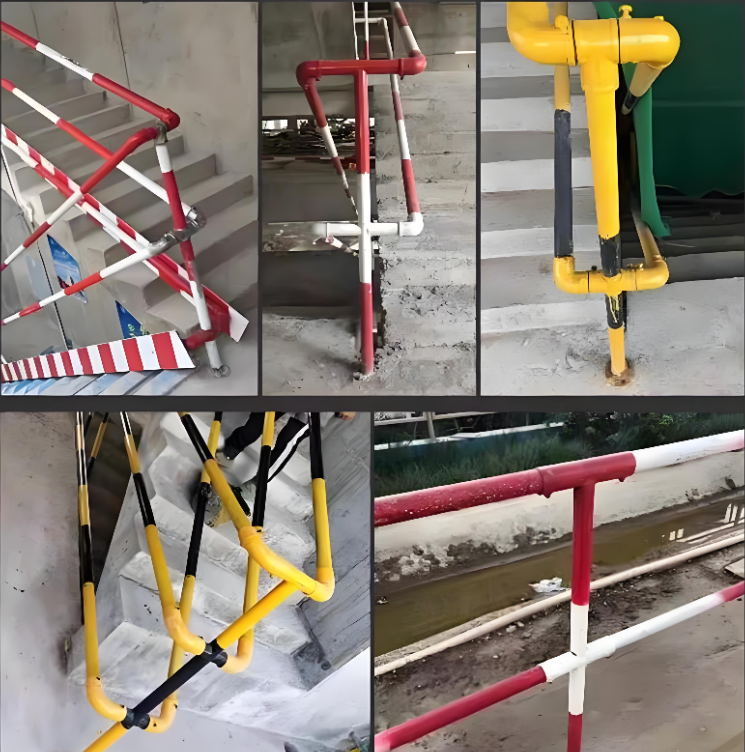
Standardized construction process of guardrail, three points of product and seven points of installation
The performance of the national standard guardrail is fully dependent on standardized construction. If the product meets the standards but the construction is not standardized, there will still be problems such as loosening, falling off, and excessive spacing.
The first step is accurate positioning and measurement, according to the latest 1.2-meter national standard height and 11cm spacing standard, to avoid problems such as excessive spacing, insufficient height, and tilt deviation, and to adapt to different scene sizes of balconies, bay windows, and stairs.
The second step is to treat the base layer, clean the wall and ground base at the installation location, remove the loose mortar, and ensure that the installation surface is flat and solid. Hollow walls and lightweight walls need to be reinforced in advance, and direct punching and fixing are prohibited.
The third step is to embed and fix, precisely punch holes and implant expansion bolts, thicken the base to fit the base surface, and fix it evenly at multiple points. The large-span railing increases the auxiliary fixing fulcrum to improve the overall stability.
The fourth step is welding assembly, full welding and splicing in strict accordance with the measured size, correcting the vertical level, and ensuring that the overall railing is straight and non-inclined, and the spacing is uniform.
The fifth step is to polish, remove welding slag, burrs, and sharp corners, and polish the whole house to avoid scratches and bumps, and improve aesthetics and safety.
The sixth step is acceptance and cleaning, overall shaking test stability, check national standard parameters, clean up construction waste, and complete finished product protection.
Construction core taboos: It is strictly forbidden to reduce the protective height, enlarge the rod spacing, reduce fixed points, and fake welding. All construction processes must comply with the new 2025 national standard specifications.
[Acceptance standard map | Fence height measurement, spacing detection, load-bearing shaking test acceptance site]
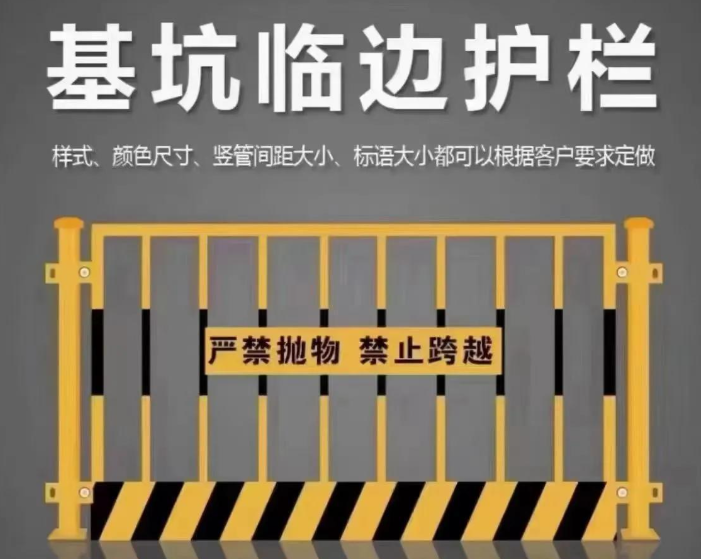
Sixth, the core points of national standard acceptance, the owner's self-inspection must-have list
After the guardrail is completed, the owner can check and accept it against the national standard by himself, which is simple and accurate, and has no professional threshold. First, the size acceptance, the net height is ≥1.2 meters, the vertical rod spacing is ≤11cm, there is no oversized gap, and there is no suspended stepping point at the bottom; second, the structure acceptance, the overall shaking is no loosening, no shaking, no abnormal sound, the base is firmly fixed, no wire removal, no loose screws; third, the process acceptance, the solder joint is flat, no burrs, no virtual welding, no depression, no deformation on the pipe wall, and the surface is smooth and no rust points; fourth, the safety acceptance, no horizontal climbing rod, the bottom is closed and anti-falling, no sharp corner protrusion, and no deformation when pressed under load.
All guardrails that do not meet the above standards are non-standard substandard products and can be reworked unconditionally for rectification.
[Comparison of advantages and disadvantages | National standard thickened protective fence vs inferior thin protective fence, comparison of details of pipe wall, welding and spacing]
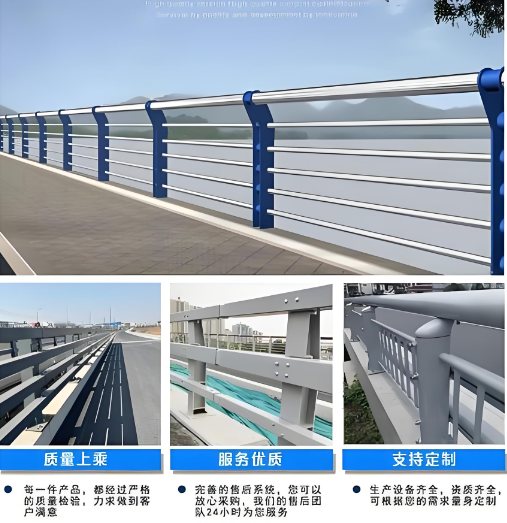
Seven, the guardrail purchase pit avoidance guide, see through the merchant's reduction routine
There are many chaos in the market guardrail, and low-price routines emerge in an endless stream. Only by mastering the key points of pit avoidance can we choose compliance safety products.
Routine 1: The old national standard pretends to be the new national standard, and it is still constructed according to the height of 1.05 meters and 1.1 meters, which does not meet the new regulations of 2025, and will be accepted and rectified later; Routine 2: False standard material, falsely claiming 304 stainless steel, actual delivery of 201 material, short-term rust corrosion; Routine 3: Wall thickness shrinkage, marked 1.0mm is actually only 0.5mm thin tube, and the load-bearing is not up to standard; Routine 4: The spacing is large, and the vertical rod spacing is enlarged for the provincial material, exceeding the 11cm national standard red line; Routine 5: Spot welding pretends to be full welding, the solder joints are concealed and stolen, and the later cracking
When purchasing, be sure to mark in the contract: 2025 new national standard 1.2 meters height, 11cm standard spacing, 304 stainless steel material, real standard wall thickness, full welding process, lifelong rust prevention, to protect their own rights and interests.
[Completed panorama | Standardized compliance guardrail floor-to-ceiling real scene of the whole house, safe and beautiful, suitable for home improvement style]
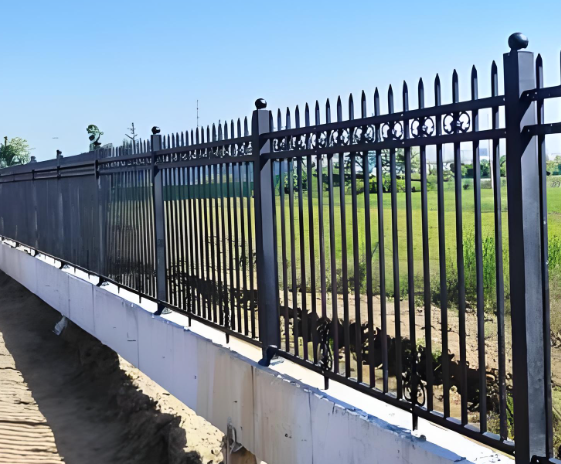
conclusion
The guardrail is not an optional decorative product, but the core line of defense to protect home safety, especially for families with the elderly and children at home. Compliance guardrail is a rigid demand for home improvement. After the 2025 new version of the national standard is upgraded, the height, spacing, load-bearing and structure of the guardrail are fully upgraded, and old non-standard products are completely eliminated.
High-quality guardrails must meet the four core conditions of national standard compliance size, standard material wall thickness, integrated full welding process, and stable pre-embedded installation. Whether it is new house decoration, old house renovation, or engineering support, it cannot simply compete for low prices and ignore safety standards. Only by understanding the professional parameters, construction specifications, and purchase points of the guardrail can we install a set of compliance, stability, durability, and high-value standardized guardrails to protect the daily safety of the home in an all-round way.