

Antique doors and windows
Antique doors and windows | Full analysis of process classification, material selection, production process and installation and maintenance
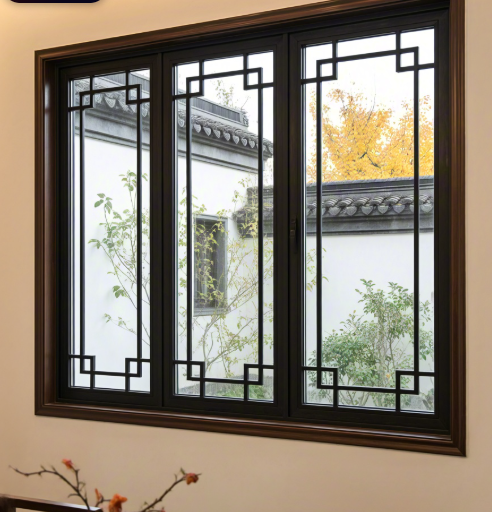
The overall real scene of antique doors and windows in Chinese-style houses, with log lattice antique doors and windows with white walls and tiles, has a strong sense of antique atmosphere
First, the definition, style origin and application scenarios of antique doors and windows
Antique doors and windows are door and window categories that rely on traditional Chinese ancient building doors and windows, combined with modern processing technology, and integrate traditional tenon and mortise aesthetics with modern use needs. They are the core components of new Chinese-style decoration and ancient building repair. When many owners first understand antique doors and windows, they simply think that they are just ordinary doors and windows with retro styles, ignoring that antique doors and windows are divided into two major directions: ancient restoration and new Chinese-style improvement. There are obvious differences in process standards, materials and structures between the two. Antique doors and windows were born out of the ancient architectural woodworking system of the Ming and Qing Dynasties, inheriting traditional forms such as partition doors, lattice windows, windows, and support windows. The patterns, divisions, and lines all follow the traditional construction logic.
At present, the application scenarios of antique doors and windows are very extensive: Chinese courtyard houses, B & B hotels, ancient town commercial streets, ancestral temples, garden landscapes, new Chinese villas, tea rooms, clubs, exhibition halls, and catering store decoration are all widely used. In addition to decorative attributes, qualified antique doors and windows also take into account practical functions such as lighting, ventilation, sound insulation, sealing and anti-theft, and are not simply decorative ornaments. According to the material category, the mainstream on the market is divided into three categories: solid wood antique doors and windows, aluminum alloy antique doors and windows, and aluminum-wood composite antique doors and windows, which are also the content explained below.
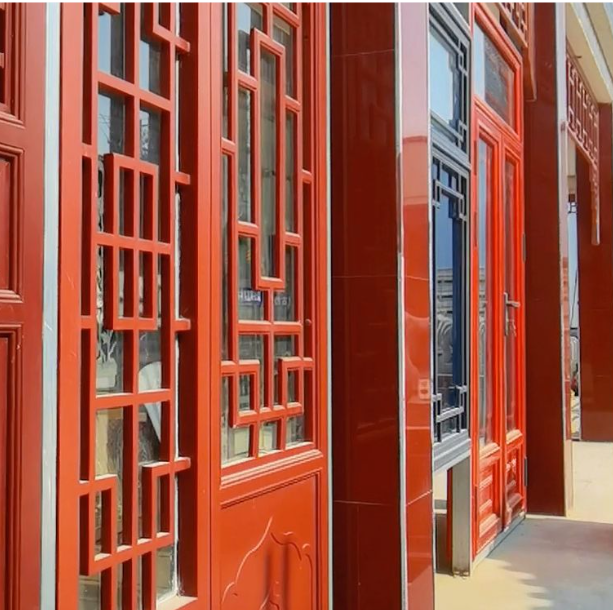
Close-up of antique door and window pattern details, close-up of ice cracks, back lines, swastika patterns
Second, the mainstream pattern system and pattern meaning of antique doors and windows
Patterns are the soul of antique doors and windows, and it is also the most intuitive point to distinguish the fineness of workmanship. Traditional patterns have corresponding auspicious meanings, not random splicing lines. Antique door and window patterns are divided into straight lattices, geometric patterns, plant patterns, auspicious beast patterns, and combined relief patterns. Straight lattices, squares, and tic-tac-toe patterns belong to simple basic models, elegant and versatile, suitable for tea rooms and modern new Chinese-style spaces; ice cracks are popular styles, meaning ice-breaking upward and safe years; back patterns continue, representing wealth and longevity; swastika patterns mean longevity and longevity.
Plum blossoms, orchids, bamboo, chrysanthemums, peonies, and lotus are common in plant patterns. The four gentlemen of Meilan Bamboo and Chrysanthemum are classic Chinese themes. Peonies symbolize wealth and lotus flowers symbolize honesty and harmony; the theme of relief auspicious beasts includes unicorns, dragons and phoenixes, and bats. They are mostly used in the main doors and windows of ancestral halls and mansions, and the carving process is more complicated. Here it is necessary to distinguish between through carving, relief, round carving, and thread carving: the through carving pattern is transparent and light, and the lighting is good; the relief has a sense of hierarchy and a stronger three-dimensional sense; the deep relief processing is difficult and the cost is higher. When purchasing, pay attention to the fact that many low-priced antique doors and windows use stickers and patches to imitate car
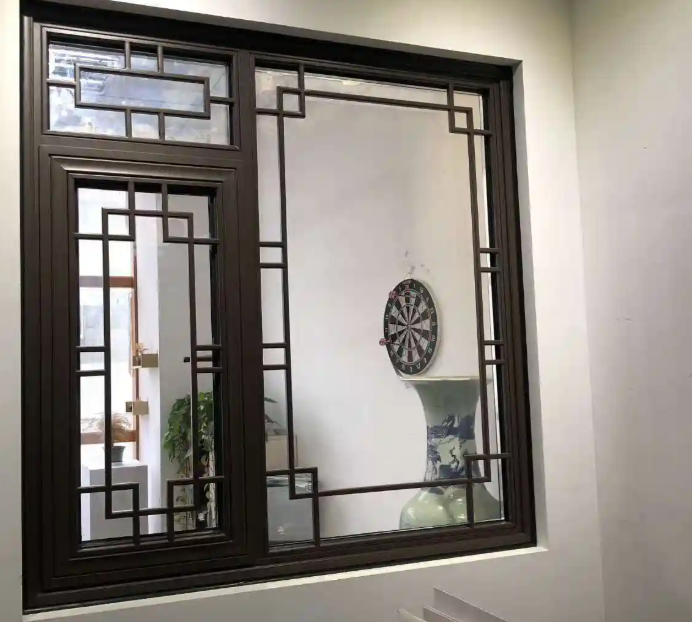
Side-by-side comparison chart of three antique door and window samples of solid wood, aluminum alloy and aluminum-wood composite
Third, the comparison of the three mainstream materials of antique doors and windows, the analysis of advantages and disadvantages
The material determines the cost, service life, and later maintenance difficulty of antique doors and windows, and is also the most torn place when customers choose models. The three mainstream materials have their own adaptation scenarios, and there is no absolute good or bad.
Solid wood antique doors and windows: commonly used pine, fir, elm, oak, pineapple grid, teak. Fir and pine are cost-effective and light in texture, and are mostly used for indoor partitions and indoor flower windows; elm has a hard texture and better stability than pine; pineapple grid and teak belong to high-end hardwood, with high density, corrosion resistance and insect resistance, suitable for outdoor ancient buildings and open-air courtyard doors and windows. The advantage of solid wood is that it has a warm texture, pure tenon and tenon taste, and is the first choice for ancient building repairs. The disadvantage is that it is easy to expand and shrink and deform due to temperature and humidity, and needs regular painting and maintenance. Outdoor use and maintenance workload is large.
Aluminum alloy antique doors and windows: using aluminum alloy profiles as the base material, the surface is made of wood grain transfer printing, fluorocarbon spraying, and the appearance of wood grain is replicated. The advantages are waterproof and moisture-proof, insect-proof and non-corrosive, non-cracking, maintenance-free, high strength, can be used as insulating glass, good sound insulation and heat insulation sealing performance, suitable for outdoor exterior wall doors and windows, street shops, humid and waterfront areas; the short board is cold to the touch, lack of log warm texture, limited use in high-end ancient restoration projects.
Aluminum-wood composite antique doors and windows: indoor solid wood, outdoor aluminum alloy, taking into account the appearance of solid wood and aluminum weather resistance, is the best choice for new Chinese-style exterior doors and windows of villas, the price is between solid wood and ordinary aluminum alloy, balancing appearance, performance and durability.
Disassembly schematic diagram of traditional tenon and mortise structure, lattice shoulder tenon, dovetail tenon and chuck tenon are marked and displayed
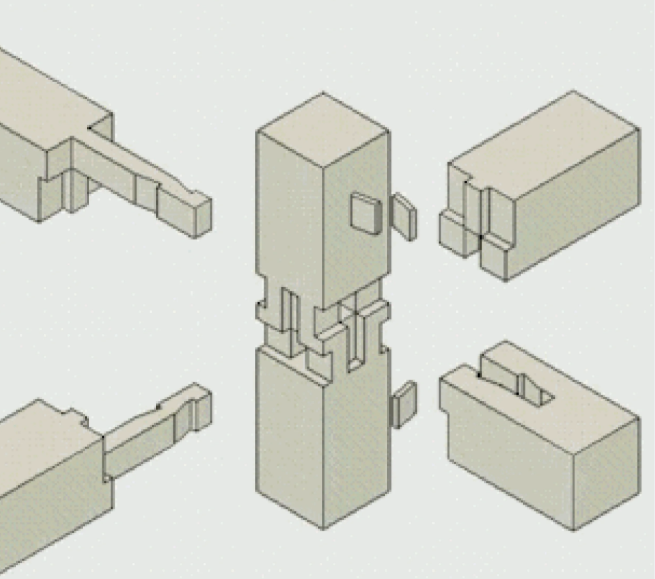
Fourth, the core process of antique doors and windows: tenon and mortise structure and modern connection technology
Mortise and tenon is the core technology of traditional antique wood doors and windows, and it is also the key to judge whether the process of solid wood antique doors and windows is professional. Traditional antique partition doors and windows do not rely on nails to fix, but rely on the tenon and mortise to bite and force each other. Common mortise and tenon include lattice, dovetail, through tenon, half tenon, and chuck tenon. Doors and windows with close tenon and tenon can be used for a long time in a reasonable temperature and humidity environment, and the structure is stable.
Now there are two kinds of process routes on the market: pure mortise and tenon ancient process, mortise and tenon plus hardware-assisted reinforcement process. Pure ancient mortise and tenon are mostly used for ancient building restoration and high-end customized projects, with long construction period and high labor cost; most home decoration and homestay antique solid wood doors and windows are reinforced by mortise and tenon plus a small amount of invisible screws, taking into account stability and traditional appearance. The aluminum alloy antique doors and windows rely on the profile angle code glue injection angle process, which is consistent with the logic of the broken bridge aluminum doors and windows group angle, to ensure that the frame is square and firm. Key points to avoid pits: Low-priced solid wood antique doors and windows use gun nails and glue splicing in large quantities. There is no standardized mortise and tenon, and the pattern will be loose and fall apart after one or two
The real shot of the painting process of antique doors and windows, polishing, polishing, priming, and painting construction pictures
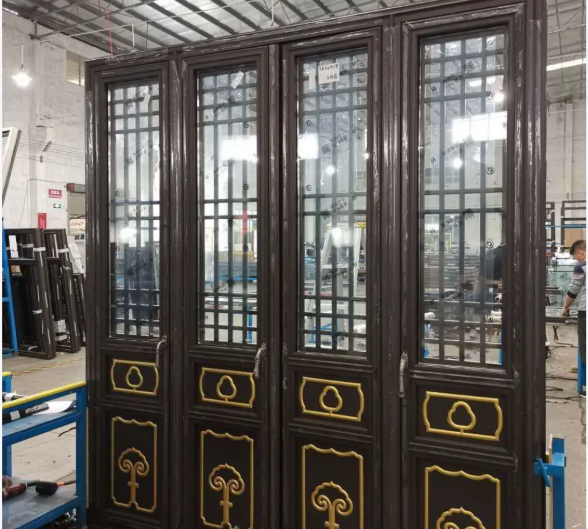
Five, antique doors and windows surface coating process, paint classification and quality identification
Antique door and window painting not only determines the appearance color, but also protects the substrate, anti-corrosion and anti-moth protective layer. Solid wood antique door and window painting process is complicated, divided into clear water paint, muddy water paint, and old antique paint.
Clear water paint (varnish): transparent paint surface, retain the natural texture of wood, can intuitively see the wood lines, scarring, is the most commonly used process of solid wood antique doors and windows, divided into matte varnish, semi-matte varnish, matte more in line with Chinese low-key texture; muddy water paint is solid color paint, covering wood grain, color can choose black walnut, mahogany, brown, black; old process includes weathering, carbonization, rubbing, gold painting, deliberately create a sense of vicissitudes of life, mostly used in ancient towns, retro homestay projects.
Regular process: coarse grinding and fine grinding of the closed primer, grinding the color paste to polish the primer topcoat, and repeatedly polishing and painting. The inferior product only brushes the topcoat once, and the paint film is thin, which soon turns white, peels and fades. Wood grain transfer on the surface of aluminum alloy antique doors and windows, fluorocarbon spraying, fluorocarbon spraying is more resistant to ultraviolet rays, and long-term outdoor exposure is not easy to fade. Ordinary thermal transfer printing is easy to fade and gray outdoors for 3-5 years.
, pure copper hinge, copper latch, copper handle, copper door ring
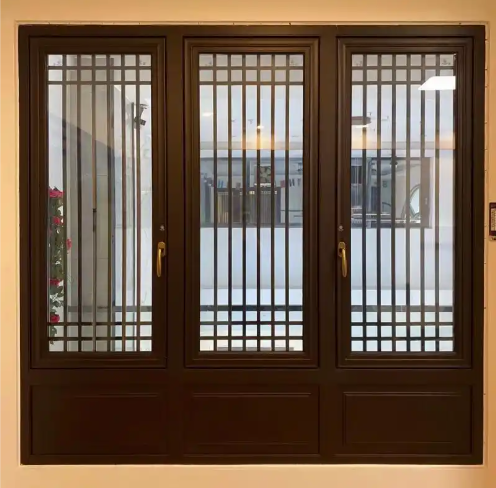
Six, antique doors and windows matching hardware selection, traditional hardware and modern hardware matching
Antique door and window hardware may seem small, but it directly affects the feel and service life of the switch, and is also the finishing touch of the Chinese atmosphere. Traditional antique hardware is mainly brass, including copper hinges, copper latches, copper door latches, copper handles, door knockers, and copper locks. Brass hardware has a thick texture and forms a warm coating after oxidation. The more you use it, the better it looks. It is suitable for pure solid wood Chinese doors and windows.
If it is antique doors and windows used for external walls, it is also necessary to take into account the needs of sealing, sound insulation and anti-theft. Hidden broken bridge hardware and buffer hinges can be used. The appearance retains an antique copper-colored shell, and the interior is a modern system door and window hardware, taking into account the retro appearance and sealing performance. Many low-cost packages are matched with thin iron sheet imitation copper hardware, which is easy to rust and break, and will lose its luster after one year. When purchasing, distinguish: forged brass, cast brass, and iron sheet copper plating. After the surface coating of copper-plated products is worn, it will soon rust and turn black.
Antique doors and windows on-site installation construction map, frame straightening, gluing and closing, fixed installation
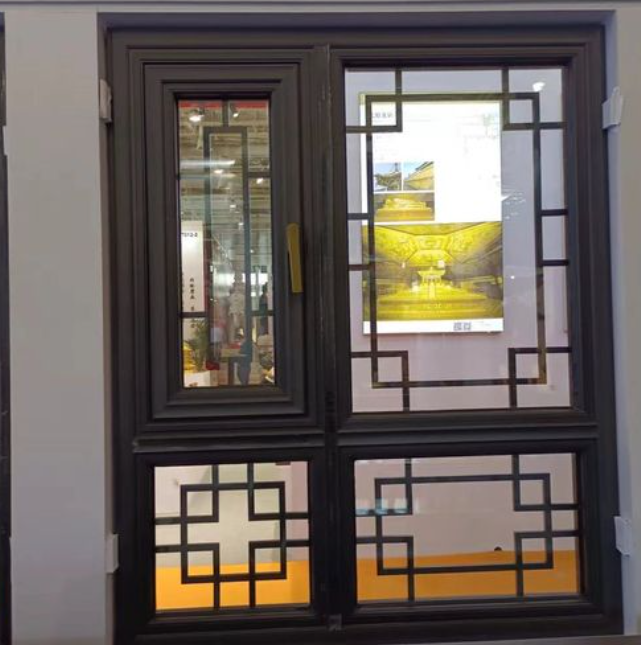
VII. Standardized installation process and installation priorities for antique doors and windows
Antique doors and windows are customized products. "Three points of materials and seven points of packaging". Improper installation, no matter how good the product is, there will be uneven gaps, air leakage and water leakage, and bumping and deformation of the flower grid. There are obvious differences in the installation precautions of solid wood antique doors and windows and aluminum alloy antique doors and windows.
Solid wood antique doors and windows installation process: the hole is reviewed, cleaned, the frame is leveled and straightened in place, the temporary fixed gap is filled, the closure is glued, and the flower grid and hardware are installed for protection. There are expansion joints reserved around the holes of solid wood doors and windows, which cannot be hard squeezed and stuck. The reserved gaps are used to adapt to the thermal expansion and contraction of wood. This is the unique point of solid wood doors and windows. It is easy to deform and crack without leaving expansion joints.
The installation of aluminum alloy antique exterior wall doors and windows is the same as that of broken bridge windows. Styrofoam and exterior wall weathering glue need to be used to close the mouth, and the waterproof slope should be done well to prevent rainwater from penetrating. During the installation stage, focus on protecting the carved lattice. The lattice is slender and easy to bump and break the material. Wrap the protective film before completion; choose neutral weathering glue for the glue seam. Acid glue will corrode the surface coating of copper hardware and aluminum. Check after installation: smooth opening, uniform gaps, alignment of horizontal and vertical lines, no warping and skewing.
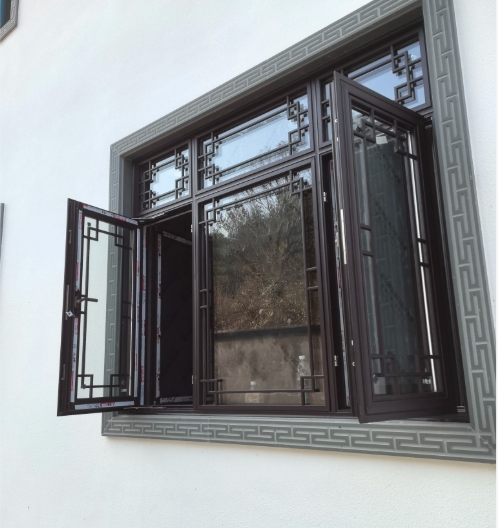
Antique doors and windows maintenance real shot, solid wood wiping maintenance, cleaning grid ash
Eight, the daily maintenance method of antique doors and windows to extend the service life
Antique doors and windows of different materials have very different maintenance methods. Many customers shorten the life of doors and windows due to improper maintenance. The core of solid wood antique doors and windows maintenance: control the environmental humidity, long-term humid environment is prone to mildew and moth-eaten, and extreme dryness is easy to crack; check the paint surface every year, and replenish the paint in time for local paint peeling; regularly wipe the lattice dust with a dry soft cloth, and do not rinse it directly with a lot of water to avoid moisture penetrating into the mortise and tenon gaps; indoor solid wood doors and windows try to stay away from floor heating, radiators, and sun exposure.
The maintenance of aluminum alloy antique doors and windows is the simplest and belongs to the maintenance-free type. It can be wiped with water every day to avoid hard objects scratching the surface wood grain layer; aluminum-wood composite doors and windows focus on protecting the inner solid wood part, and the outer aluminum does not need special maintenance. Grid gaps are easy to accumulate dust, which can be cleaned with brushes and vacuum cleaners. Do not use strong acid and alkali cleaners, which will corrode the paint surface and metal hardware. Brass hardware in coastal areas can be waxed regularly to slow down salt spray corrosion.
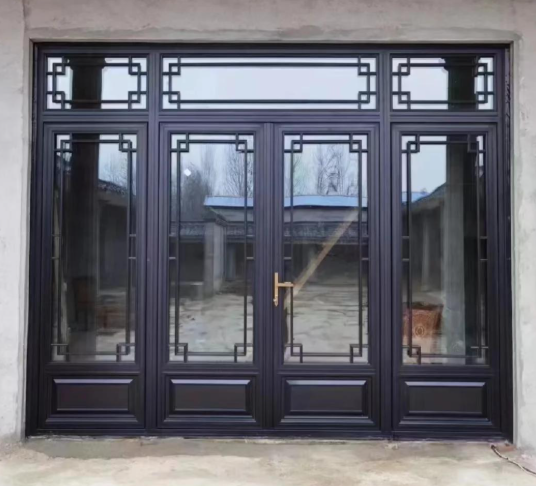
The completion effect of antique doors and windows in different spaces, the comparison of antique doors and windows in ancient buildings, villa tea rooms, and shops
Nine, antique doors and windows purchase pit avoidance guide, common routines dismantling
When buying antique doors and windows, there are many routines on the market, and several high-frequency pit points are sorted out. First, the material is shoddy, using pine wood as elm and pineapple grids, and sticking veneer as solid wood. The appearance looks the same, and the price difference is huge; second, carving cuts corners, machine shallow carving replaces deep relief, and patch carving replaces integrated through carving; third, the process is simplified, giving up mortise and tenon, and all glue gun nails are spliced; fourth, the paint surface stealing process reduces the number of primers, looks good in the short term, and fades quickly; fifth, aluminum alloy doors and windows are confused with ordinary transfer printing and fluorocarbon spraying, which fades quickly when used outdoors.
Simple reference for selection: ancient building repair, indoor tea room partition, pursuit of log texture priority solid wood tenon and mortise; exterior walls, courtyards, humid areas, do not want frequent maintenance, choose fluorocarbon spraying aluminum alloy antique doors and windows; villa exterior walls want log value and durability Choose aluminum wood composite antique doors and windows. Before placing an order, confirm the drawings, patterns, materials, paint craftsmanship, and hardware materials, write it into the contract, and keep samples for comparison.
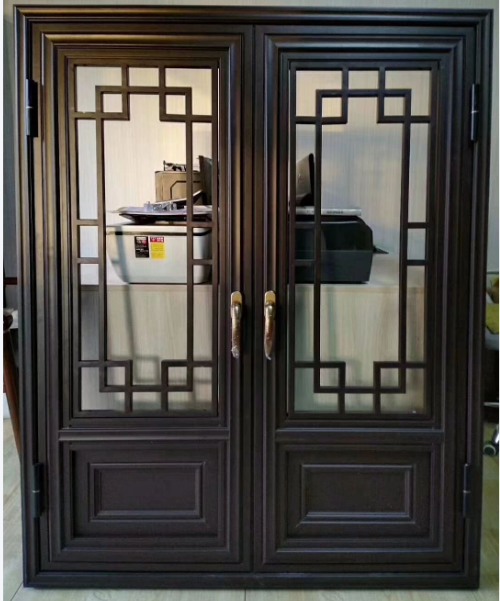
Renderings of the finished exhibition hall of antique doors and windows, a variety of lattice styles are displayed
Summary of the antique door and window industry: Chinese components that balance aesthetics and practicality
Antique doors and windows are not just replicas of ancient styles of decorations, but also the product of the combination of traditional woodworking culture and modern doors and windows. It carries Chinese aesthetics, and every detail of patterns, mortise and tenon, and carving contains traditional construction wisdom. At the same time, modern improvements can meet modern living needs such as sound insulation, heat insulation, waterproofing, and anti-theft. Whether it is the restoration of ancient buildings, the self-construction of new Chinese-style villas, or the decoration of homestay tearooms, when choosing antique doors and windows, you should not only look at the renderings and prices, but also understand the complete system of materials, mortise and tenon, painting, hardware, and installation. Only by choosing the process plan that matches the scene can you buy beautiful and durable antique doors and windows, and create a warm and elegant Chinese space.