

Panoramic skylight
Panoramic Sunroof Encyclopedia: Full Analysis of Structural Principles, Classification Parameters, Advantages and Disadvantages and Professional Maintenance
[Family car/SUV panoramic sunroof opening and closing high definition panoramic real shot, showing the transparent visual effect of the whole vehicle, suitable for encyclopedia main vision]
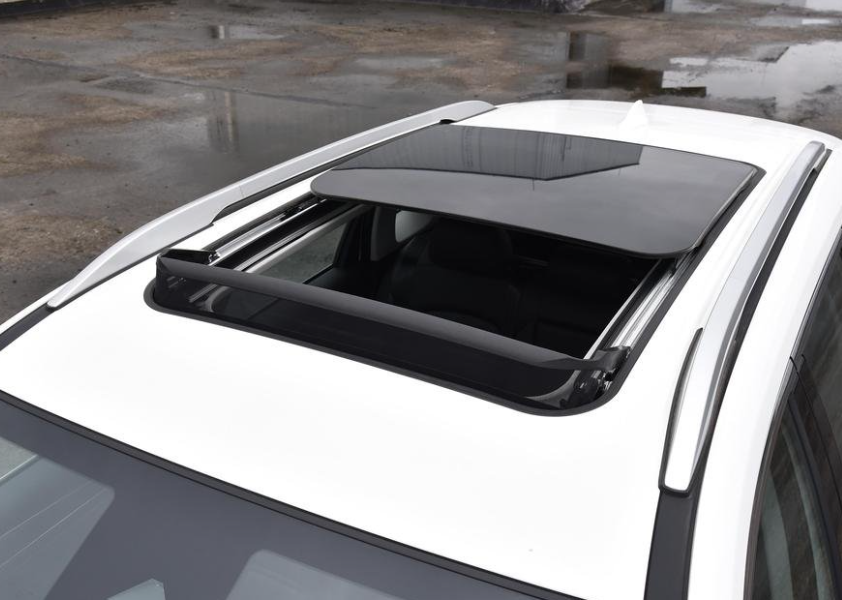
Panoramic sunroof is the mainstream high-end body configuration of modern passenger cars, and it is also a landmark intelligent body lighting and ventilation system that distinguishes ordinary small sunroof. With the upgrading of automotive industry technology, panoramic sunroof has been popularized from the exclusive configuration of early luxury cars to all models such as family cars, SUVs, and MPVs. Many car owners and car buyers only know that panoramic sunroof has good lighting and high appearance, but they do not understand its structural principle, material standard, technical parameters, safety mechanism, and maintenance logic.
This article, as the authoritative encyclopedia of panoramic sunroof science, will systematically explain the definition, category division, core structure, technical parameters, working principle, advantages and disadvantages, body safety impact, daily maintenance and common fault avoidance knowledge from a professional perspective. The content is easy to understand, the data is professional and accurate, suitable for car purchase reference, car learning, industry science reading, and at the same time adapt to search engine SEO indexing and ranking rules.
What is a panoramic skylight? Definition and core characteristics of authority
[Comparison diagram | Ordinary small sunroof VS panoramic sunroof size, coverage area, and lighting range intuitive comparison chart]
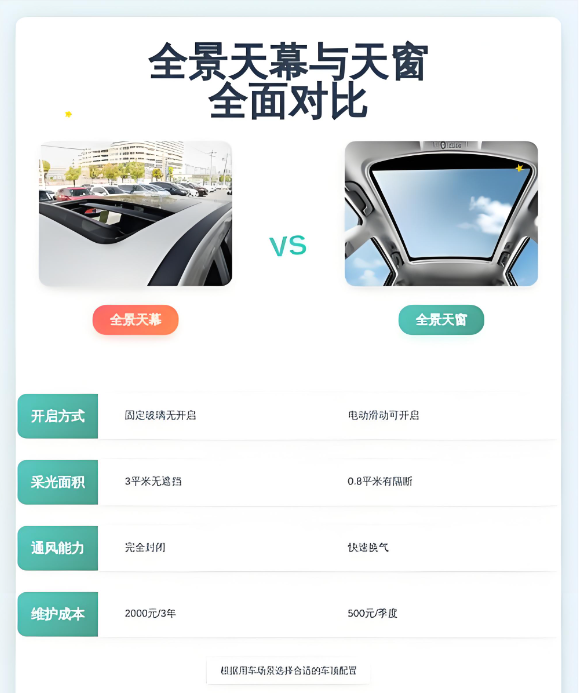
In the automotive industry's standardized definition, a panoramic sunroof refers to a large-area glass lighting system on the roof, with an overall coverage area much larger than that of a traditional small electric sunroof. The conventional lighting area can reach 0.8 square meters to 1.2 square meters, covering the top area of the front, middle and even rear rows. It is the core body configuration that enhances the sense of transparency, space and driving comfort in the car.
The traditional ordinary sunroof only covers the front head area, the lighting area is only 0.2-0.3 square meters, the function is single, and the rear row has no lighting experience. The biggest core feature of the panoramic sunroof is the global lighting, wide field of vision, and the transparency of the whole vehicle, which can increase the light inside the car by 50% to 75%, completely solving the depression caused by the dark interior and closed roof.
From the perspective of structural attributes, the panoramic sunroof belongs to the body passive safety supporting system, not just decorative accessories, integrated tempered laminated glass, sealed waterproof system, electric drive mechanism, sunshade and heat insulation system, anti-pinch intelligent control system in one, is a precision mechatronics body parts, with lighting, ventilation, heat insulation, noise reduction, emergency ventilation multiple functions.
Unlike ordinary sunroofs, panoramic sunroofs are developed, produced, and installed in accordance with strict automotive standards, with extremely high requirements for body rigidity, roof structure, welding process, and sealing accuracy. They are also an important basis for judging the luxury configuration and quality level of vehicles.
Second, the mainstream classification and respective characteristics of the panoramic sunroof industry (professional category division)
[Category classification map | Fixed canopy, segmented panoramic sunroof, overall open panoramic sunroof physical comparison + structural labeling]
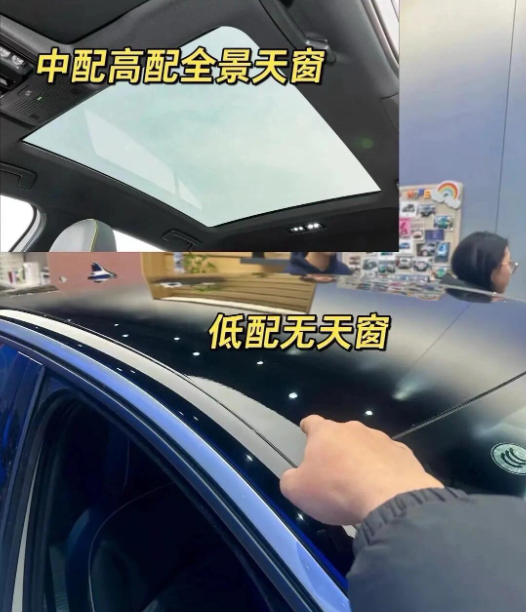
According to the opening mode, structural form, and functional differences, the automotive industry divides panoramic sunroofs into three main categories, with distinct differences in structural principles, applicable models, advantages and disadvantages, and cost parameters.
1. Fixed panoramic canopy (panoramic sunroof cannot be opened)
Fixed panoramic sunroof, also known as panoramic canopy, is a whole piece or spliced fixed glass structure, no sliding opening function, and the whole process is closed and fixed. The core advantages are high structural strength, good roof integrity, small body wind resistance, excellent sound insulation and heat insulation performance, zero water leakage hazards, and extremely low failure rate.
This type of sunroof focuses on extreme lighting and appearance, and is mostly used in new energy pure electric cars, coupes, and household SUVs. It has a simple structure, long service life, and almost zero maintenance costs in the later stage. The disadvantage is that ventilation cannot be turned on, only lighting functions can be realized, and there is no convection ventilation effect.
2. Sectional panoramic skylight can be opened
This is currently the most popular type of panoramic sunroof in household cars. It adopts a front and rear segmented double glass structure. The front glass supports electric sliding opening, upward lift ventilation, and the rear glass is fixed and closed.
Its core advantage is to take into account both ventilation and global lighting. The front row can achieve normal sunroof ventilation, pressure relief, and ventilation functions, and the rear row enjoys panoramic lighting vision, which is practical and balanced, with low failure rate and convenient maintenance. It is suitable for the vast majority of fuel vehicles and hybrid household models. It is the most cost-effective and most mature panoramic sunroof solution in the market.
3. Integral panoramic skylight can be opened
The integral panoramic sunroof is slidably opened as a whole by a single oversized glass, with a larger opening area, stronger visual integration and higher sense of luxury. The overall structure is precise and complex, and the precision of the drive motor, guide rail mechanism and sealing system is extremely high, and the cost is much higher than that of the segmented sunroof.
Mainly used in mid-to-high-end SUVs, business MPVs, and luxury cars, the advantages are large ventilation area, no segmentation of the field of vision, and excellent experience; the disadvantages are complex structure, slightly larger weight, and extremely high requirements for installation technology, which requires fine maintenance in the later stage.
In addition, the current high-end models have been upgraded with intelligent dimming panoramic sunroof, which can be freely switched between transparent, matte, and dark insulation modes through electronically controlled color-changing glass technology, eliminating the need for manual sunshades. This is the latest panoramic sunroof upgrade technology.
III. Core structure and working principle of panoramic skylight
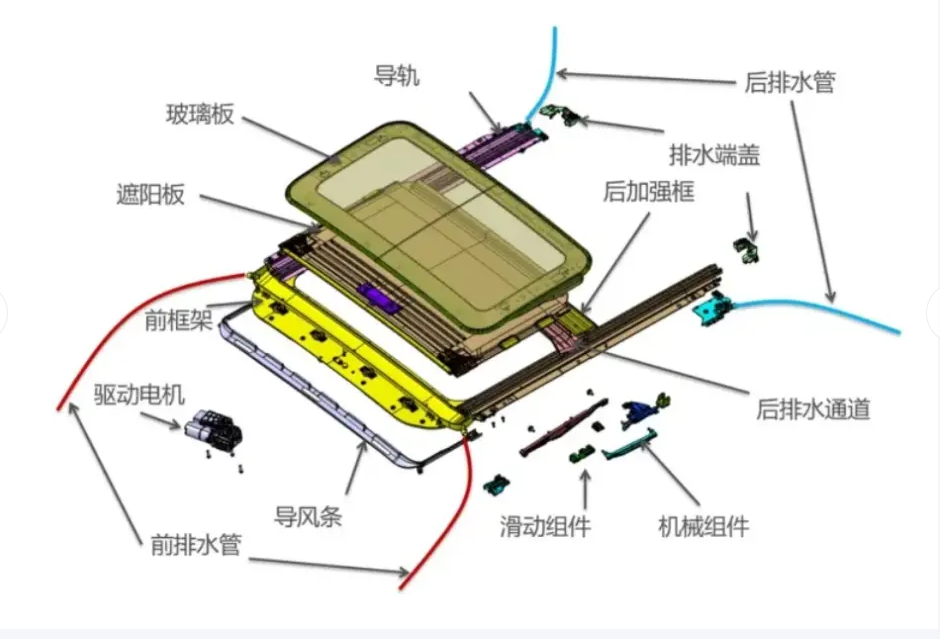
[Structure dismantling diagram | Panoramic sunroof glass, guide rail, motor, sealing strip, sunshade, drainage hole internal structure dismantling and marking]
The panoramic skylight appears to be a simple piece of glass, but it is actually an integrated system composed of more than ten precision components. Each structure corresponds to its own function, which determines the waterproof, safety, opening and closing, and thermal insulation performance of the skylight.
1. Glass assembly system (core protective layer)
The mainstream of panoramic sunroofs adopts automotive-grade double-layer laminated tempered glass, which meets the national automotive safety glass mandatory standards. The glass has undergone high-temperature tempering and laminated laminating processes, with extremely high hardness, impact resistance, gravel resistance, and deformation resistance. Even if it is damaged by foreign objects while driving at high speed, the glass fragments will be firmly adhered by PVB laminated film, which will not splash and hurt people, greatly improving driving safety.
High-end model sunroof glass comes with multi-layer functional coating, including ultraviolet barrier layer, infrared reflective heat insulation layer, hydrophobic and anti-fouling layer, which can block 99% ultraviolet rays and reflect 80% - 90% infrared heat sources, taking into account sunscreen, heat insulation and anti-aging functions.
2. Electric drive and guide rail transmission system
It is composed of silent drive motor, steel wire transmission group, precision guide rail and limiter, and supports one-button opening, one-button closing, upward lift ventilation and automatic limit functions. The guide rail is made of high-strength anti-corrosion alloy material, which runs smoothly without cards and abnormal noises, and is suitable for repeated opening and closing use all year round.
The whole system is equipped with intelligent anti-pinch technology as standard, and obstacles will automatically rebound when the sunroof is closed to avoid pinching personnel and damaged parts, which belongs to the standard safety protection mechanism.
3. Sealed waterproof and drainage system
99% of the leakage of the panoramic sunroof is not a glass quality problem, but improper maintenance of the sealing and drainage system. Professional panoramic sunroof adopts multiple closed-loop sealing structures and high-density weather-resistant rubber seals to achieve full gap sealing and prevent rain, dust and wind noise from infiltrating.
At the same time, the roof has a built-in four-hole independent drainage system, and the four corners are equipped with special drainage pipes to quickly divert rainwater to the bottom of the car for discharge. Under normal working conditions, it can achieve lifelong water leakage. It is the core hidden engineering structure of the panoramic sunroof.
4. Heat insulation and shading system
Equipped with high-density sunshade, flame-retardant, sunscreen, and anti-aging fabrics, it can completely block direct sunlight after closing, isolate external heat, avoid heat exposure in summer, and protect interior leather and plastic parts from aging and fading.
IV. Panoramic sunroof core professional technical parameters (industry standard)
[Parameter explanation diagram | Sunroof glass thickness, light transmittance, heat insulation rate, wind pressure resistance parameter data annotation diagram]
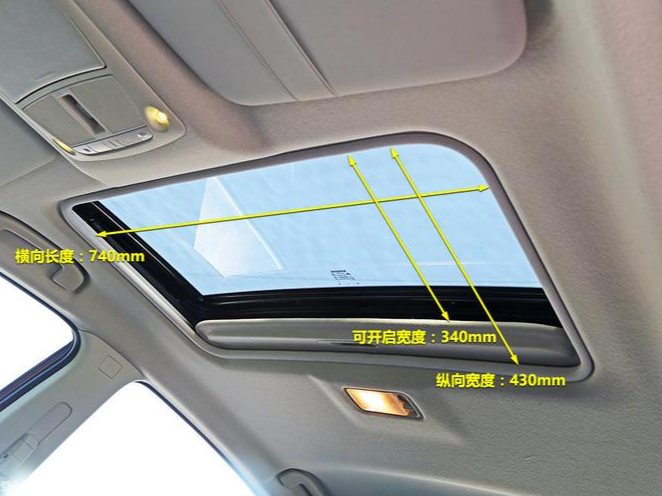
Professional panoramic sunroofs follow the unified technical standards of car companies, and the core parameters determine the use experience and service life, which is also the key basis for distinguishing between high-quality and low-quality modified sunroofs.
Glass thickness parameters: The thickness of the mainstream original panoramic sunroof glass is 4.0mm-6.0mm. The double-layer laminated composite structure has high compressive strength, can withstand high-strength impact, and meets the body's wind pressure safety standards.
UV blocking rate: the original standard ≥99%, effectively protect the skin of drivers and passengers, and prevent the interior from long-term sun exposure, aging, cracking, fading and deterioration.
Infrared insulation rate: Conventional original sunroof can reach more than 80%, high-end coated sunroof can reach 90%, greatly reducing the heating rate in summer, reducing air conditioning load, energy saving and noise reduction.
Wind noise control parameters: The window airtightness is excellent in the closed state, and the wind noise increment of ≤3dB at 120km/h does not affect the tranquility of the car.
Service life parameters: The original sunroof opening and closing test times are ≥10,000 times, normal use can cover the service life of the whole vehicle, and the guide rails, motors and seals are stable and durable for a long time.
Safety explosion-proof parameters: tempered laminated structure, broken without sharp debris, in line with the national passive safety standards for motor vehicles.
V. The core advantages and practical value of panoramic skylights
[Picture 6: Scene real scene | Daytime lighting, high-speed ventilation, outdoor viewing, and real shooting scene in the transparent space in the car]
The panoramic sunroof can become the mainstream standard of automobiles, and its core is its irreplaceable practical value, which enhances the driving experience in an all-round way.
1. Global lighting, bid farewell to the depression in the car
Compared with the ordinary roof, the panoramic sunroof greatly enhances the intake of natural light in the car, and the rear passengers can also enjoy a transparent view, weakening the oppressive feeling of the narrow space in the car, enhancing the grade and comfortable atmosphere of the whole vehicle, especially suitable for dark interior, medium and large SUV, MPV models.
2. Efficient ventilation to quickly balance the air inside the car
During the driving of the vehicle, turn on the sunroof lift mode, which can quickly extract the turbid air, soot, odor, and formaldehyde residues in the vehicle by using the principle of negative pressure ventilation. The ventilation speed is much higher than that of the side window, and it will not generate strong wind to blow directly on the human body, resulting in higher comfort.
On rainy days, the sunroof can be opened for micro-ventilation, which not only maintains air circulation in the car, but also prevents rainwater from entering the car. It is a very practical driving function.
3. Heat insulation and sun protection to protect the interior and passengers
The high-end coated panoramic sunroof can effectively block ultraviolet rays and high-temperature heat sources, avoid hot and sultry in the summer, prevent long-term aging and fading of seats, center consoles, and door panels, prolong the service life of the interior, and protect drivers and passengers from ultraviolet damage.
4. Noise reduction and pressure relief to improve the texture of high-speed driving
Opening windows at high speed is easy to produce strong wind noise and tinnitus, and opening the panoramic sunroof for ventilation makes negative pressure ventilation softer and lower noise, effectively balancing the air pressure in the car and relieving high-speed driving fatigue.
5. Enhance vehicle value retention and appearance texture
Panoramic sunroof is a mainstream high-end configuration with high consumer recognition. The appearance of the vehicle is more three-dimensional and fashionable. Under the same vehicle conditions, models with original panoramic sunroof have a higher value retention rate and are more popular in the used car market.
Six, panoramic sunroof objective shortcomings and industry misunderstandings analysis
[Misunderstanding popular science map | Graphic analysis of common misunderstandings such as hot sunroof, water leakage, and insecurity]
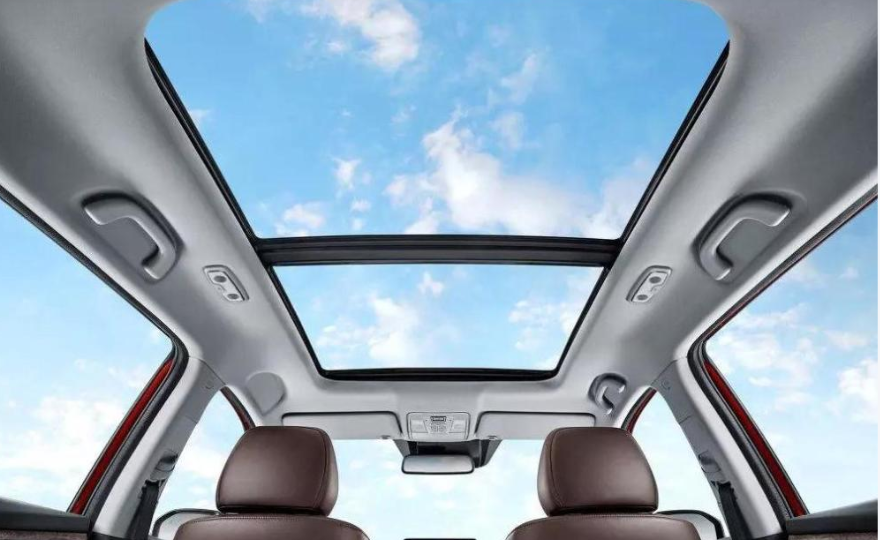
Many users have a one-sided understanding of panoramic sunroofs. Most of the "sunroof leaking, hot in summer, and unsafe" circulated on the Internet belong to misunderstandings. This section objectively popularizes the real shortcomings and misunderstandings from a professional perspective.
Correction of common misunderstandings
Myth 1: Panoramic skylights are very hot in summer
The regular original panoramic sunroof comes with multi-layer heat insulation coating + blackout curtain, which has excellent heat insulation effect after closing the sunshade. The temperature difference between the whole vehicle and the ordinary iron roof is almost the same; only the non-coated and inferior modified sunroof will have serious heat absorption problems.
Misunderstanding 2: Panoramic sunroof is unsafe and reduces body rigidity
The original panoramic sunroof has undergone thousands of vehicle collisions and rigidity tests. The roof frame is designed with reinforced beams, which will not reduce the overall rigidity of the body. The crash safety fully meets the national standard and the safety is guaranteed.
Misunderstanding 3: Panoramic sunroof is prone to water leakage
The original sunroof comes with a perfect drainage system, which does not leak for life under normal maintenance. Water leakage is basically caused by clogged drainage holes and aging ash accumulation of sealing strips, not product design defects.
True and objective shortcomings
Compared with the iron roof, the panoramic sunroof has certain requirements for later maintenance, and it is necessary to regularly clean the drain holes and guide rails.
The overall openable skylight structure is precise, and the maintenance cost is higher than that of ordinary small skylights;
In extremely cold and hail environments, it is necessary to pay attention to protection to avoid external forces hitting the glass.
Seven, panoramic sunroof professional maintenance methods and failure prevention (necessary for car owners)
[Maintenance details | Sunroof drain hole cleaning, guide rail lubrication, rubber strip cleaning and maintenance practical operation details]
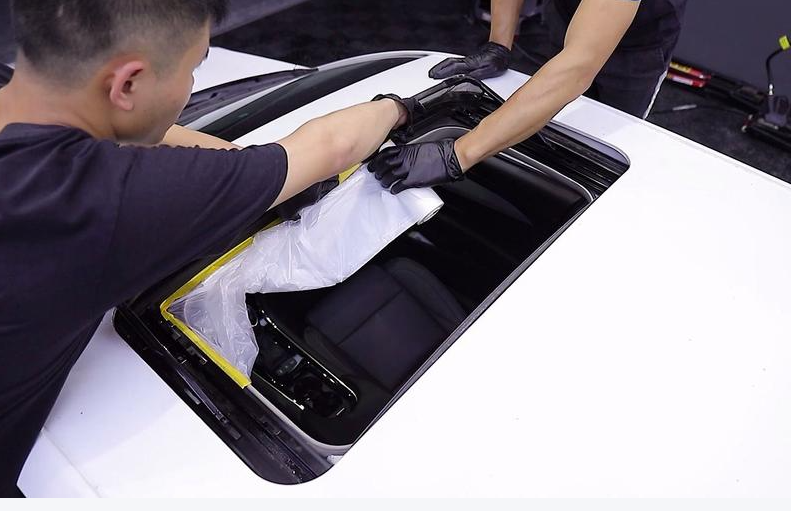
The panoramic sunroof is a precision electromechanical component. Scientific maintenance can achieve lifelong zero failure, zero water leakage, and no abnormal noise. It is a must-have car knowledge for car owners.
Regularly clean the drainage holes: The drainage holes in the four corners of the skylight are easy to accumulate leaves, dust, and sediment. Clean them every six months to avoid clogging the accumulated water and pouring water.
Guide rail cleaning and lubrication: Dust removal and special grease maintenance are carried out on the sunroof guide rail every year to avoid opening and closing cards, abnormal noises, and motor overload damage.
Sealing strip maintenance: regularly wipe the dust of the sealing strip, use rubber curing agent for maintenance, prevent the aging, hardening and cracking of the rubber strip, and ensure the waterproof and windproof performance of the seal.
Avoid violent operation: do not forcibly intervene during the opening and closing of the sunroof, do not place obstacles, and protect the anti-pinch system and transmission mechanism.
Extreme weather protection: Do not forcibly open the frozen skylight in winter ice and snow weather, and avoid violent opening and closing immediately after exposure to the sun in summer high temperature to prevent damage to the glass and structure.
Eight, panoramic sunroof common faults and professional solutions
In daily use, panoramic sunroofs rarely experience quality failures, and most of the problems are caused by improper maintenance. Common problems can be quickly self-checked and solved.
Sunroof abnormal sound card: mostly caused by dust accumulation and lack of oil on the guide rail, which can be returned to normal after cleaning and lubrication;
Sunroof leakage and water seepage: 90% are blocked drainage holes and aging sealing strips. It can be solved by dredging drainage and replacing rubber strips;
Open and close slowly and weakly: the motor accumulates dust, the voltage is unstable or the resistance of the guide rail is too large, which can be restored after cleaning and maintenance;
Automatic rebound anti-clip false trigger: guide rail foreign body card, clean up obstacles can be used normally.
summary
The panoramic sunroof is not a simple roof glass decoration, but a high-end automotive integrated system that integrates optical protection, thermal insulation and noise reduction, electromechanical intelligence, sealing and waterproofing, and body safety. From an industry professional perspective, the high-quality original panoramic sunroof has a safe structure, stable performance, and strong practicality, taking into account the multiple advantages of appearance, comfort, safety, and value preservation.
In the process of purchasing and using a car, consumers do not need to blindly reject or over-deify the panoramic sunroof, recognize its structural principles, parameter standards, advantages and disadvantages, and maintenance logic, and use it scientifically and regularly to enjoy the wide vision and high-quality driving experience brought by the panoramic sunroof for a long time, maximizing the practical value of the vehicle's high-end configuration.