

Plastic steel swing door
Plastic steel swing door | Full analysis of profile principle, process parameters, selection, installation and maintenance
First, the basic definition and product positioning of plastic steel swing doors
Schematic diagram of disassembly of plastic steel swing door profile section
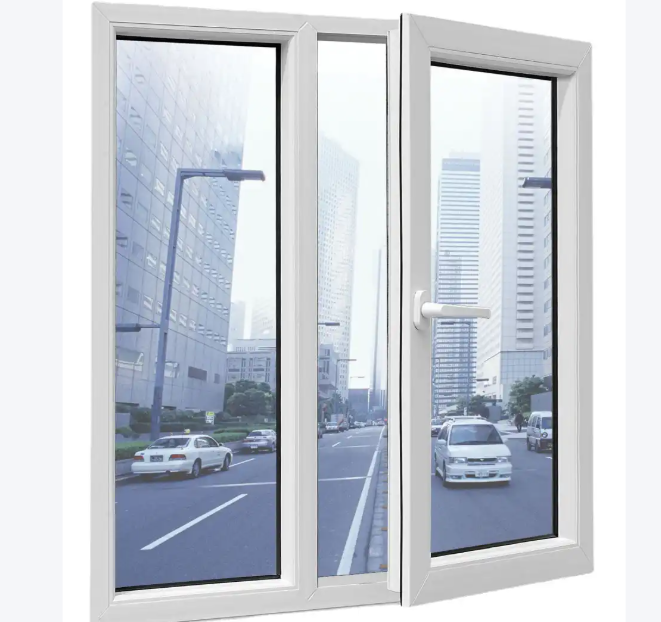
Plastic steel casement doors, also known as PVC plastic steel casement doors, are made of rigid polyvinyl chloride (UPVC) as the main raw material, adding stabilizers, impact modifiers, titanium dioxide, and processing aids. They are extruded at high temperature through an extruder to form hollow multi-cavity profiles. The inner cavity is reinforced by steel lining, and then cut, welded, and assembled with hardware and glass. It is a casement door body that is widely used in China.
Many users are easy to confuse plastic steel swing doors, aluminum alloy swing doors, and fiberglass reinforced plastic swing doors. The three substrates are completely different. The main material of plastic steel is UPVC plastic, which relies on the internal steel lining to enhance the structural strength. The opening method is that the hinge opens sideways, inward or outward, which is different from sliding doors and folding doors. It has been widely used in self-built houses, balconies, kitchens, bathrooms, factory warehouses, rental houses, and resettlement houses for a long time due to its close price, good heat and sound insulation, and its own anti-corrosion and non-rust characteristics.
Plastic steel casement doors are not pure plastic doors. The built-in steel lining is the core of the bearing force. Plastic steel doors without qualified steel lining will sag, not close tightly, and deform over time. The following gradually explains the professional knowledge of plastic steel casement doors from the dimensions of raw materials, profile structure, performance, style, installation, comparison, and pit avoidance, which is convenient for procurement, home improvement owners, and engineering parties to select models for reference.
Second, plastic steel swing door raw material composition and raw material grade distinction
UPVC raw material particles, steel lining raw materials real picture
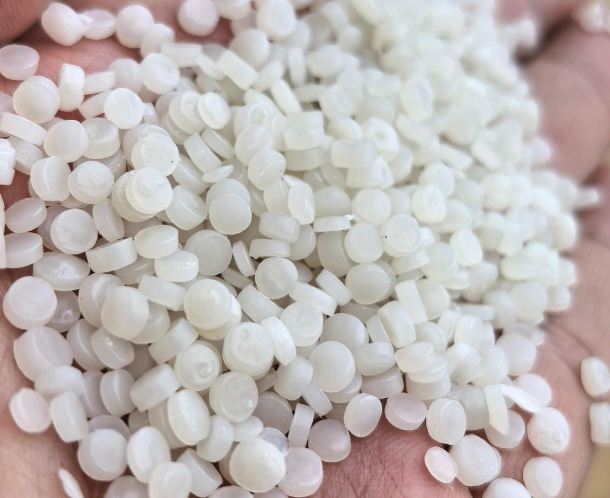
The raw material formula of high-quality plastic steel swing doors has strict standards, and the quality of the raw materials directly determines the aging speed, toughness and service life of the product. The root cause of the huge price difference on the market is the formula.
The main material is UPVC rigid polyvinyl chloride resin powder, which is the basic skeleton of the profile. Qualified products use national standard excellent SG-5 resin powder; low-cost and inferior profiles will recycle a large amount of PVC recycled materials, with many impurities and poor UV resistance. It will turn yellow and brittle after 1 to 2 years of outdoor use.
All kinds of additives perform their respective duties: calcium and zinc stabilizers (environmentally friendly) or composite lead salt stabilizers (old engineering models, calcium and zinc environmentally friendly formulas are preferred for home improvement), impact-resistant ACR additives, rutile titanium dioxide (anti-ultraviolet, prevent yellowing), internal and external lubricants, colorants. The cost of titanium dioxide is very high, small factories reduce the amount of titanium dioxide added, and profiles are prone to aging and fading.
The reinforcement is galvanized steel lining. The material is generally Q235 cold-rolled galvanized steel strip, which penetrates into the hollow cavity of the profile. The wall thickness of the steel lining is the key: household balconies, indoor plastic steel swing doors, and the wall thickness of the national standard steel lining is not less than 1.2mm. It is recommended to ≥mm. The steel lining must be galvanized to avoid rust and expansion inside the profile and cracking the profile cavity.
Simple summary: good plastic steel = new UPVC resin + sufficient titanium dioxide + high-quality additives + hot-dip galvanized thickened steel lining; poor plastic steel = recycled material, less titanium dioxide, thin steel lining or even no steel lining.
Three, plastic steel swing door multi-cavity profile structure and extrusion production process
Plastic steel profile extrusion production line, multi-cavity section structure diagram
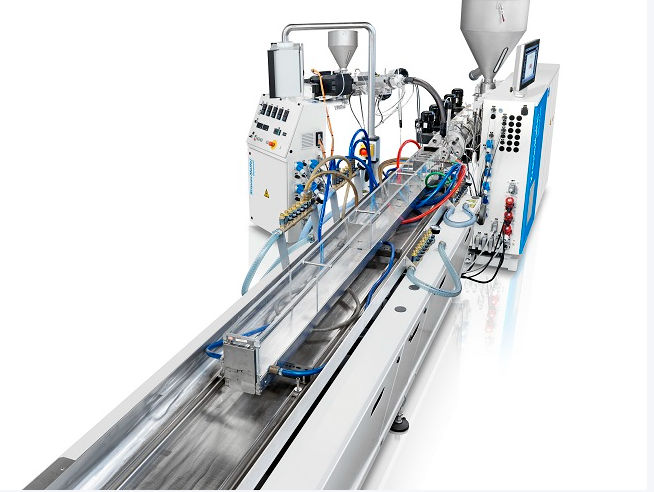
The plastic steel profile adopts the extrusion molding process, which is different from the glass fiber reinforced plastic pultrusion and aluminum alloy extrusion process. After the raw materials are mixed, they enter the extrusion cylinder for heating and plasticization, and are vacuum cooled and shaped by the setting die, and the hollow multi-cavity profile is obtained by traction and cutting.
Regular plastic steel casement door profiles are designed with a multi-cavity structure, including the main cavity, steel lining cavity, thermal insulation cavity, drainage cavity, and sealed card slot. Advantages of multi-cavity: multi-layer cavities block heat conduction and improve thermal insulation; independent drainage cavity, rainwater will not flow into the steel lining cavity to avoid steel lining corrosion; multi-channel card slots are used to install rubber strips to achieve multiple seals. On the market, inferior simplified profiles have few cavities, thin wall thickness, poor thermal insulation, and easy blockage of drainage.
Profile national standard wall thickness: The visual surface wall thickness of the main profile of the national standard plastic steel doors and windows is ≥2.0mm. Many low-priced products are only 1.4mm and 1.6mm, which belong to non-standard reduction.
The whole set of finished product processing process: profile cutting, steel lining cutting, penetrating into the steel lining, fixing screws, locking 45-degree angle, hot melt welding, welding angle, cleaning, grinding and milling drainage holes, keyhole assembly, sealing strip installation, hinges, locks, handles and other hardware glass assembly, pressing fixed finished product inspection and packaging.
The welding process is a landmark process of plastic steel. It is hot-melt butt at high temperature, and the welding angle is integrally formed. The qualified welding angle has high strength and will not crack easily. If the welding temperature is not well controlled in small factories, the welding angle is prone to brittle cracking and water seepage.
Fourth, the core performance advantages of plastic steel swing doors
Comparison diagram of performance parameters of plastic steel swing door
Plastic steel casement doors can dominate the market for a long time and have several irreplaceable advantages, making them suitable for matching the corresponding usage scenarios.
First, the thermal insulation performance is excellent. UPVC itself has a very low thermal conductivity, and with the multi-cavity hollow structure, the thermal insulation is better than that of ordinary aluminum alloy swing doors. It is used in self-built houses and low-temperature rooms in northern rural areas. It is not easy to condense indoors, and the heating energy consumption is lower. Although broken bridge aluminum is also insulated, the cost of plastic steel is lower under the same configuration.
Second, corrosion resistance, no rust. Plastic substrates will not oxidize and rust, bathrooms, damp basements, farms, warehouses with slightly corrosive gases will not appear like iron doors and ordinary aluminum alloys.
Third, the sound insulation and noise reduction effect is good. With double-layer hollow tempered glass + multiple sealing strips, the cavity structure can weaken the noise transmission, and the street-facing room can meet the basic sound insulation needs.
Fourth, the price is affordable. Low cost of raw materials and mature processing technology. Compared with the broken bridge aluminum swing door of the same size, the overall price is much lower. It is the first choice for large-scale resettlement and rental housing projects with limited budgets.
Fifth, the processing has good sealing performance and rich colors. It can be made into white, co-extruded whole body color, and coated wood grain color; the hot melt welding gap is small, and with EPDM rubber strip, it has strong airtightness after closing, and is windproof and dustproof.
Sixth, the insulation is safe and non-conductive, and there is no conductivity hazard in the use of power distribution auxiliary rooms and simple computer rooms.
V. Plastic steel casement doors have obvious shortcomings and applicable boundaries
Real pictures of inferior plastic steel doors with aging yellowing and sagging door leaves
Plastic steel swing doors have clear shortcomings and cannot be purchased blindly. They must be judged in combination with the environment.
First, the ability to withstand high temperature exposure is limited. UPVC plastic is a polymer material, which will age slowly under long-term exposure to the sun and high temperature environment. Even if titanium dioxide is added, it will still slowly turn yellow and lose toughness after many years. Therefore, plastic steel is generally not recommended for high-end villa doors facing south without shade and long-term exposure to the sun.
Second, the door leaf is easy to sag and deform. The rigidity of plastic steel itself is weak, and the bearing capacity depends on the steel lining. If the height of the door leaf exceeds 2.2 meters, the width is too large, or the steel lining is too thin and the hinge quality is poor, the door leaf will sag, rub the bottom, and lock after a few years of use. This is the most common failure of plastic steel doors.
Third, the flame retardancy is average and flammable in itself. Fire escape doors that do not meet Class A non-flammable and have strict fire protection requirements cannot use plastic steel swing doors, so fire doors need to be selected.
Fourth, the surface is easy to scratch. The hardness of the plastic surface is low, and hard objects are easy to leave scratches when bumped. The scratches cannot be polished and repaired, which affects the appearance.
Fifth, the toughness of the low temperature environment decreases. Under extremely cold and low temperature conditions, inferior formula profiles will become brittle and prone to cracking due to impact. High impact modified formula profiles must be selected in cold areas.
Mainstream styles, opening methods and glass options for plastic steel swing doors
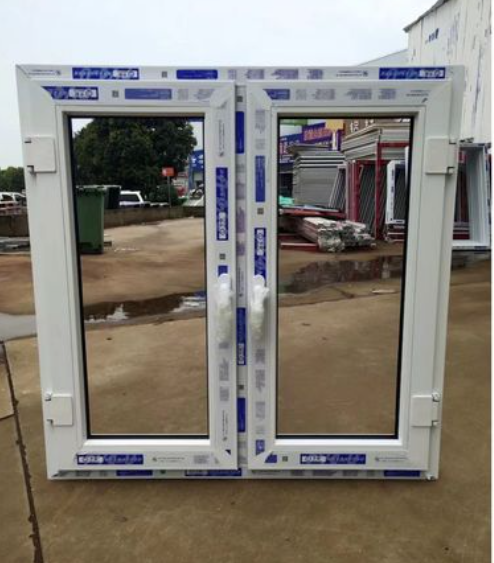
Style renderings of inner and outer opening plastic steel swing doors
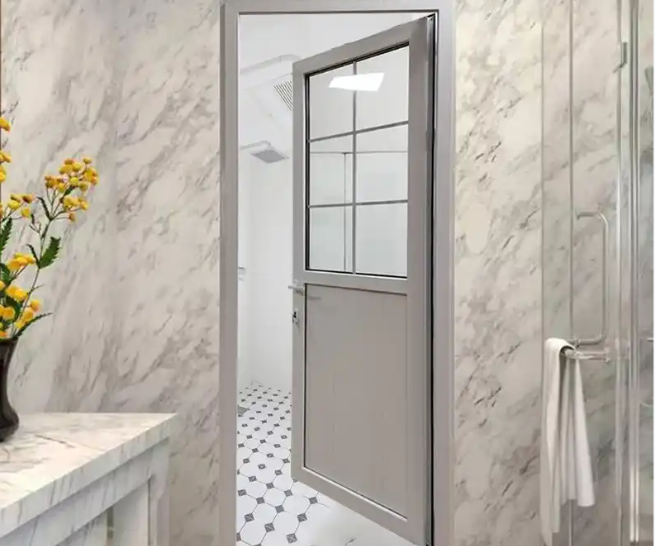
Plastic steel swing doors are divided into inner swing doors, outer swing doors, and a few inner swing doors according to the opening direction.
Outside open casement door: open outward, do not occupy indoor space, suitable for toilets and balconies; the disadvantage is that high-rise external opening has the risk of falling fans, and many residential property high-rise buildings are prohibited from opening external doors.
Open the door: open to the interior, high security, high-rise use of mainstream style, but the door will occupy the indoor space.
Inner opening and inner inverted plastic steel swing door: It can be opened flat, or the upper inner inverted micro-ventilation, rainproof and anti-theft, and the hardware cost is higher, which is an upgraded model.
Glass options:
Basic model: 5mm single-layer tempered glass, simple warehouse and storage room use, poor thermal insulation and sound insulation;
Home improvement regular models: 5 + 12A + 5 double-layer hollow tempered glass, balcony, kitchen standard, balanced thermal insulation and sound insulation;
In severe cold areas, high demand for noise reduction: three layers and two cavities of hollow tempered glass;
Privacy requirements: frosted hollow, Changhong tempered glass.
Key reminder: The glass of home improvement and high-rise scenes must be tempered to avoid glass breaking and hurting people. Glass beads are divided into outer beads and inner beads. The inner beads are safer and not easy to be pried by the outside.
Seven, plastic steel swing door and aluminum alloy, zinc steel swing door comparison selection
Comparison diagram of plastic steel, broken bridge aluminum and ordinary aluminum alloy
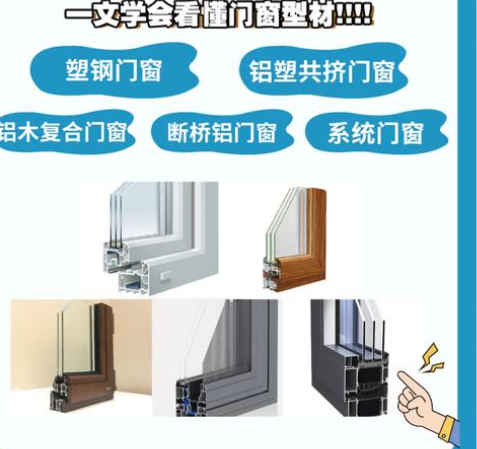
Many customers torn the balcony door to choose plastic steel or aluminum alloy, the three positioning differences are clear.
Plastic steel swing door: advantages of good insulation, cheap, anti-corrosion; short board is easy to age, large fan is easy to sag, and the texture is plastic; suitable for budget, humid rooms, resettlement houses, and self-built interior doors.
Ordinary aluminum alloy swing doors: high strength, sun resistance, not easy to deform, and many styles; poor insulation of short boards, poor heat insulation without broken bridges, fast heat conduction of metals, and higher price than plastic steel.
Broken bridge aluminum alloy swing door: strong heat insulation, high strength, good weather resistance, long service life, high value; short board price is high, budget investment is large.
One-sentence selection: short-term use, low budget, wet indoor door selection of plastic steel; long-term use, south exposure, the pursuit of stability and durability priority broken bridge aluminum.
Eight, plastic steel swing door installation construction specification points
Plastic steel casement door hole fixing, foam glue construction map
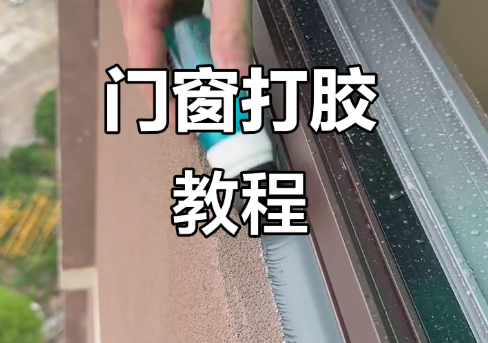
The deformation and leakage of plastic steel doors are often not a product problem, but an irregular installation.
1. Fixing method: Use special fixing pieces to fix, the spacing of fixing pieces is ≤600mm, and a fixing point must be set within 200mm of the corner. It is forbidden to directly hit the expansion screw hard top in the main cavity of the profile, which is easy to squeeze the profile out of shape.
2. Gap filling: The gap between the window frame and the wall is fully filled with polyurethane foaming agent. The foaming agent has no vacancies continuously. The excess part is cut off after the foaming agent is cured.
3. Sealing and waterproofing: Weathering silicone sealant is used on the outside and neutral sealant on the inside. The glue line is continuous and smooth, and no breakpoints or pores can appear. Sealant is the key to blocking the infiltration of rainwater.
4. Drainage hole protection: The profile leaves the factory to reserve drainage holes. During installation, styrofoam and sealant must not block the drainage channel to prevent rainwater from accumulating inside the cavity and soaking the steel lining to cause rust.
5. Leveling requirements: When installed, the horizontal and vertical corrections are in place, and the skewed door frame is an important incentive for the door leaf to sag and fail to close later.
6. Completed debugging: After installation, repeatedly debug the hinges and lock points to ensure that the door leaf opens and closes smoothly. After closing, the rubber strip is evenly pressed, without warping seams or rubbing the frame.
Nine, plastic steel swing door purchase pit avoidance guide
No steel lining, thin steel lining inferior plastic steel profile section
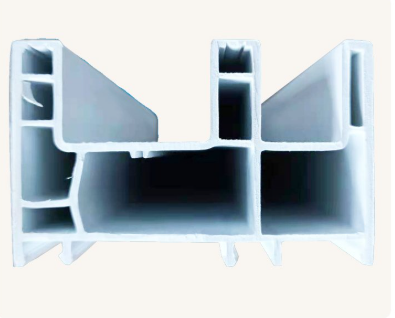
The low-price trap in the plastic steel market is very concentrated, and procurement focuses on avoiding these routines.
1. Omit steel lining or use extremely thin non-standard steel lining, or even use iron sheet instead of galvanized steel lining, and use the door leaf to sag directly for scrap for a period of time. The order contract indicates the wall thickness of the steel lining and the galvanizing process.
2. The wall thickness of the profile is false, and the nominal 2.0mm actually has only 1.4mm non-standard profiles.
3. Recycled material profiles look white in appearance, yellow and brittle in a short time, and the price is extremely low.
4. Simplify the sealing, only make a single rubber strip, no multiple isobaric seals, air leakage and water seepage.
5. The hardware is cheap and inferior, the hinge is insufficient in load-bearing, and it soon loosens and slips. The hinge of the plastic steel door is the load-bearing core, and the large door must choose a thicker load-bearing hinge.
6. The quotation does not include transportation, installation, sealant, and foaming, and the price will be increased later.
When purchasing, give priority to asking for the profile test report, check the profile logo, and implement the national standard GB/T 8814.
Ten, plastic steel swing door daily maintenance method
Schematic diagram of plastic steel door cleaning and rubber strip replacement and maintenance
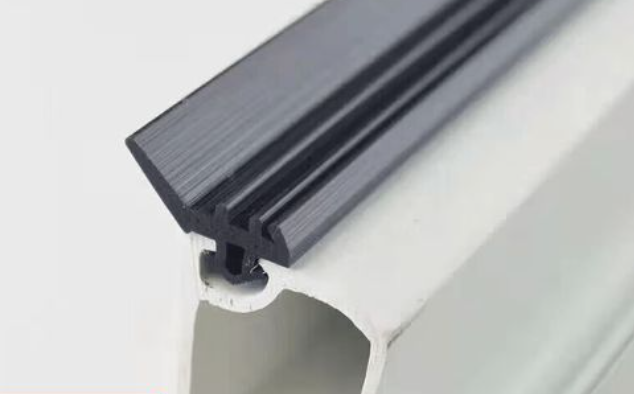
Correct maintenance can delay aging and prolong the service life of plastic steel swing doors.
1. Cleaning: Wipe with a soft rag with a neutral cleaner. It is forbidden to polish the surface with steel balls and hard sandpaper, and scratch the surface to accelerate aging; do not use strong acid and alkali cleaners.
2. Hardware maintenance: Apply a small amount of silicone-based grease to hinges and lock points every year, do not use oil, oil is easy to stick to ash and wear hardware.
3. Rubber strip inspection: Rubber strip is a consumable part. It will be inspected for 3 to 5 years. If it hardens, cracks, shrinks, and falls off, it will be replaced in time to prevent air leakage and water leakage.
4. The drainage holes are regularly dredged, and dust and sediment block the drainage holes, causing water to corrode the steel lining.
5. Avoid long-term heavy objects relying on the door leaf and strong impact to prevent welding fillet cracking and profile deformation.
6. There is no shading position in the south, and a sunshade can be installed to reduce direct sunlight and delay yellowing and aging.
Full text summary
Panoramic renderings of plastic steel casement door home improvement projects
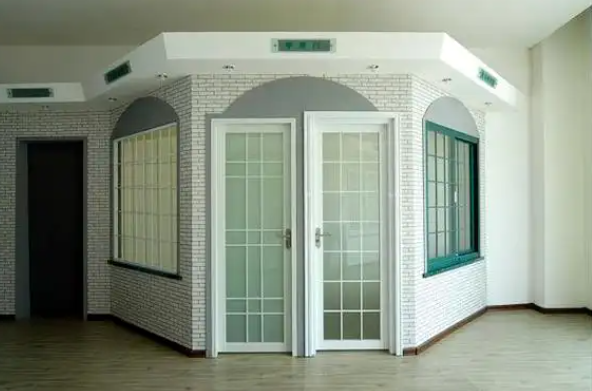
Plastic steel swing doors are made of UPVC multi-cavity profiles and built-in galvanized steel linings. They are formed by mature extrusion hot-melt welding processes. They are widely used in self-built houses, resettlement houses, rental houses, and humid kitchen and bathroom scenes with good thermal insulation, anti-corrosion, and high cost performance.
Its core shortcoming is that its weather resistance is weaker than that of aluminum alloy, and large-sized door fans pose a risk of sagging. The success or failure of procurement depends on the raw material formula, profile wall thickness, steel lining specifications, and hardware configuration.
When purchasing, clear the use environment: humid, limited budget, indoor ventilation doors can give priority to plastic steel; long-term exposure to the sun, the pursuit of more than ten years of stability and no deformation, priority is given to broken bridge aluminum swing doors. At the same time, strictly control the installation process, do a good job of foaming, sealing, drainage, and regular maintenance of rubber strips and hardware in the later stage, in order to avoid common faults such as water leakage and door sagging. As a cost-effective general door and window product, choose the right regular manufacturer and standard configuration, plastic steel swing doors are still a very practical choice.