

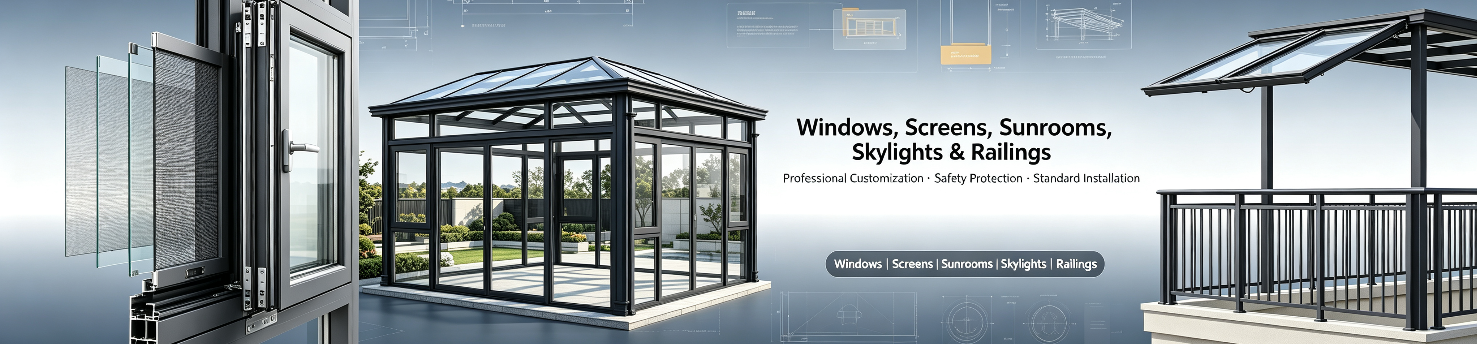
Balcony guardrail
The most complete professional analysis of balcony guardrails | National standard specifications, material classification, installation standards and purchase guidelines
First, the basic understanding of balcony guardrail: the core component of building safety protection
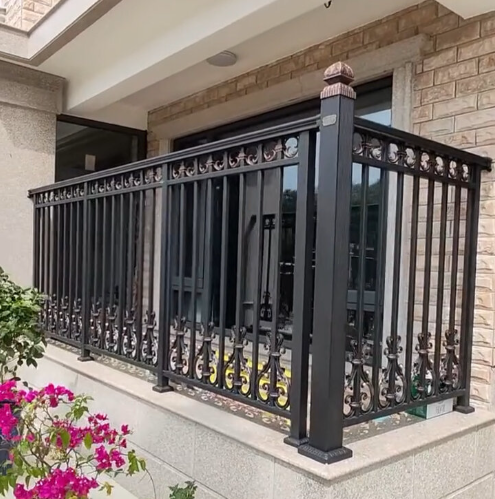
Balcony guardrail is a necessary safety protection component in residential, villa, commercial housing, and tooling buildings. Its main function is to prevent people from falling from high altitude, prevent falling objects, isolate protection, and beautify the building facade. It is an irreplaceable important facility in the building safety system. Many owners only pay attention to the appearance of doors and windows and walls when decorating, ignoring the safety and compliance of balcony guardrails. Later, there are safety hazards such as loose guardrails, rust, substandard height, and excessive spacing.
With the official implementation of the latest "Code for Residential Projects" GB 55038-2025 in 2025, balcony guardrails have been upgraded from simple decorative components to mandatory safety acceptance items. Whether it is the original guardrail of the new house, the replacement of the guardrail of the old house, or the balcony renovation guardrail, it must strictly follow the national unified safety standards, otherwise it will not pass the property acceptance and completion acceptance, and there will be great safety risks.
A high-quality balcony guardrail needs to meet the six core properties of stable structure, rust prevention and weather resistance, safety compliance, beautiful atmosphere, wind pressure resistance and climbing resistance at the same time. It is not only the last line of defense for home safety, but also an important part of the appearance of the building facade, the quality of the community, and the preservation of the house. This article gradually explains the national standard parameters, material differences, style characteristics, construction standards, and maintenance knowledge of balcony guardrails to help users scientifically select models and avoid potential safety hazards.
Analytical diagram of structural composition of residential balcony guardrail
The latest national standard for balcony guardrails (core professional parameters)
If you want to choose and install the right balcony guardrail, you must first understand the latest national mandatory regulations, which are the most authoritative and rigid standards in the industry and the fundamental basis for the safety of guardrails.
According to the Code for Residential Projects GB 55038-2025 implemented on May 1, 2025:
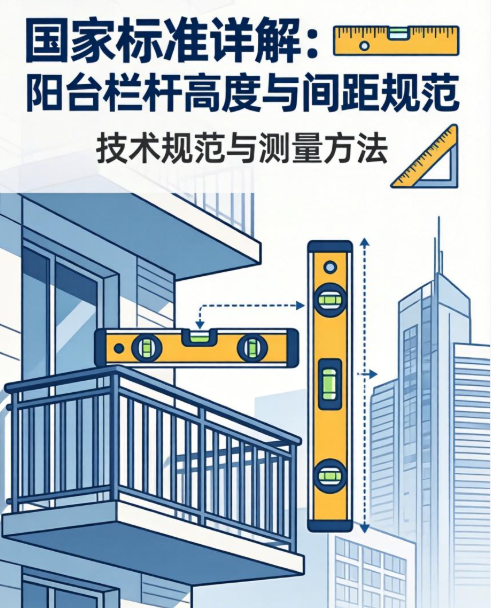
1. Balcony guardrails have a unified net height of ≥1.2 meters, replacing the old 1.05-meter and 1.1-meter standards. All new and renovated residential balconies must reach a height of 1.2 meters to eliminate the risk of climbing and falling.
2. The net spacing of the vertical rods is ≤0.11 meters (11cm) to prevent children's heads from getting stuck and their bodies from drilling out, and to completely prevent children from drilling safety accidents.
3. Balcony guardrails are strictly prohibited from setting horizontal climbing handrails and horizontal rods to avoid children stepping on and climbing;
4. The balcony guardrail must have high-strength wind pressure resistance and impact resistance, and it is forbidden to use easily deformed, fragile, and inferior thin-walled materials.
5. For treadable countertops with a bottom width greater than 22cm, the height of the guardrail must be recalculated from the treadle surface to ensure that the overall protection height meets the standard.
All community balcony renovation and guardrail replacement must be carried out in strict accordance with the height of 1.2 meters and the spacing of 11cm. Failure to meet the standards will be ordered by the property to rectify, and there are major home safety hazards. Balcony guardrails produced by regular manufacturers are all produced in accordance with the new national standard mold opening, and the structure, spacing and height are in full compliance.
2025 balcony guardrail national standard parameter size drawing
III. Classification of mainstream balcony guardrail materials, advantages and disadvantages, and applicable scenarios
At present, the balcony guardrail in the home improvement and tooling market is mainly divided into four mainstream materials: aluminum alloy balcony guardrail, zinc steel balcony guardrail, stainless steel guardrail, and glass guardrail. Each material has a huge gap in technology, lifespan, price, and weather resistance, and the adaptation scenarios are completely different.
1. Aluminum alloy balcony guardrail (high-end mainstream)
Using 6063-T5 original aluminum alloy profile, one-piece extrusion molding, surface electrostatic powder spraying, fluorocarbon spraying process. Advantages: never rust, solid wall thickness, stable structure, minimalist and advanced appearance, waterproof and sun protection, strong weather resistance, no fear of rain, sun exposure, humid environment. Aluminum alloy guardrail wall thickness is sufficient, strong impact resistance, no oxidation, no paint peeling, no deformation, service life can reach more than 20 years.
Suitable for: high-end residential areas, villas, self-built houses, hardcover rooms, and long-term outdoor balconies.
2. Zinc steel balcony guardrail (engineering explosion)
Using hot-dip galvanized steel pipe base material, multi-layer anti-rust treatment after baking paint, high hardness, high strength, high cost performance, solid structure, is the developer's real estate standard engineering guardrail. Advantages: moderate price, high hardness, strong impact resistance, regular style; short board: long-term outdoor use interface, solder joints are prone to slight rust, 3-5 years need to maintain the paint.
Suitable for: high-rise residential areas, resettlement houses, batch tooling projects.
3. Stainless steel balcony guardrail (traditional classic)
It is mainly made of 304 and 316 stainless steel, which is anti-corrosion and rust-proof, cost-effective and not easy to damage. Ordinary 201 stainless steel is easy to rust and is not recommended for outdoor use. Stainless steel guardrail is transparent and simple, but the shape is single, the decoration is poor, and the high-end decoration is less used.
4, tempered glass balcony guardrail (minimalist Internet celebrity models)
Using 3C tempered glass + aluminum alloy handrails, it is transparent and unobstructed, with excellent vision and the highest value. Suitable for viewing balconies, large floor-to-ceiling windows, and minimalist decoration; short board: it has extremely high requirements on the installation process, and it is easy to shake if it is not fixed. It needs regular glue maintenance.
Comparison chart of four mainstream balcony guardrail materials
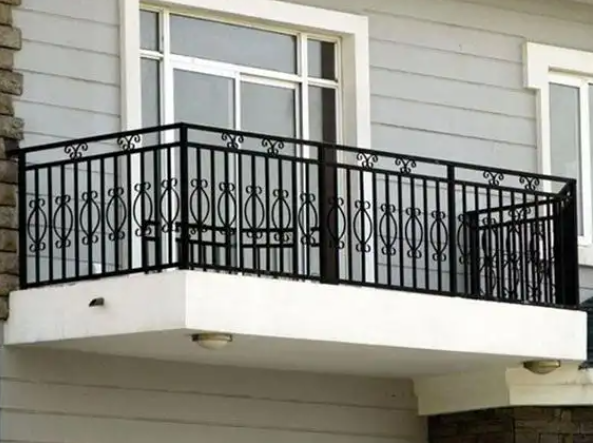
Fourth, detailed professional advantages of aluminum alloy balcony guardrails (the first choice for home improvement)
At present, 90% of high-end home improvement, villa renovation, and balcony renovation prefer aluminum alloy guardrails, which are also the most recommended materials for home balcony guardrails. The professional advantages are very obvious.
First, fully waterproof and rust-proof structure: aluminum alloy has its own metal anti-oxidation properties, does not rust, does not oxidize, and is corrosion-resistant. It is suitable for humid, rainy, coastal salt fog climate in the south, and does not fade or turn white from outdoor exposure all year round.
Second, the structure of the thickened profile is stable: the regular home improvement aluminum alloy guardrail is made of thick profiles, the wall thickness of the column is up to standard, and the structural mechanical design of the horizontal bar and vertical bar is resistant to wind pressure and impact. Adults shake vigorously without shaking.
Third, the process is mature and high-value: the surface is made of imported electrostatic powder spraying technology, with a delicate and uniform paint surface, scratch-resistant and wear-resistant. The colors can be selected from matte black, deep space gray, ivory white, fluorocarbon ash, and wood grain, suitable for all modern, minimalist, light luxury, and new Chinese decoration styles.
Fourth, it fully meets the new national standard: 1.2 meters standard height, 11cm standard vertical pole spacing, no horizontal climbing points, full marks for child safety protection, and successfully passes the property acceptance.
Fifth, maintenance-free long life: no need to paint and maintain every year, no rust, no slag, no pollution of the wall and floor, and a lifetime of worry-free installation.
Thickened aluminum alloy balcony guardrail profile wall thickness details real shot
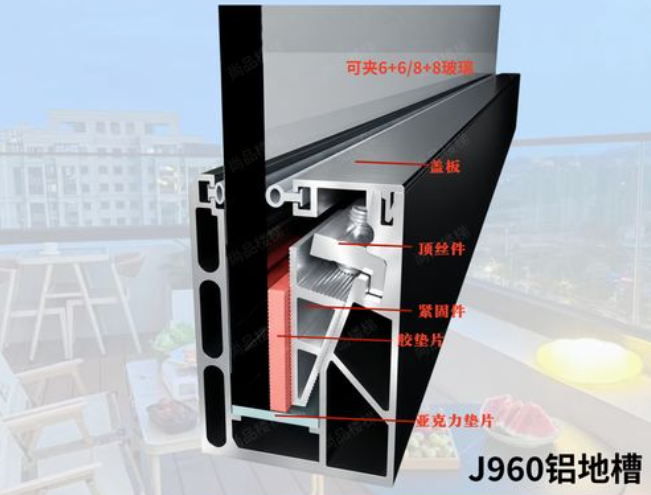
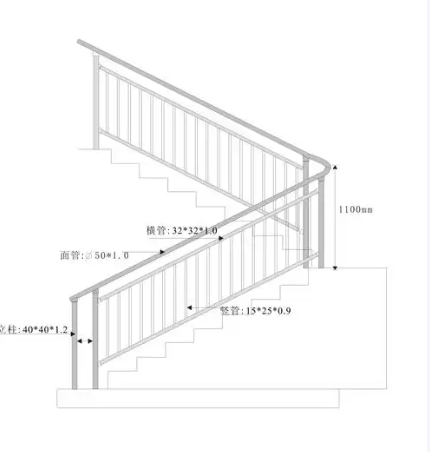
Fifth, the structural principle of balcony guardrail: column, cross bar, vertical bar force system
Many users think that the guardrail is just a simple railing splicing, but in fact the regular balcony guardrail is an overall mechanical load-bearing system.
The complete balcony guardrail structure is divided into: fixed column, main load-bearing crossbar, protective vertical rod, top armrest, bottom waterproof cover plate, and expansion fixing parts.
The column is the core force point, and the spacing is strictly controlled within 1.1 meters to 1.2 meters. If the spacing is too wide, it will lead to overall shaking and insufficient wind pressure resistance. The double-layer reinforcement design of the main crossbar distributes the impact force. The dense vertical bars meet the national standard for preventing children from drilling and climbing.
The regular process adopts a whole group of welding + screw reinforcement + lining strengthening, the overall frame is highly integrated, the force is uniform, and the typhoon and windy weather do not shake, deform, or fall off. Inferior guardrails cut corners, the column spacing is too large, the profile wall is thin, there is no reinforcement, simple splicing, and the later shaking is loose, and there is a risk of falling the fence.
Balcony guardrail force structure, column spacing structure diagram
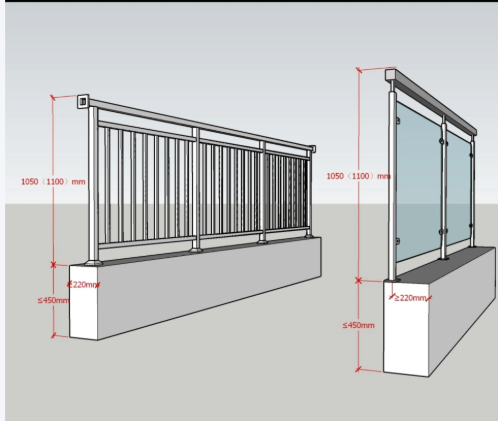
Six, balcony guardrail standardized installation construction technology
The guardrail is installed in three parts of the seven-point product. No matter how good the material is, non-standard installation is also a safety hazard. The installation of regular balcony guardrails follows a standardized process:
1. On-site survey: measure the length, height, and ground base of the balcony, check the property facade specifications, and locate according to the new national standard 1.2 meters in height;
2. Punching and fixing: using stainless steel thickened expansion screws to fix the column, the punching depth is up to standard, and there are no empty holes or empty installations;
3. Frame assembly: column leveling, vertical correction, and overall assembly of cross bars and vertical bars to ensure that the whole is straight, non-inclined, and non-shaking;
4. Waterproof closure: Weathering sealant is applied at the bottom to seal the gap to prevent rainwater from infiltrating the interior of the balcony and corroding the base layer;
5. Overall debugging: shake to test stability, check spacing, height, flatness, and clean up the site for completion acceptance.
Professional construction key points: vertical error ≤2mm, no shaking as a whole, tight sealing of gaps, and complete height spacing.
Balcony guardrail standardized installation construction site real shot
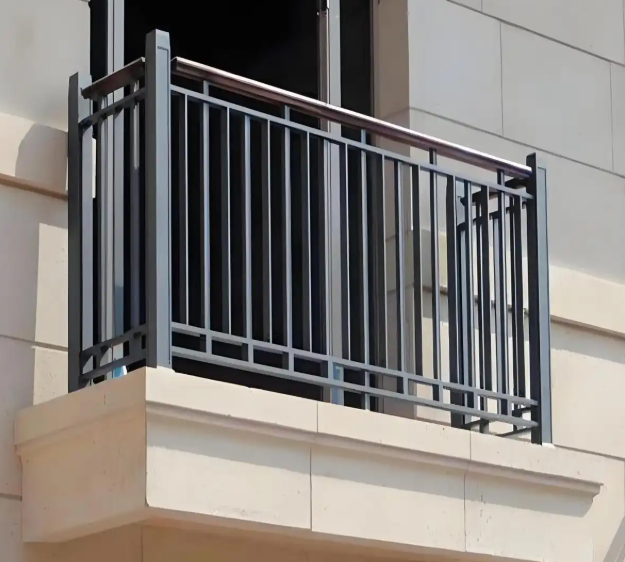
Seven, different apartment balcony guardrail adaptation selection plan
1. High-rise residential balconies: Priority is given to thickening aluminum alloy national standard guardrails, which are stable and rust-proof, wind pressure-resistant, and have high safety protection to avoid the risk of high-rise falling objects and people;
2. Low-rise villas, courtyard balconies: optional glass guardrails + aluminum alloy handrails, transparent vision and high-end atmosphere;
3. Real estate tooling batch projects: cost-effective zinc steel guardrail, regular and unified, high acceptance rate;
4. Sea view and humid areas: 316 stainless steel or fluorocarbon aluminum alloy is preferred, which is super resistant to salt spray and corrosion.
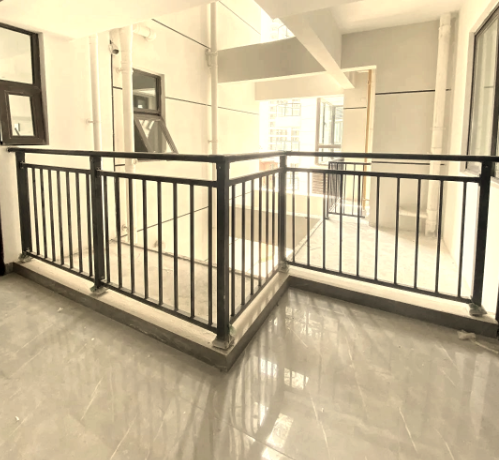
Floor renderings of guardrails in different scenes of high-rise, villa and tooling
Eight, balcony guardrail purchase high-frequency pit avoidance guide
1. Low-cost thin-walled material trap: Many businesses use thin materials, recycled aluminum, and virtual standard wall thickness, which shake and deform as a whole after installation;
2. The pitch exceeds the standard trap: non-standard large-spacing railings, children can drill out, which seriously does not meet the 2025 new national standard;
3. Insufficient height trap: the old 1.05-meter and 1.1-meter guardrails cannot pass the property acceptance now;
4. Process reduction trap: no reinforcement, no lining, simple splicing, and abnormal sound of loosening in the later stage;
5. Inferior painting traps: Ordinary paint fades, peels, and falls off after half a year, which greatly affects the appearance of the facade.
Choose the core formula: look at the national standard size, look at the profile wall thickness, look at the surface process, look at the overall structure, and look at the installation process.
Nine, balcony guardrail daily maintenance and service life
High-quality aluminum alloy balcony guardrails are almost maintenance-free, and only need to wipe dust with water every day; zinc steel guardrails are simply repainted and maintained for 2-3 years; glass guardrails are regularly inspected for gluing and tightening screws.
Regular national standard balcony guardrail: aluminum alloy life of more than 20 years, zinc steel 8-12 years, stainless steel more than 10 years.
Rational maintenance can prevent rust, fading, shaking, and loosening, ensuring long-term home safety.
Full text summary
Balcony guardrails are not simple decorative railings, but building safety protection systems that are related to the safety of the whole family and meet national mandatory standards. After the implementation of the latest residential specifications in 2025, the 1.2-meter national standard height and 11cm standard vertical rod spacing became the rigid standards for all balcony guardrails.
Compared with zinc steel, stainless steel and glass guardrails, thickened national standard aluminum alloy balcony guardrails have become the first choice for modern home improvement, villa renovation and community renovation due to their advantages of never rusting, stable structure, advanced appearance, maintenance-free, safety compliance and super long durability.
When buying balcony guardrails, don't just look at the low price, give priority to national standard specifications, regular profiles, and standardized construction, taking into account safety, aesthetics, and weather resistance, in order to truly protect home safety and improve the overall quality of the building