

Cement fence
Cement guardrail professional detailed explanation: material, classification, process, construction acceptance and purchase guide
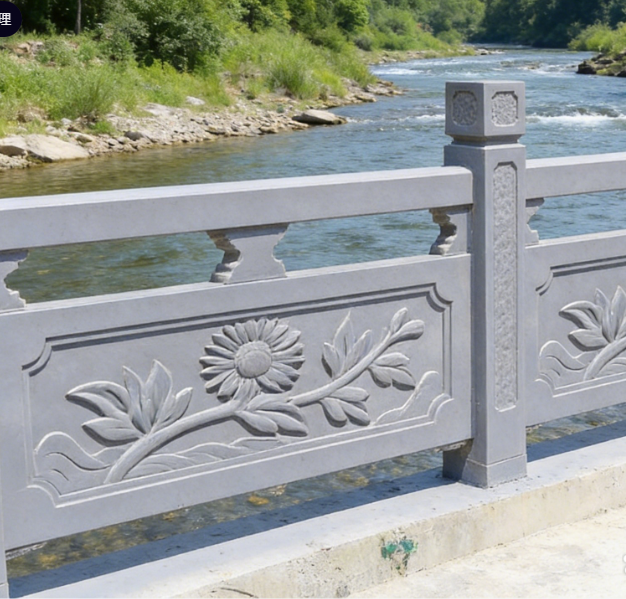
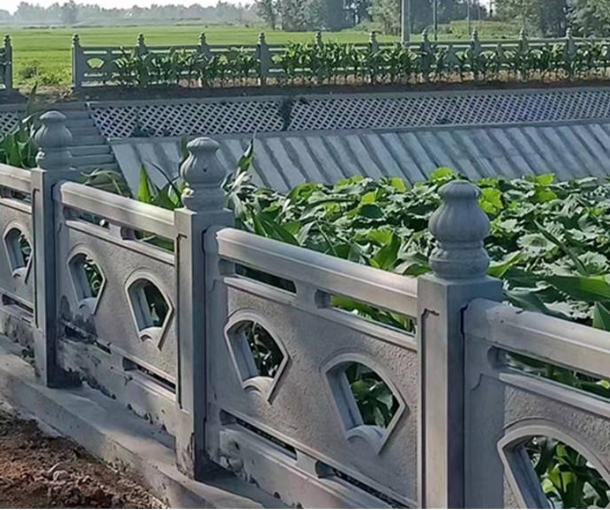
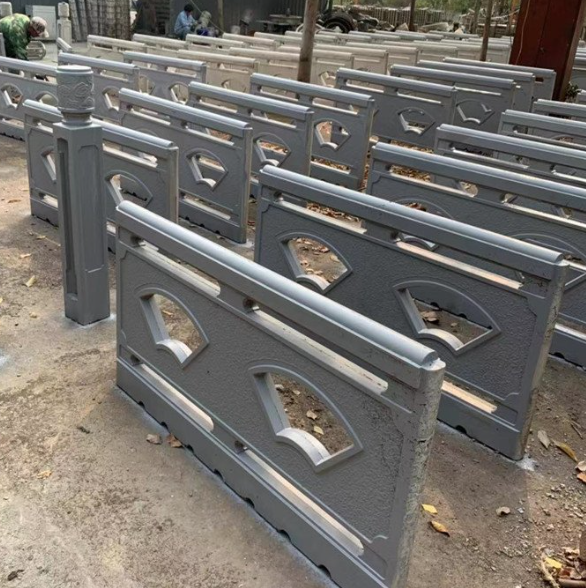
Overall real picture of outdoor river imitation stone cement guardrail
I. Overview of cement guardrail foundation and mainstream application scenarios
Cement guardrail, also often referred to as concrete guardrail, imitation cement precast guardrail, imitation stone cement railing, is based on ordinary Portland cement, sand and gravel aggregate, steel skeleton as the basic raw material, through the prefabricated mold pouring, curing and forming of protective components, is a very widely used protective facilities in the field of outdoor engineering. Many people will simply understand cement guardrail as "concrete railings". In fact, modern cement guardrail has broken away from the image of traditional rough cement components. Through mold shaping, surface coloring, and imitation pattern treatment, it can reproduce various textures such as bluestone, white marble, yellow rust stone, and wood grain, taking into account protective functions and landscape decoration effects.
Compared with zinc steel guardrail, stainless steel guardrail and stone guardrail, cement guardrail has a very distinct positioning difference. It has strong impact resistance, weathering resistance, corrosion resistance, sun and rain exposure, no metal rust and fading problems, moderate cost and long service life. The main application scenarios include: river embankments, reservoirs and ponds, municipal roads, scenic plank roads, park squares, new rural courtyards, bridges on both sides, slope isolation, cemetery landscape, factory walls, etc.
Especially in areas near water, remote outdoors, and areas where the flow of people is large and easy to bump, cement guardrails have outstanding advantages. Metal guardrails are easy to be stolen and man-made. Natural stone guardrails are expensive and easy to break due to excessive weight. Cement guardrails are sturdy, heavy, anti-theft, and require little maintenance in the later stage. They are a popular choice for municipal landscape engineering and rural renovation projects. At the same time, cement guardrails are divided into two production modes: on-site pouring and factory prefabrication. At this stage, the proportion of prefabricated cement guardrails in the project is getting higher and higher, with a higher degree of standardization and more stable quality.
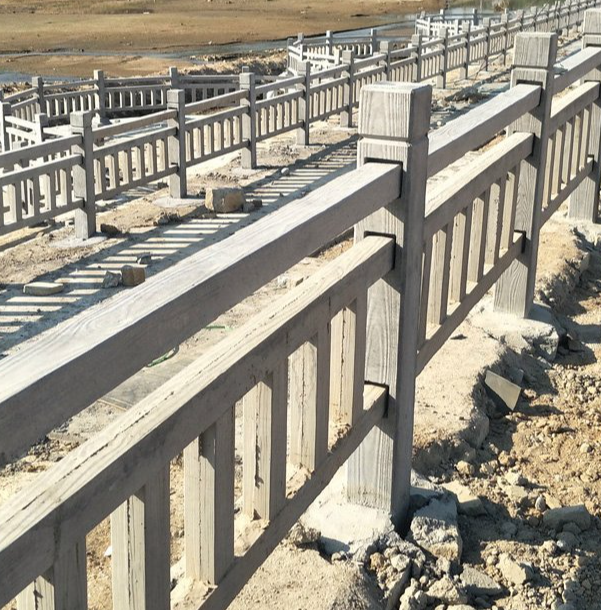
Close-up of cement guardrail raw materials and built-in steel skeleton section
Second, the raw material ratio and internal structure principle of cement guardrail
Many customers only look at the appearance of cement guardrails, but ignore the internal skeleton and raw material ratio, which is also the core reason why many low-cost cement guardrails break and collapse after being used for a long time. Qualified cement guardrails are not pure cement pouring, but reinforced concrete composite structures. They rely on steel bars to bear tension and concrete to bear pressure, and the combination of the two achieves high strength.
The raw materials are mainly divided into these categories: 42.5 grade ordinary Portland cement, clean river sand, graded crushed stone, high-strength cold-drawn wire/threaded steel bar, water reducer, early strength agent, anti-cracking agent, and color paste pigment. Regular products will arrange a continuous steel skeleton inside the handrails, columns, and vertical bars. The main reinforcement is generally Φ6-Φ10 rebar, and the stirrup spacing is controlled at 15-20cm to form a stable mesh frame. Inferior products either do not put steel bars, but only a small amount of fine iron wire, or use insufficient cement and soil sand with high mud content, which will crack and break the rod in a short time.
In terms of ratio, C30 concrete is commonly used for landscape prefabricated cement guardrails, and C35 concrete is used for some river and bridge high-protection guardrails to ensure impact resistance and frost-thaw resistance. At the same time, anti-crack admixtures will be added to reduce the probability of surface cracking of the guardrail under the change of temperature difference. Pigments are divided into internal color mixing and external spray protective paint. Internal color mixing is to add color paste in the mixing stage. The color is unified from the inside to the outside, and it is not easy to show white after collision, which belongs to high-end technology. External spray is to spray paint the surface after the finished product, which is low cost and easy to peel and fade in the later stage.
Cement guardrail product classification sample map (imitation stone, imitation wood, square, carved)
III. Classification of mainstream products of cement guardrails and their respective scope of application
According to the shape and decorative effect, the cement guardrail on the market can be divided into four categories. The structural strength, cost, and adaptation scenarios of different categories vary greatly, and the style cannot be selected blindly.
The first category, imitation stone cement guardrail, is also the most commonly used style of engineering. Imitate granite, bluestone texture, thick texture atmosphere, suitable for rivers, bridges, municipal parks, large landscape areas, high protection level, visual stability;
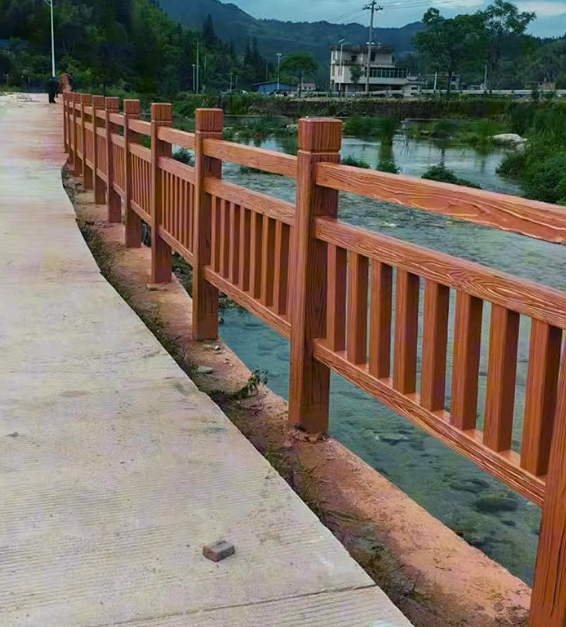
The second category, imitation wood cement guardrail, the surface to make wood grain, tree effect, natural style, mostly used in mountain forest trails, wetland parks, agritainment, rural gardens, strong atmosphere;
The third category is simple square cement guardrail, with simple style, less carving, fast production speed, and lower unit price. It is mostly used for factory isolation, slope protection, and new rural walls.
The fourth category is the carved art cement guardrail, with relief flower and bird, auspicious cloud patterns, complex craftsmanship, high mold cost, and is mostly used in antique scenic spots, ancient building facilities, and high-end manor landscapes.
According to the production method: prefabricated guardrail, factory unified mold pouring, maintenance standards and then transported to the site for assembly, short construction period, stable finished product; cast-in-place cement guardrail, in the construction site to support the mold, on-site pouring, the advantage is that it can be adapted to special-shaped arc, special size, the disadvantage is that the on-site maintenance cycle is long, affected by the weather, the surface is prone to honeycomb pockmarked surface, and now it has been gradually replaced by prefabricated models.
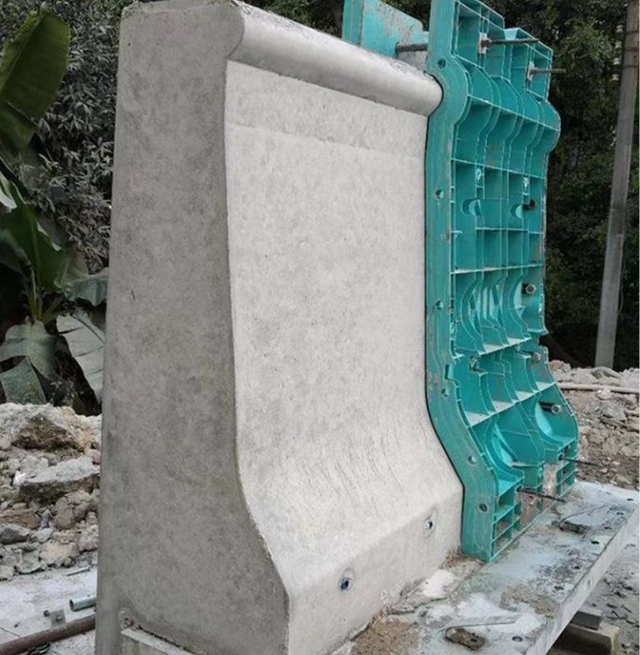
Precast cement guardrail mold pouring, demoulding production real pictures
IV. Cement guardrail production process and maintenance core points
The quality of cement guardrail depends on the proportion of steel bars in half, and the other half depends on maintenance. Concrete is a hydraulic material, and the maintenance is not in place. The strength will never meet the design standards. It is easy to crack and drop blocks in the later stage. The standardized production process of prefabricated cement guardrail is as follows: mold cleaning, brush, mold release agent, steel skeleton into the mold, fixed concrete, mixing, pouring, shaking table, vibrating, surface texture, dressing, standing, initial setting, demoulding, constant temperature, moisturizing, maintenance, grinding, repairing, coloring, and protective topcoat inspection.
Among them, the vibration process is very critical. The internal bubbles of the concrete are discharged through the shaking table to avoid voids and honeycombs inside the guardrail, otherwise it will break from the hollow position after being stressed. The demoulding time is generally 12-24 hours after the pouring is completed. Adjust according to the ambient temperature. If the temperature is low, the demoulding time will be extended. Early demoulding is prone to missing corners and collapsing edges.
Maintenance is the top priority. The standard maintenance cycle is not less than 7 days, and high-quality manufacturers will achieve 14-day moisturizing maintenance. Keep it moist during maintenance to avoid sun exposure, strong wind direct blowing, and low temperature freezing. Many small workshops load and ship directly after demoulding in order to catch up with the construction period. The strength of concrete only reaches less than 50% of the design strength. It is bumped and damaged during transportation. After the installation is completed, it will soon crack in a large area after the temperature difference between winter and summer. The guardrail after maintenance meets the standards has high surface hardness, crisp knocking sound, and greatly improved weathering resistance. After the coloring is completed, the last sealing protective paint can block the penetration of rainwater, UV erosion, and reduce the whitening of pan-alkali.
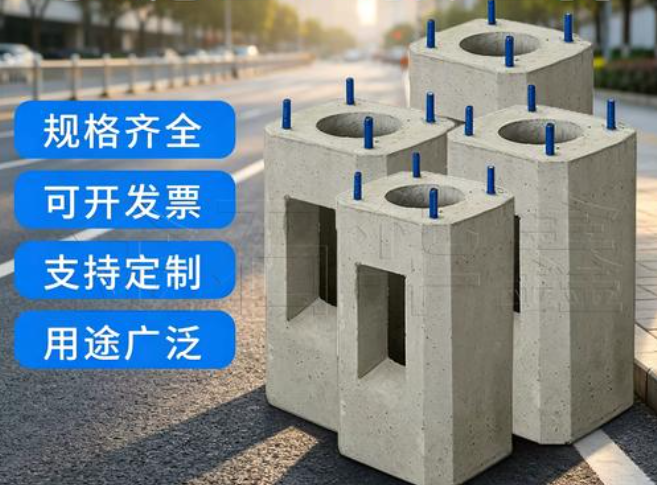
Schematic diagram of foundation pit excavation and embedded parts construction of cement guardrail foundation
Construction specifications and technical points for on-site installation of cement guardrails
Cement guardrail weight is relatively large, the focus of installation lies in the foundation, the foundation is unstable, no matter how good the guardrail will collapse later, especially the river water guardrail, foundation construction is a mandatory safety link. Standard installation steps: site line positioning foundation pit excavation cushion leveling pouring concrete independent foundation or ground beam pre-embedded steel plate/pre-embedded steel column hoisting alignment welding or grouting connection gap filling treatment hook repair overall cleaning, complementary color.
For guardrails in river channels and steep slopes, the foundation burial depth is generally not less than 50cm. If it is a soft soil foundation, the burial depth should be increased or the ground beams should be connected into a whole to prevent the foundation from settling and pulling the guardrail, resulting in fracture and dislocation. Pre-embedded steel bar grouting is preferred for the connection between columns and foundations, and the grouting material is made of non-shrinkage grouting material, which has better compactness. The splicing gap of the guardrail is controlled at 3-5mm. Use crack-resistant mortar to fill the joint, and ordinary cement mortar cannot be used directly. Otherwise, after thermal expansion and contraction, the gap will crack and seep water, the steel bars will rust and expand, and the cracked components will
Construction taboos: It is not allowed to directly place the guardrail on the soil surface for simple stacking; the floor beam cannot be omitted in the waterfront area; the joint position cannot be waterproofed without caulking. After the installation is completed, it needs to be left for more than 3 days for maintenance, and then accepted. It cannot withstand external impact immediately.
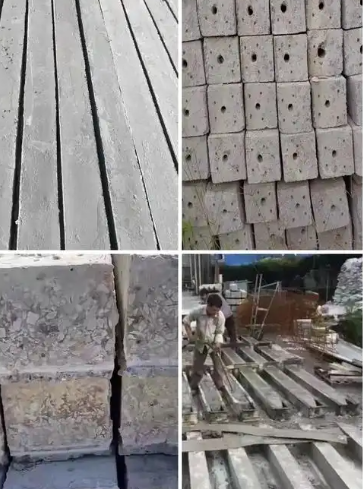
Comparison chart of damaged cement guardrail, display of pan-alkali, cracking, and block falling diseases
VI. Common diseases, causes, and prevention programs of cement guardrails
Many users have reported that the cement guardrail has been whitening, cracking, and falling blocks for several years. These diseases have clear incentives and can be avoided in advance. The most common problem is pantothenic alkali (alkali return whitening), which is the internal soluble salt that leaches out to the surface with the penetration of rainwater to form white powder. The main reasons are: poor compactness of concrete, no sealing protective paint, and long-term continuous soaking in rainwater. Prevention plan: fully vibrate during production to improve compactness, and apply a special alkali-resistant sealing primer after completion.
The second is structural cracking, which is divided into surface fine lines and through cracks. Surface fine cracks are mostly caused by lack of water for maintenance and large temperature differences in sun exposure; through long cracks are basically caused by insufficient steel bars, foundation settlement, and impact loads. This kind of crack is a potential safety hazard and needs to be reinforced or replaced. There are also corner cracks, which are mostly caused by demoulding, transportation and lifting bumps, or hard knocking alignment during installation.
In addition, freezing and thawing damage is very prominent in the northern region in winter. Rainwater seeps into the interior, the icing volume expands, and layer by layer peels off. When selecting the type of the northern project, it is necessary to clearly require the use of anti-freezing and thawing formula concrete, add air entraining agent, and improve the anti-freezing level. Daily maintenance is relatively simple. If cracks are found, timely repair and brush protective paint to prevent water from continuously entering the interior can greatly prolong the service life.
Comparison renderings of cement guardrail, stone guardrail and zinc steel guardrail
Seven, the comparison of cement guardrail and other guardrail products, clarify the selection ideas
Many project purchasers are torn to choose whether cement guardrails or metal guardrails or stone guardrails. We compare them from the core dimension to facilitate selection.
Compared with zinc steel guardrails, zinc steel guardrails are lightweight, flexible in style, and quick to install, but metals can be stolen, and there is a risk of rust outdoors for a long time. They are resistant to impact and are suitable for residential balconies. Cement guardrails are self-important, anti-theft, and impact-resistant, and are not afraid of corrosion. They are suitable for rivers, roads, and scenic spots. The disadvantages are high self-weight, high transportation and installation costs, and weak flexibility in modelling changes.
Compared with natural stone guardrails, stone has advanced texture, but it is expensive. Natural stone has dark cracks, heavy weight, easy to break during transportation, and limited mining. The effect of cement imitation stone guardrails is close to that of stone, and the cost is only one-third or even lower than that of stone. Bulk supply is stable.
Compared with the solid wood guardrail: the solid wood guardrail has a natural texture, but it is afraid of water and insects. It needs to be repaired and painted in 2-3 years, and the maintenance cost is high. The imitation wood cement guardrail has a wood grain appearance, which is not corrosive when soaked in water, and is insect-proof and maintenance-free.
Briefly summarize the selection formula: cement guardrails are preferred for water-facing, collision-prone, and remote anti-theft needs; zinc steel guardrails for home improvement balconies and high-rise residences are preferred for broken bridges; natural stone guardrails are selected for high-end native texture and sufficient budget.
The river cement guardrail that has been completed for many years is in good condition without cracking and caustic soda
Eight, cement guardrail acceptance standards, quality inspection points
Cement guardrail is a protective component, involving water and road safety. Acceptance can not only look at the appearance, but need to check a number of indicators. Appearance level: no large area of honeycomb pockmarked surface on the surface, no through cracks, no corner defects within the allowable range, uniform color, straight joints; structural level: foundation size, buried depth in line with the drawings, column verticality deviation of not more than 3, guardrail as a whole without shaking; material level, manufacturers need to provide concrete test block test report, steel certificate, waterfront projects also need to verify anti-permeability, anti-freezing related test data.
Simple self-inspection method on site: tap the component with a small hammer, the sound is dull and empty, which means the internal vibration is not solid; the sound is crisp and dense, indicating that the concrete is well formed; shake the column vigorously, there is no obvious displacement or loosening, and the foundation is qualified. After the acceptance is completed, it is recommended to keep the photos of the completion, and follow-up inspections will compare the status.
Full text summary
Cement guardrails continue to be widely used in municipal river channels, rural revitalization, and scenic landscape projects due to their characteristics of ultra-high structural strength, weather resistance and corrosion resistance, good anti-theft, strong landscape plasticity, and long-term low maintenance. But it is not a simple "cement pole". Product quality is determined by a series of links such as raw material labeling, steel skeleton, vibration process, moisturizing maintenance, and foundation construction.
There is a huge gap in product quality in the market. Low-priced small workshop products steal steel bars and omit maintenance. They look similar in the short term. They will crack and be scrapped in just one or two years, which poses a great safety hazard. When purchasing and construction, you can't just compare the unit price, but check the internal reinforcement, concrete label, maintenance cycle, and installation foundation plan. Cement guardrails with reasonable selection, standardized production, and standardized construction can have a service life of 30-50 years in normal outdoor environments. One investment can play the dual role of protection and landscape for a long time. It is a cost-effective outdoor protection solution.