

Comprehensive analysis of broken bridge aluminum doors and windows | Structural principles, performance indicators, process standards and selection guidelines
Comprehensive analysis of broken bridge aluminum doors and windows | Structural principles, performance indicators, process standards and selection guidelines
Broken bridge aluminum doors and windows, broken bridge aluminum system windows, broken bridge aluminum profiles, PA66 heat insulation strips, pin glue injection, whole window K value, air tightness and water tightness, wind pressure resistance, broken bridge aluminum doors and windows installation, balcony broken bridge aluminum
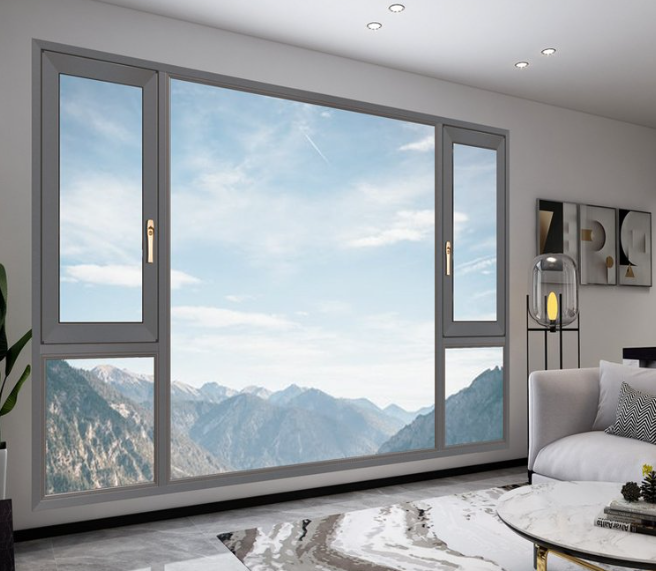
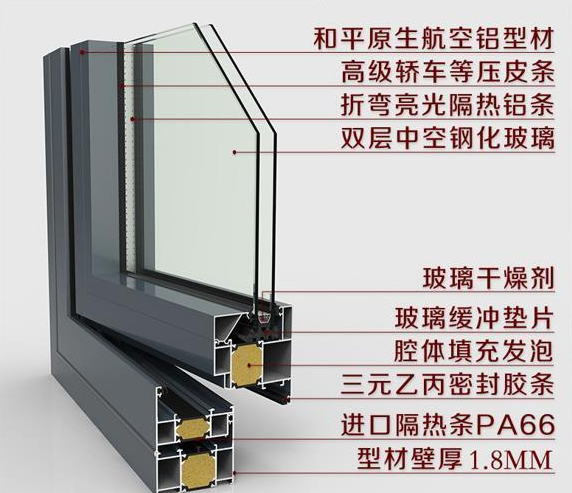
[Cross-sectional structure diagram of broken bridge aluminum profile | Multi-cavity isotherm, heat insulation strip, sealing structure section sample angle real shot]
First, the basic definition and thermal insulation principle of broken bridge aluminum doors and windows
Broken bridge aluminum doors and windows, the full name of thermal insulation broken bridge aluminum alloy doors and windows, is currently the most widely used energy-saving aluminum doors and windows products for home decoration balconies, old house window replacement, villa self-built houses, and engineering building exterior windows. It is also the core component of reducing heat and cold loss and improving living comfort in modern building envelope structures. Many decoration owners are prone to confusion about the concept: broken bridge aluminum is a general term for a type of profile structure, and system windows belong to the high-end branch of broken bridge aluminum doors and windows that has undergone a complete set of system research and development and matching tests. The two are not antagonistic relationships, but inclusive relationships.
The aluminum alloy itself has a high thermal conductivity, and pure aluminum profiles are very easy to conduct heat. The indoor heat is rapidly lost in winter, and the outdoor heat continues to pour in in summer. The energy-saving effect of ordinary aluminum alloy doors and windows is extremely poor. The core technical logic of broken bridge aluminum is the design of heat-breaking bridge (heat blocking): between the inner and outer layers of aluminum alloy profiles, embedded with low thermal conductivity insulation strips, the aluminum profile is disconnected, and the heat conduction channel formed by aluminum metal is cut off. At the same time, with multi-cavity cavity, sealing system, and energy-saving glass, heat transfer is suppressed from conduction, convection, and radiation, so as to achieve the goal of heat insulation, noise reduction, and energy saving.
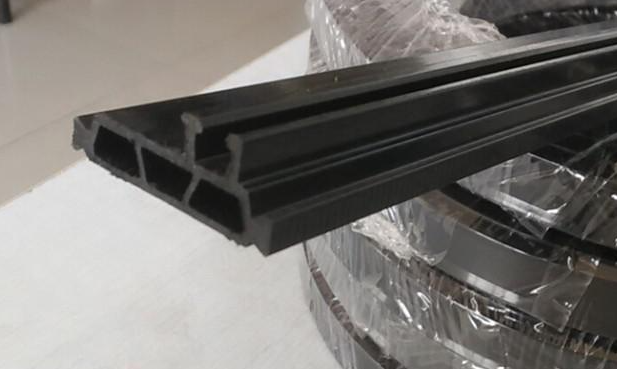
The mainstream of the industry adopts the piercing broken bridge process, which is different from the early pouring broken bridge structure. The piercing process is to roll and bite the aluminum profile card slot through a gear hobbing machine, and the PA66 nylon thermal insulation strip is firmly clamped between the inner and outer aluminum profiles. The bite tension must meet the JG/T174 standard to avoid the risk of stripping and cracking due to long-term temperature difference deformation, thermal expansion and contraction. Inferior products will use PVC plastic thermal insulation strips instead of nylon thermal insulation strips. PVC has poor heat resistance, low temperature brittleness, easy aging and fracture, and the thermal insulation performance is almost invalid. It is the most common cutting-edge point for broken bridge aluminum doors and windows. The qualified thermal insulation strip standard is PA66-GF25, nylon plus 25% glass fiber, high temperature resistance, anti-aging, and tensile strength standards. It is the first guarantee for the performance of broken bridge aluminum.
[Comparison of PA66 heat insulation strip and PVC inferior heat insulation strip, close-up, rolling nip process details]
Second, the professional standard of aluminum profile substrate, wall thickness and cavity structure for broken bridges
The base material of broken bridge aluminum profile must be 6063-T5 national standard primary aluminum alloy, the alloy composition is stable, the strength, toughness and surface adhesion are stable after extrusion molding; recycled heteroaluminum impurities are many, brittle, spraying is easy to drop powder, and it is easy to bend and deform after force. It is strictly prohibited to use high-rise. According to GB/T8478-2020, the wall thickness of the main force rod of the outer window of the building is ≥1.4mm for conventional low-rise residential buildings; high-rise buildings with more than 10 floors, coastal typhoon areas, and large fixed and large opening fans. It is recommended to use profiles with a wall thickness of 1.8mm and above; super high-rise and large-grid engineering windows, 2.0mm thickened profiles are recommended to improve the safety redancy of the whole window against wind pressure.
Cavity design is the core of the research and development of broken bridge aluminum profiles, and it is also the key to widening the gap between ordinary broken bridge aluminum and high-end system broken bridge aluminum. Single cavity broken bridge aluminum has a simple structure, low cost, and obvious convection heat dissipation; multi-cavity isotherm design is the mainstream solution for high-end profiles. It is generally divided into thermal insulation cavity, drainage cavity, reinforcement cavity, and hardware installation cavity. Independent cavities perform their respective duties. The drainage cavity and the thermal insulation cavity are isolated from each other. Rainwater flows in the independent drainage cavity and will not penetrate into the thermal insulation cavity. At the same time, the static air inside the cavity itself belongs to a low thermal conductivity medium. The multi-layer cavities are superimposed to further reduce the heat transfer coefficient Uf value of the profile.
The isotherm design principle is to keep the isotherms of the profiles on the indoor side and outside the chamber on a vertical line, reduce the temperature difference stress, and reduce the probability of distortion and deformation of the profiles. Common series on the market are 60, 70, 75, 80, 85, 90, 110, 120 series. This number represents the frame width of the profile, which is the total width of the profile from outdoor to indoor. The larger the frame width, the wider the width of the insulation strip is usually, and the stronger the insulation potential. However, you can't simply rely on the series of numbers to judge whether it is good or bad. Many businesses have wide frames with narrow insulation strips, which belongs to a typical marketing routine. The width of the insulation strip is the core indicator of the insulation of the profile. Conventional 24mm, 30mm, 35mm insulation strips, the wider the insulation strip, the lower the U value of the profile, and the better the energy saving.
The surface treatment process of profiles is divided into powder spraying, fluorocarbon spraying, electrophoresis, and anodizing. The mainstream of home improvement is electrostatic powder spraying, outdoor weather-resistant polyester powder, strong adhesion, scrub resistance, not easy to yellow and fade; fluorocarbon spraying is more expensive, salt spray resistance and UV resistance are extremely strong, suitable for coastal high-corrosive environments, and the quality assurance cycle is longer. Inferior spraying is prone to sagging, color difference, powder loss, and surface peeling and fading after two or three years of use.
Three, broken bridge aluminum doors and windows four core performance indicators (three + thermal sound insulation)
The performance testing of broken bridge aluminum doors and windows is based on GB/T7106, which is often referred to in the industry as the three characteristics of doors and windows: air tightness, water tightness, wind pressure resistance, and superimposed heat transfer coefficient K value and sound insulation index, which together form the whole window performance evaluation system. All regular engineering orders require type testing reports.
1. Wind pressure resistance performance: measure the ability of doors and windows to withstand wind loads, resist bending deformation, do not occur glass falling off, and profile damage. It is divided into levels 1 to 9. The higher the level, the stronger the wind resistance. Low-rise communities generally have level 6 enough; high-rise and coastal typhoon areas are recommended to be level 7 to 9. Wind pressure resistance not only depends on the wall thickness, but also the cavity reinforcement ribs, group angle strength, hardware load-bearing, and fixing methods will all jointly affect the final level. If the wind pressure resistance level is insufficient, the window sash will shake and make abnormal noises in windy weather, and safety accidents will occur in extreme cases. It is the primary concern indicator for high-rise window replacement.
2. Water tightness performance: Under the combined action of wind and rain, the ability to block rainwater from penetrating into the room, the higher the level, the stronger the ability to resist rainwater and typhoon rainwater backflow. The core of water tightness is not the rubber strip, but the isobaric drainage structure. High-quality broken bridge aluminum adopts the principle of isobaric chamber. The pressure of the outdoor drainage chamber is balanced with the outdoor atmospheric pressure. Rainwater is discharged from the hidden drainage hole by gravity to avoid rainwater being pressed into the room by air pressure. Low-end broken bridge aluminum has no isobaric design. The drainage hole is directly connected to the indoor chamber. It is easy to backflow and seep water during heavy rain. Many owners' windows leak water, not because of the aging of the rubber strip, but because of the congenital defects of the profile drainage structure. Drainage is divided into exposed drainage and hidden drainage. Hidden drainage has a simpler appearance and is not easy to back
3. Air tightness performance: In the closed state, the air permeability index, the higher the level, the less air leakage in the gap. Windows with poor air tightness, cold air is poured into the gap in winter, and air-conditioning air-conditioning air-conditioning air-conditioning air-conditioning is leaked in summer, directly increasing heating and air-conditioning electricity bills. Home improvement is preferably ≥6 grade air tightness, high-end system windows can achieve 7 to 8 grades, and the penetration of the whole window gap is extremely low. The air tightness is determined by the number of sealing channels, the material of the rubber strip, the overlap amount of the frame fan, and the sealing of the group angle. The mainstream market has two seals and three seals. The three-seal structure has an independent airtight cavity and a watertight cavity, and the air tightness is significantly better than the two seals.
4. The heat transfer coefficient K value of the whole window: the K value of the whole window is in units W/(m2 · K), which represents the heat transferred per unit area per unit time when the temperature difference is 1K. The smaller the K value, the stronger the heat preservation and energy saving. Ordinary double-layer hollow broken bridge aluminum K value is mostly 1.8~ 2.4; with three-glass two-chamber, Low-E low-emissivity glass, and argon-filled system broken bridge aluminum, the K value can be 0.8~ 1.4, which meets the standards of ultra-low energy consumption buildings and passive houses. K value is the whole window index, not a single index of profiles. Glass accounts for more than 70% of the whole window area. The influence of glass configuration on K value is much greater than that of the profile itself.
5. Sound insulation performance: weighted sound insulation Rw, facing the main road, elevated, and railway periphery, high sound insulation configuration is required. Ordinary insulating glass broken bridge aluminum Rw is about 30~ 35dB; laminated hollow composite glass can achieve 38~ 45dB, effectively suppressing medium and low frequency traffic noise. Sound insulation is a system engineering. Glass, sealing, frame fan gaps, and group corner seals are all indispensable. Relying on thickened glass alone, air leakage in the gaps is also poor in sound insulation.
[Schematic diagram of the test scene of the three-property testing laboratory for aluminum doors and windows of broken bridges, schematic diagram of the principle of isobaric drainage]
Four, sealing system, glass configuration, hardware accessories selection points
The sealing rubber strip is the core of airtight and water-tight consumables. The high-quality broken bridge aluminum uniformly adopts EPDM rubber strip, which is resistant to high and low temperature, ozone aging, and has long-lasting elasticity. It is not easy to harden and crack after more than 15 years of normal use; low-cost products use recycled rubber and plastic strips, which harden and shrink in 2 to 3 years, appear gaps, and leak air and water. The three-way sealing structure includes outdoor sealing rubber strip, intermediate isobaric rubber strip, and indoor sealing rubber strip. The intermediate isobaric rubber strip is the key to separating the airtight cavity and the watertight cavity. It is also a landmark structure that distinguishes ordinary broken bridges from system broken bridges.
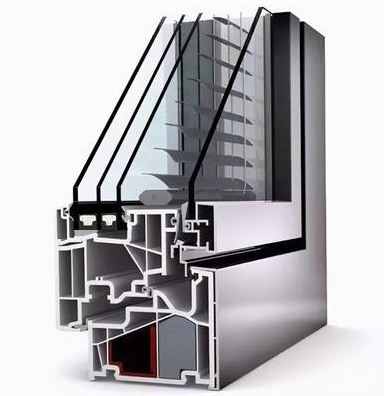
Glass occupies most of the area of the whole window and is the core carrier of energy saving and sound insulation. All tempered glass must be marked with 3C. No 3C logo is a non-standard product, and there is a potential safety hazard of self-explosion. Common configuration classification:
① Double-layer insulating glass: 5 + 12A + 5, basic household model, suitable for quiet and non-cold areas;
② Three-glass two-cavity insulating glass: 5 + 12A + 5 + 12A + 5, the thermal insulation is greatly improved, suitable for cold regions in the north;
③ Low-E low-emissivity glass: divided into offline Low-E and online Low-E, offline Low-E has better performance, reflects infrared heat radiation, blocks outdoor heat in summer and locks indoor heat in winter. It is standard for high-end broken bridge aluminum.
④ Laminated insulating glass: 5 + 0.76PVB + 5 laminated + 12A + 5, the main sound insulation, street-facing, elevated preferred, laminated layer can attenuate low-frequency noise, glass after broken adhesion does not scatter, higher safety.
The hollow layer can be filled with argon gas to further reduce heat conduction and improve sound insulation and heat insulation performance, which is an upgrade option. The hollow aluminum strip adopts warm edge strips to distinguish traditional aluminum spacers and reduce condensation and fogging on the edge of the glass.
Hardware accessories determine the life of the window sash opening and closing, load-bearing, anti-fall safety, inner opening and inner pouring, flat opening broken bridge aluminum, hardware is the top priority. Mainstream first-line brands include domestic and imported brands such as Gewu, Siglia, Haobo, etc., multi-point locking structure, multi-point pressing of the lock seat, after closing the frame fan is evenly fitted, and the seal is more stable; inferior single-point hardware, only one lock point, long-term use of the fan body sagging, the gap becomes large, and the switch card. The high-rise opening fan must be equipped with an anti-fall rope and an anti-fall device, as a mandatory safety accessory to prevent the window sash from falling off. The inner opening and inner pouring hardware has two opening modes: flat opening and upper hanging and inner pouring. Micro-ventilation does not fill the air. It can be slightly opened for ventilation in rainy days. It is a popular way to open for home improvement now
Fifth, angle forming process: the difference between ordinary angle and pin injection process
The angle forming process is a part of many businesses that is easy to steal the concept. The four corners of the window frame are the stress concentration positions and the high incidence of water leakage.
The traditional ordinary broken bridge aluminum mostly adopts the collision angle process: the profile corner code is squeezed and bitten, the screws are simply fixed, and there are subtle gaps in the corners. Under the repeated action of thermal expansion and contraction, the gaps slowly expand, and water vapor penetrates. After a long time, the corners seep and the frame is slightly deformed.
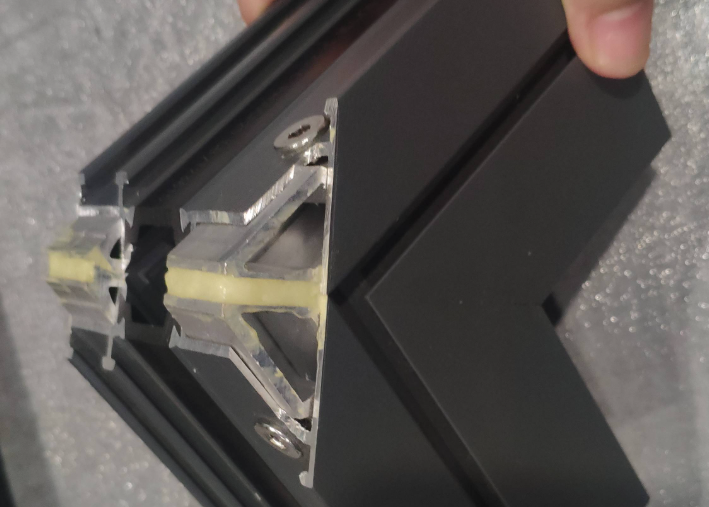
The high-end broken bridge aluminum system window adopts the pin glue injection angle process: customized diversion groove angle code, 304 stainless steel pins penetrate into the positioning and fix, and then inject special angle structure glue into the angle code diversion cavity. The glue fills all the gaps in the corners, and after curing, the four corners form a rigid whole. The advantage is that the strength of the corners is greatly improved, the anti-deformation and waterproof sealing ability are strong, and the hidden danger of water seepage in the corner seam is reduced from the source. At the same time, it is necessary to distinguish between "real glue injection" and "fake glue injection". The fake glue injection is only glued on the surface of the glue injection port, and the interior is not filled with the cavity. There is no substantial reinforcement sealing effect. During acceptance, you can ask to check the angle code structure and the design of the glue injection diversion groove.
[Close-up of pin glue injection angle code structure, group corner glue injection construction real picture]
Six, broken bridge aluminum doors and windows production, installation process and acceptance specifications
There is a consensus in the industry: three points of profiles and seven points of installation, and then high-end broken bridge aluminum products, the installation is not standardized, and the performance is directly reduced. The complete process includes door-to-door survey, scheme deepening, profile opening, numerical control processing, corner injection, rubber strip assembly, glass pressing assembly, factory commissioning, transportation, on-site installation, glue closing, and finished product acceptance.
Installation is divided into wet installation and dry pad installation. Now it is standardized to give priority to dry installation for home improvement window replacement. The frame and the wall are not directly filled with cement mortar, and the gap is filled with foaming filler. The outer weathering silicone sealant is glued and waterproof, and the inner beauty glue is closed. The foaming agent plays a role in filling and insulation, and cannot be used as a load-bearing and waterproof main material; the weathering glue must be a neutral silicone weathering glue for doors and windows, which is compatible with aluminum and walls. It does not mold or crack. Acid glue will corrode aluminum and accelerate the aging of the rubber strip. It is prohibited to use it.
The spacing of the fixing pieces is strictly in accordance with the specifications, and the corner positions and upper and lower edges are encrypted and fixed; the outer frame must reserve drainage holes. After installation, the debris in the holes should be cleaned to ensure smooth drainage; the outer wall insulation layer and waterproof layer cannot be damaged by the window frame fixing parts. The waterproof closure of the facade is the highest source of water leakage on the sealed balcony.
Key verification items for completion acceptance: ultrasonic sampling of profile wall thickness, material verification of thermal insulation strips, glass 3C logo, hardware opening and closing smoothness, smooth drainage holes, no broken glue bubbles in sealant, uniform opening fan gap, no sagging, water seepage and rain test. At the same time, check the configuration of the quotation list to avoid merchants from subtracting thermal insulation strips, glass, hardware and rubber strips when placing orders.
Seven, common misunderstandings of broken bridge aluminum doors and windows and key points for purchasing and avoiding pits
1. Just look at the numbers of the profile series, 70 must be better than 60? Wrong. The series is only the frame width, the width of the thermal insulation strip, the cavity structure, the number of sealing channels, the glass configuration, and the angle forming process jointly determine the performance. The wide frame is equipped with narrow thermal insulation strips and two sealed low-cost 70 broken bridge aluminum, and the performance is not as good as the 60 three sealed windows with a solid structure.
2. Can't rely solely on black and gray to judge whether the PA66 thermal insulation strip is good or bad? The market has dyed PVC imitation nylon thermal insulation strips. The most reliable way is to ask for test reports and laser marking labels. Regular PA66 thermal insulation strips will have brand and material laser marking on their surface.
3. System window = broken bridge aluminum? System window belongs to the sub-category of broken bridge aluminum. It is a coordinated design of the whole system. Profiles, rubber strips, hardware, glass, and drainage structures are synchronized and matched, and a full set of profile tests has been completed. Ordinary broken bridge aluminum is mostly used by profile factories. Door and window factories match hardware and glass by themselves, and there is no complete system matching test.
4. If the wall thickness is up to standard, everything will be fine. Wall thickness is the foundation of safety, but any shortcoming in the angle forming process, sealing, drainage, hardware, and installation will cause air leakage and poor sound insulation. Many 1.8-thick profiles have low-cost windows, and they are equipped with inferior rubber strips and angle collision processes. Long-term use problems are frequent.
5. Insulating glass will never fog? Insulating glass sealant failure, aluminum desiccant saturation, there will be hollow layer water fogging, belonging to glass failure, formal product quality assurance will include insulating glass anti-fogging years.
Application scenarios, maintenance and service life of broken bridge aluminum doors and windows
Broken bridge aluminum doors and windows are suitable for a wide range of scenarios: residential sealed balconies, bedroom casement windows, large fixed viewing windows in the living room, sun room matching opening fans, villa floor-to-ceiling windows, self-built exterior windows, schools, office buildings, factories and other types of building exterior windows. Differentiated selection according to the scene: high-rise priority high wind pressure resistance, anti-fall hardware; street priority laminated hollow sound insulation glass; rainy areas in the south focus on strengthening watertightness, hidden drainage; cold areas in the north give priority to wide thermal insulation strips + three-glass Low-E configuration.
Daily maintenance: EPDM rubber strips regularly clean dust to avoid sand and gravel wear and tear on the sealing surface; drain holes are checked and dredged every year to prevent fallen leaves and sediment from blocking water accumulation; hardware hinges and lock points are filled with a small amount of special grease every year, do not use oil; avoid hard objects hitting window sashes and pulling open fans; external wall weathering glue is checked once every 5 to 8 years, and cracking and degumming are replenished in time to prevent water seepage.
Qualified broken bridge aluminum doors and windows, the theoretical life of the substrate itself is very long, and the performance attenuation mainly comes from rubber strips, sealants, hardware and other consumables. Regular brands are properly maintained, and the entire window can be used stably for more than 15 to 20 years.
Comprehensive analysis and summary of broken bridge aluminum doors and windows
Broken bridge aluminum doors and windows is a comprehensive set of energy-saving envelope products, not a simple processing of a single aluminum material. Its core value relies on PA66 heat insulation and heat insulation structure, multi-cavity profile design, isobaric drainage and sealing system, energy-saving glass, brand hardware, pin angle injection process, and standardized installation. When selecting the model, it is not possible to compare the price alone, only look at the appearance. It is necessary to combine the floor height, wind pressure, noise, and regional climate to comprehensively check the profile base material, heat insulation strip, three-sex grade, K value, glass, hardware, corner forming process, installation plan, and quality assurance terms. Only by getting a complete configuration list and testing data can we choose safe, energy-saving, sound-proof, long-term stable and water-tight broken bridge aluminum doors and windows.
In the context of continuous upgrading of building energy conservation standards, aluminum doors and windows have become the mainstream solution for home improvement doors and windows. From the early basic insulation requirements, they have gradually iterated towards ultra-low energy consumption, quiet comfort, and long-life safety. They are also product categories that door and window manufacturers, decoration companies, and engineering Party A focus on.