

Highway fence
Highway guardrail net | Full analysis of specification classification, material process, installation standards, and selection
Highway guardrail network overall installation of expressway
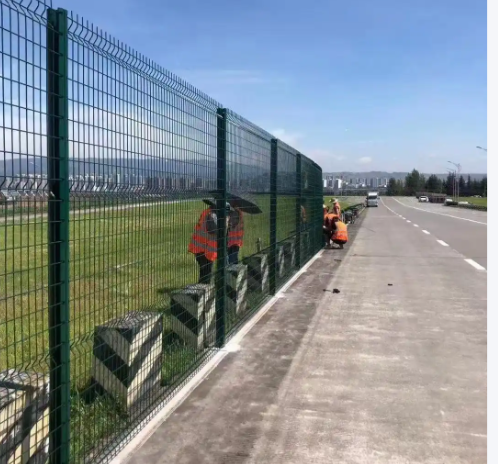
Overview and core role of highway fence products
Highway guardrail network is also often referred to as road guardrail network, highway isolation fence, traffic protection network. It is the most basic, most used and most versatile metal protection facility in road traffic security engineering. It strictly follows the national standard of GB/T 26941-2025 for the production and installation of highway isolation fences. It is mainly used in highways, national highways, provincial highways, urban and rural roads, municipal expressways, and road green belt isolation scenarios. It is the core supporting facilities to ensure road traffic safety and standardize traffic order.
Different from rigid and flexible anti-collision guardrails such as waveform guardrails and cable guardrails, highway guardrails mainly focus on isolation, protection, anti-intrusion, anti-parabolic, and zoning control functions. They do not focus on strong anti-collision of vehicles. They are more suitable for road boundary isolation, human-vehicle diversion, slope protection, and road section closure management. Its core functions are divided into four points: first, it effectively blocks pedestrians and non-motorized vehicles from crossing the highway at will to avoid traffic accidents; second, it prevents roadside debris, gravel, and animals from breaking into the roadway to ensure the safety of vehicles driving at high speed; third, it realizes the physical zoning of two-way lanes, roads and green belts, roadways and sidewalks; fourth, it improves the overall regularity of roads, beautifies the road engineering environment, and adapts to various municipal acceptance standards
With the advantages of stable structure, anti-corrosion and durability, convenient installation, high cost performance, and simple maintenance, highway guardrails have become a rigid demand product for highway construction, reconstruction, expansion, and maintenance projects, and are also a routine procurement category for transportation infrastructure project bidding.
Second, the mainstream classification of highway guardrail network and detailed explanation of applicable scenarios
Classification and comparison chart of styles of various highway guardrails
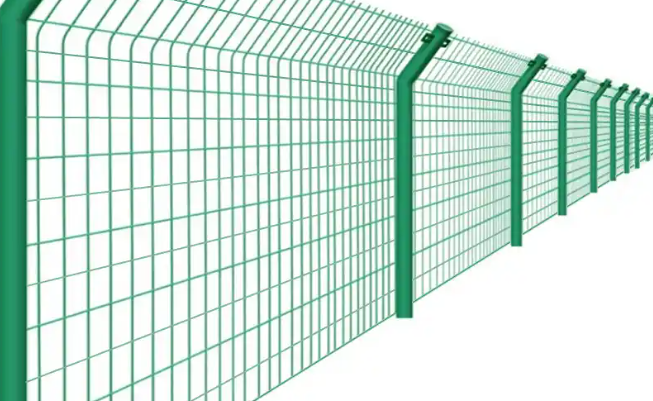
According to the structural style, construction scenarios, and protection level differences, highway guardrails can be divided into five main types: frame guardrails, bilateral wire guardrails, peach-shaped column guardrails, anti-glare guardrails, and bending guardrails. Each style has completely different structural characteristics and suitable sections, which is the core basis for engineering selection.
Framed highway guardrail net with a square tube frame as a whole, with strong rigidity, high impact resistance, not easy to deform, and the highest protection level. It is mainly used for isolation on both sides of expressway main lines, expressway ramps, provincial main roads, and important roads. It is suitable for long-term outdoor use and high-standard acceptance sections.
The bilateral wire highway fence has a minimalist structure, no outer frame, bent and interspersed columns at both ends, fast installation speed, lower cost, and strong versatility. It is widely used in national highways, provincial highways, rural highways, construction temporary enclosures, and road boundary closures. It is the preferred style for small and medium-sized road projects.
The peach-shaped column highway guardrail net adopts a unique peach-shaped column with snap-on mesh, which has a beautiful appearance, smooth lines, and both protection and decoration. It is mostly used for municipal roads, urban expressways, landscape highways, and urban road isolation. It is suitable for high-standard municipal lighting projects.
The anti-glare guardrail net is equipped with an anti-glare structure and encrypted mesh, which can block the glare of the opposite lights at night. It is mainly used in the central isolation belt of expressways, taking into account the functions of isolation and anti-glare for driving safety.
The bottom of the bending highway guardrail comes with three bending reinforcements, which have stronger wind and pressure resistance. It is suitable for mountainous highways, slope sections, windy and rainy road conditions, and has excellent terrain adaptability.
III. Highway guardrail network standard specifications (general engineering)
Highway guardrail net specifications and dimensions parameter table
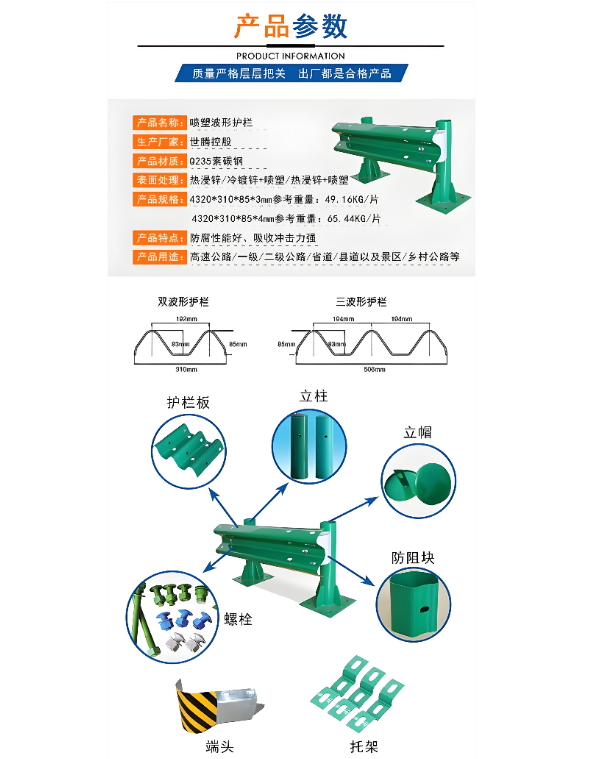
The highway guardrail network has a unified engineering specification, which can be customized and adjusted according to road grades and construction needs. The mainstream standardized parameters are suitable for most highway projects in the country, and are also the core technical parameters of bidding.
The conventional height is divided into 1.8 meters and 2.0 meters of road general-purpose models. Special road sections can be customized with a height of 1.2 meters, 1.5 meters, 2.2 meters, and 2.5 meters. The mesh width is uniform in modular sizes of 2 meters, 3 meters, and 4 meters, which is convenient for batch construction and splicing.
Wire diameter specifications: national standard highway guardrail mesh wire diameter 3.5mm - 5.0mm, high-speed trunk lines use thickened wire diameter above 4.0mm, rural roads and auxiliary sections can use 3.0mm - 3.5mm conventional wire diameter to ensure protection strength while controlling engineering costs.
Mesh standard: universal 75150mm, 80160mm, 100200mm rectangular mesh, uniform and regular mesh, which can not only effectively prevent pedestrians from crossing, but also ensure ventilation and light transmission, and avoid deformation and damage to the guardrail caused by strong wind accumulation.
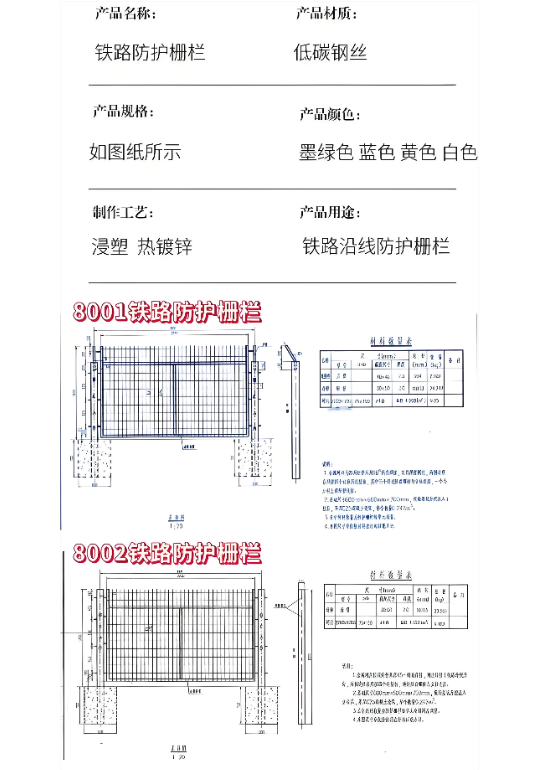
Column specifications: square tube column, peach column, tube column three types, wall thickness 1.0mm - 2.0mm, high-speed engineering using thickened column, with chassis fixed or embedded installation, stronger stability.
All specifications can be customized according to project drawings, road conditions, and acceptance standards, fully adapting to the needs of municipal, high-speed, and rural roads.
Fourth, the road fence material and anti-corrosion process determine the service life
Close-up of guardrail net hot-dip galvanizing + spraying process details
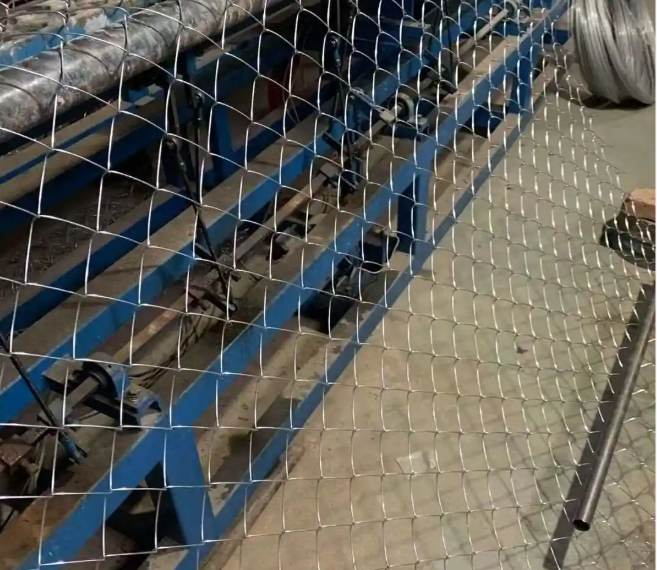
Highway guardrails are exposed to the outdoors for a long time and withstand sun, rain, frost, and wind and sand erosion. The material and anti-corrosion process directly determine the service life of the product and the quality of the project, and are also the key to distinguishing the quality of the project.
Regular highway guardrail net substrates are all made of high-quality low-carbon steel wire and Q235 steel, which have high toughness, sufficient strength, not easy to break, and good impact resistance. This avoids recycling waste and inferior steel, and guarantees structural stability from the source.
The mainstream three-layer anti-corrosion process on the market is divided into two types, which are suitable for different engineering standards:
The first type: hot-dip galvanizing + electrostatic spraying double-layer anti-corrosion, which is standard for high-speed and municipal high-standard projects. First, high-temperature hot-dip galvanizing to prevent rust and oxidation of the substrate, and then outdoor special electrostatic spraying. The paint surface has strong adhesion, UV resistance, and aging resistance. The service life can reach 10-15 years without rust or peeling.
The second type: cold galvanizing + spraying simple anti-corrosion, cost-effective, suitable for rural roads, temporary sections, short-term projects, with a service life of 3-5 years to meet basic protection needs.
High-end projects can choose the immersion process, the coating is thick, anti-corrosion, acid and alkali resistant, suitable for coastal, humid, rainy and highly corrosive road sections, effectively resisting salt spray and rain erosion. Qualified finished products have a flat and smooth surface, no burrs, no plasticity, no leakage plating, and meet road traffic security acceptance standards.
V. Installation methods and construction standards for highway guardrails
Standardized installation and construction of construction site guardrail net
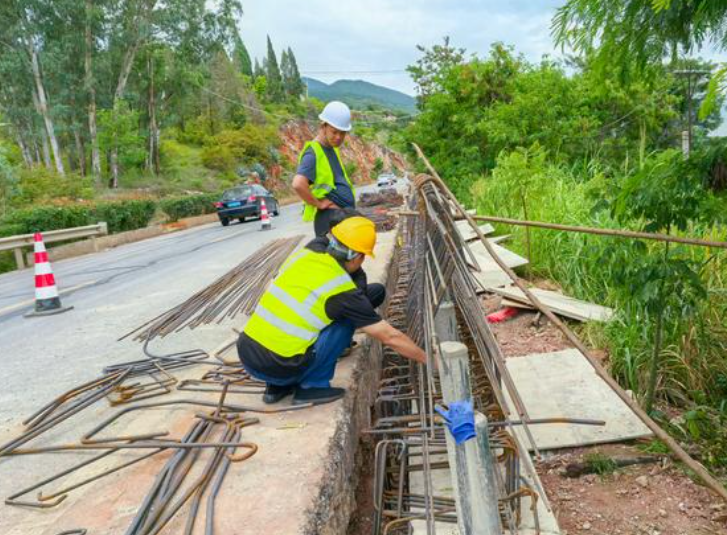
Highway fence installation technology mature specification, divided into embedded installation, flange chassis fixed installation two core construction methods, strictly follow the highway isolation fence construction specifications, adapt to different subgrade conditions.
Embedded installation is the most commonly used construction method, suitable for soil roadbeds and green belt sections. During construction, 30-50 cm of pre-embedded columns are dug, and the concrete is poured and fixed. After solidification, the mesh is hung and buckled. The whole is deeply rooted, wind-resistant and earthquake-resistant, and has strong stability. It is suitable for long-term permanent road protection projects.
Flanged chassis fixed installation, suitable for hardened pavement, cement subgrade, asphalt pavement, no need to dig holes and break the road, fixed chassis through expansion screws, fast installation, no damage to the road surface, easy to disassemble and migrate later, suitable for municipal roads, reconstruction and expansion of road sections, temporary enclosure projects.
Standardized construction process: measurement of release column fixed-point foundation construction column fixed mesh splicing buckle fastening leveling calibration overall acceptance. After installation, the whole is required to be straight and flat, no tilt, tight mesh without gaps, firmly buckled, and the whole line is neat and unified to meet the requirements of road engineering appearance and safety acceptance.
Sixth, the core advantages of highway guardrail network and road adaptability
The overall regular renderings of the guardrail network on the completed road section
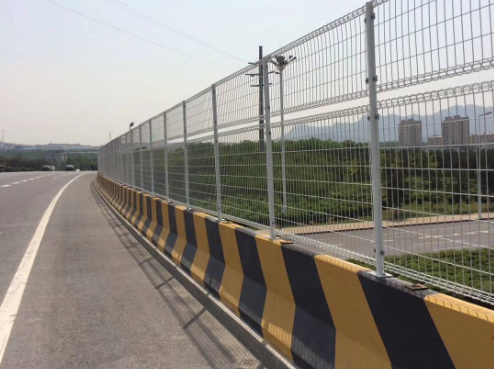
Compared with traditional brick walls, wrought iron fences, and simple fences, highway guardrails have outstanding advantages in road engineering and are also the main protection products for transportation infrastructure.
First, the safety protection is strong. The steel structure mesh has high toughness, which can effectively resist external impact, vehicle scratches, and man-made climbing damage, prevent pedestrians from crossing and animals from breaking in, and greatly reduce road safety hazards.
Second, the weather resistance is extremely strong. Professional anti-corrosion process is suitable for the four-season climate, high temperature resistance, cold resistance, rain resistance, anti-corrosion, long-term outdoor use without deformation or rust.
Third, it is transparent and beautiful without blocking the line of sight. The mesh structure is ventilated and translucent, which will not block the driver's line of sight, without visual blind spots, improving driving safety, and at the same time neat and unified, beautifying the road environment.
Fourth, the construction is efficient and cost-effective. Modular finished components do not require on-site welding processing, greatly shortening the construction period, and the cost is much lower than that of traditional isolation facilities, making them suitable for large-scale batch construction.
Fifth, the maintenance is simple and repurposeable. No frequent maintenance is required in the later stage, the damaged parts can be replaced separately, and the disassembly is convenient. The reconstruction and expansion project can be reused twice, reducing the total cost of the project.
Seven, highway fence engineering selection guide (to avoid purchasing stepping on the pit)
Schematic diagram of guardrail mesh selection for different road conditions
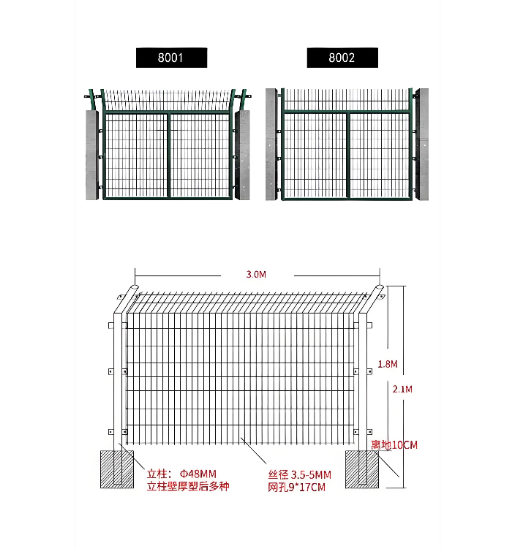
Many road engineering procurement is prone to selection errors, resulting in insufficient protection, failed acceptance, and short service life. Accurate selection criteria are summarized based on engineering experience.
Highway, main road, core sections: priority thickened frame fence, wire diameter above 4.0mm, thickened column, hot-dip galvanized spray process, high protection level, strong durability, to meet high standards of acceptance.
National highways, provincial highways, and rural highways: bilateral wire fence is preferred, which is cost-effective, quick to install, and has sufficient protection to meet the needs of conventional road isolation.
Urban municipal and landscape roads: peach-shaped column guardrail mesh is selected, which has a high value, regular and beautiful appearance, and is suitable for municipal lighting projects.
Mountainous areas, slopes, and windy road sections: three bending and reinforcing guardrails are selected, which have strong wind resistance and compression resistance and terrain adaptability.
Coastal and humid corrosive areas: Hot-dip galvanizing + thickened immersion dual anti-corrosion process must be used to prevent salt spray corrosion.
At the same time, it is necessary to focus on verification when purchasing: whether the wire diameter and wall thickness are up to standard, whether the anti-corrosion process is compliant, whether the solder joints are firm, and whether there are any cutting corners to avoid non-standard and inferior products affecting the engineering acceptance and use safety.
Full text summary
Panorama of finished products of highway guardrail network standardization project
As the core facility of the road traffic security system, highway guardrail networks are widely used in all kinds of highway and municipal road isolation protection projects across the country by virtue of standardized category division, standard engineering specifications, mature anti-corrosion technology, and efficient construction methods. Different styles of guardrail networks adapt to different road conditions and protection levels, from high-speed trunk lines to rural roads, from municipal landscape roads to mountainous slope roads, there are corresponding standardized solutions.
The core standard of high-quality highway guardrail network lies in the substrate compliance, specification compliance, anti-corrosion in place, and construction specifications. Regular national standard products can not only ensure road safety for a long time, standardize traffic order, but also reduce later maintenance costs and improve the overall quality of road engineering.
Whether it is a new highway project, road reconstruction and expansion, or the replacement and maintenance of old guardrails, the rational selection and standardization of highway guardrails according to road conditions, road grades, and budgets is essential to ensure the quality of the project, pass the acceptance smoothly, and achieve long-term stable protection