

Plastic steel doors and windows
Professional science popularization of plastic steel doors and windows | Full analysis of profile structure, performance, selection, construction and maintenance
[Home improvement plastic steel doors and windows completed real scene, indoor perspective, with plastic steel profile section sample]
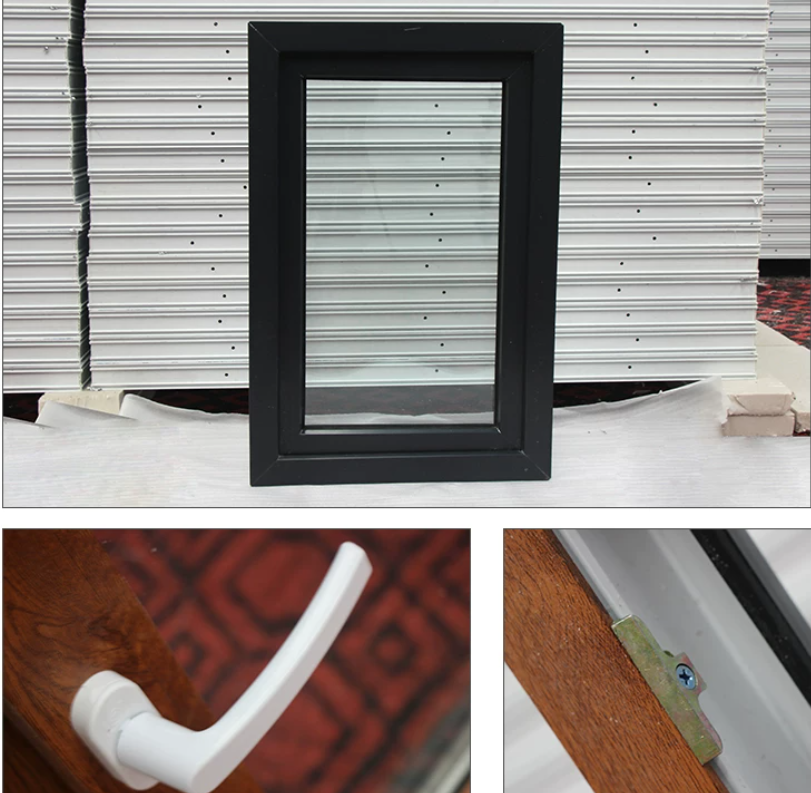
Plastic steel doors and windows, officially known as unplasticized polyvinyl chloride (PVC-U) plastic doors and windows, have been introduced into China since the 1990s. With their excellent thermal insulation, sealing and sound insulation, and cost-effective advantages, they have been widely used in residential, resettlement buildings, factories, and old house renovation projects for a long time. Many owners have a polarized perception of plastic steel doors and windows: some people think that plastic steel windows are easy to yellow and deform, which is a low-end product; some old users recognize that they are well insulated and affordable. In fact, plastic steel doors and windows are a set of standardized system products. The core of the gap between good and bad lies in the profile formula, cavity structure, steel lining configuration, sealing strip, hardware, and processing technology.
This paper starts from the basic definition of plastic steel doors and windows, the principle of profile cavities, core performance indicators, accessories matching, advantages and disadvantages, applicable scenarios, installation specifications, purchase and pit avoidance, post-maintenance, etc., taking into account professional technical knowledge
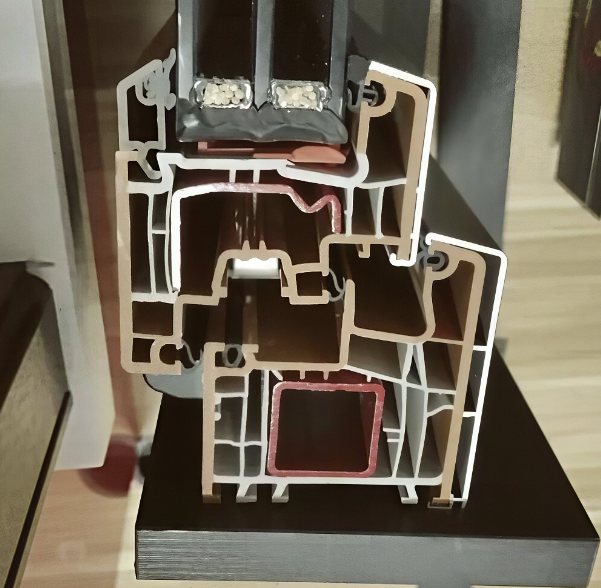
[Schematic diagram of profile section | PVC-U plastic-steel profile section marking diagram, marking multi-cavity, steel lining groove, sealing card slot, heat insulation cavity]
First, the basic definition of plastic steel doors and windows and the principle of profiles
The main material of plastic steel doors and windows is PVC-U rigid PVC profiles, which is different from soft PVC plastics. The raw material does not contain plasticizers and has stable physical strength. The rigidity of simple PVC profiles is insufficient, so the interior of the profiles is reserved for cavities, and galvanized reinforced steel linings are installed. The combination of "plastic" and "steel" is the origin of the name of plastic steel.
The national standard GB/T 8814 "Unplasticized Polyvinyl Chloride (PVC-U) Profiles for Doors and Windows" is the core basis for the production of plastic steel profiles. Regular profiles use a multi-cavity structure, which is generally divided into a main cavity (where steel lining is placed), a drainage cavity, a heat insulation cavity, and a sealed cavity. The functions of multi-cavity design: first, to block heat conduction and improve thermal insulation performance; second, to form an independent drainage channel, rainwater will not directly contact the steel lining, reducing rust; third, to improve the torsion and bending resistance of profiles, reducing the probability of thermal deformation.
The profiles on the market are divided into three categories: A, B, and C. Class A is a high-performance profile with a wall thickness of ≥2.8mm; Class B is a general-purpose type with a wall thickness of ≥2.5mm; Class C is a simple engineering model with a wall thickness of 2.0mm, which is mostly used in temporary buildings. Many low-cost small-scale factory profiles directly use C-type materials to pretend to be Class A, which is the main source of yellowing, deformation, and lax customs in the later stage. PVC raw materials also have advantages and disadvantages. The ratio of new powder, stabilizer, and titanium dioxide determines weather resistance. Profiles produced from recycled materials age rapidly under ultraviolet radiation, yellowing and brittle.
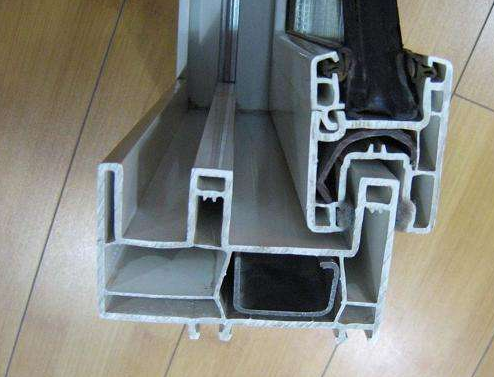
[Comparison chart of steel lining real shot | Comparison of qualified thickened galvanized steel lining and thin-walled non-standard steel lining, marked thickness and galvanized layer]
Second, built-in steel lining: the stressed skeleton of plastic steel doors and windows, the easiest place to reduce the distribution
Steel lining is the load-bearing core of plastic steel doors and windows, and it is also the easiest part for merchants to cut corners. PVC plastic itself will creep when heated. If there is no qualified steel lining support, the window sash will sag, rub the frame, and lock and fail under its own weight and wind pressure for a few months.
National Standard Requirements: Doors and windows stressed rods (frames, fans, stills) must be equipped with hot-dip galvanized steel linings. The wall thickness of the steel lining is selected according to the size of the hole and the height of the floor. Conventional home improvement window sash steel lining wall thickness is not less than 1.2mm, high-rise, large fixed fans, and casement doors are recommended to be 1.5mm and above; the steel lining must be a closed U-shaped or rectangular closed structure. The opening thin steel lining has poor torsion resistance and is not recommended. The surface of the steel lining is hot-dip galvanized to isolate water vapor, prevent the steel lining from rusting and expanding, and support cracking PVC profiles.
Buying common routines: no steel lining is placed in the cavity of the profile, or only a short steel lining is placed, and the two ends are empty; cold plating and no galvanized steel lining are used, which will rust for half a year; the wall thickness of the steel lining is virtual, and the standard 1.2mm is actually only 0.6mm. The steel lining is a built-in concealed part, which cannot be seen after processing and sealing. The steel lining specifications and galvanizing process must be stated in the order contract.
[Schematic diagram of sealing structure | Three sealing sections of plastic steel doors and windows, marked with outer seal, isobaric chamber, and inner sealing strip]
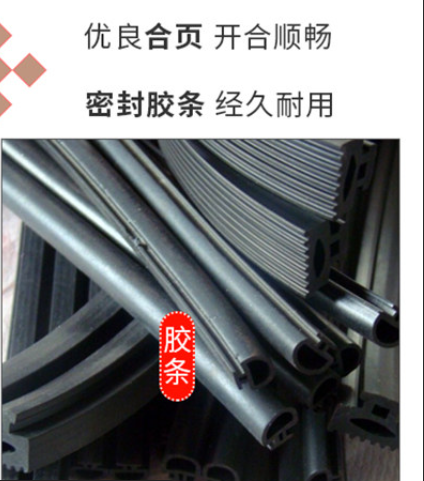
Third, the sealing system and drainage structure determine the airtight and watertight performance
High-quality plastic-steel system windows are equipped with multi-channel EPDM EPDM sealing strips as standard, and the mainstream is two-channel sealing and high-end three-channel isobaric sealing. The rubber strips are co-extruded in one piece and matched with the profile card slot, and cannot be pasted casually later. EPDM rubber strips are resistant to high and low temperatures and aging. They have little elastic change after 8-10 years of normal use; PVC rubber strips are used for low-priced products. They harden, crack, shrink, and leak and seep in 1-2 years.
The drainage adopts an independent cavity drainage design, which is similar to the hidden drainage logic of the broken bridge aluminum. The drainage cavity is isolated from the steel lining cavity, and the rainwater is discharged from the outer drainage hole along the diversion groove and will not flow into the steel lining position. During regular processing, the drainage holes and air pressure balance holes are opened in pairs to balance the internal pressure of the cavity, and rainwater is avoided during strong winds and heavy rains.
Many small workshops omit air pressure balance holes in processing, or drain holes directly open the steel lining cavity. Long-term soaking of rainwater in the steel lining causes the steel lining to rust and expand, and the profiles bulge and crack. The water tightness of plastic steel doors and windows can reach up to 5 levels, and the air tightness is up to 6 levels. At the same price, the air tightness is not inferior to that of ordinary broken bridge aluminum windows, making it very suitable for northern heating areas.
[Drawing of plastic steel door and window hardware accessories | Close-up of plastic steel special actuator, lock point, hinge, wind support, handle]
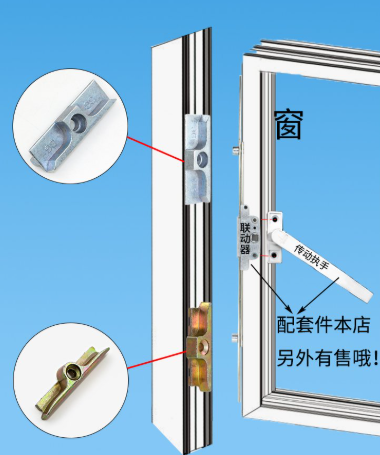
Fourth, the special hardware matching for plastic steel doors and windows cannot be used with broken bridge aluminum hardware
The slot of the plastic steel profile is a European standard slot, but the hardware base structure is different from that of the broken bridge aluminum, so it cannot be directly mixed. Plastic steel casement windows and casement doors commonly use inner opening and inner inverted, single-point lock, and multi-point lock hardware; sliding plastic steel doors and windows use pulleys and hook locks.
Casement windows give priority to multi-point locking hardware. A circle of multiple lock points synchronously presses the rubber strip, with uniform force and stable sealing; a single-point lock has only one lock point in the middle, and the corners are prone to air leakage after long-term use. The hinge load-bearing needs to match the weight of the window sash, and the large fan heavy glass must choose a reinforced load-bearing hinge, otherwise the window sash will sag and the lock point will be misplaced. The pulley of the sliding window is divided into nylon pulley and steel pulley. The nylon pulley is silent and suitable for household use; the stainless steel pulley is wear-resistant and dusty. The factory environment is more suitable.
The service life of the hardware of plastic steel windows is lower than that of high-end broken bridge aluminum hardware. Regular brand hardware normally requires maintenance, lubrication, and replacement of accessories in 5-8 years; miscellaneous hardware has broken handles and locked points in 2-3 years.
[Glass configuration sample diagram | Comparison of hollow tempered glass, single glass, hollow belt warm edge strip samples]
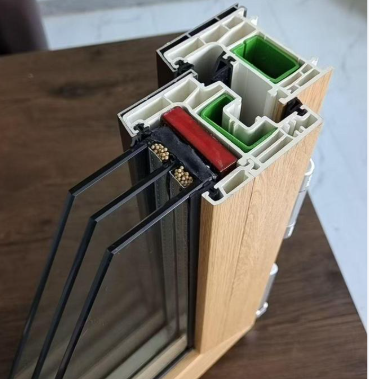
Glass matching scheme, the core of thermal insulation, sound insulation and safety
Plastic steel doors and windows can be matched with single-glass, double-glass hollow, and three-glass two-cavity hollow glass, with a huge performance gap between different configurations.
Many of the old-fashioned resettlement houses are 5mm single-piece glass, which has poor thermal insulation and sound insulation. Now home improvement is basically eliminated; the mainstream configuration of home improvement is 5 + 12A + 5 hollow tempered glass, and the hollow layers 12A, 15A, and 20A are optional. The larger the hollow layer, the better the sound insulation and heat insulation; the northern cold areas are upgraded with three glasses and two chambers, and the thermal insulation effect is greatly improved. The K value of the whole window can be within 2.0W/(m2 · K).
The glass must be tempered to meet safety regulations, and the high-rise outer windows are forcibly tempered; the laminated insulating glass can be upgraded if there is a need for sound insulation. The insulating glass spacers are divided into aluminum spacers and warm edge strips. The warm edge strips reduce the cold bridge on the edge of the glass and reduce the condensation on the inside of the glass in winter. Many low-priced plastic steel window insulating glasses do not use butyl glue or structural glue. The hollow layer quickly fogs and enters water, which cannot be repaired, so the glass can only be replaced.
[Performance test report diagram | Summary of wind pressure resistance, airtightness, watertightness and thermal insulation test of plastic steel windows]
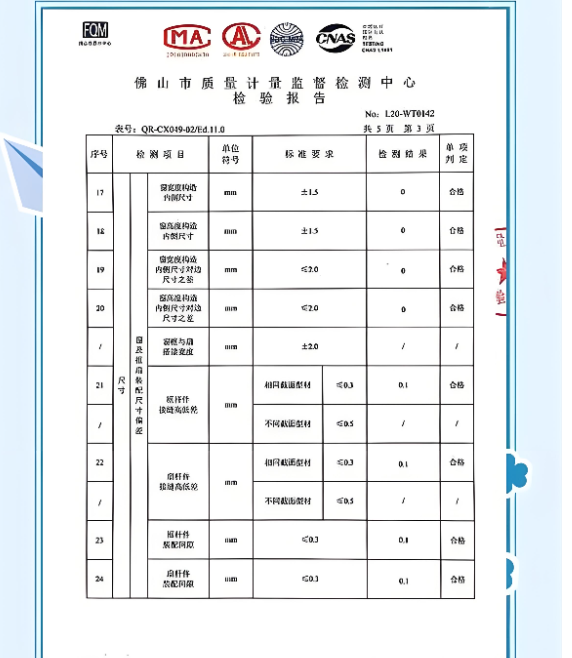
The advantages and disadvantages of the comprehensive performance of plastic steel doors and windows should be viewed objectively and rationally
✅ Advantage:
The thermal insulation performance is outstanding, and the thermal conductivity of PVC itself is extremely low. With multi-cavity + insulating glass, the thermal insulation is better than that of ordinary aluminum alloy windows under the same configuration. It is very suitable for northern heating rooms and self-built houses.
Sound insulation effect is good, multi-cavity structure with insulating glass, effectively blocking outdoor noise;
Corrosion resistance, not afraid of acid rain, humidity, seaside, bathroom, factory building and other corrosion-friendly environment;
The price is close to the people, the cost is lower than that of broken bridge aluminum doors and windows, and the mass transformation of old houses is very cost-effective;
The surface does not require painting, and the color is stable. Conventional white is the main color, and there are also co-extruded color and laminated wood grain models.
❌ Weakness:
PVC is a polymer material. Long-term strong ultraviolet exposure will slowly age and turn yellow. Even if a sufficient amount of titanium dioxide is added, it cannot be completely eliminated, but the time is slow;
Rigidity depends on the steel lining, once the steel lining is reduced, it is easy to deform and sag;
Poor high temperature resistance, summer exposure environment, profile creep risk is higher than aluminum alloy;
Wood grain coated model, the surface coating is easy to edge and remove after many years of use.
Many people think that plastic steel windows must be very poor. In fact, it is the stereotype left by a large number of recycled materials and inferior products without steel lining in the early years. Class A new materials, thickened steel lining, and formally processed plastic steel windows are the norm for stable use for more than 15 years.
[Installation construction map | Plastic steel door and window frame fixing, foaming, external wall gluing, leveling construction site]
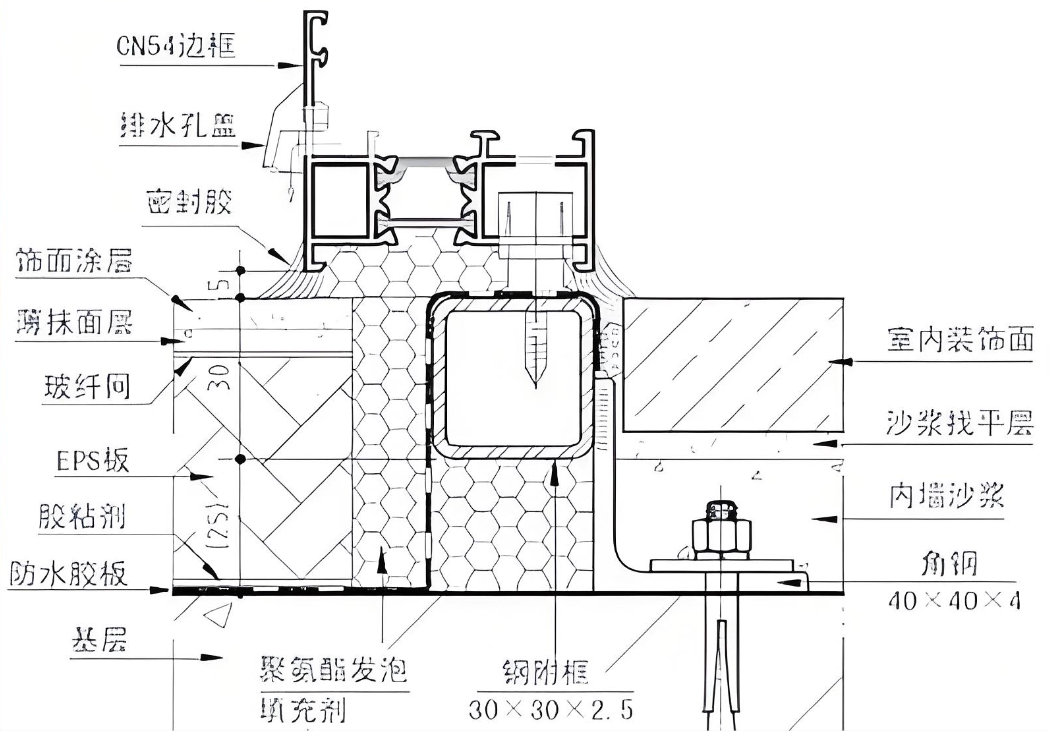
VII. Standardized installation process and acceptance points for plastic steel doors and windows
Plastic steel doors and windows also follow "three points of product, seven points of installation". Improper installation, no matter how good the profile is, it will leak water and air.
Cave cleaning: clean the wall floating ash, loosen the mortar, and review the size of the hole;
The window frame is leveled in place: put in the window frame, correct the horizontal and vertical, and control the diagonal error within the allowable range;
Fixed: fixed with fixing pieces or expansion bolts, the fixed point spacing conforms to the specification, and the corner position is encrypted and fixed; plastic steel profiles cannot be directly punched and self-tapping screws are hard-pulled, which is easy to cause the profiles to crack;
Gap filling: window frames and wall gaps are filled with high-density polyurethane foaming agent, and the foaming is full and continuous;
Waterproof closure: the outside is sealed with neutral silicone weathering glue, and the inside is beauty glue; it is strictly forbidden to use ordinary glass glue inside and outside;
Debugging: After foaming and curing, turn on the fan to repeatedly debug the hinge and lock point to ensure that the switch is smooth and the rubber strip is pressed evenly;
Water test: After completion, water check drainage, sealing, and troubleshooting hidden dangers.
Key points of acceptance: smooth opening without abnormal sound, no gap after closing, tight fitting of the rubber strip, smooth drainage hole, continuous no cracking of the outer glue, firm fixing and no shaking.
[Real scene map of applicable scenarios | Plastic steel windows for old house renovation, plastic steel sliding windows for factory buildings, plastic steel casement windows for rural self-built houses]
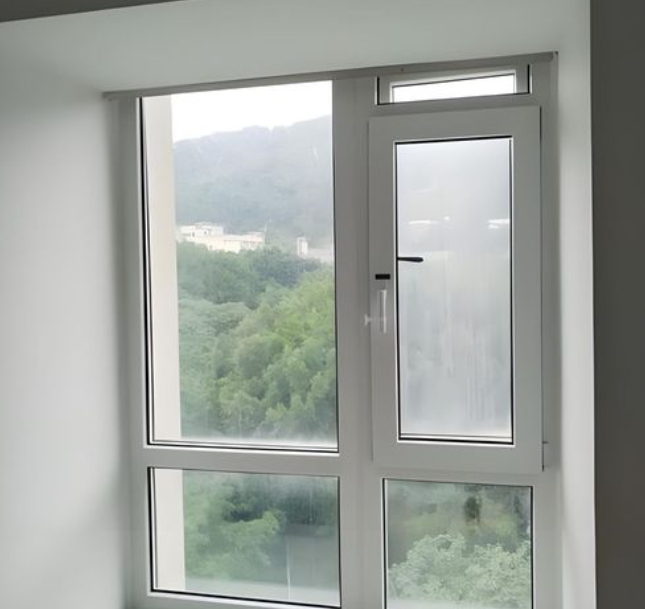
Eight, which scenarios are plastic steel doors and windows suitable for, and which scenarios are not recommended
Suitable for scenarios: northern heating residences, old residential buildings, resettlement houses, rural self-built buildings, factory warehouses, toilets, humid areas, and batch renovation projects with limited budgets; users with high insulation requirements and low budgets do not want to invest in broken bridge aluminum.
Not recommended scenarios: high-rise windward side, tropical long-term sun exposure without shade, high-end home improvement that does not yellow for a long time, large-span and ultra-wide opening fan. This kind of scene gives priority to aluminum alloy system windows, which have stronger stability against high temperature and wind pressure.
Color plastic steel is divided into two colors: surface coating and co-extrusion. The weathering resistance of co-extrusion profiles is much better than that of later coating. If the budget is sufficient, co-extrusion models are not easy to fade and peel.
[Comparison chart of advantages and disadvantages | New Class A plastic steel profiles vs recycled inferior profiles, yellowing, cavity, steel lining comparison]
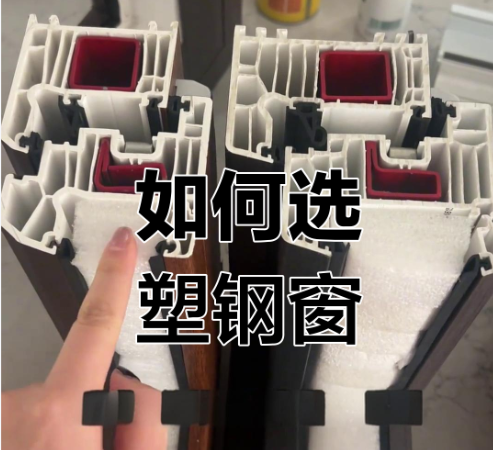
Nine, choose a pit avoidance guide and avoid common routines in the industry
Confuse the profile categories, and Class C engineering materials pretend to be Class A high-performance profiles;
Steel lining, short steel lining and thin-walled non-galvanized steel lining are omitted.
Recycled material profiles quickly turn yellow and brittle;
Hollow glass is not sealed, short-term fogging;
Adhesive strip with inferior PVC, rapid hardening cracking;
Simplified drainage structure, no pressure balance hole, water seepage in rainy days;
Only the bare frame is reported at a low price, and the price of hardware, glass and installation will be increased separately in the later stage.
The contract must state: profile national standard A, new PVC raw materials, steel lining thickness and galvanizing process, rubber strip material, glass specifications, quality assurance years.
[Maintenance schematic diagram | Clean drain holes, wipe rubber strips, and oil maintenance for hardware]
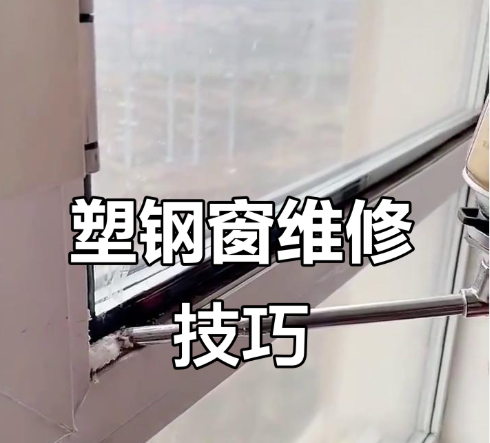
Ten, plastic steel doors and windows daily maintenance, extend the service life
Plastic steel windows are not difficult to maintain. Doing a good job of a few points can significantly prolong the service life: cleaning up dust and debris in the drain hole before the rainy season every year to prevent clogging and water accumulation; regularly wiping the rubber strip with water to avoid oil adhesion; spraying a small amount of silicon-based lubricant on the hinge and actuator every year, do not use oil; avoid hard objects hitting the profile; do not hang heavy objects on the window sash to prevent sagging; replace the rubber strip in time if it is found to crack and the glass is fogged.
If the surface is slightly yellow, wipe it with a neutral detergent to prohibit strong acids and alkalis, which will accelerate aging.
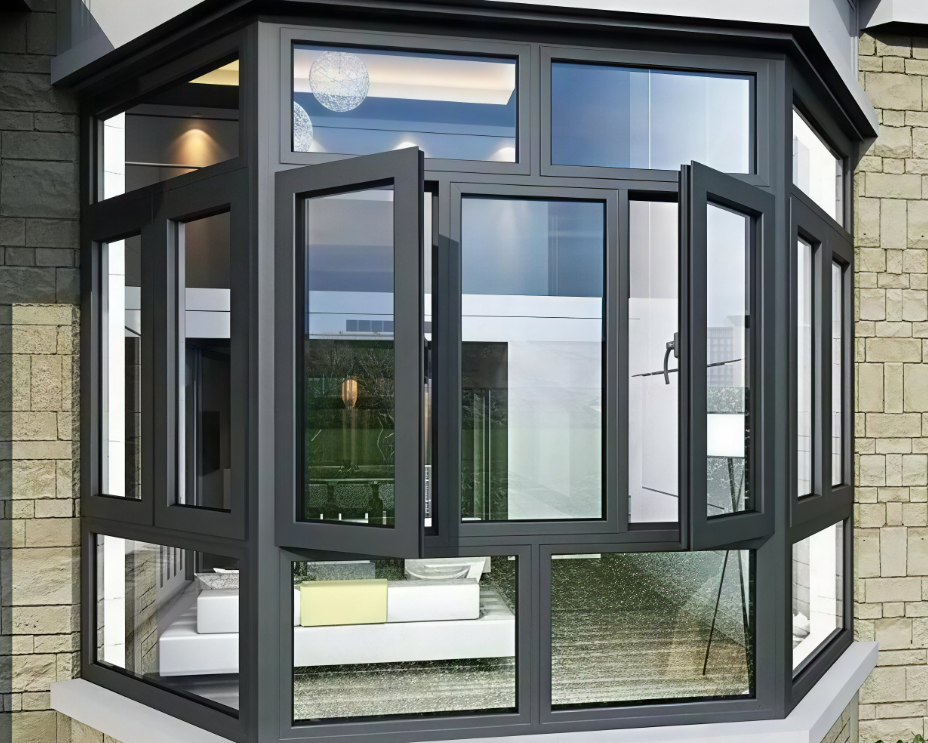
[Panoramic completion map | Overall floor effect of residential white plastic steel casement windows]
conclusion
Plastic steel doors and windows are not backward and eliminated door and window products, but a mature and cost-effective thermal insulation door and window system. Its core competitiveness lies in its excellent thermal insulation performance, which is very suitable for a large number of old house renovations, self-built houses, and northern heating markets in China. All its properties are based on qualified A-type materials, sufficient galvanized steel linings, matching sealing strips, standardized processing and standardized installation.
When buying plastic steel doors and windows, you can't just compare prices, but focus on distinguishing the quality of raw materials, cavity structure, steel lining configuration, and glass sealing process. It is not absolutely good or bad from broken bridge aluminum doors and windows, only the difference between adaptation scenarios: value thermal insulation, limited budget, and humid environment, plastic steel doors and windows are preferred; high-rise, strong sun exposure, and pursuit of long-term stability and non-fading, aluminum alloy system windows are preferred. Only by understanding the professional parameters, structural principles, and acceptance standards of plastic steel doors and windows can we avoid low-priced and inferior products and choose durable, air-tight, and water-impermeable doors and windows.